





Bid Day Problems Every Contractor Faces and How to Fix Them
Bid day is the day everything either comes together or falls apart. It's when a general contractor collects final subcontractor numbers, checks them against the scope, and submits a complete bid before a hard deadline. Most contractors don't lose bids because their pricing is wrong. They lose because something breaks down in the final hours.
In construction bidding, that distinction matters more than most people outside the industry realize.
What is bid day in construction?
Bid day in construction is the deadline date when a general contractor must submit a complete, compliant bid to the project owner or awarding authority. It's the finish line of the entire preconstruction bid process — every takeoff, every subcontractor coverage call, every scope clarification has to land before the clock runs out.
There's no partial credit on bid day. A bid that's 95% ready and missing one trade is still incomplete.
What happens on bid day in construction?
The morning usually starts calm and ends loud. Sub numbers trickle in over email, text, and phone calls. Someone's compiling them into a spreadsheet or a bid board while someone else is chasing down the last two trades that haven't responded.
By early afternoon, the team starts bid leveling: comparing and cross-checking the numbers submitted by subs who all scoped the job differently.
All of this leaves little to no time for final adjustments that are often made in the last hour, while the bid submission deadline is already ticking down.
Teams that move faster here usually rely on a structured bid tab to compare competing sub proposals on equal footing instead of eyeballing raw totals under deadline pressure.
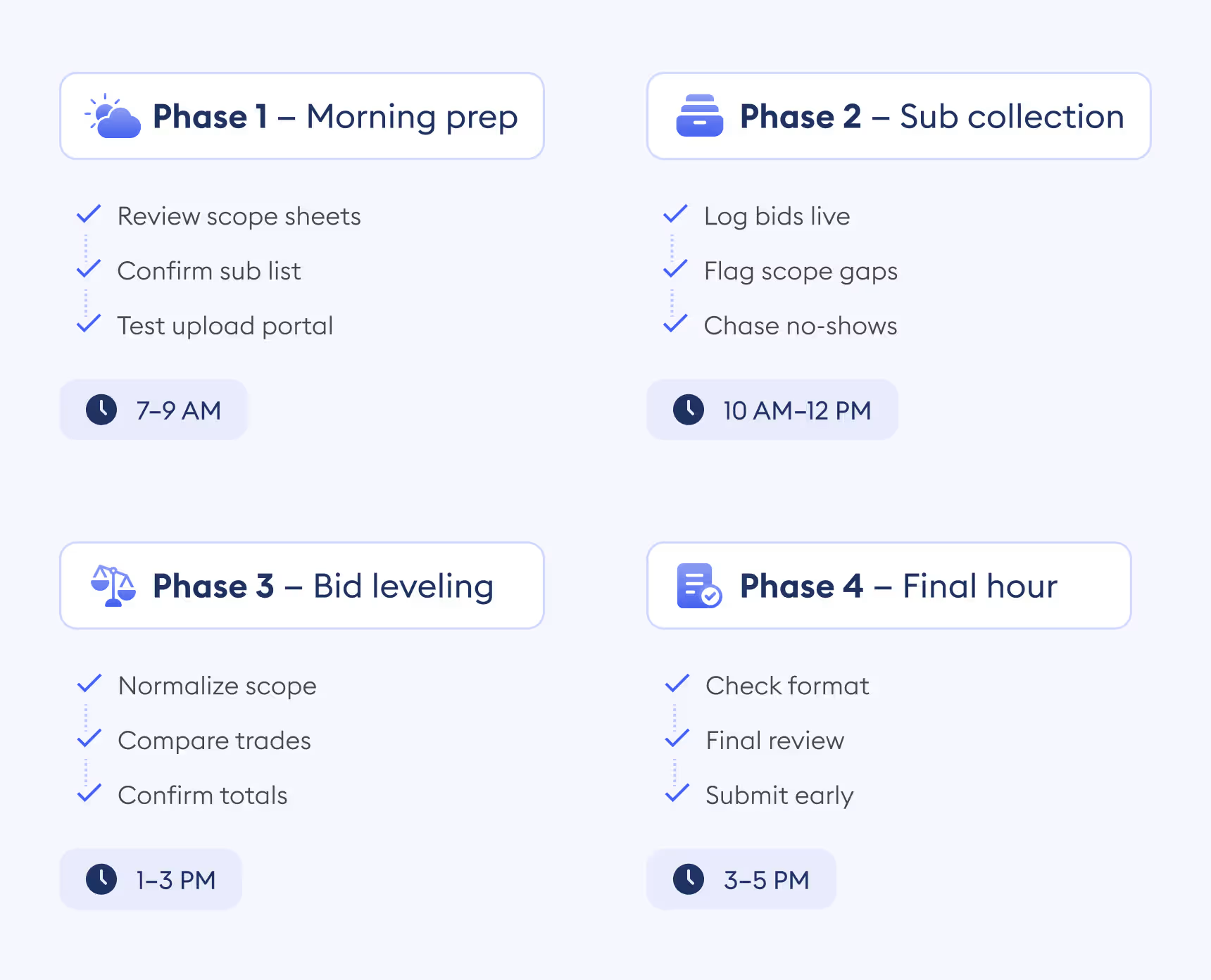
How to prepare for bid day (checklist)
Good bid day preparation doesn't start on bid day. It starts the moment documents are released — with sub outreach, scope review, and a centralized system to track bid deadlines, RFIs, and addenda. A real bid day checklist isn't a single list; it's three phases, each with a different job.
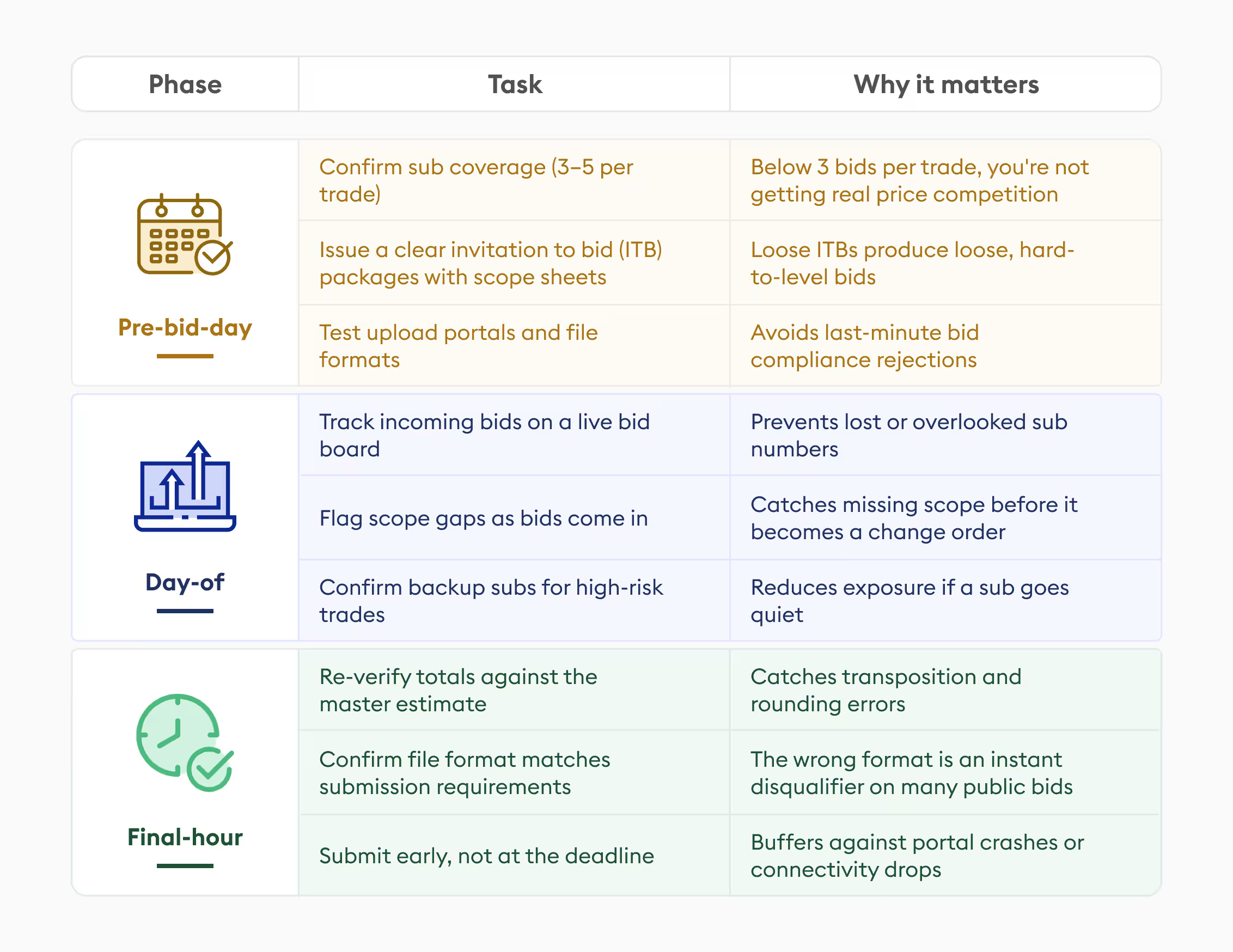
This checklist works as a standalone reference, but it only holds up if you understand why each failure point happens. That's where most bid day problems actually start.
Common bid day mistakes and how to avoid them
These are the failure points that show up on almost every bid day, regardless of project size.
Connectivity/ tech failure on bid day
Portals crash. Wi-Fi drops at the worst possible moment. Cloud storage takes longer to sync than expected.
Prevention: Don't wait until the final hour to upload. Submit at least 30–60 minutes before the deadline, and have a mobile hotspot as backup in case the office connection fails.
Missed bid submission deadlines
This is the most unforgiving failure on the list. A bid submitted one minute late is, in most cases, simply not accepted.
Prevention: Treat the deadline as 30 minutes earlier than it actually is internally. Build that buffer into your team's working timeline.
File and/or data transfer issues
Large drawing sets, corrupted PDFs, and version mismatches between team members all cause delays exactly when there's no time to spare.
Prevention: Standardize file naming and formats early. Confirm everyone is working from the latest version of the scope and drawings, not an outdated copy from three days ago.
Subcontractor backing out on bid day
A sub ghosting on bid day is one of the most disruptive things that can happen — suddenly there's a scope gap with no time to fill it.
Prevention: Keep a shortlist of backup subs per trade, confirmed in advance. Reach out to subs a day before bid day, not the morning of. With Beam AI cutting down your takeoff and estimating time, you get more runway to find replacement coverage when a sub disappears, instead of improvising in the final hour. Cold outreach at 3 PM on bid day rarely works.
Non-compliance or wrong bid format
Public and institutional bids in particular are strict about format — missing a signature page, the wrong file type, or an incomplete bid bond can disqualify an otherwise winning bid.
Prevention: Build a compliance checklist specific to each bid type and have a second person verify it before submission. Don't rely on memory from the last project.
Missing info and miscommunication
Scope assumptions that aren't written down lead to mismatched numbers between trades or a GC submitting a bid with a gap nobody caught.
Prevention: Put scope clarifications in writing and circulate them to every bidding sub, not just the ones who asked the question.
Bid day best practices for general contractors
The GCs who consistently win treat bid management as a system. Not a process that gets rebuilt from scratch every time a new bid drops.
That means having:
- Contingency plans for the trades most likely to fall through.
- Using bid analytics to know which subs actually show up versus which ones burn your time.
- Running a live bid board, not a shared inbox and a spreadsheet somebody updates when they remember to.
This is exactly what Beam AI's bid tracker is built for. Instead of chasing sub bids across email threads and text chains, the bid tracker gives the estimating team a single place to log, compare, and level incoming numbers. It's the difference between having a bid board and having to build one mid-day when things start moving fast.
Hard-bid commercial work commonly carries 3–5% of direct costs as contingency to absorb minor scope shifts and last-minute pricing changes. That's not padding; it's a deliberate line item, not a number buried in the markup.
How early should you start the bidding process?
This depends heavily on project size, but the lump-sum bid period itself is typically only two to four weeks once documents are released. Within that window, general contractor bidding teams are expected to solicit sub pricing, level bids, and finalize numbers — which is why front-loading preconstruction workflow tasks matters so much.
A widely used industry hit ratio is around 5:1. For every five jobs bid, contractors typically win one. That ratio improves significantly when bid coverage and leveling are handled early instead of compressed into the final 48 hours.
What are the risks and limitations associated with relying on manual bid-day processes?
Even with a solid checklist, manual bid day processes carry real risk. Spreadsheets get out of sync. A scope clarification sent by text doesn't reach every sub. One missed email means a trade goes uncovered, leaving no time to fix it.
These aren't edge cases. They're the default failure mode of any process built on email threads and shared inboxes.
The contractors who reduce this risk aren't the ones working harder on bid day — they're the ones who built a system that doesn't require heroics to function.
Beam AI removes several of the most common manual failure points. It is an AI-based takeoff and estimating software that helps both cut down turnaround time and manage bids across their entire lifecycle with its built-in bid dashboard.
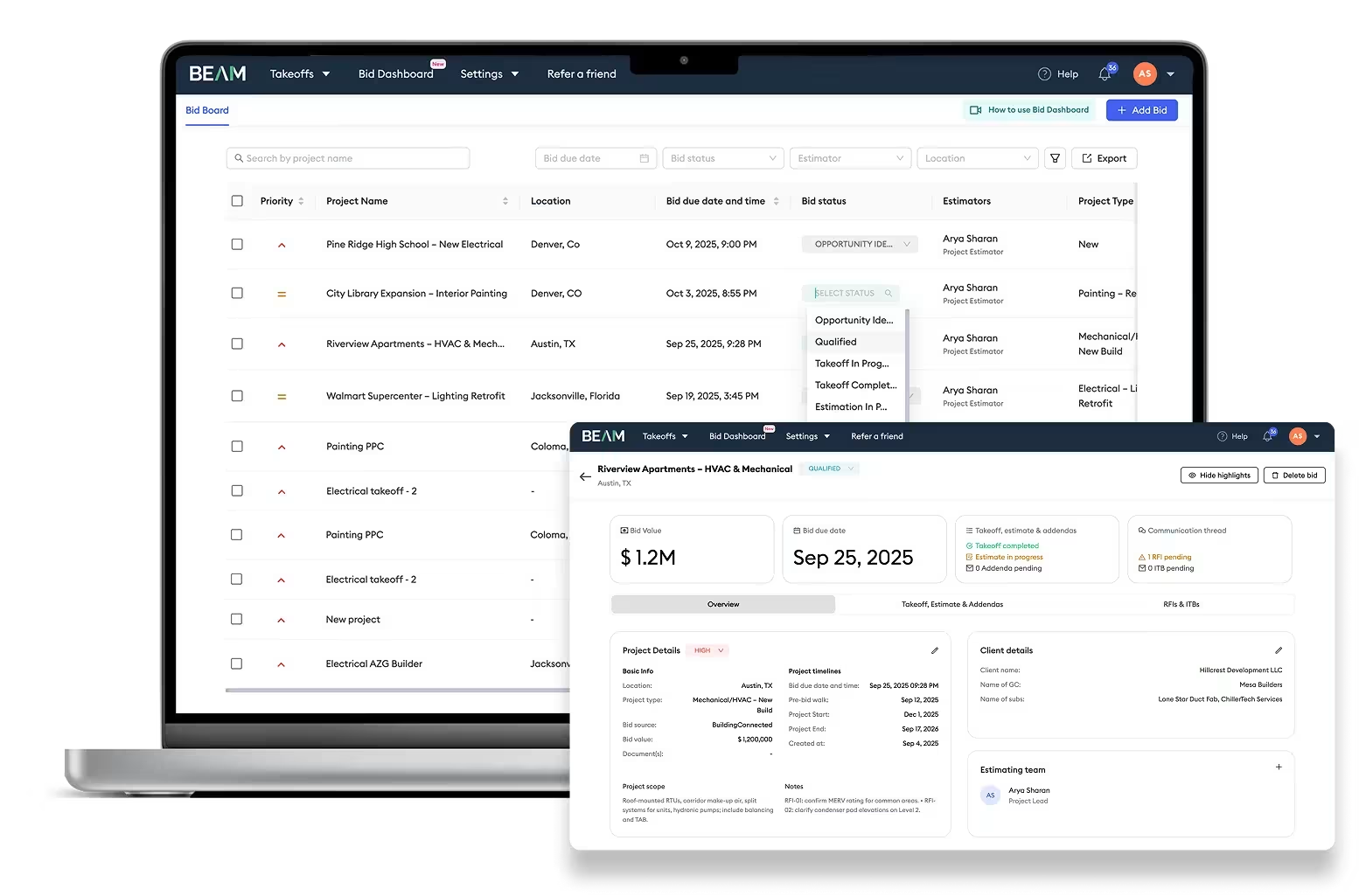
The two takeoff models that Beam AI offers (Done-for-you and Do-it-yourself) shorten the estimating runway, so there's more time for bid management. And the bid tracker keeps sub coverage visible instead of buried across five different communication threads. Over time, using a bid tracker helps vet the right projects to bid on and win more business.
The result isn't a perfect bid day, but one in which the problems that do come up are quite manageable.
These aren’t just our claims. The team at Steel West were spending an average of 5 hours per estimate, making the process highly time-intensive. This reduced the team’s ability to focus on refining bids, managing active projects, and pursuing additional opportunities. After using Beam AI, they are now saving about 75% of the takeoff time, which has freed them up to bid on more projects and improve their bid volume by 34%.
Curious to read what other value Beam AI brings to construction businesses’ estimating and bidding workflow? Read our success stories here.
Conclusion
Bid day problems follow predictable patterns: tech failures, missed deadlines, file issues, sub ghosting, compliance errors, and miscommunication. Proper planning from the beginning is the only way to prevent them. A structured bid day checklist, real sub coverage, and early preparation fix most of them before they happen.
The contractors who submit clean, competitive, on-time bids aren't the ones who hustle harder in the final hour. They're the ones who treated bid day as the last step of a system — not the only step.
Beam AI helps build that system. From instant DIY takeoffs for HVAC, plumbing, and steel, to DFY takeoff and estimate workflows across 15 trades with 24 to 72 hours turnaround, to a dedicated bid tracker that keeps the entire team working from the same picture — it's designed for the part of construction bidding that spreadsheets were never built to handle.
Schedule a demo with us today to see how it works.



.jpg)