





“Asphalt estimating is the process where you follow step-by-step calculations of all the materials, labor, equipment and overall costs needed to complete a paving job. You start with the asphalt takeoff, which allows you to make your quantity takeoff, followed by calculating your cost and creating a bid that allows contractors to deliver winning and profitable proposals.”
Winning profitable paving jobs starts long before the crew arrives on-site. It begins with an accurate estimate. Whether you're bidding on a parking lot, roadway, commercial development, or residential driveway, even a small quantity error can reduce your profit margin or cost you the project.
This is where paving estimating software becomes essential. Paving estimating software is a digital solution that measures project quantities, calculates materials, supports paving cost estimation, and streamlines the entire paving estimation workflow. Modern platforms now use AI to automate measurements, reduce manual errors, and help contractors bid on more projects in less time.
If you're looking to improve your asphalt estimation process, understand the asphalt takeoff process, or explore how an AI paving estimator can speed up estimating, this guide walks you through every step.
What Is Paving Estimating Software and Why Do Contractors Use It?
All estimates must begin with a correct project quantity. Paving estimate software provides contractors with an all-in-one solution to measure paving areas, compute asphalt volumes, estimate required materials, and prepare compelling bids. No manual takeoff necessary. Paving contractors will often spend hours poring over dozens of pages, taking hand measurements, and entering the data into spreadsheets to calculate a total. However, even the best teams may still make mistakes.
With modern paving estimating software, many of these manual processes are automated. Instead of manually drawing measurements for every parking lot, sidewalk, curb, or road, contractors can quickly derive all quantities digitally and compile them for standardized reporting.
And today, many software options include artificial intelligence. The use of AI for paving estimating allows the software to automatically detect paving components on construction drawings and pull all associated quantity measurements.
What this means for busy estimators: By replacing manual measurements with AI-based workflows, estimators can:
- Complete quantity takeoffs faster
- Improve bid accuracy with consistent measurements
- Collaborate more effectively across teams
- Handle drawing revisions with less manual effort
- Increase bidding capacity without adding headcount
Instead of spending hours measuring plans, estimators can focus on higher-value work like refining pricing strategies, coordinating with subcontractors, reviewing project risks, and preparing more competitive bids.
The impact is measurable. For example, Paved Assets, an asphalt maintenance contractor, used Beam AI to eliminate up to 10 hours of on-site measurements per property, accelerate proposal turnaround, and bid on more projects with greater confidence - all while maintaining accurate estimates.
Why Accurate Paving Takeoffs Matter Before You Start the Asphalt Estimation Process
Every estimate is only as accurate as the quantities behind it. If the measurements are wrong, every material calculation, labor estimate, and equipment cost will also be inaccurate.
That’s why a precise paving takeoff is the bedrock of any successful estimate. Long before they’re able to apply prices to any item, contractors need to ensure they have accounted for all paving areas, specified pavement thicknesses, base materials used, and verified project requirements.
For a detailed guide on improving quantity accuracy, read the accurate paving takeoff blog
Accurate takeoffs become even more valuable when projects include multiple revisions. Instead of manually comparing every updated drawing, modern AI-driven workflows can automatically detect plan changes and highlight quantity differences.
“The National Asphalt Pavement Association (NAPA) says that the proper planning and use of materials result in high-quality pavement, and at the same time, contractors will minimize waste during the construction of the project,” a paper published on “Materials and Design of Asphalt Concrete” says.
Likewise, the Federal Highway Administration (FHWA) said: “Proper selection, quantity calculations, and planning of the required material are vital parts of concrete construction.”
Each measured element contributes directly to the overall paving cost estimation. Missing even one scope item can significantly impact profitability.
The SMART-PAVE Framework for the Asphalt Estimation Process
To simplify estimating, use the SMART-PAVE Framework - a structured approach that breaks the asphalt estimation process into clear, repeatable steps.
SMART-PAVE stands for:
- S – Study the project documents
- M – Measure all paving quantities
- A – Assess pavement thickness and materials
- R – Review labor, equipment, and production rates
- T – Total project costs
- P – Price, overhead, and profit
- A – Analyze project risks
- V – Validate quantities
- E – Execute the final bid
Adhering to this approach ensures each paving estimate is prepared using a consistent, proven estimating procedure, leading to fewer skipped tasks and greater consistency across your estimates.
Step 1: Study the Project Documents Carefully
The first step is not to reach for a measuring tape, but to first read all the available project documents. The reason behind many an estimation error lies in a contractor measuring things they have no real use for until they understand the project's scope.
Start with:
- Site plans
- Grading plans
- Utility drawings
- Pavement schedules
- Cross sections
- Project specifications
- Bid instructions
- Addenda
Make sure to review any notes on pavement type, compaction criteria, asphalt mix designs, layer depths, drainage needs, and construction sequence. Many large commercial developments involve several drawing revisions. Manually comparing all drawings will significantly eat into your estimating time.
An automated AI paving estimator tool can recognize and alert you to changes, letting estimators zoom in on only the changed quantities.
Identifying potential issues early in the process can help avoid miscommunications down the line regarding project limitations such as phased construction, limited access, environmental requirements, and other factors that will impact an asphalt bid.
Step 2: Perform the Asphalt Takeoff Process
Once you've reviewed the plans, begin measuring every paving component. The asphalt takeoff process involves extracting quantities directly from construction drawings to estimate material, labor, and equipment requirements accurately.
Typical measurements include:
- Parking lots
- Roadways
- Sidewalks
- Drive aisles
- Curbs
- Gutters
- Medians
- Crosswalks
- Bike lanes
- Aprons
Quantities should be coordinated with the project plans and specifications. Even today, most contractors still take these quantities by hand using digital scales and spreadsheets. This process can get the job done, but for projects with hundreds of sheets, it can become incredibly tedious.
Modern paving takeoff software can automate these quantity calculations. This Software can identify paved areas on PDF plans, group quantities by scope, and export a report for the estimator to review before bidding the work.
Instead of spending hours tracing all the paving and determining the area, the estimators can review AI quantities and focus on pricing.
Step 3: Calculate Asphalt Quantities and Tonnage
After completing measurements, calculate the amount of asphalt required.
We’re now transforming those measured pavement area totals into material volumes that vendors would then schedule to produce and deliver.
Asphalt Tonnage Formula
Asphalt Tonnage = (Area × Thickness × Density) ÷ 2,000
Or, using a commonly accepted field calculation:
Tonnage = (Square Feet × Thickness in Inches × 145) ÷ 2,000
Where:
- Area = Total pavement area
- Thickness = Compacted asphalt thickness
- Density ≈ 145 lb/ft³ (varies by mix)
- 2,000 = Pounds per ton
Example
Suppose a contractor needs to pave:
- Area = 50,000 sq ft
- Thickness = 3 inches
Tonnage:
(50,000 × 3 × 145) ÷ 2,000 = 10,875 tons
Make sure to check the project’s recommended mix design and density before ordering any materials. These elements will differ in mix design and also with application.
The tonnage estimates you obtain will also affect everything from plant scheduling and trucking to your projected timeline and actual paving costs.
Step 4: Evaluate Material Requirements Beyond Asphalt
Asphalt is only one part of the estimate. A complete asphalt estimating workflow should also account for every supporting material required to complete the project successfully.
These commonly include:
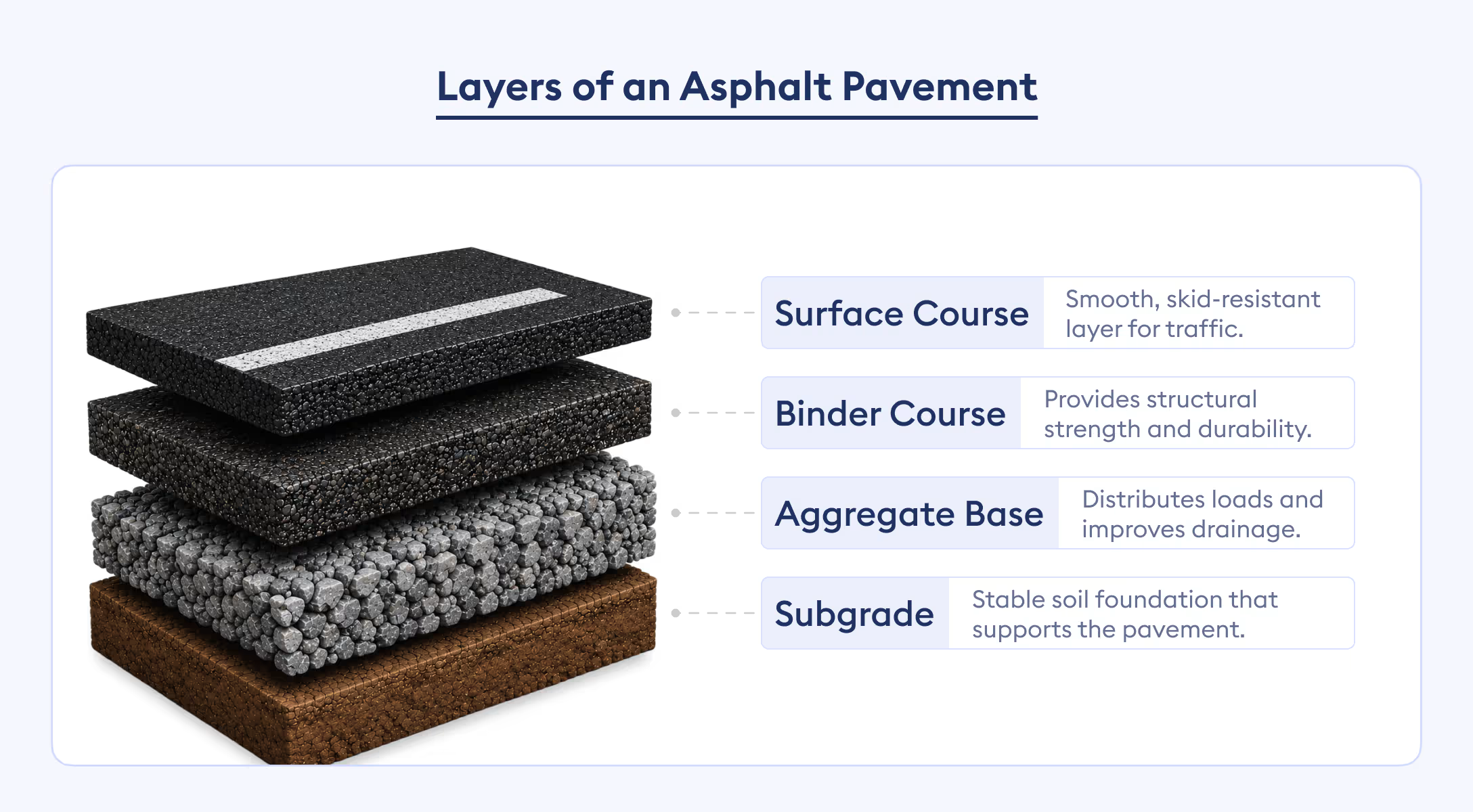
- Aggregate base
- Tack coat
- Prime coat
- Binder course
- Surface course
- Geotextiles
- Stabilization materials
- Edge restraints
- Joint sealants
- Pavement markings
Every material will also impact procurement, logistics, installation sequencing, and the overall project budget.
Many new paving estimating software applications will enable you to organize those quantities into defined reports for your estimators to utilize in preparing your bid more accurately and with less data entry.
Step 5: Estimate Labor Costs for Every Activity
After determining the quantity of material, estimate the time required to complete all operations or the paving job. As you already know, labor is one of the largest portions of the total estimation, and if we do not consider the efficiency of the team of workers, they will certainly prove costly to the job owner and us.
Work on the tasks individually and do not use an average hourly rate. The following is typical for each task.
- Site preparation
- Milling and removal
- Base placement
- Asphalt paving
- Rolling and compaction
- Joint construction
- Striping and finishing
- Cleanup
Estimating crew size is challenging because asphalt productivity varies depending on factors such as job size, time of year, site accessibility, traffic control, and equipment availability. It’s always useful to evaluate past project data to assess crew-size productivity.
Step 6: Calculate Equipment and Operational Costs
Each paving job involves the use of certain machinery and equipment. Estimating engineers should consider not only rental costs but also the equipment owner's operating and ownership costs.
Include costs for:
- Asphalt pavers
- Rollers
- Milling machines
- Skid steers
- Excavators
- Dump trucks
- Sweepers
- Fuel
- Maintenance
- Equipment mobilization
In larger commercial projects, you'll need several paving trains. When you involve multiple machines, logistics become complicated. Make sure your paving estimate workflow addresses the additional costs.
Step 7: Account for Waste, Risk, and Contingencies
Because no two projects are ever quite the same, estimators will also make provisions for variable conditions such as weather changes, fluctuating or rising material costs, design changes, or varying existing site conditions that may influence an increased budget:
- Material waste
- Asphalt shrinkage
- Rework
- Weather delays
- Traffic management
- Unexpected excavation
- Price escalation
- Minor scope changes
A simple logical clause that adds strength to our bids without pushing our pricing out of the competitive window.
Step 8: Add Overhead and Profit
Indirect Costs Direct costs are only one piece of the pie. You should also recover business costs and a consistent profit with your quote. Some common overheads include:
- Office expenses
- Insurance
- Software subscriptions
- Project management
- Administrative staff
- Safety programs
- Licensing
- Business development
And last but not least, set an appropriate profit margin, considering market rates, competition, project complexity, and the risks involved.
Step 9: Review and Validate Before Submitting the Bid
Before your estimates are accepted, you may wish to perform some systematic quality checks. A simple form of these checks is to pose questions like:
- Have all paving areas been measured?
- Do quantities match the latest drawings?
- Were all addenda incorporated?
- Are production rates realistic?
- Have subcontractor quotes been updated?
- Were waste factors included?
- Has the pricing been verified?
Nowadays, most contractors use a digital review workflow to verify quantities before the submittal. This final review process helps eliminate errors that cost big dollars, builds client trust, and boosts profits.
Key Factors That Influence Paving Cost Estimation
How an AI Paving Estimator Improves the Paving Estimation Workflow
Estimating teams today face tighter bid deadlines, more project revisions, and increasing competition. Manual quantity takeoffs simply don't scale when multiple bids are due each week.
This is where an AI paving estimator transforms the estimating process.
Instead of manually tracing every paved area, AI automatically identifies paving features from construction drawings, measures quantities, and organizes outputs for estimator review.
An AI paving estimator helps contractors:
- Capture quantities faster
- Reduce manual measurement errors
- Compare revised drawings automatically
- Standardize estimating workflows
- Spend more time optimizing pricing instead of measuring plans
This gives the estimator more time for what’s important - price and the bid itself- but can cut out manual tasks that go on between those steps. AI isn’t the estimator; it enhances the estimator.
Software such as Beam AI also allows teams to review AI-based quantities, make edits where needed, and export structured reports directly into estimating workflows.
Common Asphalt Estimating Mistakes That Reduce Profitability
Errors can slip even the experienced estimators, which can weaken the bid. Pay attention to the following common warning signs that might blow the bid.
- Missing paving areas during takeoffs
- Using outdated drawing revisions
- Incorrect pavement thickness assumptions
- Ignoring waste factors
- Underestimating trucking requirements
- Forgetting striping or ancillary work
- Applying outdated material pricing
- Inconsistent labor production rates
Following a standardized asphalt estimating process helps reduce these errors and improves estimate consistency across projects.
Manual vs. Digital vs. AI Paving Estimating Software
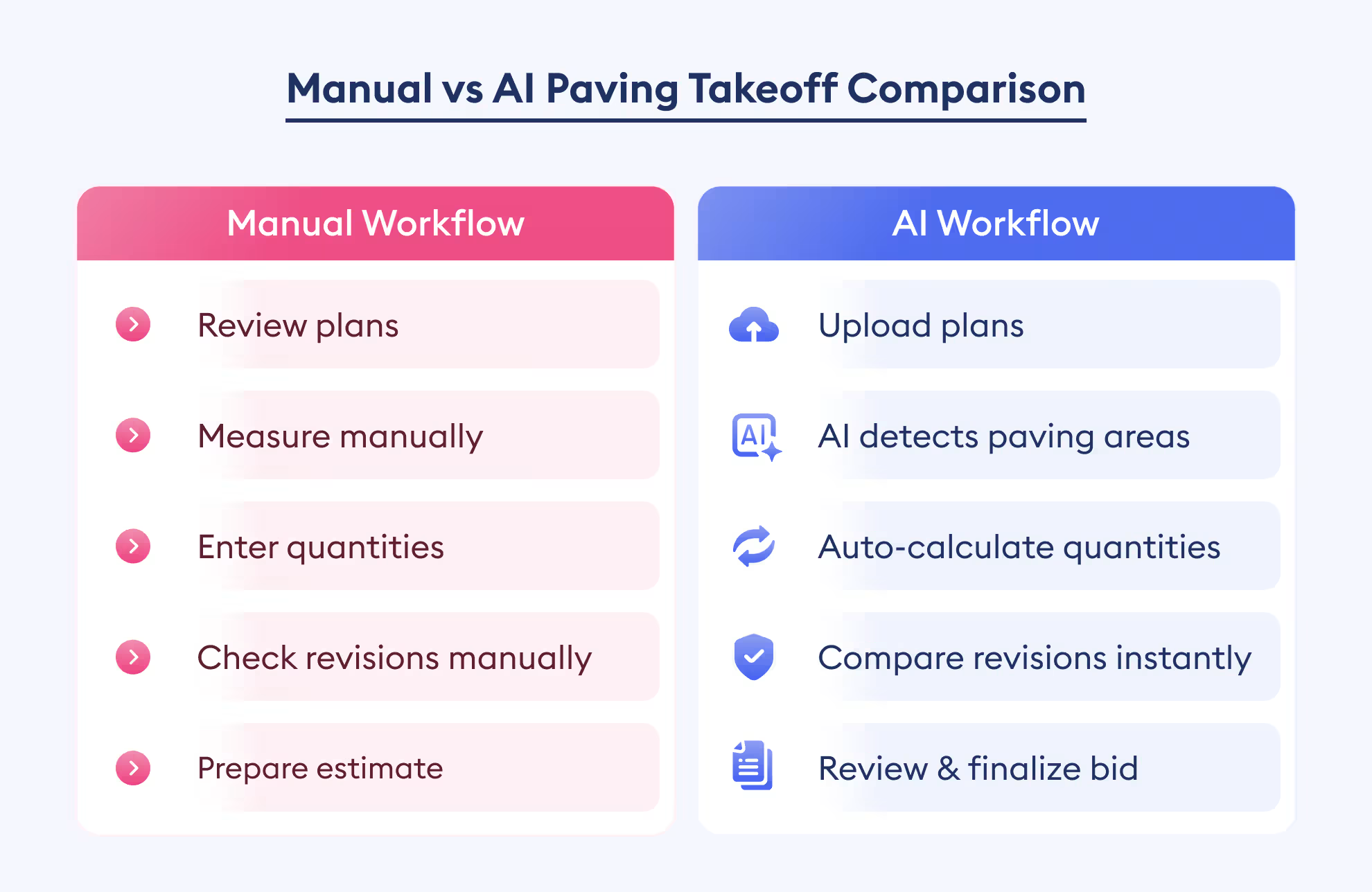
Contractors pursuing multiple projects each month realize clear efficiency gains using automated workflows, all while maintaining control over their estimates.
What Features Should You Look for in Paving Takeoff Software?
Not every estimating solution provides the same capabilities. When evaluating paving takeoff software, look beyond basic measurement tools.
Prioritize features such as:
- AI-assisted quantity extraction
- Automatic plan revision comparison
- Cloud-based collaboration
- Custom reporting
- Quantity verification tools
- Excel exports
- PDF markup
- Measurement history
- Project version control
- Multi-user access
The best paving takeoff software integrates seamlessly with your existing estimating process while reducing repetitive manual work.
Best Practices to Improve Asphalt Estimating Accuracy
Improving your estimated quality without reinventing the wheel, small tweaks in a workflow will likely yield more improvement than you expect. Try following best practices like:
- Always review project specifications before measuring.
- Use standardized estimating templates across projects.
- Verify every quantity against the latest drawing set.
- Maintain historical production and pricing data.
- Review estimates with a second estimator whenever possible.
- Update material prices regularly.
- Track estimate accuracy against completed projects.
- Adopt digital tools that reduce repetitive manual tasks.
By standardizing processes, you will find more accurate estimates and better-performing bids.
Conclusion: Build a Smarter Asphalt Estimation Process
A successful asphalt estimation process combines accurate quantities, realistic production assumptions, and disciplined cost analysis. When every step of the paving estimation workflow follows a consistent process, contractors can submit more competitive bids with greater confidence.
Modern paving estimating software makes this process faster and more repeatable by reducing manual effort, improving collaboration, and helping teams respond quickly to plan revisions. Combined with an AI paving estimator, contractors can focus less on repetitive measurements and more on strategic decision-making.
If your team wants to improve paving cost estimation, streamline the asphalt takeoff process, and increase estimating capacity, adopting AI-powered estimating tools can provide a significant competitive advantage.





.jpg)