




Enterprise construction estimating software for large GCs
Construction demand hasn’t slowed down. If anything, the pipeline has only gotten denser over the last few years. The challenge is on the execution side.
Most large general contractors face a familiar constraint. Bid volumes are up, projects are getting more complex, and timelines are tighter. At the same time, the estimating function hasn’t scaled at the same pace. According to the U.S. Bureau of Labor Statistics, between 2024 and 2034, about 649,300 openings are projected each year, and that shortage extends into preconstruction as well. Estimators are harder to hire, take months to ramp, and are often stretched across multiple bids at once.
In that environment, estimating is no longer just about getting numbers right. It’s about how many opportunities a team can realistically process, how consistently those estimates are built across offices, and how much visibility leadership has into the numbers being submitted. With the labor shortage rising and the cap on estimating capacity, contractors are being forced to leave good opportunities on the table. Moreover, hiring is not the solution here. It takes time, bandwidth, and trained people, which the market is in decline for.
This is where enterprise construction estimating software starts to play a very different role, not as a tool for individual estimators, but as infrastructure for how estimating operates across the business.
How enterprise construction estimating software differs from project-level tools
A project-level estimating tool is usually built around a single estimator or a small team. It helps them take off quantities, build a cost estimate, and manage a bid. That can work well for smaller contractors.
But large GCs handling multiple projects, across multiple locations and teams, need something broader. They need enterprise preconstruction technology that supports this. The difference between project-level tools, meant for smaller team,s and enterprise construction estimating software is simple.
Project-level tools help an estimator finish a bid and push it forward. Project after project. Enterprise construction estimating software helps large organizations manage estimating and make the process repeatable.
Understanding this difference matters because not all construction estimating software is built for the scale large GCs require. These large contractors don’t just need speed; they need control and trust in accuracy. These teams have multiple projects coming in every day; they need to understand how numbers are built, where addenda come in and what changed, all the assumptions that are taken, and whether teams across offices are working from the same playbook.

Organization-wide estimating responsibilities
Enterprise-level estimating is never confined to a single project. It spans different locations, project types, and multiple business units. Moreover, multiple teams are working on various projects. One might work on healthcare projects in Texas, another on mixed-use buildings in California, and a third on commercial builds in the Midwest. It’s never the same,
Without structured, organization-wide estimating workflows, each team slowly develops its own way of working. At first, that may not seem like a problem. Every office has its own habits, market knowledge, and preferred templates. But over time, the differences start to matter.
Scope may be interpreted differently. Cost structures may vary. Review processes may not match. Risk may be priced one way in one region and another way somewhere else.
An enterprise estimating platform that construction teams can use well brings these workflows into a shared system. It does not remove flexibility, but it gives the organization a common foundation for how estimates are built, reviewed, and trusted.
Multi-office collaboration and oversight
Estimating is becoming more distributed, especially in large GCs. And as it becomes more distributed, it becomes harder to manage. Teams need to be kept up to date on everything and constantly require up-to-date data. This includes past estimates, reviewing each other’s work, and moving quickly without duplicating work and effort.
In these situations, leadership visibility also becomes extremely important. This does not include just the final numbers or revenue, but the thought process behind every project. All assumptions used. Where were there tight margins? Which bids are at risk? What teams are overloaded?
This level of visibility is difficult to achieve when estimates are spread across spreadsheets, emails, file folders, and disconnected tools. These are some of the most common limitations in legacy estimating workflows that large contractors run into as they grow.
Financial and operational risk at scale
For large GCs, small inefficiencies do not go unnoticed. A few percentage points of inconsistency across many bids can become real financial exposure.
That is why modern estimating platforms that construction teams are evaluating today are judged on more than individual features. Large contractors want to know whether the platform can support consistency, visibility, governance, and performance at scale, and to estimate software requirements across the organization.
Technology categories supporting enterprise estimating
Before choosing a platform, it helps to understand the different types of technology large contractors already use. This is especially useful when comparing estimating software for large contractors or enterprise estimating platforms.
Most enterprise teams do not rely on one tool for everything. They usually have a stack of systems that support takeoff, estimating, operations, cost management, document control, and project delivery.
Heavy civil and infrastructure contractors may use platforms like HeavyBid for detailed bid build-ups, crews, equipment details, production rates, and complex scope structures. Tools like B2W Estimate are often used where estimating connects closely with field operations, job costing, and project performance. AGTEK is commonly used for earthwork, sitework, and quantity analysis, especially where accurate quantities drive the rest of the estimate.
A newer category is AI construction estimating software, which is increasingly seen as one of the best solutions to automate construction estimates, since the focus is on automating repetitive takeoff and estimate preparation work. This is where the AI estimating vs traditional estimating conversation becomes important. Many traditional construction estimating systems help estimators manage manual workflows more efficiently. AI-led platforms focus on removing a large part of that manual work, especially quantity extraction, so teams can process more bids without stretching estimators even further.
For large GCs, the right answer is rarely one tool that does everything. It is usually a connected estimating stack that supports the way the business actually operates.
The same pattern is playing out across industries — see the AI-adoption takeaways from SaaStr Annual 2026.
Auditability as a core requirement in enterprise construction estimating software
One of the first things that comes up in large estimating teams is traceability.
When an estimate changes, it’s important to know what changed, why it changed, and who made that decision. In many traditional workflows, this information is either buried in spreadsheets or lost entirely.
Traceable cost development and change history
A good construction estimating audit trail allows teams to track how an estimate develops. This becomes extremely important when large GC teams are dealing with addenda, value engineering, changes, or last-minute pricing updates.
Instead of reworking entire estimates or trying to remember what changed between versions, teams can focus on the specific areas that need attention.
This is not just about documentation. It saves time. It reduces confusion. It gives reviewers a clearer path to understand the estimate before it goes out.
Review checkpoints and approval workflows
Enterprise estimating is rarely a one-step process. Estimates often move through junior estimators, senior estimators, project executives, operations leaders, and sometimes leadership before submission.
Without structure, these reviews end up happening haphazardly; over email threads, spreadsheets, and fragmented tools. People leave reviews and comments in different places. Versions get renamed and remade. Final changes start happening too close to the deadline.
That slows the process down and increases the risk of errors.
A stronger enterprise workflow gives all teams with clear checkpoints. Everyone knows the process; what needs to be reviewed, who the POC is, and where all the latest versions live.
Compliance readiness and documentation
Documentation is not an optional step for large GCs. Since their projects hold more revenue value, everything needs to be in check. Whether it is an internal review, client audit, or future reference, estimates need to have a clear record behind them.
Enterprise construction estimating software supports efficiency and more here. It can help create a clear record of all changes, reviews, approvals, and decisions taken by POCs.
Performance at scale in high-volume bid environments
One of the biggest shifts in recent years has been the increase in the volume of bids teams are expected to handle.
It’s no longer realistic for an estimator to work on one project at a time. Most teams are juggling multiple bids, each with its own deadlines and revisions.
Handling concurrent bids across teams
Traditional estimating workflows are sequential. You have one estimator doing one takeoff and one estimate at a time.
This model becomes a massive bottleneck when you’re trying to work at scale and when bid volumes rise. Teams then end up making difficult decisions, the ones where opportunities are ranked, and some are not even pursued. This is not because it was a bad fit, but because there are not enough hours to get the estimate done in the first place.
Modern multi-project estimating software can help teams by performing multiple takeoffs at the same time. There are many tools like Beam AI, that automate the entire takeoff and estimate entirely, helping estimators work on multiple bids at the same time.
This changes the capacity equation entirely. Teams now don't need to rely on adding more headcount to pursue more work.
Managing large datasets and complex scopes
Enterprise projects involve large plan sets, detailed specifications, multiple trades, and repeated revisions. The software has to handle that volume without slowing the team down.
When systems start to struggle under heavier workloads, teams fall back to their old manual workarounds. Some end up downloading files locally, some track their changes on separate spreadsheets, and more. That is how fragmentation creeps back in.
System responsiveness under enterprise workload
Speed is easy to overlook until it becomes a problem. If a system lags during review or struggles with large files, it disrupts the estimating rhythm.
At enterprise scale, responsiveness and speed are not a good to have. Just like for any other contractor, it affects bid win rates, review cycles, and general volume coverage.
Permission controls and access governance
As more people get involved in the estimating process, controlling access becomes critical.
Role-based access across estimating functions
Not every user should have the same level of access. Estimating software permission controls allows organizations to define roles clearly. Some users can edit estimates, others can review, and some can only view.
This structure helps maintain accountability without slowing down collaboration.
Protecting standardized cost structures
Cost data is one of the most valuable assets a contractor has. It reflects years of vendor relationships, production experience, regional knowledge, and lessons learned from past projects.
Without strong construction data governance software, that knowledge can become fragmented. One office may use one pricing assumption. Another may use a different template. A senior estimator may have a cost structure that never makes it into the shared system.
Over time, this makes estimates harder to compare and harder to trust. At this scale, that cost data also has to be kept secure inside the platform.
Balancing collaboration with control
The goal is not to lock everything down. Estimators still need room to think, adjust, and apply judgment.
The goal is to create a system in which collaboration occurs within clear boundaries. That is what keeps estimates flexible enough for real projects, but controlled enough for enterprise teams.
System integrations across the construction stack
Estimating does not happen in isolation. It sits between preconstruction, project management, and financial systems.
Data exchange with project and cost systems
Strong construction system integrations estimating capabilities ensure that data flows seamlessly between systems. Estimates can feed directly into project budgets, reducing duplication of work.
Interoperability with document and model workflows
Drawings, BIM models, and specifications are rapidly changing. Integrated systems help teams keep estimating work connected to the latest documents and project information.
This is especially important as more contractors work with model-based quantities, coordinated drawings, and digital document workflows.
Reducing manual transfer between systems
Every manual step creates a chance for something to go wrong. A cost code can be copied incorrectly. A quantity can be missed. A pricing update can stay in one file and never make it into the final version.
Integrations reduce those handoffs, improving both speed and reliability.
Data governance and standardized cost structures
One of the defining characteristics of enterprise estimating is how data is managed.
For smaller teams, cost knowledge often lives in people’s heads, personal spreadsheets, or local templates. For large contractors, that is too risky.
Central ownership of cost knowledge
Large contractors need a single source of truth for cost data. Standardized cost structures that construction teams can rely on help ensure everyone works from the same baseline.
Now, this does not mean every bid is priced in the same way. This means the organization has a consistent structure and database for how prices are organized, reviewed, compared, and reused.
Consistency across projects and regions
Without standardization, estimates can vary widely across teams. Over time, that affects competitiveness, profitability, and leadership confidence.
A consistent structure makes it easier to compare similar projects, understand regional differences, and identify where assumptions may need to change.
Historical data reuse for better accuracy
One of the biggest boons of enterprise construction estimating software is the ability to go back to past data. Instead of teams starting everything from scratch every time, estimators can build on assumptions that have been proves previously.
That helps teams move faster without losing the benefit of experience.
What enterprise estimating software looks like in practice
Implementing an enterprise system is not just about buying technology. It is about changing how estimating operates.
The best enterprise construction estimating software rollout usually starts with a pre-decided workflow. How should estimates be built? What cost structures should the team be using? How are revisions handled or should be handled? What kind of visibility does leadership need? Where does all the data go when bids are won or lost?
Once these workflows are sorted out, tech has a better chance of adoption.
Organization-wide rollout
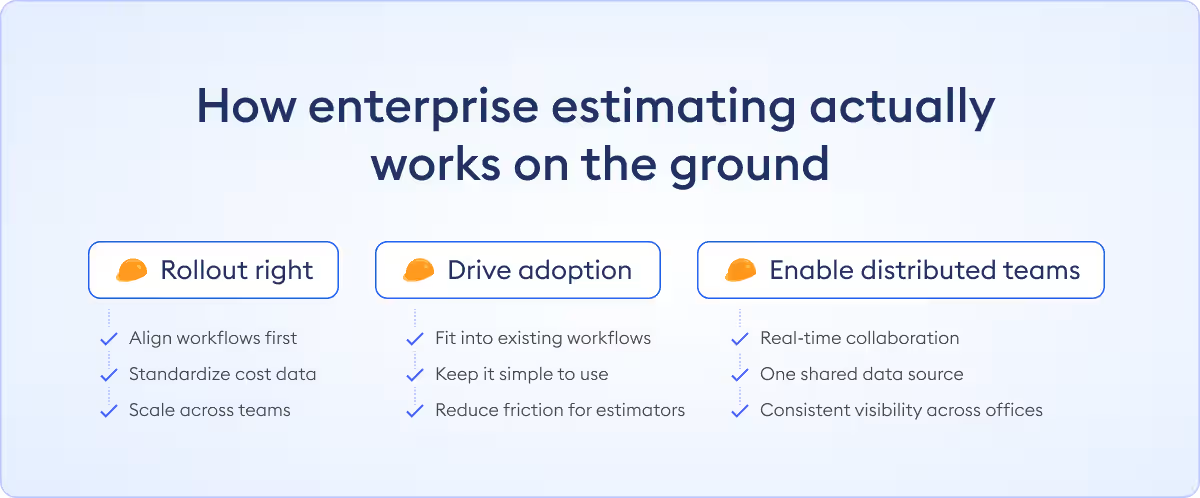
Successful enterprise construction estimating software adoption and implementation start with alignment. Define workflows, standard cost data, and review steps, then scale across teams.
If offices across locations enter their own processes in the system without prior alignment, the company may end up with a tool that does not work and even wider fragmentation.
Change management
Adoption is often the biggest challenge.
Estimators will not use a tool just because leadership chose it. The platform has to make its work easier. It has to fit into existing workflows, reduce friction, and help them move faster without making them feel like they are losing control. Estimators won't adopt a tool just because leadership picked it - which is why making construction software actually stick takes a real rollout plan.
That human side of rollout matters just as much as the technical side.
Supporting distributed teams
Cloud-based platforms like Beam AI make it easier for teams across locations to collaborate in real time. Everyone can work from the same data, with the same visibility, instead of chasing file versions or waiting for updates.
For distributed estimating teams, that can make the difference between a clean review process and a last-minute scramble.
Operational outcomes of organization-wide estimating systems
When these systems are implemented well, the impact is practical and easy to see.
Estimates become more consistent. Review cycles become easier to manage. Leadership gets better visibility. Cost data becomes easier to govern. Teams spend less time chasing information and more time making decisions.
Consistency across bids
Estimates become more aligned across teams, reducing variability in how scope is interpreted and how costs are structured.
This does not remove estimator judgment. It gives that judgment a stronger foundation.
Better decision visibility
Leadership gains insight into how estimates are built, where risks exist, which bids are moving, and where teams may need support.
That visibility is especially important when the organization is deciding which opportunities to pursue.
Greater control over cost-development
Standardization improves confidence in the numbers. Teams can see how costs are built, how assumptions are applied, and how changes move through the estimate.
This creates a stronger connection between estimating, review, and business decision-making.
Scalable estimating capacity
This is where the biggest change happens. By reducing manual effort and enabling parallel workflows, teams can handle more bids without increasing headcount at the same pace.
Beam AI, for example, allows estimators to offload repetitive takeoff work and focus more time on pricing, risk evaluation, and strategy.
That is the real value of scalable estimating. It gives teams more room to pursue the right work.
Where Beam AI fits as an enterprise construction estimating software
Enterprise estimating systems are evaluated on multiple things, structure, governance, and scale. But in reality adoption comes down to one simpek thing, whether the adopted software actually removed the bottlenecks it claims to. Does it actually makes the estimating process smoother.
This is where Beam AI has begun to fit into conversations about enterprise construction estimating software.
Moving beyond project-level takeoffs
For most large GCs, the biggest time sink in estimating is still quantity takeoff. Even with digital tools, estimators spend hours clicking through plans, measuring, and validating quantities. It’s repetitive work, but it directly impacts how many bids a team can take on.
Beam AI approaches this by removing the manual process entirely. All you need to do is upload plans, define scope, and AI does the rest of the work for you. For enterprise teams, this means takeoffs are no longer a bottleneck or a sequential activity tied to individual estimators.
It becomes something that can run in parallel across multiple projects.

Supporting performance at scale
At the enterprise level, the question is not whether a system works on a single project. It’s whether it holds up across dozens of bids running at the same time.
Beam AI is built to support performance at scale, estimating software requirements. Teams can process multiple takeoffs simultaneously, track progress in real time, and avoid the backlog that typically builds up during peak bidding periods.
This has a direct impact on capacity. Instead of choosing which bids to pursue based on bandwidth, teams can expand coverage without adding headcount.
Enabling organization-wide estimating workflows
Enterprise estimating is rarely centralized in one location. Teams are spread across offices, regions, and sometimes even countries.
Beam AI supports organization-wide estimating workflows by standardizing how quantities are generated and structured. Whether a team is working out of one office or five, the output remains consistent.
That consistency becomes important when estimates move into pricing, review, and final submission. It reduces the need for rework and makes collaboration smoother across teams. Getting there still depends on applying the right estimate at each project stage.
Improving auditability and revision handling
One of the recurring challenges in enterprise estimating is handling revisions. Drawings change, addenda are issued, and teams often end up having to redo work from scratch.
Beam AI addresses this by identifying changes between versions and highlighting differences in quantities. Instead of rebuilding entire takeoffs, estimators can focus only on what has changed.
This supports a stronger construction estimating audit trail, where updates are easier to track and validate over time.
Working within existing enterprise systems
Large contractors don’t operate on a single platform. Estimating sits alongside project management tools, accounting systems, and document workflows.
Rather than forcing teams into an enterprise estimating suite they don't need to replace their entire tech stack, Beam AI is designed to fit into this environment and automate the takeoff layer directly. Outputs are structured and exportable, making them easier to integrate with existing construction systems and estimating workflows.
This reduces friction during adoption and ensures teams can incorporate AI-driven takeoffs without disrupting established processes.

Beam AI does not replace the estimator. It shifts where their time goes. Instead of spending hours on quantity extraction, estimators can focus on pricing, risk evaluation, and coordination.
At enterprise scale, that shift matters. It’s what allows estimating teams to keep up with demand without becoming the bottleneck.
Before you go
Estimating has always been a critical function in construction, but its role is changing. It’s no longer just about preparing bids. It’s about enabling the business to pursue more opportunities with greater confidence and better control over outcomes.
For large contractors, that shift requires more than incremental improvements. It requires a system that can operate at the same scale as the business itself.
That’s what enterprise construction estimating software is really about.



.jpg)