

.jpg)

Flat roofs aren't the problem; poor drainage is
Flat roofs leak because water isn't removed efficiently. In most cases, recurring leaks can be traced back to poor drainage design, inadequate slope, clogged drains, faulty flashing, or neglected maintenance. When rainwater remains on the roof for too long, it places continuous stress on the roofing system, eventually leading to membrane deterioration, saturated insulation, and interior leaks.
But understanding why this happens starts with knowing what a flat roof actually is.
A flat roof usually consists of a structural deck, insulation, a waterproofing membrane, flashing at transitions and penetrations, and a drainage system designed to move rainwater off the roof.
According to recent commercial roofing market research, low-sloped roofs accounted for more than 42% of commercial roofing installations in 2025, making them the most common roof configuration across warehouses, manufacturing facilities, retail buildings, healthcare facilities, and institutional projects.
Despite the name, a flat roof is not meant to be perfectly flat. They are built with a slight pitch so water can move toward a drainage system rather than sit on the roof indefinitely.
And that matters because flat roofs are often blamed for failures that are actually caused by poor water management.
A well-designed low-slope roof can perform reliably for decades. It can create usable rooftop space, simplify maintenance access, accommodate HVAC equipment, reduce exterior wall height, and support the clean visual profile that many commercial and contemporary buildings want.
But unlike steep-slope roofing, which sheds water quickly through gravity, a flat roofing structure depends on engineered drainage to remove water in a controlled way. That means the roof’s long-term performance is directly tied to how well the drainage path was designed, installed, and maintained.
So when people ask why flat roofs leak, the better question is this: how well has the drainage system of the building been designed, installed, and maintained?
Because in most cases, that is where the story starts.
Why flat roofs leak more often than sloped roofs
The reason flat roofs leak more often than steep-slope roofs has less to do with the roof shape itself and more to do with how long water stays in contact with the roofing surface.
On a steep roof, gravity quickly carries water away, minimizing the time water can exploit a weak seam, a cracked flashing detail, or a puncture in the roof covering.
A flat roof works differently. There, water still drains through gravity, but much more slowly, relying on subtle slopes and drainage pathways to reach designated outlets. When that drainage path is interrupted, water starts sitting where it should not, ultimately increasing the likelihood of leaks.
And that’s why the most common causes of flat roof leaks usually include:
Notice that none of these problems occur simply because the roof is flat. They all relate to how water is, or isn't, being removed from the roof.
How proper drainage design prevents flat roof leaks
On a low-slope roof, drainage design is what determines how water moves across the roof surface and exits the building.
It includes much more than just “having a drain”, and goes to includes the roof’s slope strategy, drain locations, drain sizing, overflow protection, edge conditions, tapered insulation layout, and the details that keep water from backing up at critical transitions. The International Building Code (IBC) requires roofs to include primary roof drainage systems along with overflow drainage to safely manage rainwater during heavy storms.
A roofing drainage system may include:
- Internal roof drains that collect water at designated low points and route it into the building’s storm piping
- Scuppers that allow water to discharge through a parapet wall
- Gutters and downspouts that collect runoff at the roof edge
- Tapered insulation systems that create slope where the structural deck is flat
- Crickets and saddles that divert water around curbs, skylights, and equipment
- Overflow drains or overflow scuppers that provide backup relief during heavy rain or blocked primary drains
This is why drainage design should never be treated as an accessory to the roof. Because if the drainage path is wrong, even premium flat roof materials can fail early.
Ponding water is the biggest threat to a flat roof
Ponding water is water that remains on the surface of the roof for an extended period because the roof cannot drain it away efficiently. That may happen because the roof was designed with insufficient slope, because a drain is blocked, because the deck has settled, because insulation has compressed, or because a rooftop obstruction interrupts the water path.
And, at first glance, standing water can look harmless. The membrane is still intact, the roof may not be actively leaking, and the water may appear shallow. But ponding water is one of the most destructive conditions a low-slope roofing system can experience because it affects almost every layer of the assembly.
The U.S. Environmental Protection Agency (EPA) recommends designing roofs to promote positive drainage and avoid prolonged standing water, since excess moisture can accelerate roofing deterioration and increase the risk of long-term building damage.
Over time, persistent ponding can cause:
Faster membrane deterioration - Roof membranes age faster when they remain wet for long periods.
Seam stress and separation - As water repeatedly sits at laps and transitions, seams can begin to weaken, especially on aging or poorly installed systems. Once seams open, water has a direct path into the assembly.
Saturated insulation - When water gets through the membrane or flashing, it can soak the insulation below. Wet insulation loses thermal performance, adds weight, and often has to be removed rather than dried in place.
Added structural load - Standing water is heavy and repeated ponding adds sustained dead load that can worsen deck deflection and create even deeper low spots over time.
Freeze-thaw damage - In colder climates, trapped water can freeze, expand, and stress membrane seams, flashing edges, and drainage components.
Biological growth and contamination - Dirt, algae, and organic debris accumulate faster in ponding areas, which can obstruct drains and make inspections harder.
Interior leaks and hidden envelope damage - Once water bypasses the membrane, it can travel through insulation, deck joints, and wall connections before becoming visible inside the building. Just like balancing curtain wall vs storefront glazing to ensure tall façades properly manage wind-driven rain and deflection, roofing water management must protect the entire building enclosure from systemic water infiltration.
How improper slope creates leaks, even before the membrane fails
Because flat roofs are low-slope systems, even small miscalculations can create major water-management problems.
The roof was never given enough slope in the first place
Some roofs are built with minimal pitch and no real tolerance for construction variation. On paper, the drainage path may work, but in the field, a slight dip can eliminate positive flow.
Structural settlement changes the water path
Over time, roof framing and deck systems can deflect under the weight of equipment, foot traffic, snow, or repeated ponding. Water naturally follows the lowest point, so even modest movement can redirect drainage away from where it was intended to go.
Insulation compresses under traffic or equipment
Low spots often develop around service paths, mechanical curbs, or heavily trafficked maintenance areas. Once the insulation compresses, water starts collecting there.
Rooftop penetrations interrupt flow
Curbs, skylights, ducts, supports, and conduit racks can block the water path if crickets and saddles are not designed correctly.
This is why tapered insulation systems matter so much in flat roofing. They create positive slope across the roof field and around obstructions so water can move predictably toward drains rather than wandering into isolated depressions.
Flat roof drainage systems in detail
The drainage strategy depends on the building size, parapet conditions, roof geometry, structural design, and local rainfall requirements. But most flat roof drainage systems fall into four main categories.
Internal roof drains
Internal drains are the most common drainage solution in commercial flat roofing. Water is directed to designated low points in the roof, where drains connect to internal piping that carries stormwater through the building.
These systems work well on large roofs because they allow drainage without relying on perimeter edges. But, they require careful coordination. The locations of the drains need to match the low points of the roof; the sumps around the drains must be properly shaped; and the flashing at the drain bowl should be watertight. If a drain clogs or is undersized, water can back up across a large roof area very quickly.
Scupper drainage systems
Scuppers are openings in a parapet wall that allow water to exit the roof laterally. They are often used on smaller commercial buildings, canopies, or roof sections where perimeter discharge is practical.
While scuppers can function effectively, they can develop obstructions and are not as effective if the roofing surface is not sloped towards the scuppers. If the opening is too high above the roof surface, water could pond prior to it reaching the outlet.
Gutter-based drainage
Some residential and light commercial flat roofs use gutters and downspouts. This heavily depends on edge detailing and frequent cleaning. Gutters clogged with leaves, granules, or wind-blown debris can quickly turn a manageable drainage path into standing water at the roof edge.
Siphonic roof drainage systems
Siphonic systems are engineered drainage systems designed to move water at high velocity through full-bore piping under negative pressure. They are more specialized and usually found on larger commercial or industrial projects where long pipe runs and high drainage efficiency are needed.
These systems can reduce pipe sizes and improve drainage performance when properly designed, but they are not a casual add-on. They require accurate hydraulic design and careful installation.
Why overflow drainage matters
Without overflow protection, a blocked drain can turn a roof into a water storage basin during a storm. That’s why every primary drainage system should be paired with a backup strategy. Overflow drains or overflow scuppers provide emergency relief if primary drains become blocked or rainfall intensity exceeds normal capacity. And especially on commercial roofs, overflow drainage becomes a critical risk-control measure.
Flat roof materials and how they perform under drainage stress
Different flat roof materials respond differently to weather, temperature changes, and moisture exposure. While selecting the right membrane is important, none of them can compensate for poor drainage. And here’s how major flat roof materials compare from a drainage-performance perspective.
EPDM roofing
EPDM are synthetic rubber membranes widely used on commercial roof systems. It is known for flexibility and weather resistance. It also performs well over long periods but depends heavily on quality seam installation and effective drainage.
TPO roofing
TPO combines reflective performance with heat-welded seams and is one of today's most common commercial flat roofing materials. It is widely used on warehouses, retail buildings, office buildings, and multifamily projects. However, proper installation and positive drainage are essential for long-term performance.
PVC roofing
PVC is often selected where chemical resistance, grease exposure, or highly durable welded seams are important, such as restaurants, food facilities, or some industrial applications. Like TPO, its heat-welded seams are a major advantage, but PVC still depends on correct slope and drainage detailing.
Modified bitumen
Modified bitumen systems are multi-layer membrane systems that are usually installed in torch-applied, cold-applied, or self-adhered systems. They are typically found on both residential and commercial low slope roofs and can be used in projects that require redundancy and durability. Good performance can be expected but if the drainage is inadequate, ponding water may contribute to increased surface wear, seam stress and deterioration of the flashing.
Built-up roofing systems
Built-up roofing, also known as BUR, is a system of multiple plies with bitumen and surfacing materials that have proven to be a durable membrane system for decades, and continues to be used in commercial buildings. They are multi-layered to create a redundant structure, but if they are exposed to moisture for extended periods of time, it can cause blistering and water inside the assembly.
And ultimately, material choice matters, but drainage decides whether the material gets to perform.
This is the key point building owners and estimators often miss. Roofing manufacturers can compare warranties, seam technologies, reflectivity, puncture resistance, and chemical resistance, but the membrane does not operate in isolation. It operates inside a drainage environment.
If the roof is holding water, the material is being asked to perform under constant stress it was never supposed to carry for years at a time.
*Actual service life depends on installation quality, drainage design, climate, and ongoing maintenance.
Flat roof types and why drainage strategy changes between them
Here’s a breakdown of the different flat roof types and how they behave under moisture exposure:
Warm roof systems
In a warm roof, the insulation is placed above the deck, with the waterproofing layer above or integrated into the system depending on the assembly. These systems are common because they keep the deck warmer and help reduce condensation risk. Drainage still needs to be designed carefully, but moisture problems are often easier to manage than in poorly ventilated cold roof assemblies.
Cold roof systems
In a cold roof, insulation is located below the deck, leaving a ventilated cavity above it. These systems can work, but they are more vulnerable to ventilation and condensation issues if not detailed properly. If water enters the assembly, diagnosing the source can be more complicated.
Inverted roof systems
In an inverted roof, the waterproofing membrane sits below the insulation layer. These systems can protect the membrane from UV and thermal cycling, but they require careful detailing because water moves through the upper layers before reaching the waterproofing surface and drainage plane.
Built-up roof assemblies
BUR systems rely on multiple membrane plies and often appear on older commercial buildings. Their drainage performance depends heavily on how well the substrate remains sloped and how well flashings and drain details are maintained over time.
Single-ply membrane systems
Single-ply systems such as EPDM, TPO, and PVC are common because they are lighter and more efficient to install, but they still rely completely on correct drainage design, especially at seams, transitions, and penetrations.
The most common drainage design mistakes that shorten roof life
Most recurring leak problems can be traced back to a small number of drainage mistakes that compound over time. The most common include:
Insufficient slope
When the roof does not have enough pitch to create positive drainage, water starts looking for its own low points. That is where ponding begins.
Undersized roof drains
A roof may technically have drains but still fail if the drainage capacity is too low for the roof area or rainfall conditions.
Poorly placed drains
Drains only work if the roof surface actually directs water to them. A drain located near a high point is not a solution.
Clogged scuppers and drains
Even a well-designed drainage system fails when debris blocks the outlet. Flat roof drainage only works if water can physically reach and pass through the drain.
Weak flashing at drainage points
Drains, scuppers, corners, and transitions are some of the most vulnerable leak locations on any roof. If these details are poorly flashed, water will eventually find them.
Rooftop equipment placed in the water path
Mechanical equipment, supports, and added rooftop infrastructure can unintentionally create dams that interrupt drainage and trap water behind them.
No overflow drainage
Primary drains fail. Heavy storms happen. Overflow protection is what keeps a blocked drain from becoming a structural loading problem.
Ignoring structural deflection
A roof that was draining acceptably five years ago may not be draining the same way today. Settlement and deflection alter the roof's geometry.
Poor membrane detailing around drains
Drain bowls, clamping rings, target patches, and reinforcing details are not cosmetic details. They are critical leak-prevention components.
None of these mistakes look dramatic on day one, and that’s what makes them dangerous. Drainage failures are usually slow in nature, with the roof working just well enough to avoid immediate alarm while damage accumulates beneath the surface.
Why many flat roof repair jobs fail
One of the biggest reasons flat roof repair jobs do not last is that the visible leak gets repaired, but the underlying drainage problem does not.
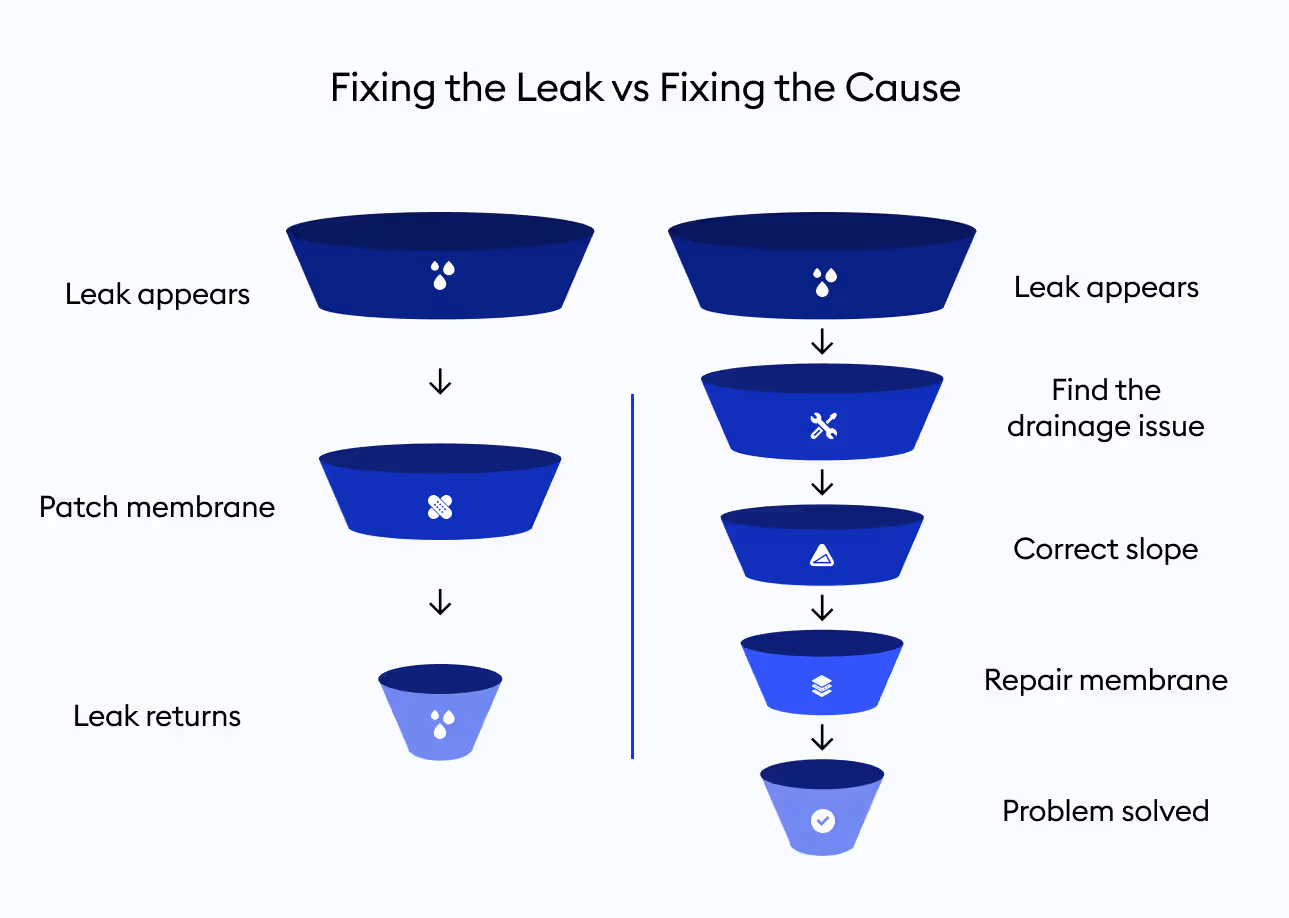
A contractor patches an open seam. A flashing corner gets resealed. A puncture gets repaired. The roof stops leaking for a few months. Then the next storm comes, water returns to the same low area, and the problem repeats.
That happens because the membrane failure was only the symptom. A successful flat roof repair should start with one question: why is water collecting here in the first place?
Depending on the roof, the real repair may involve one or more of the following:
- Patching membrane seams or replacing damaged sections
- Replacing failed flashing at drains, curbs, and parapets
- Installing tapered insulation to rebuild positive slope
- Adding a new internal drain in a chronic ponding zone
- Enlarging or lowering scuppers to improve discharge
- Replacing saturated insulation and wet substrate materials
- Correcting rooftop obstructions that interrupt drainage
- Reworking overflow drainage to prevent storm backup
For owners comparing flat roofing services, this is a critical difference. A leak repair contractor who only seals what is visible may solve the symptom, and a contractor who evaluates slope, drainage, and wet insulation is more likely to solve the actual problem.
What to look for when hiring flat roofing contractors
Drainage detailing is one of the most skill-sensitive parts of flat roof construction. That makes contractor selection especially important.
When evaluating flat roofing contractors, building owners and facility teams should look beyond brand names and membrane recommendations and ask more specific questions about drainage competence.
Good questions include:
- How will you verify existing slope and identify low spots before proposing a repair or replacement?
- If the roof has chronic ponding, do you recommend tapered insulation, added drains, or both?
- How do you detail drain flashings, scuppers, and overflow systems?
- What is your process for identifying and replacing wet insulation?
- How do you coordinate around rooftop equipment and penetrations so drainage is not blocked?
- What maintenance plan do you recommend after installation?
- What parts of the roof system are covered by the warranty, and what drainage-related conditions could affect that coverage?
Maintenance is one of the biggest flat roof leak prevention tools
Drainage design is the foundation of flat roof performance, but maintenance is what keeps that design working.
Low-slope roofs require more deliberate maintenance than steep-slope roofs because the drainage system is exposed to debris, traffic, and weathering at every storm event. Leaves, trash, sediment, and rooftop service activity can gradually turn a properly designed drainage path into a blocked one.
A practical flat roof maintenance plan should include:
- Drain cleaning - Roof drains, scuppers, strainers, gutters, and downspouts should be cleared regularly, especially before storm season and after heavy wind events.
- Debris removal - Loose debris traps moisture, blocks drainage paths, and can accelerate membrane wear.
- Membrane inspections - Inspect for punctures, open seams, shrinkage, blisters, and surface wear, especially in ponding-prone areas.
- Flashing inspections - Check drain flashings, parapet transitions, curb flashings, and penetrations for cracks, separation, and movement.
- Ponding water monitoring - If water repeatedly remains in the same area after storms, that location should be documented and evaluated before it becomes a leak.
- Seasonal maintenance scheduling - Commercial properties should typically inspect low-slope roofs at least twice a year, plus after major storms or rooftop equipment work.
How drainage affects a flat roof estimate
Drainage design also matters during estimating, because it changes both the upfront scope and the long-term value of the project. Common cost drivers include:
- Total roof size and layout complexity
- Number and location of drains
- Need for tapered insulation or slope correction
- Replacement of wet insulation or damaged deck sections
- Membrane type and thickness
- Scupper, gutter, and overflow drainage upgrades
- Rooftop penetrations and curb detailing
- Parapet modifications or edge metal work
- Labor access constraints around active commercial facilities
This is also where owners sometimes make the wrong decision. A lower initial price can look attractive if it only includes membrane replacement. But if the real issue is poor drainage, that cheaper project may simply reinstall the same failure pattern with new material on top.
From an estimating perspective, drainage improvements often raise the initial project cost but reduce lifecycle cost significantly. A roof that drains correctly is less likely to need recurring emergency repairs, insulation replacement, or premature full replacement.
And that’s what the real conversation would look like with clients, i.e, not just what the roof costs today, but what the drainage design will cost the building over the next 10 to 20 years if it is ignored.
Why drainage design determines flat roof lifespan
By the time a low-slope roof leaks, the membrane is often blamed for a problem that started much earlier.
When the roof is designed to be properly drained, it can function effectively for many years with the membrane, insulation, flashing and structural deck all operating within the environment they were meant for. The water is able to flow down the drain, the roof between storms is dry, and there is no continuous wet load or extended seam stress on the assembly.
A roof that doesn’t drain well is different. It will keep the membrane wet, load the structure, soak the insulation, stress seams, and highlight every installation fault and maintenance opening. It reduces the service life of the roof even if the membrane is regarded as a premium product.
The essential secret to the success of flat roofs is that drainage design, material selection, installation quality, and maintenance planning work together as one integrated roofing system.
Conclusion
Flat roofs are practical, efficient, and widely used roof systems that can perform extremely well when they are designed and maintained correctly.
What causes most flat roof leaks is not the roof shape itself. It is poor drainage planning, insufficient slope, ponding water, clogged drains, weak flashing at drainage points, and repair strategies that fix the visible damage without correcting the water-management problem underneath it.
Hence, drainage design should be given greater consideration in all roofing discussions, whether it's choosing a roofing system, calculating a roof's cost, planning a roof repair, or designing its maintenance. When water can drain off the roof effectively, there is a chance that the membrane can function as intended, because even the best material is operating at a disadvantage if water is allowed to remain on the roof.
For contractors, estimators, and building owners, that makes drainage one of the most important variables in flat roof performance, service life, and lifecycle cost.

For those already considering scope of roof replacement, estimating the costs of roof repairs, and the accuracy of drainage changes, it also helps to tie roofing considerations to the preconstruction process as a whole. The greater the clarity of drainage conditions, slope corrections rendered, scope of insulation and membrane requirements during takeoff and estimate, the fewer surprises will appear later in the project.