





Studies across the construction industry suggest estimators spend 40–50% of their time just on doing quantity takeoffs. In heavy civil work, where projects include highways, bridges, utilities, and large earthwork packages, that number can be even higher.
If you’re estimating infrastructure projects, you’re often dealing with hundreds of plan sheets, long bid schedules, and massive quantities. Manually measuring and organizing all that data slows the process down and leaves room for costly errors.
Estimating infrastructure projects involves different workflows, risks, and coordination requirements than vertical building construction.
You're not just pricing materials and labor; you’re modeling an entire physical environment that may span miles of terrain.
These complexities shape how heavy civil estimating platforms are designed and used.
Estimating infrastructure projects, such as heavy civil construction, involves different workflows, risk profiles, and coordination requirements than vertical building construction. When you’re estimating infrastructure projects, you are not just pricing materials and labor, you are modeling an entire physical environment across miles of terrain. These challenges are exactly what define how estimating platforms must operate.
How infrastructure project estimating differs from building construction
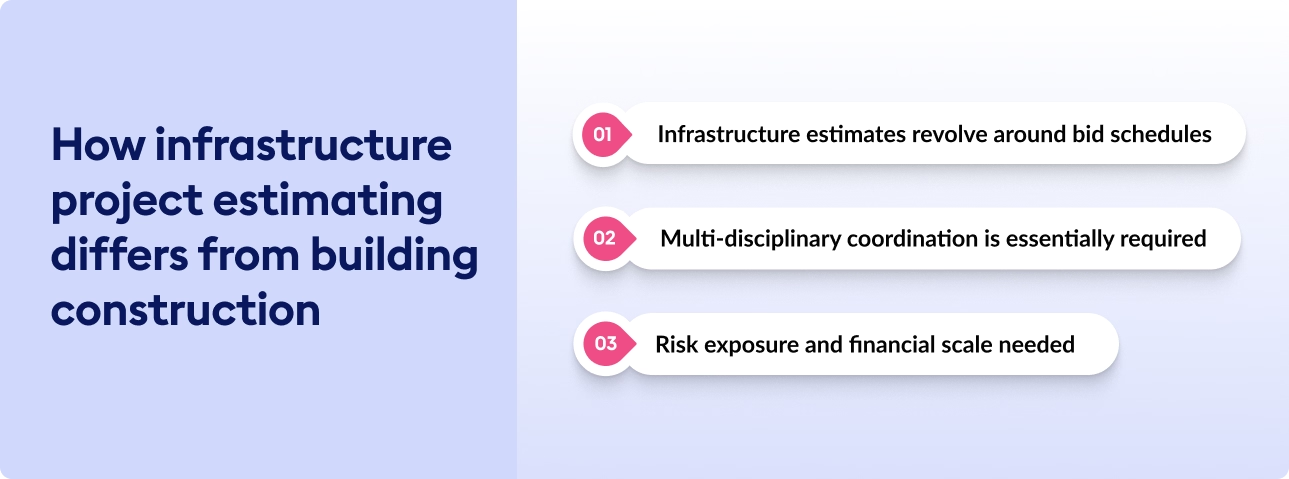
Estimating infrastructure projects, such as heavy civil construction, involves different workflows, risk profiles, and coordination requirements than vertical building construction. When you’re estimating infrastructure projects, you are not just pricing materials and labor, you are modeling an entire physical environment across miles of terrain. These challenges are exactly what define how estimating platforms must operate. Infrastructure work spans miles of terrain rather than a single footprint - the defining trait of how civil construction differs from vertical building.
Why Infrastructure Estimates Revolve Around Bid Schedules?
Infrastructure projects normally use structured bid schedules defined by public agencies like transportation departments, municipal utilities, and federal programs, which require contractors to submit quantities across hundreds or thousands of line items.
For example, when you build an estimate for a highway project, you may break costs into categories such as:
- Earthwork and grading
- Drainage systems
- Pavement layers
- Traffic control
- Structural components
- Environmental mitigation
Each of these items represents a standardized unit price structure. Instead of estimating one building system at a time, you must create a comprehensive cost model that aligns with agency bid schedules.
That means estimating software must not only handle large bid tables but also maintain accurate unit pricing across thousands of entries.
Why is multi-disciplinary coordination required?
Multi-disciplinary coordination is required because most projects involve multiple trades and technical disciplines working on the same design and physical space.
Let’s say, a single transportation corridor may include:
- Roadway grading
- Bridge structures
- Stormwater drainage
- Utility relocation
- Traffic management systems
Each of the areas introduces its own quantities and risk assumptions. Your estimating software must allow different teams to contribute inputs while maintaining a unified cost model, allowing collaboration capabilities essential in heavy civil estimating environments.
Risk exposure and financial scale
Bids in infrastructure often involve financial commitments far larger than any typical building project. For instance, a highway expansion or water infrastructure upgrade can exceed millions of dollars, so much so that even small quantity errors can turn into major financial loss.
Heavy civil estimating, therefore, requires better review workflows, audit trails, and consistent cost methodologies. And estimating platforms must be able to help teams track assumptions, validate quantities, and document decision logic before submitting a bid.
What Makes Heavy Civil Estimating Technically Complex
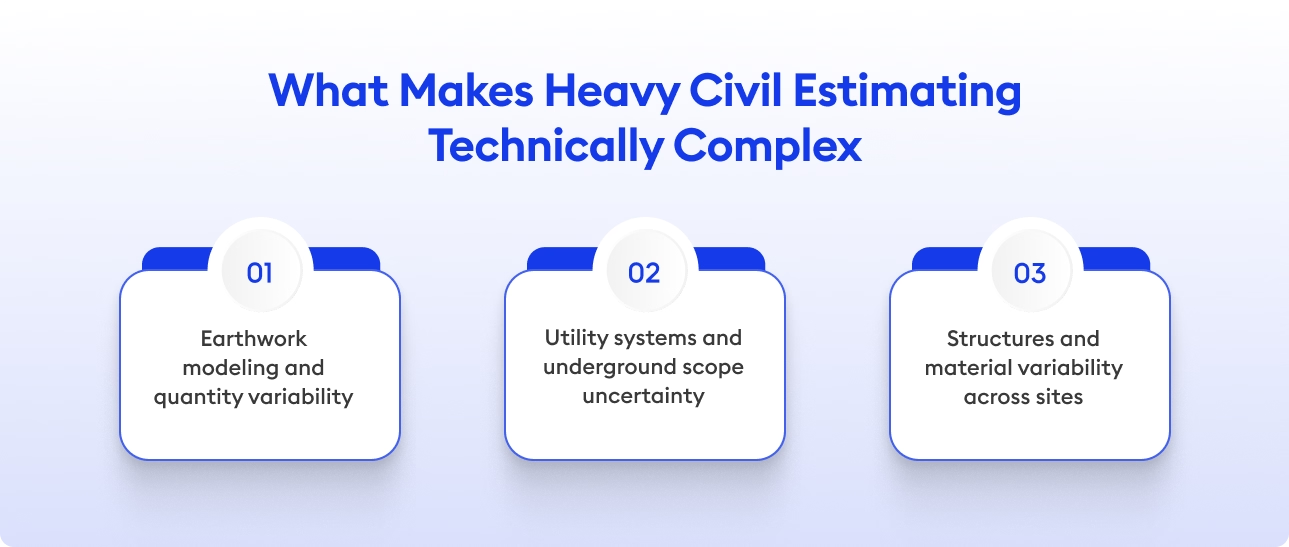
Given the uncertain nature of heavy civil estimating, it tends to become technically complex or challenging. Unlike controlled building sites, infrastructure projects cover large geographic areas where ground conditions and site challenges vary continuously, and there are several factors that contribute to this complexity:
Earthwork modeling and quantity variability
Earthwork often represents one of the largest cost drivers in infrastructure construction. Here, estimating excavation and material transport requires detailed land mapping. While preparing estimates, you must analyze survey data, digital terrain models, and geotechnical reports to forecast earthwork volumes because even small design changes can significantly alter excavation quantities.
Another civil contractor lifted bid capacity up to 5X after automating its manual cut-and-fill takeoffs.
Utility systems and underground scope uncertainty
Another major reason for cost uncertainty is ground utilities, because systems such as existing water lines, electrical ducts, and gas pipelines may require relocation or protection during construction. However, utility records are often incomplete or outdated, as a result, estimating teams interpret survey data and engineering assumptions to predict relocation work.
Even your estimating workflow can include contingency calculations for unknown underground conditions, systems that allow estimators to track assumptions and update quantities quickly become critical in these situations.
Structures and material variability across sites
It is known that infrastructure projects frequently include structural components such as bridges, drains, retaining walls, or tunnels because each structure requires different materials, equipment, and construction methods. And that is where estimating platforms allow you to manage these variations without losing visibility across the overall cost model. Earthwork, utilities, and drainage each demand their own quantities — which is exactly what a civil takeoff sets out to capture.
Capabilities Required in Enterprise Estimating Platforms
Because of the scale and complexity of infrastructure estimating, enterprise contractors often require estimating platforms that support large, distributed teams and high-volume workflows. Hence, the most effective system is the one that focuses on operational consistency and collaboration rather than a single estimator's productivity, such as:
Handling concurrent bids across offices
Large infrastructure contractors often pursue multiple projects simultaneously, which requires estimating teams across regional offices to work on several bids at once.
Enterprise estimating platforms support concurrent workflows without creating data conflicts, wherein you’ll require centralized systems where teams can access shared cost structures while working independently on separate bids.
AI-based takeoff software such as Beam AI further strengthens this workflow by accelerating one of the most time-consuming parts of estimating - quantity takeoffs. Instead of spending days manually measuring drawings, estimators can upload plan sets, define the scope of the work, and get takeoffs within 24-72 hours, reviewed by an experienced QA team. This allows estimating teams across offices to process bid packages faster, maintain consistent quantities, and review cost assumptions more efficiently.
As a result, contractors can handle more bids simultaneously without compromising accuracy, increasing bid capacity while allowing estimators to focus on validation, pricing strategy, and risk review rather than repetitive quantity extraction.
Standardized cost databases and governance
One of the most critical aspects for contractors in infrastructure is consistent unit pricing because without centralized cost databases, different estimating teams may end up using inconsistent assumptions for labor rates and material pricing.
With enterprise estimating systems, organizations can maintain governed cost libraries, ensuring estimators across offices apply standardized cost models.
Collaboration across distributed teams
Infrastructure bids often require multiple collaborations between the regional office & engineering teams, and subject-matter specialists.
With estimating platforms, you can review support shared workflows where multiple contributors modify and validate data. Collaboration features further help reduce bottlenecks in the estimating process, instead of relying on sequential document exchanges, teams can coordinate updates in a centralized environment.
See how Beam AI is teaming up with Sidian to modernize civil preconstruction workflows.
Auditability and decision traceability
Infrastructure bids often go through multiple internal reviews before submission.
While senior estimators and project executives usually evaluate cost assumptions, enterprise estimating platforms provide a clearer audit trail that is traceable, and this traceability is essential when organizations analyze bid outcomes or respond to post-bid questions from public agencies.
How Infrastructure Contractors Evaluate Estimating Software
Selecting heavy civil estimating software involves more than just comparing feature lists. Contractors typically evaluate platforms based on how well they support large-scale estimating operations.
Scalability and performance under workload
Infrastructure estimates can contain thousands of bid items and large data sets. As multiple teams work, the platform must be able to maintain stable performance. Contractors, therefore, evaluate whether systems can process large estimates efficiently and support many concurrent users without performance degradation.
Workflow efficiency and estimator productivity
Estimators spend significant time developing quantities, organizing & managing cost structures, and reviewing assumptions. Therefore, you need the right estimating software that reduces repetitive tasks and significantly improves productivity.
At the same time, contractors often assess how estimating platforms streamline quantity development, cost modeling, and review cycles. Efficient workflows allow teams to focus more on strategic analysis rather than just depending on manual data management.
Integration with project and cost systems
Estimating data often feeds into other enterprise systems, such as project management platforms and cost tracking tools.
Although, contractors evaluate whether estimating systems integrate with these platforms, a seamless data flow often helps maintain consistency between preconstruction planning and project execution.
Support for large bid packages
Infrastructure bids frequently include extensive documentation, multiple subcontractor scopes, and numerous specification references.
Estimating platforms must handle large bid packages without creating organizational challenges. Systems that manage complex bid structures help teams maintain clarity throughout the estimating process.
Types of Platforms Used in Heavy Civil Estimating
The heavy civil estimating software category includes several types of platforms that differ in how they approach quantity development and cost modeling.
Understanding these categories helps contractors evaluate which tools best fit their workflows.
Traditional estimating software
Traditional heavy civil estimating software focuses primarily on structured cost databases and bid schedule management. These platforms allow estimators to build cost models using predefined unit prices and quantity inputs.
In fact, many established estimating tools in this category support standardized bid forms used by transportation and public works agencies, because these systems emphasize cost database management and structured estimating workflows.
Model-based workflows
There are also some estimating environments that requires incorporation of digital terrain models and engineering data to support quantity calculations. Model-based workflows allow estimators to derive quantities directly from design models or survey data.
Platforms used in earthwork and site modeling contexts may support these workflows, as it can improve accuracy when terrain data and engineering models are available.
AI-based takeoff and estimating software
As a newer category of estimating platforms, estimators these days often use artificial intelligence to analyze historical project data and assist with quantity development. AI-assisted systems help identify patterns in previous projects and suggest cost structures, while accelerating repetitive estimating tasks.
Such platforms represent an evolution in estimating workflows. Rather than replacing estimators, they support faster analysis and improved data reuse across projects.
Let us talk about the best AI-based takeoff and estimating software, Beam AI. Instead of clicking through hundreds of sheets and measuring elements manually, estimators can upload their project drawings and define the scope of work. The system scans the entire plan set, extracts quantities such as lengths, areas, and volumes, and produces a structured material takeoff that can be exported to Excel or integrated into existing estimating workflows.
Beyond quantity extraction, Beam AI helps estimating teams manage the broader preconstruction process. The platform supports multi-trade takeoffs across scopes such as concrete, structural steel, mechanical, electrical, plumbing, paving, and site utilities. It can also detect changes in plan revisions or addenda, helping estimators quickly identify scope updates that may affect quantities or pricing.
Because the most time-consuming part of estimating is typically quantity takeoffs, automating that step can significantly increase bid capacity. Contractors using AI-based takeoff platforms report saving 15–20 hours per week and submitting more bids without increasing estimating staff.
See how one civil contractor redirected days of estimator time to higher-value work after automating takeoffs.
Where Do Modern AI Estimating Platforms Fit in Infrastructure Workflows
AI estimating platforms are increasingly replacing traditional estimating processes by helping teams process large datasets more efficiently.
When you operate at enterprise scale, these are the capabilities that can significantly improve estimating throughput.
Pattern recognition across historical project data
Infrastructure contractors accumulate extensive historical project data over time, however, with AI systems, you can now analyze this data to identify cost patterns, productivity benchmarks, and recurring project structures.
By referring to past estimates, AI-assisted platforms help estimators develop cost models more quickly, instead of rebuilding cost structures from scratch, you can reuse proven estimating frameworks from similar projects.
Parallel processing of large bid packages
When you bid for large infrastructure, there can be thousands of line items and multiple technical disciplines. But with AI enablement, platforms can process large data sets in parallel, allowing estimators to generate quantity calculations and cost models more efficiently, especially when organizations are preparing several major bids simultaneously.
Reducing manual quantity extraction effort
The major problem with traditional estimating workflows is it often require manual quantity extraction from drawings and specifications. But with the help of automation, AI-assisted tools can help with this manual process by identifying relevant elements in project documents and organizing them into structured data by reducing manual extraction effort, allowing estimating teams to focus on cost analysis and risk evaluation.
Supporting multi-project estimating environments
Enterprise contractors also frequently maintain active estimating pipelines with multiple concurrent bids. Such workload like organizing project data, surfacing historical references, and maintaining consistency across estimates can be successfully handled with AI estimating platforms to support estimating teams operate across multiple regions and project types.
Overall Operational Benefits at Enterprise Scale
When infrastructure contractors implement enterprise estimating platforms effectively, they often observe improvements in operational consistency and estimating capacity, such as consistency across estimating teams, faster bid turnaround for complex projects, improved transparency in cost development, and reuse of knowledge across projects, which is one of the most valuable outcomes of structured estimating systems.
In a nutshell, infrastructure estimating will continue evolving as project sizes grow and digital construction workflows expand. And as estimating teams manage more complex infrastructure programs, AI-based estimating & takeoffs software is becoming an essential component of enterprise preconstruction operations.




.jpg)


.webp)

