



What You Don’t See Beneath a Concrete Slab
Walk into any construction site and you'll come across a concrete slab somewhere along the way. It could be supporting a house, a warehouse, a garage, or even a backyard shed. While it often looks like a simple layer of concrete, the performance of the entire structure depends on how well that foundation is designed and installed.
Most slab problems don't show up right away. Because cracks, uneven settling, and surface wear can take months or even years to appear, and they usually trace back to choices made before the concrete ever went down. Hence, knowing the basics of slab design, reinforcement, and installation is essential to save you from costly headaches down the road.
What Is a Concrete Slab?
A concrete slab is a flat and horizontal surface made from poured concrete that serves as a foundation, floor, or structural base. Unlike crawl space or basement foundations, a slab foundation sits directly on the ground or on a prepared gravel base.
The popularity of concrete foundation slabs comes down to three key advantages:
- Faster construction
- Lower overall foundation costs
- Long-term durability
Because the foundation carries the entire load of a structure, slab quality directly affects structural performance, longevity, and maintenance costs.
The 5 Main Types of Concrete Slabs
Not all slabs are built the same. The best choice depends on soil conditions, building type and load requirements. Here are the most common types used in construction:
Monolithic Concrete Slab
A monolithic concrete slab combines the footing and floor into a single pour. Because everything is placed at once, construction is faster, and labor costs are lower.
It is best suited for:
- Residential homes
- Garages
- Small commercial buildings
Slab-on-Grade Foundation
A slab-on-grade foundation is cast directly on prepared dirt and gravel.
Typical uses are:
- Storage Areas
- Retail premises
- Workshops
- Detached Garage
Suspended Slab
Unlike ground-supported systems, suspended slabs are elevated and supported by beams and columns.
Best for:
- Multi-story building
- Parking building
- Commercial Building
Reinforced Concrete Slab
A reinforced slab, on the other hand, contains steel rebar or wire mesh to increase strength and minimize cracking.
These systems are commonly used when higher structural loads are expected.
- Warehouses, manufacturing facilities and industrial buildings
- Multi-story commercial and residential structures
- Parking garages and transportation infrastructure
- Areas that support heavy equipment, machinery, or frequent vehicle traffic
Heated Concrete Slab
A heat concrete slab floor contains radiant heating tubes embedded within the concrete.
Benefits include:
- Improved energy efficiency
- Consistent indoor temperatures
- Reduced heating costs
It has become increasingly popular in modern residential construction.
Standard Concrete Slab Thickness
One of the most common questions builders ask is how thick a slab should be. The answer depends on load requirements and soil conditions.
A thicker slab isn't necessarily always better because proper reinforcement, stable soil, and good drainage often matter just as much as thickness itself.
How to Measure a Concrete Slab
Whether you're estimating materials for a new foundation, planning a patio, or preparing a shed base, accurate measurements are essential.
Here's how to measure a concrete slab correctly:
Step 1: Measure the length of the slab in feet.
Step 2: Measure width at widest point.
Step 3. Convert slab thickness in inches to feet.
For instance:
- 4-inch slab = 0.333 ft
- 6-inch slab = 0.5 feet
Step 4: Calculate the volume and multiply the length by the width.
Estimators often use digital tools like Beam AI to speed up takeoff calculations and reduce manual errors in slab quantity estimation.
Knowing how to measure dimensions accurately prevents costly overordering or shortages.
Measuring one slab is the easy part - here's how to do a concrete takeoff across the whole structure.
How a Concrete Slab Calculator Works
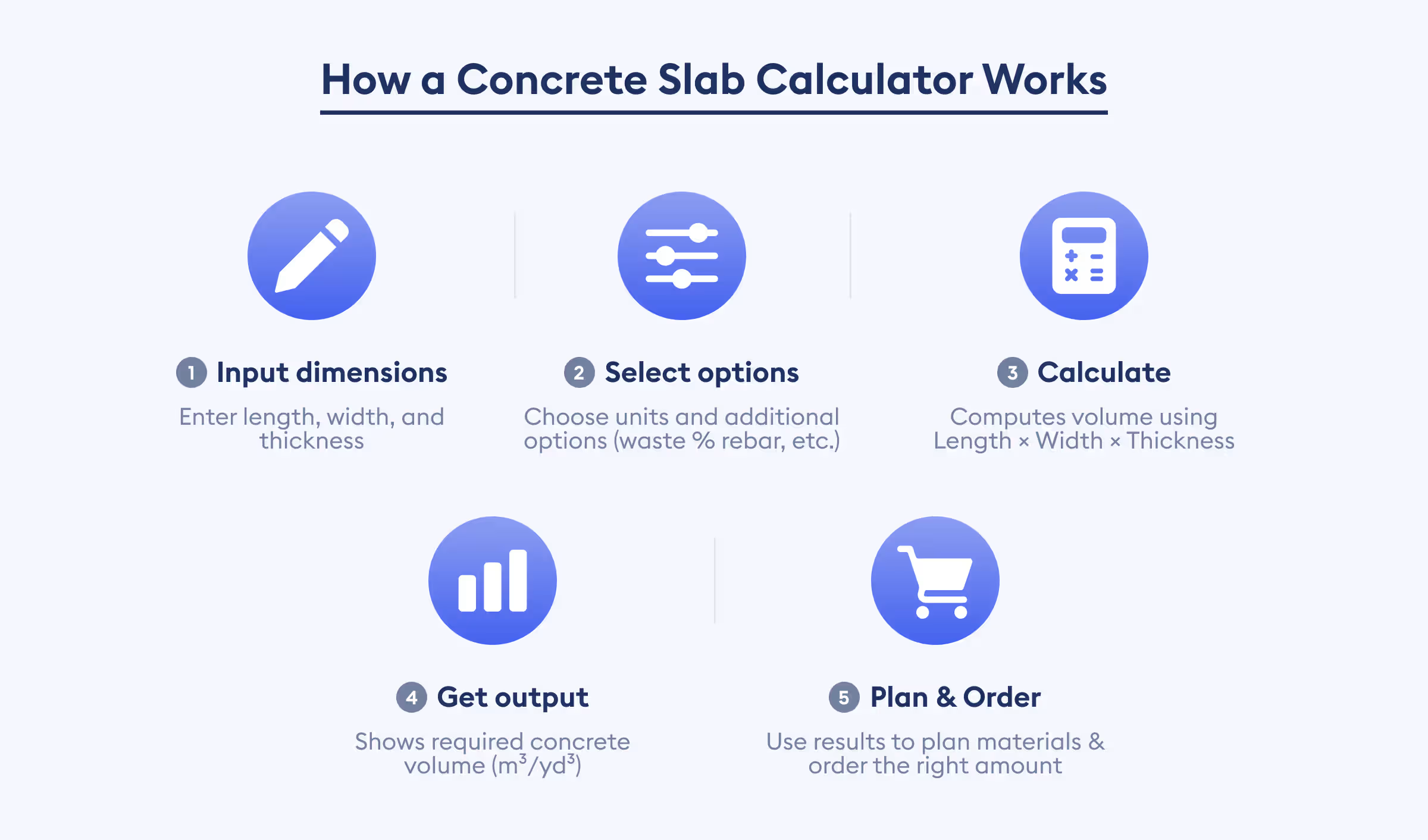
Once you've measured the slab dimensions, the next step is determining how much concrete you'll actually need. This is where a concrete slab calculator becomes useful.
Most calculators produce:
- Cubic yards needed
- Estimated volumes of materials
- Project Costs (approx.)
But a concrete slab estimator or concrete cost estimator gives contractors the ability to quickly estimate project requirements and reduce calculation errors. Because even small measurement errors can greatly impact concrete orders on larger projects. Modern estimating platforms like Beam AI take this further by automating quantity takeoffs directly from drawings, reducing dependency on manual slab calculators.
Concrete Slab Cost Breakdown
A concrete slab calculator can tell you how much concrete you’ll need, but it won’t tell the whole story when it comes to the costs of the project. This is because the final price of a slab is affected by much more than the quantity of material.
Contractors increasingly rely on AI-powered estimating tools like Beam AI to break down labor, material, and site conditions more accurately during early budgeting stages.
The budget for two projects of equal size can vary substantially depending on site conditions, labor needs and finishing specifications. Therefore, understanding these cost drivers helps you make a more realistic estimate to avoid surprises when construction starts.
Material Costs
The materials that go into a slab foundation extend beyond the concrete itself depending on the project. Material costs may involve:
- Concrete mix
- Gravel base
- Vapor barriers
- Reinforcement steel
The vapor barrier is easy to treat as a minor line item, but here's what happens when you skip a vapor barrier under a concrete slab — and why it belongs in every slab estimate.
Labor Costs
In construction, labor cost is often considered as the largest portions of the overall budget. Typical labor activities include:
- Excavation
- Site preparation
- Formwork installation
- Concrete placement and finishing
- Cleanup and site restoration
Site Conditions
No two job sites are exactly alike, which is why site conditions can significantly affect the cost of a concrete slab. Before even construction begins, the condition of the site can have a major impact on both labor and material costs, such as:
- Sloped or uneven terrain
- Poor soil conditions require additional preparation
- Limited site access for equipment and concrete trucks
- Additional grading or drainage work
A slab performs only as well as the ground beneath it, so any issues with the site must be addressed before concrete is poured.
Optional Upgrades
Ultimately, the cost of a concrete slab is not determined by a single price per square foot but a combined result of materials, labor, site preparation and project-specific requirements. Some projects may also require additional features that improve performance, durability or comfort, which can further increase the overall cost.
These may include:
- Rebar reinforcement
- Radiant floor heating systems
- Decorative concrete finishes
- Higher-strength concrete mixes
So, understanding each of these variables makes it easier to evaluate estimates and budget accurately.
Using a Concrete Slab Cost Calculator
Estimators and contractors often use concrete slab cost calculators during planning phase to quickly evaluate project feasibility and budget requirements. These types of tools typically calculate costs using:
- Square footage
- Thickness
- Regional labor rates
- Material pricing
The prices vary from residential patio to garage floor and shed foundation to home slab. This is because labour and material costs will differ from region to region. Using online calculators should be used as a planning tool and not as a budget.
Platforms such as Beam AI enhance this process by connecting cost estimation with real-time quantity takeoffs, improving bid accuracy for contractors.
How to Pour a Concrete Slab
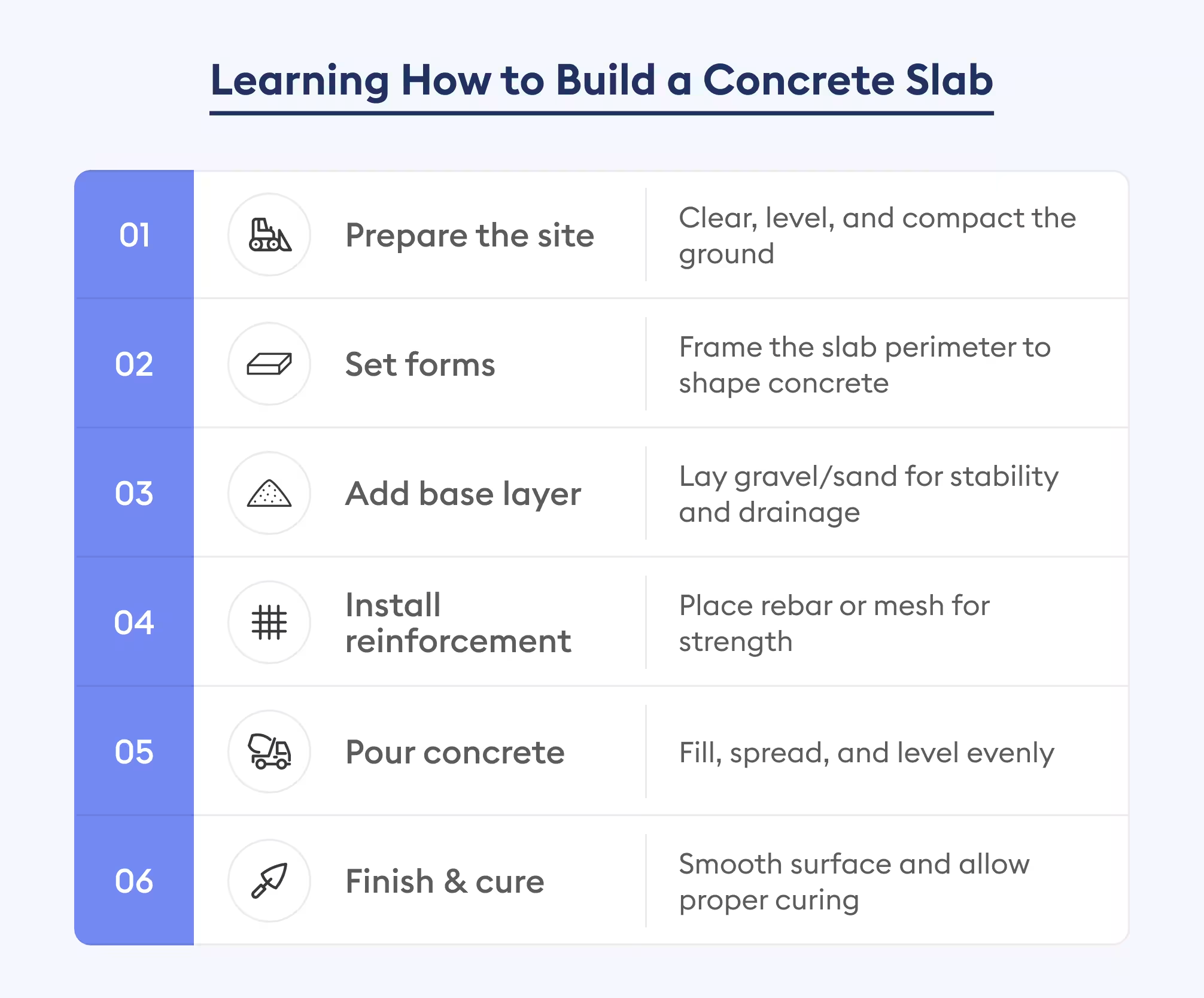
There's much more to pouring a concrete slab than just depositing concrete and letting it set. Proper site preparation, reinforcement, placement and curing are essential to the quality of the finished slab. Failure to follow all these steps may cause cracking, settlement, drainage problems and poor structural performance.
Excavate the Site
Clear the area of vegetation, topsoil, debris and any unstable material before starting. You want a nice solid base, something that will support the slab for a long time.
Compact the Subgrade
Once the excavation is complete, ensure that the soil below is compacted well. If the subgrade is not well compacted, it may settle over time and cause the slab to crack or become uneven.
Install Forms
Forms are then placed around the perimeter to define the slab's dimensions and thickness. As properly aligned forms help ensure the finished slab is level, square, and built to the required specifications.
Add a Gravel Base
After the forms are set, a layer of compacted gravel is often laid down under the slab for proper drainage, providing extra support to minimize moisture problems and the risk of uneven settling.
Install Reinforcement
With the base prepared, the next step is installing reinforcement such as rebar or welded wire mesh. This reinforcement will make the slab stronger and more resistant to cracking over time and to the structural loadings and ground movements.
Pour and Place the Concrete
Once the reinforcement work is done, apply the concrete uniformly over the forms and finish the concrete quickly to get a uniform finish. Carefully placed materials will ensure equal thickness and strength of the slab and prevent weak areas from forming.
Screed and Finish the Surface
Once the concrete is laid, the surface is prepared by smoothing it to the needed elevation and then the surface is finished according to the purpose of the concrete. Finishing may include floating, troweling, or brooming to create the desired texture and appearance.
Cure the Concrete Properly
One of the most important stages of concrete construction is curing. During this period, the concrete retains moisture while it gains strength. If the slab dries too quickly, it can develop shrinkage cracks, reduced durability, and surface defects.
A successful slab isn't determined solely by the day it is poured. Long-term performance relies on the quality of preparation, reinforcement, finishing and curing that is carried out during the concrete slab installation process.
How to Build a Concrete Slab: Planning Matters
Learning how to build a concrete slab goes beyond pouring concrete, as several planning decisions affect long-term performance.
Before construction begins, it's important to plan for factors that affect long-term slab performance.
Many municipalities require permits for structural foundations, and details such as drainage should be addressed early since standing water can weaken the slab over time. Accessibility elements bring their own concrete scope and code rules — here are the ADA ramp requirements every estimator should know if the project includes accessible entrances. Further, expansion joints should also be incorporated to control cracking caused by temperature changes. In addition, the reinforcement strategy should be selected based on slab thickness, soil conditions, and expected loads. Finally, while concrete gains significant strength within a few days, it continues curing for several weeks.
Rebar for Concrete Slabs
Concrete is very strong in compression, but is very weak in tension, as a result of which reinforcement is so important. Use of steel rebar restricts cracking, increases load carrying capacity and contributes to the long-term durability of the slab.
Most residential projects use either reinforcing bars or welded wire mesh, while rebar typically provides greater structural strength and crack resistance. Although reinforcement costs more initially, it can be very beneficial for the life of the slab in terms of repair and maintenance costs.
Concrete Slabs for Shed Base Applications
Concrete slabs are among the most popular choices for shed base projects among property owners due to the fact that they can result in a low maintenance, stable and hard-wearing foundation.
While a 4-inch slab will usually suffice for most shed base projects (with the proper prepared gravel bed beneath and drainage surrounding), extra weight in a shed may call for extra reinforcer. There isn’t generally as much in shed foundation work as is typical of residential projects, but the site needs to be well prepared nevertheless, for long-term success.
Concrete Slab Crack Repair
Even well-installed concrete can succumb to cracks over the years. Reasons may range from shrinkage during concrete curing, ground settlement under the slab, and freeze-thaw cycles and even insufficient curing methods. The way the crack is addressed usually depends on the type and condition of damage.
If the crack has formed due to structural stress, you might need to go the distance for epoxy injection repairs, where lesser damages can be taken care of by routing and sealing, or resurfacing may be required for a damaged surface, and a full replacement may be necessitated by pervasive deterioration.
Taking note of why the crack has formed is the primary move to a repair that will make an actual impact.
Concrete Slab Jacking and Leveling
Uneven settling of a slab does not necessarily mean a replacement is needed. Concrete slab jacking restores the slab to its original position by injecting material beneath the surface to fill voids and provide support.
Traditional slabjacking uses a cement-based slurry, while polyurethane foam injection has become increasingly popular as it is lighter, faster to install, and causes minimal disruption. For many projects, leveling a settled slab through jacking is considerably more cost-effective than complete replacement.
Hiring Concrete Slab Contractors
The longevity of the slab construction relies just as much on skilled workmanship as it does on the materials. When evaluating concrete slab contractors, look for proper licensing and insurance, relevant project experience, sound reinforcement practices, quality finishing standards, and warranty coverage.
Experienced contractors understand that successful slab construction begins with proper preparation and planning, not simply pouring concrete. Tools like Beam AI are also widely used by contractors to improve bid accuracy and reduce missed scope during pre-construction planning.
Common Concrete Slab Mistakes
Most slab failures are caused by a few preventable mistakes. Here are some of the most common causes of cracking and settlement:
- Poor subgrade preparation
- Lack of reinforcement
- Wrong slab thickness
- Lack of curing
- Drainage problems
Addressing these factors during construction is far more cost-effective than dealing with repairs after the slab has been installed.
Concrete Slab vs Other Foundation Types
Choosing a foundation involves balancing cost, functionality, and long-term maintenance requirements. Concrete slab foundations are often preferred because they are faster to install, more cost-effective, and require minimal maintenance. However, they aren't the only option.
Crawl space foundations provide easier access to plumbing and utility systems while creating separation from ground moisture. While basements offer even more flexibility by adding usable living, storage, or utility space, though they typically come with higher construction costs.
The right choice ultimately depends on your climate, site conditions, budget, and project goals.
Final Thoughts
One of the most economical foundation types today is a well-constructed slab. It doesn't matter whether you have to build a new home, a garage, a shed, or a commercial facility, success is dependent on proper thickness, reinforcement, site preparation and curing.
With the help of a concrete slab calculator, knowledge of cost drivers and experience with construction practice, you can establish a long-lasting foundation capable of lasting for decades.