



Concrete Cost Per Square Foot Explained: What Really Impacts Your Project Cost?
When people search for concrete cost per square foot, they usually expect a simple answer. They want a number they can use to estimate a patio, driveway, garage floor, or foundation.
The problem is that there is no universal concrete cost per square foot.
Consider two 400-square-foot slabs in the same city. One is a standard backyard patio with a broom finish. The other is a reinforced garage floor with a vapor barrier, thicker concrete, and higher strength requirements. Although the square footage is identical, the concrete cost per square foot can vary dramatically.
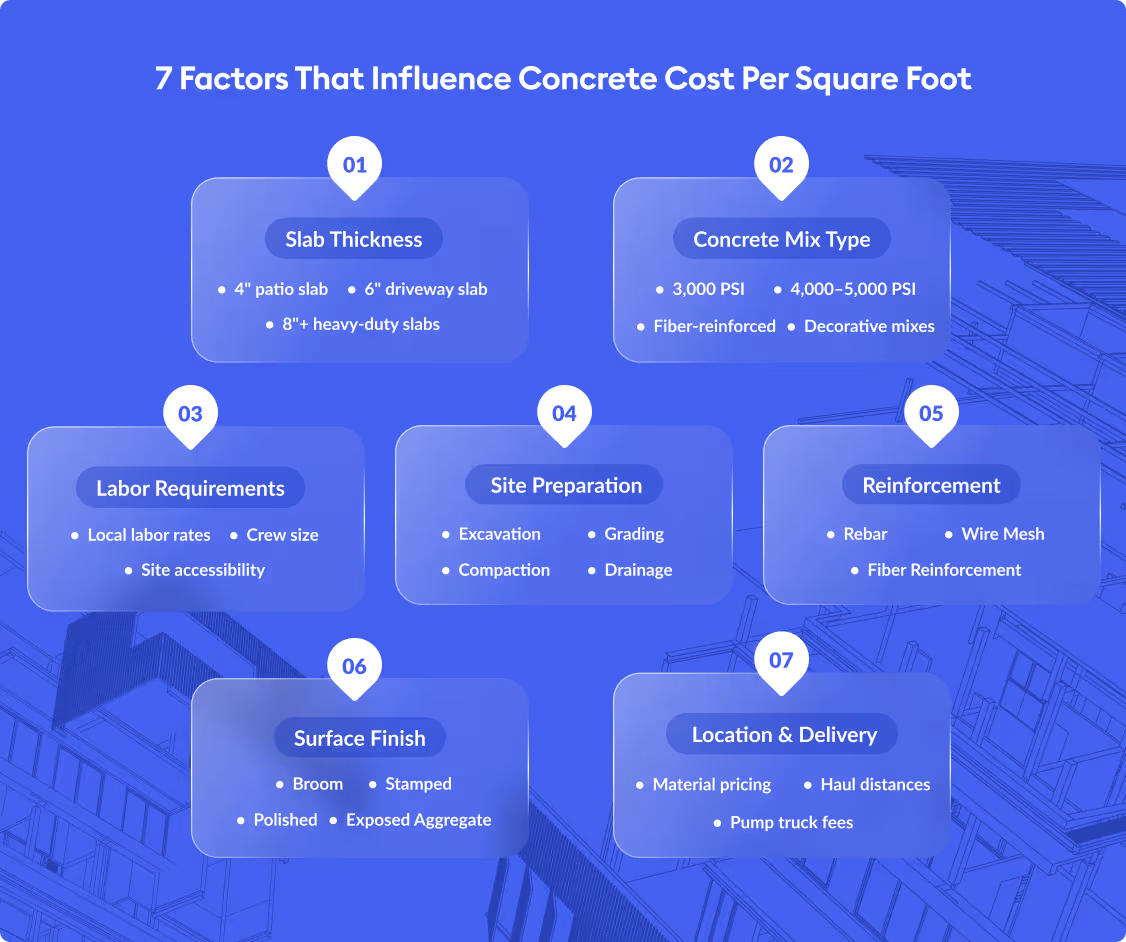
That is because it only gives you a figure for an area. It cannot provide information for slab thickness, concrete strength, reinforcement, amount of labor needed, prep to the job site, finish type, and delivery. Each of those factors affects the concrete cost per square foot.
Knowing these factors will help you with your budgeting, bidding, and estimating on your project.
Why There Is No Single Concrete Cost Per Square Foot
One of the biggest misconceptions in construction is that every slab costs roughly the same amount to build.
In reality, professional concrete estimating starts with project specifications, not averages.
A contractor estimating a warehouse floor evaluates very different requirements than a contractor pricing a residential patio. Even two driveways in the same neighborhood can have completely different prices due to site conditions, reinforcement requirements, or finish selections.
That's why experienced estimators rarely rely on national averages when calculating concrete cost per square foot. Instead, they analyze the unique details of each project to determine the actual cost of concrete.
Before discussing labor, reinforcement, or finishes, it's important to understand the factor that most affects material quantities: slab thickness.
Thickness: The Cost Driver Most Property Owners Underestimate
If there's one factor that has the greatest impact on concrete cost per square foot, its thickness.
Many people focus entirely on the area. However, concrete is purchased by volume rather than square footage. Even a small increase in thickness can significantly increase the amount of concrete required.
Contractors calculate volume using the formula:
Length × Width × Thickness (in feet) ÷ 27 = Cubic Yards
For example, a 400-square-foot slab poured to a thickness of 4 inches requires roughly 4.9 cubic yards of concrete. Increase that slab to 6 inches thick, and the required volume jumps to approximately 7.4 cubic yards.
That's nearly 50% more material despite having the same footprint.
This is why the concrete cost per square foot can vary so much between projects. Thicker slabs require more concrete, more labor, and often more reinforcement. That calculation only works if the area is right to begin with — here's how to calculate square footage from a plan before you convert it into concrete volume.
Typically, patios and sidewalks use 4-inch slabs, while driveways and garage floors often require 6-inch slabs because they must support heavier loads.
When evaluating how much is concrete per square foot, thickness should always be one of the first questions asked.
See how slab thickness affects your concrete order.
Concrete Mix Design Has a Direct Impact on Concrete Cost Per Square Foot
Another reason concrete cost per square foot varies is that concrete isn't a single product.
A standard residential patio may use 3,000 PSI concrete, while a driveway or commercial slab may require 4,000–5,000 PSI concrete. Higher-strength mixes typically contain more cement and specialized materials, increasing the overall concrete price per square foot.
There are also specialty concrete mixes designed for specific performance requirements.
Fiber-reinforced concrete improves crack resistance and durability. Air-entrained concrete is commonly used in freeze-thaw climates because it resists weather-related damage. Decorative concrete mixes may include color additives, specialty aggregates, or other architectural features.
An interesting point many project owners overlook is that fiber-reinforced concrete can sometimes reduce the labor required to install wire mesh. Although the material itself may cost more, the total installed concrete cost per square foot may not increase as much as expected.
This is also one of the key reasons why concrete estimates go wrong - quoting a supplier on compressive strength alone without specifying fibers, admixtures, or delivery terms leaves significant gaps in the bid. Evaluating only basic material pricing rarely provides an accurate picture of the final project cost.
Labor Often Costs More Than Materials
When discussing concrete cost per square foot, many people focus entirely on concrete materials. However, labor frequently represents the largest portion of the budget.
Labor costs vary based on several factors.
First, geography plays a major role. Contractors operating in major metropolitan areas generally have higher labor rates than contractors working in smaller markets.
Second, site accessibility affects productivity. A crew pouring concrete in an open area can work much faster than a crew navigating fences, landscaping, narrow access points, or existing structures.
Third, the complexity influences labor requirements. A simple broom finish can be completed relatively quickly, whereas a stamped decorative finish may require three to four times as much labor.
Because labor varies so dramatically, two projects with identical dimensions can have completely different concrete cost per square foot figures.
Site Preparation: The Hidden Cost Most People Never See
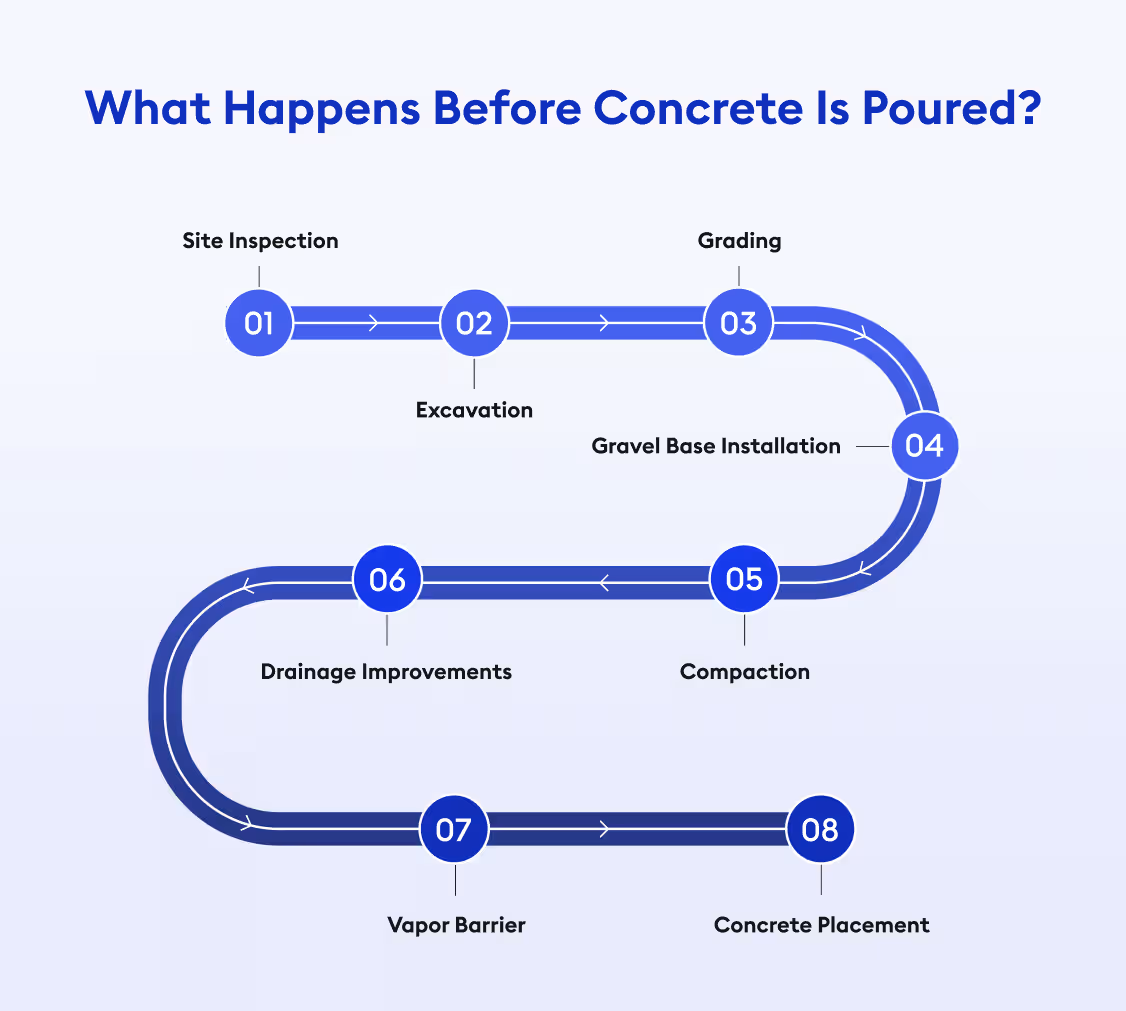
One of the most overlooked contributors to concrete cost per square foot is site preparation.
Before concrete is poured, the site must be properly prepared to support the slab and prevent future problems.
Preparation work often includes:
- Excavation
- Grading
- Gravel installation
- Soil stabilization
- Compaction
- Vapor barriers
- Drainage improvements
Imagine two homeowners installing identical patios.
One property is flat and well-drained. The other has a steep slope, clay soil, and poor drainage conditions. Slope changes more than prep cost — on paved or sloped surfaces it increases the actual area too, which is how pitch and slope can turn a flat square-foot estimate into a loss.
Although the finished patios may appear identical, the second project may require significantly more preparation. This additional labor and equipment directly increase the concrete cost per square foot.
The challenge is that site preparation costs are often invisible until a contractor evaluates the property.
Reinforcement Matters More Than Most People Realize
Concrete is strong under compression but weak under tension. That's why reinforcement is so important.
The most common reinforcement methods include rebar, wire mesh, and fiber additives.
Rebar is commonly used in driveways, foundations, garage floors, and commercial slabs because it provides excellent tensile strength. Wire mesh helps distribute loads and control cracking. Fiber reinforcement improves durability and crack resistance throughout the slab.
Some project owners attempt to reduce reinforcement to lower the concrete cost per square foot, but this can lead to expensive repairs later.
Reinforcement should be viewed as a structural requirement rather than a budget-cutting opportunity. Reducing reinforcement may lower upfront costs but can increase long-term maintenance expenses and shorten the slab's life.
Surface Finish Can Dramatically Increase Concrete Cost Per Square Foot
Another factor that surprises many property owners is how much finish selection affects concrete cost per square foot.
A standard broom finish is one of the most economical options available. It's durable, practical, and relatively quick to install.
Decorative finishes, however, require additional labor and expertise.
Popular decorative options include:
- Stamped concrete
- Exposed aggregate
- Polished concrete
- Stained concrete
Stamped concrete is particularly labor-intensive because it requires precise timing, specialized tools, and experienced installers. In many cases, stamped concrete requires three to four times as much labor as a standard broom finish.
As a result, the finish selection can significantly increase the concrete price per square foot even when the slab itself remains unchanged.
Location and Delivery Logistics Affect Concrete Price Per Square Foot
The same project can have very different pricing depending on where it's built.
Regional material costs, labor rates, fuel prices, and local demand all influence concrete cost per square foot.
Delivery logistics also play an important role.
Small pours may trigger minimum-load charges from ready-mix suppliers. Rural locations often require longer hauling distances. Tight-access sites may need pump trucks to place concrete efficiently.
These logistical factors can have a substantial impact on the final concrete cost per square foot, particularly on smaller projects where delivery charges represent a larger percentage of the overall budget.
Cement vs. Concrete: Understanding the Difference
Many people search for cement cost per square foot when they actually mean concrete.
While the terms are often used interchangeably, they are not the same thing.
Cement is only one ingredient in concrete. A typical concrete mix contains cement, water, sand, aggregate, and various admixtures.
Higher-strength mixes generally contain more cement, which increases the overall concrete cost per square foot. Specialty cements such as white cement or rapid-setting cement can further increase project costs.
When evaluating the cost of a cement floor per square foot, it's important to remember that you're actually paying for a complete concrete system rather than cement alone.
Indoor vs. Outdoor Slabs Have Different Cost Requirements
Indoor and outdoor slabs may have similar dimensions, but they often require very different specifications.
Indoor slabs frequently require vapor barriers, moisture protection systems, insulation, and tighter flatness tolerances.
Outdoor slabs must address drainage, weather exposure, freeze-thaw conditions, and slip resistance.
Because of these differences, the concrete cost per square foot for a basement floor can vary significantly from the concrete cost per square foot of a patio or driveway.
The intended use of the slab always influences the final estimate.
How to Get an Accurate Concrete Estimate
At this point, one thing should be clear: there is no universal concrete cost per square foot.
Accurate estimates require much more than square footage. Contractors must evaluate dimensions, thickness, concrete strength, reinforcement, finish requirements, site conditions, and location before determining the true concrete cost per square foot.
This is why modern concrete takeoff and concrete estimating tools have become increasingly important. Manual calculations can be time-consuming and prone to errors, especially on larger projects.
The most reliable way to determine concrete cost per square foot is through a project-specific estimate that accounts for every factor influencing cost. The right tool helps here — see how the top estimating tools compare.
Accuracy at this stage is exactly what the industry is prioritizing — see the key takeaways from World of Concrete.



.jpg)