


.jpg)


A Practical Guide to Mechanical Takeoffs in Construction
It is 9:30 PM. Your bid is due tomorrow morning.
An estimator from your team is sitting in front of multiple pages of mechanical drawings, switching between duct layouts, piping plans, equipment schedules, specification sheets, and addenda that came in just a few hours ago. One missed diffuser. One incorrect pipe length. One overlooked insulation requirement. That’s all it takes to turn a profitable bid into a painful project.
And this is no longer a rare situation.
Mechanical contractors today are under constant pressure to bid faster, tighter, and more accurately while managing increasingly complex projects. HVAC systems are becoming more detailed, drawing sets are growing larger, and labor and material costs continue to fluctuate.
That pressure is most visible during the mechanical takeoff process, where speed and accuracy directly affect whether a bid wins profitably or causes problems later in the field.
Every duct run, fitting, valve, diffuser, equipment connection, insulation requirement, and piping detail must be quantified correctly, often while estimators work against tight deadlines and constantly changing drawings. And relying entirely on manual workflows makes it harder for teams to keep up without increasing the risk of costly mistakes.
According to a Dodge Construction Network and CMiC report, 87% of contractors believe AI will meaningfully transform construction, with many firms investing in digital workflows and automation to reduce repetitive tasks, improve decision-making, and modernize traditional project processes.
That is why more HVAC contractors and estimators are moving toward AI-powered takeoff workflows. Traditional mechanical contractor software helped digitize measurements, and now, AI mechanical takeoff software is helping teams reduce repetitive work, improve bid consistency, and handle larger bid volumes without overwhelming estimating teams.
If you want to understand how mechanical takeoffs work, what gets included, where most estimating mistakes happen, and how AI is reshaping the entire workflow, this guide walks you through everything step by step.
What Is a Mechanical Takeoff
A mechanical takeoff is the process of reviewing construction drawings and specifications to identify, measure, and quantify all materials required for mechanical systems before construction begins.
That includes HVAC ductwork, piping systems, insulation, fittings, valves, supports, equipment, diffusers, pumps, chillers, boilers, and other mechanical components shown in the plans.
The purpose of a mechanical quantity takeoff is simple: create an accurate foundation for estimating project costs, labor requirements, procurement planning, and bid preparation. Because without a proper takeoff, teams are essentially pricing projects based on assumptions.
A complete mechanical takeoff typically combines quantity measurements with specification analysis. Estimators are not only measuring lengths of ductwork or pipe runs, but also interpreting insulation requirements, pressure classes, fittings, equipment schedules, access constraints, and installation complexity.
That is why experienced estimators often say takeoffs are where projects are won or lost.
Key Features of Mechanical Takeoff Software
Mechanical takeoff software is much more than just a digitizing measuring tool; it was built to enable contractors to handle huge drawing sets, minimise manual tasks, increase the accuracy of estimating, speed up the bidding process and much more.
Mechanical takeoff software is, at its core, a tool that enables estimators to measure and organize all materials involved with HVAC and mechanical systems directly from construction drawings. These comprise ductwork, pipe systems, insulation, fittings, valves, equipment and supporting items.
However, the number one benefit is workflow efficiency.
Rather than having to read through every sheet several times, estimators can utilize centralized digital plans that have automated calculations, organized assemblies, and revision tracking built directly into the workflow.
The following are some of the most crucial features of the modern mechanical contractor software:
- Digital measurement tools for ductwork and piping systems
- Automated quantity calculations
- HVAC equipment counting and tagging
- Drawing overlay and revision comparison
- Centralized project organization
- Material and labor assemblies
- Integration with estimating and procurement systems
- Cloud collaboration across estimating teams
But, more sophisticated and advanced AI takeoff software goes further by being able to auto-identify components directly from drawings. Manually tracing all of the ducts or manually counting the number of fittings can be time-consuming, whereas AI platforms can do so a lot faster, and identify symbols, understand the layout and generate quantities.
Some platforms like Beam AI offer both DIY and DFY workflows, enabling estimating teams to receive AI takeoffs in under 10 minutes or get AI + human-in-the-loop workflow-based takeoffs and estimates that are quality-checked within 36 hours. It's a flexibility that’s becoming more critical to the HVAC contractor with a high volume of bids and a limited number of estimating personnel.
Ultimately, the purpose of mechanical takeoff software is not just to digitize. It is enhancing the estimating process in every project in terms of speed, consistency, scalability, and profitability.
Benefits of Mechanical Takeoffs
First, it improves bid accuracy. When quantities are measured correctly, contractors can submit pricing that reflects the actual project scope rather than rough assumptions.
Second, it improves cost control. Mechanical systems involve thousands of interconnected components. Missing even a few items repeatedly across projects can easily destroy margins over time.
Third, it improves operational planning. Accurate takeoffs help teams order materials correctly, allocate labor more efficiently, and avoid mid-project surprises.
And most importantly, they help contractors bid more work confidently.
Many estimators today are overloaded, and manual workflows force estimators to spend hours doing it all by hand, repeatedly. AI-driven mechanical takeoff software significantly reduces that workload, allowing teams to focus on everything other than repetitive manual tasks.
Key Details and Usage Examples
Mechanical takeoffs are different in many projects, depending on the project type, the size of the building and the complexity of the system. However, in the majority of residential, commercial and industrial projects, estimators are constantly repeating a few core measurement and identification activities.
Estimators calculate linear footage for HVAC and ductwork systems, and count registers, diffusers, dampers, and air handling units. They also inspect duct size, required insulation and duct classifications to ensure that the estimate truly reflects installation conditions.
Estimators determine the number of linear feet of pipe for piping systems, and define the type of fittings (elbows, valves, reducers, supports, and insulation materials). Other materials such as copper, steel, PVC or stainless steel are also segregated as the labor and material cost may change depending on the type of material.
Identification of equipment is also an important step. Mechanical estimators review the HVAC schedules and drawings and prepare a list of the major HVAC equipment such as chillers, boilers, pumps, rooftop units and fan coil units, and exhaust systems etc. This is because the absence of any single piece of equipment can significantly impact bid accuracy.
The goal of any project is the same, regardless of the project type, namely, to create accurate quantity data that can confidently be used to create reliable bids, manage costs and execute projects smoothly.
What Gets Included in a Mechanical Quantity Takeoff
Mechanical quantity takeoffs cover far more than just basic measurements. Every component affecting installation cost must be identified and quantified.
Ductwork Takeoff
These are one of the most labor-intensive parts of HVAC estimating. Estimators measure linear feet of duct runs while also identifying duct dimensions, pressure classes, insulation requirements, hangers, transitions, elbows, dampers, and diffusers.
Complex commercial buildings often contain multiple duct systems operating under different specifications. A single oversight in sizing or fittings can create significant pricing gaps.
Ductwork takeoffs also require careful interpretation of reflected ceiling plans, mechanical schedules, and coordination drawings.
Piping Systems
Mechanical piping takeoffs include chilled-water piping, condenser-water systems, refrigerant lines, gas piping, hydronic systems, condensate drainage, and plumbing-related mechanical systems.
Estimators calculate pipe lengths, fittings, valves, supports, insulation, and accessories while considering material types such as copper, steel, PVC, or stainless steel.
Piping systems often become difficult because routing changes frequently during coordination. Manual takeoffs can quickly become outdated after drawing revisions.
HVAC Equipment
Mechanical estimators also identify and quantify HVAC equipment, including air handling units, RTUs, chillers, boilers, pumps, fan coil units, exhaust fans, VAV boxes, and heat exchangers.
Equipment schedules are reviewed carefully because missing a single unit can heavily impact project cost. Estimators also review installation complexity, rigging requirements, startup needs, and equipment access conditions.
Supporting Components
Supporting materials are often where estimating mistakes happen, and they include insulation, supports and hangers, access panels, fire and smoke dampers, louvers, sleeves, controls interfaces, and fasteners. These specialty life-safety devices and inline accessories may individually seem minor, but collectively they represent major material costs and installation labor.
Step-by-Step Mechanical Takeoff Process
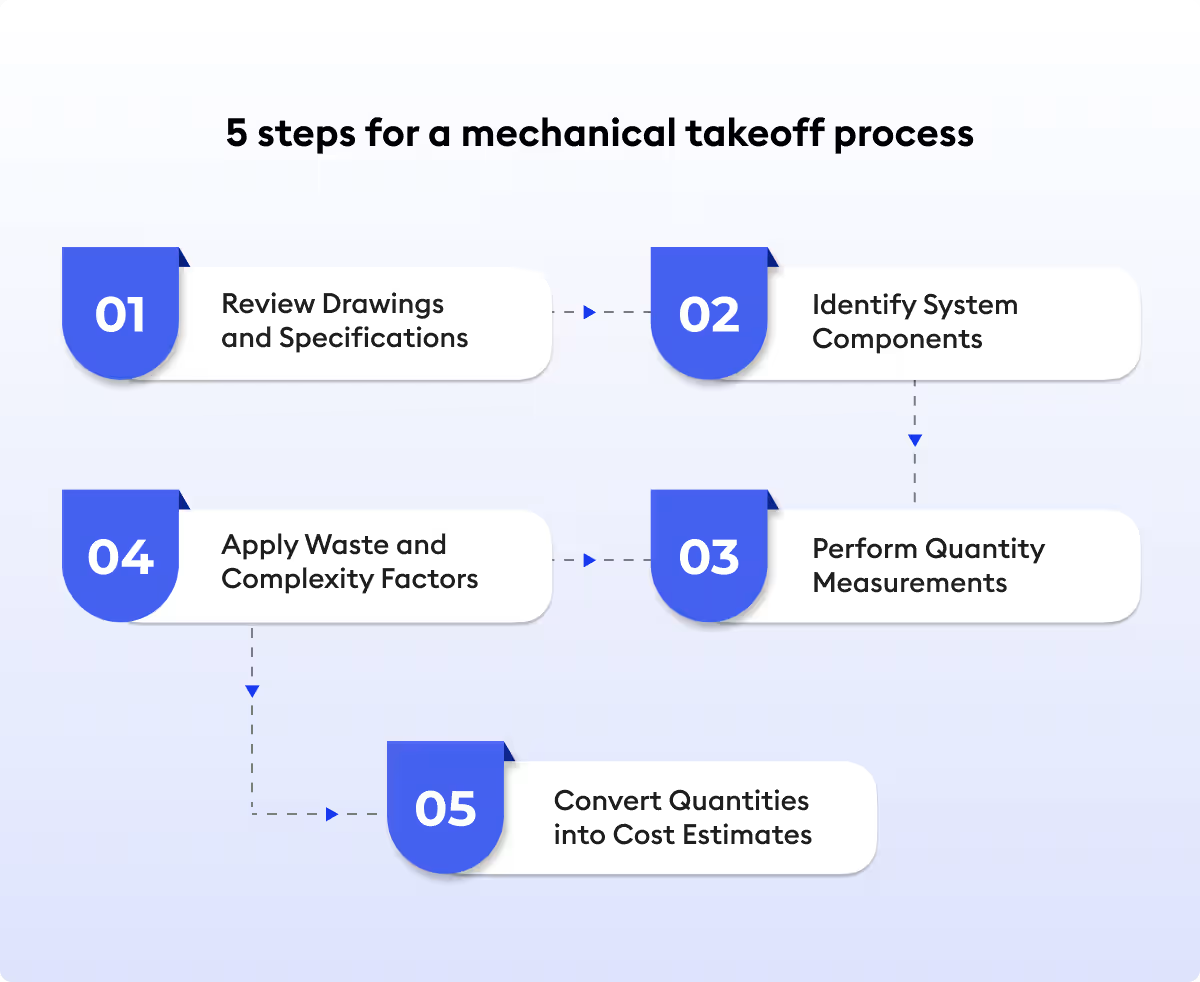
The best estimators follow a repeatable, structured workflow since that helps reduce errors and improve consistency across bids.
Step 1 - Review Drawings and Specifications
The first step is reviewing all project documentation. Mechanical estimators examine floor plans, reflected ceiling plans, sections, details, schedules, and specifications to ascertain the overall scope of the system and how all systems are interconnected. Some estimators also review architectural and structural drawings because coordination clashes can have a significant impact on mechanical installation.
This step is very important, as many errors can be made in downstream
Step 2 - Identify System Components
Next comes system identification. Estimators begin to quantify systems by organizing each system individually (i.e. supply air, return air, exhaust systems, chilled water, hot water and steam, refrigerant piping, specialty systems etc.). This system separation helps avoid redundant quantity taking.
Most AI takeoff platforms can now automate portions of this process by identifying symbols, equipment tags, and ductwork or piping networks.
Step 3 - Perform Quantity Measurements
The quantities are measured next. This includes measuring lengths for ductwork or piping systems, surface areas for insulation, equipment, fitting quantities and so forth.
The methods for performing takeoff used to involve rulers and a scale on hard copy drawings or digital takeoff software to measure linear or area quantities; this is now automated with AI software automatically calculating and quantifying system components with incredible speed.
This is also where the largest time difference between manual and AI takeoff is demonstrated. It used to take a full day to perform a manual ductwork takeoff, while AI software now takes mere hours to generate accurate quantities from the drawings.
Step 4 - Apply Waste and Complexity Factors
The raw quantities are still not a complete estimate. Mechanical estimators will now take into account construction waste, fabrication loss, site and labor conditions, the complexities of field installation of ductwork or piping in tight spaces or in ceilings with limited access, and sequence. This stage relies on the skill and experience of the mechanical estimator.
For example, a mechanical room for a hospital requires very different labor unit assumptions than a ductwork system in an open warehouse.
Step 5 - Convert Quantities into Cost Estimates
Finally, all quantities are translated into pricing. Estimators take material costs, labor units, subcontractor bids, equipment costs, general and administrative costs and profit and contingency factors to generate a complete mechanical bid estimate.
This stage connects the takeoff directly to profitability.
As explained in a previous Beam AI blog on estimates vs quotes vs bids, estimates, quotes, and bids each serve different roles during preconstruction and project pricing. But all three rely heavily on accurate takeoff data. If the original mechanical quantities are incorrect, every downstream pricing decision becomes unreliable, regardless of how detailed the proposal may look.
Where Most Mechanical Takeoffs Go Wrong
Most takeoff mistakes stem from manual workflows creating too many opportunities for human error.
Fatigue becomes a major issue during large projects. Estimators may spend hours tracing ductwork or reviewing piping systems across hundreds of pages. As concentration drops, missed quantities increase.
Drawing revisions create another major problem. A late design update can invalidate large portions of a completed manual takeoff. If revisions are overlooked, estimates become inaccurate immediately.
Specification interpretation is another common issue. Missing insulation requirements, pressure classifications, or accessory details can heavily impact costs.
And the biggest problem is that small errors compound quickly.
A 5% quantity error on ductwork may seem manageable initially. But after labor, fabrication, insulation, overhead, and schedule impacts are added, that small miss can create a 15% or greater project cost overrun.
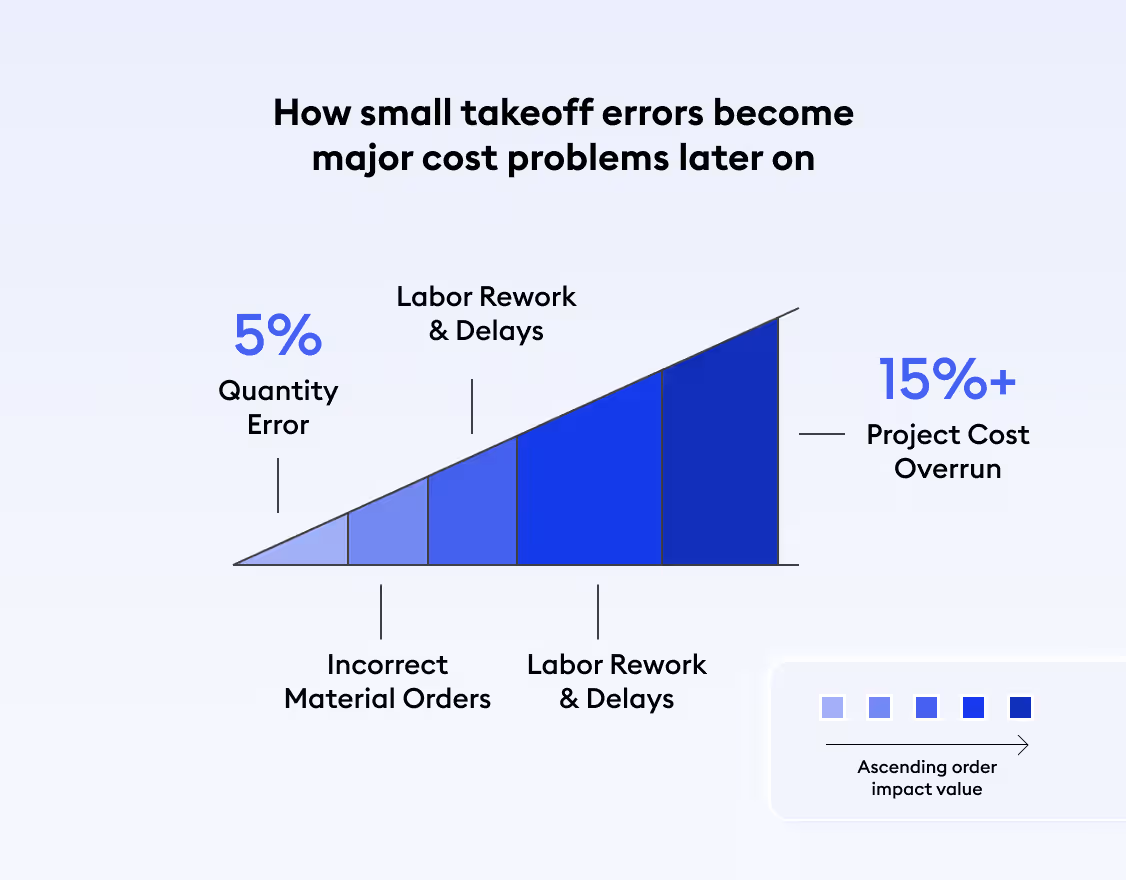
That is why modern estimators increasingly rely on software automation and AI-assisted verification.
Manual vs Software vs AI Mechanical Takeoffs
The evolution of mechanical takeoff workflows has changed how estimators handle project volume and complexity.
Traditional mechanical contractor software improved digital measurements and organization. But many platforms still require heavy manual tracing and counting. That manual tracing is exactly why mechanical contractors are moving off 90s-era estimating tools toward done-for-you AI takeoffs.
AI mechanical takeoff software takes the workflow to the next level, automating component detection, quantity extraction, and drawing analysis.
Platforms like Beam AI are helping HVAC contractors modernize estimating workflows even faster. Teams that prefer to maintain internal estimating control can use Beam AI DIY takeoff software to generate AI-based takeoffs in 10 minutes, while contractors facing estimating bottlenecks can get quality-checked takeoffs and estimates within 36 hours.
Such flexibility is crucial for growing HVAC mechanical contractors dealing with fluctuating bid volume. Some teams may only need software tools to improve efficiency, while others may need additional estimating support during peak ITB periods.
With both automation and flexibility, Beam AI helps estimators eliminate repetitive tasks, process revisions quickly, and increase bid volume without hiring additional estimators.
How Mechanical Takeoff Software Improves Estimating
The best mechanical contractor software centralizes drawings, automates calculations, organizes quantities, tracks revisions, and improves collaboration between estimating teams. Instead of going over every sheet manually, estimators can utilize structured workflows with faster verification processes.
It is also essential that your software helps you achieve standardization, as estimate quality can often differ depending on the estimator. Standardizing assemblies, pricing, labor units, and reports will create consistency across projects.
Furthermore, many mechanical contractor software can be integrated with estimating and procurement systems and project management tools to improve the overall preconstruction workflow.
The Role of AI in Mechanical Takeoffs
AI is changing estimating by reducing repetitive manual work, as it can analyze drawings and automatically identify components. But this doesn’t mean that the estimator’s role has been eliminated; it only means that the estimator’s focus has changed.
And if you’re wondering what estimators now have the time to focus on, it’s validating outputs, reviewing exceptions, adjusting pricing strategy, improving bid quality, and lots more.
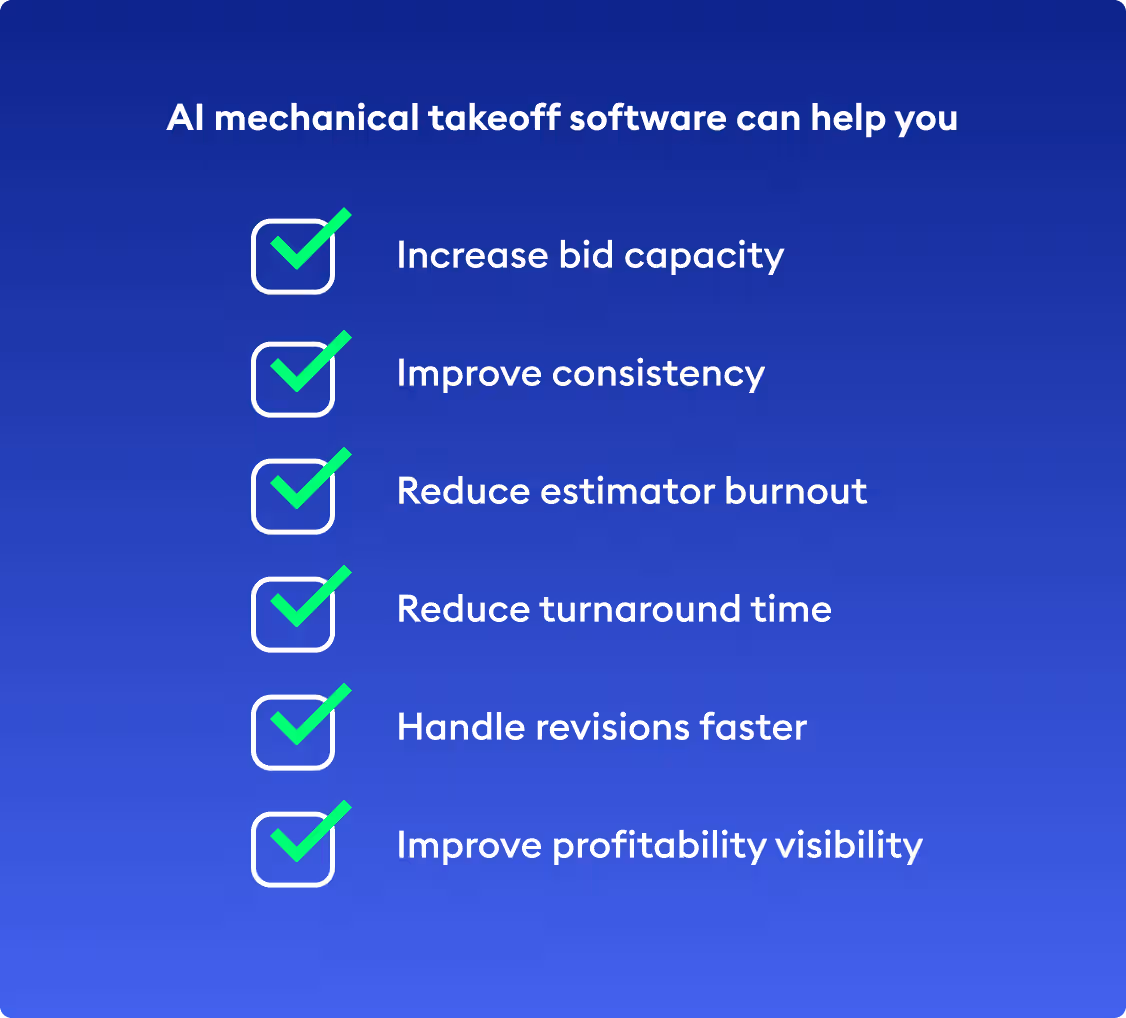
Many firms also utilize what's referred to as a "human-in-the-loop" workflow where AI excels at speed and routine tasks, and estimators handle complexity and critical decision-making. The impact of this can be substantial, but only if used to its full potential.
And, perhaps most importantly, AI helps smaller estimating teams compete with larger firms without increasing headcount.
How HVAC Contractors Can Improve Takeoff Accuracy
Better takeoffs, though, aren't just about acquiring software. The most successful HVAC contractors also improve estimating through process discipline.
Discipline through standardized workflows is paramount. Estimators need repeatable review procedures, file naming conventions and verification stages.
Revision management also remains key. Rather than an informal review of addenda, all revisions should be tracked with a repeatable review procedure.
When possible, estimate quantity measurement and pricing validation should be performed by different team members, since it helps in creating a second tier of review before bids are finalized.
Finally, the effective use of historical data also provides a lot of value. Contractors that analyze their takeoff quantities vs their actual field usage can identify trends and systematically fix errors in their estimation practices. AI solutions accelerate this with cleaner data due to digital workflows.
Choosing the Right Mechanical Contractor Software
These systems can vary by the functionality they offer; some concentrate on digital measurement tools alone, while others are focused on full takeoff and estimating workflows, while even newer programs leverage AI for speed and automation.
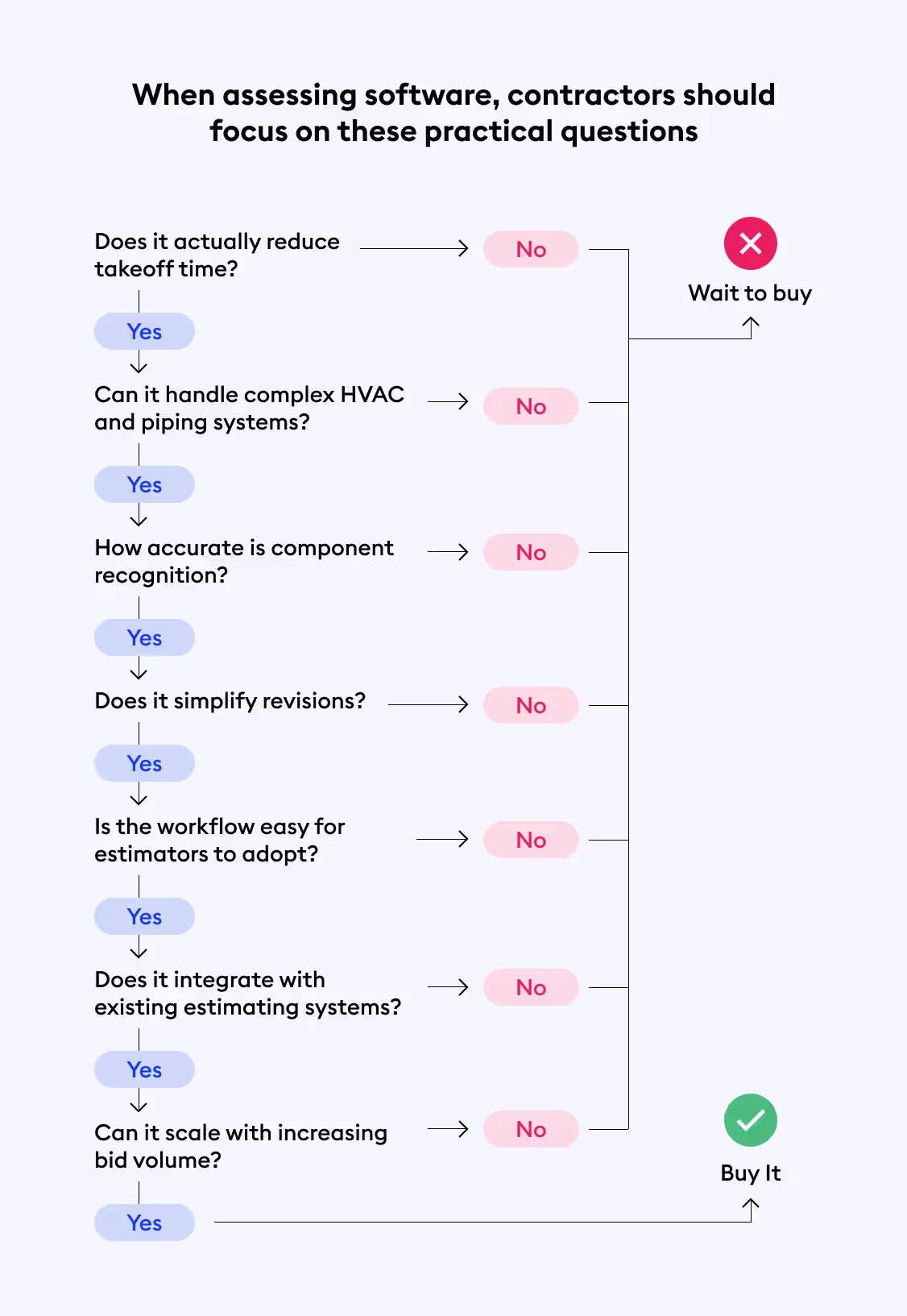
Many estimators today are specifically searching for AI takeoff software because traditional tools still require too much manual effort.
That shift is becoming one of the biggest changes happening in preconstruction workflows.
The Future of Mechanical Takeoffs
Mechanical estimating is heading in the direction of faster, more connected, and more intelligent workflows.
AI will likely continue automating repetitive quantity extraction, while estimators will be more involved in risk evaluation, constructability review, pricing strategy, and project planning.
At the same time, takeoff systems are becoming even more connected with BIM, procurement platforms, scheduling systems and field operations.
That means takeoffs will no longer function as isolated estimating exercises. They will become part of connected project intelligence workflows.
For contractors, this creates both pressure and opportunity.
The firms that continue to rely entirely on manual takeoffs may struggle to keep pace with bid volume demands and shrinking turnaround windows. The firms adopting AI estimating workflows will likely gain advantages in speed, scalability, and operational efficiency.
Conclusion
Mechanical takeoffs are one of the most important parts of the construction estimating process.
They influence bid accuracy, profitability, procurement planning, labor forecasting, and overall project success. With more complex projects, however, manual processes are becoming increasingly harder to maintain.
Traditional mechanical contractor software improved organization and digital measurements. Mechanical takeoff AI software is now taking the industry one step further by decreasing tedious tasks, enhancing speed and supporting estimators to work on bigger volumes of bids in a more consistent manner.
The function of HVAC contractors and estimators isn't to supplant people. The idea is to eliminate needless manual work to enable estimators to be more productive and give them the time to make decisions.
And in a business where speed and accuracy are all-important to profitability, that change is more significant than ever.