



What is a Construction Lifecycle?
The construction lifecycle is the complete sequence of stages that a project moves through, from the first conversation about whether to build all the way to the final handover of keys and documentation. It is not a loose collection of activities. It comprises six phases of construction and is a structured progression where each phase produces specific outputs that the next phase depends on.
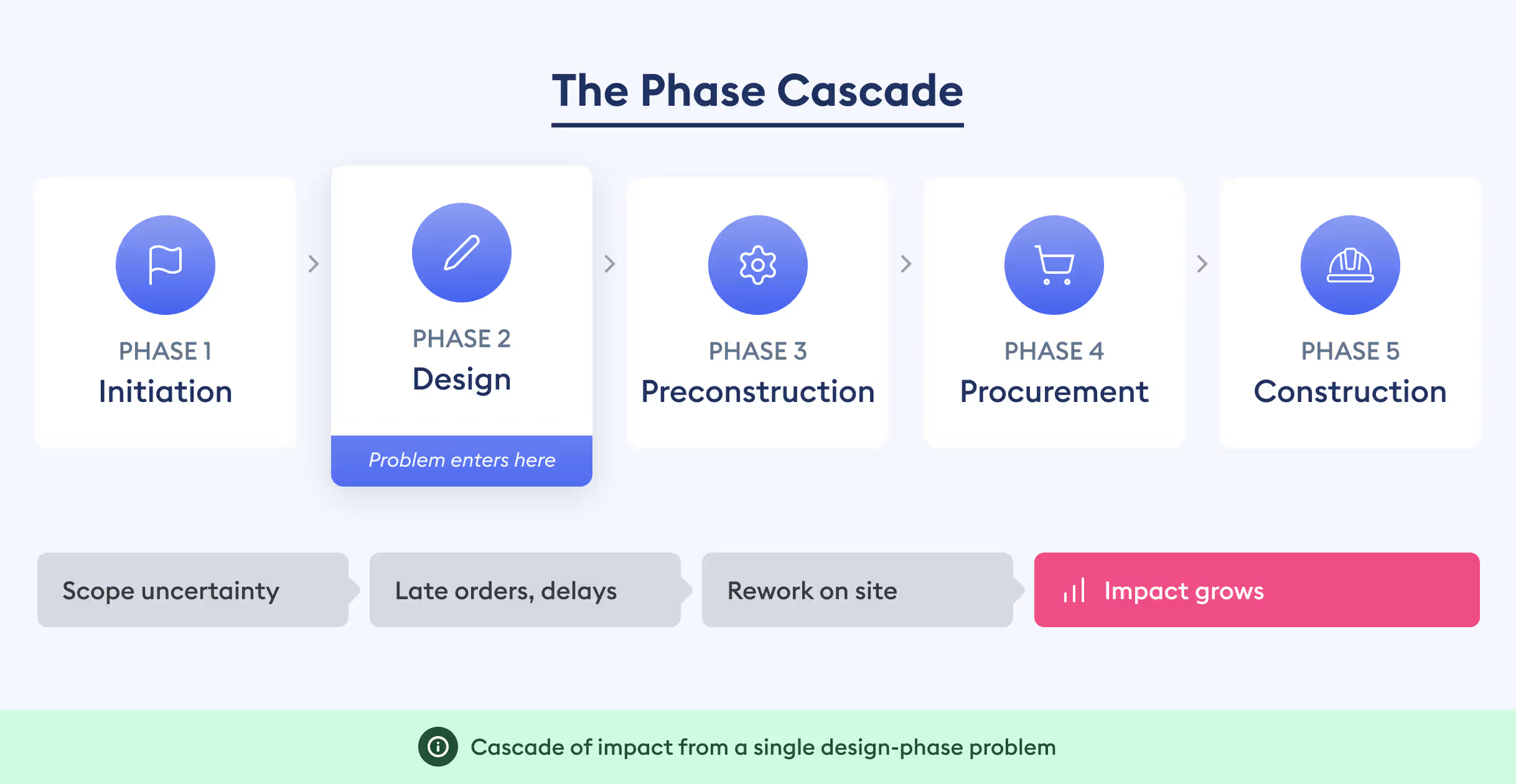
Think of it as a relay race. Each runner covers a defined leg and passes the baton at a specific point. Drop the baton, or send the next runner out too early, and the whole race suffers. When a phase is skipped, rushed, or handed off without its deliverables, the problems do not stay contained. They compound through every stage that follows.
The six phases of construction are: initiation and concept, planning and design, preconstruction, procurement, construction and execution, and post-construction and closeout. Understanding all six, not just the construction phase that most people can see, is what separates teams that manage projects from teams that are managed by them.
Every construction project phase follows this structured lifecycle, and the stakes of getting it wrong are not abstract. According to a 2022 McKinsey analysis of over 500 large capital projects, cost overruns average nearly 80% of the original budget, with schedules running about 52% longer than planned. Those numbers are not the result of bad luck. They are the result of phases that were compressed, deliverables that were skipped, and decisions that were made without the right information.
The McKinsey data tells you the scale of the problem. A 2025 peer-reviewed study of 127 practitioners working on large-scale projects tells you where it originates: design changes alone caused 56.5% of cost overruns and 40% of schedule delays. Most of the damage accumulates before a single footing is poured. That is the argument for understanding all six phases, not just the ones visible from the street.
This guide breaks down each of the six phases with the specificity that project owners and construction teams actually need: who is involved, what gets produced, how long it takes, and where most teams go wrong.
Phase 1: Initiation and Concept
Before anyone draws even a single line, a project has to justify its own existence. In fact, the initiation phase of the project only really needs to answer that one question before it can answer anything else: does this project need to exist?
This is where project goals are defined in concrete terms. What is the building for? Who will use it? What does success look like when it is finished? These questions sound simple, but the answers shape every decision made in the five phases that follow. A project without a clear purpose at initiation will spend its entire lifecycle catching up to a definition of success that was never established.
What Happens at This Stage?
The initiation phase involves defining the project scope, establishing a rough budget based on comparable projects or early cost benchmarks, identifying all relevant stakeholders, and conducting a feasibility study.
The feasibility study is the most important deliverable here, and also the most commonly skipped one. A feasibility study looks at whether the project actually makes sense. It checks if the budget holds up, if the site works, and whether zoning and regulations can be met without major roadblocks. It also asks a simple but important question: does this project match a real market or organizational need?
Skipping feasibility doesn’t remove the risk. It only moves it forward, where fixing it becomes far more expensive and difficult.
Who Is Involved?
At the initiation phase, the core participants are the project owner, any developers or financial backers, financial analysts, and, in some cases, an architect brought in early for a preliminary site review. Legal counsel may be involved if land acquisition or entitlement is part of the initial scope.
Key Deliverable
The phase closes with either a project charter or a formal go/no-go decision document. This becomes the reference point against which all future decisions are measured. Projects that drift off scope usually trace the drift back to an initiation phase that produced vague goals rather than specific ones.
Common pitfall: Skipping or rushing the feasibility study. This is the surest way to guarantee budget overruns down the line in the project. A site that looks viable on a map may have soil conditions, utility access issues, etc., that change the cost equation dramatically. Finding that out at initiation costs time. Finding it out during construction costs money and time.
Phase 2: Planning and Design
With a go decision in hand, the project moves into its most intellectually intensive phase. Planning and design transform an approved concept into a set of documents that will guide everything that follows.
The Design Progression
Design does not happen all at once. It advances through three formal stages. Schematic design establishes the overall form and spatial relationships of the project, translating goals into rough layouts and massing. Design development takes the approved schematic and adds detail: room dimensions, structural systems, material selections, and MEP system routing. Construction documents represent the final stage, producing the full drawing set and written specifications that contractors will use to build and bid.
Engineering disciplines run parallel to the architectural process. Structural engineers design the load-bearing framework. MEP engineers lay out the mechanical, electrical, and plumbing systems. Civil engineers handle site grading, drainage, and utility connections. Each discipline produces its own drawing set, which must be coordinated across all the others to catch conflicts before construction starts.
For teams working with Building Information Modeling, this coordination step is where VDC workflows pay their biggest dividends, catching clashes between structural steel, HVAC ducts, and plumbing routes inside the model before they become field conflicts that cost real time and money.
Permitting and Approvals
Construction of a project cannot commence until the project receives the required permits from the relevant jurisdiction. Permitting is essentially submitting construction documents to the local building department for review against applicable codes.
This process can take from a few weeks for simple residential work to several months for complex commercial work. In some jurisdictions and project types, the permitting process alone adds two to six months to the overall schedule, a figure that catches many project owners off guard when it is not in their initial timeline.
Cost Estimation During Design
The design phase is also where the project budget gets its first real definition. Rough order-of-magnitude estimates from initiation are replaced by detailed cost estimates developed by professional estimators working from the emerging drawing set. As design progresses from schematic through construction documents, the estimate becomes progressively more precise. By the time the full construction documents are complete, the project team should have a well-supported budget with minimal contingency.
Accurate cost estimation during design prevents budget surprises during construction. That is where Beam AI helps project teams get quantities right before the first bid goes out.
Who Is Involved and Key Deliverables
Architects, structural and MEP engineers, civil engineers, cost estimators, and the permitting authority come together during the design phase. Design milestones and decisions are approved by the project owner when options diverge. Deliverables include full construction drawings, project specifications, permit approvals, and a detailed cost estimate.
For this phase, commercial projects typically last from three to six months. For residential, it runs from one to three months. Both timelines assume steady decision-making from the owner and that there are no major design revisions after a stage is approved.
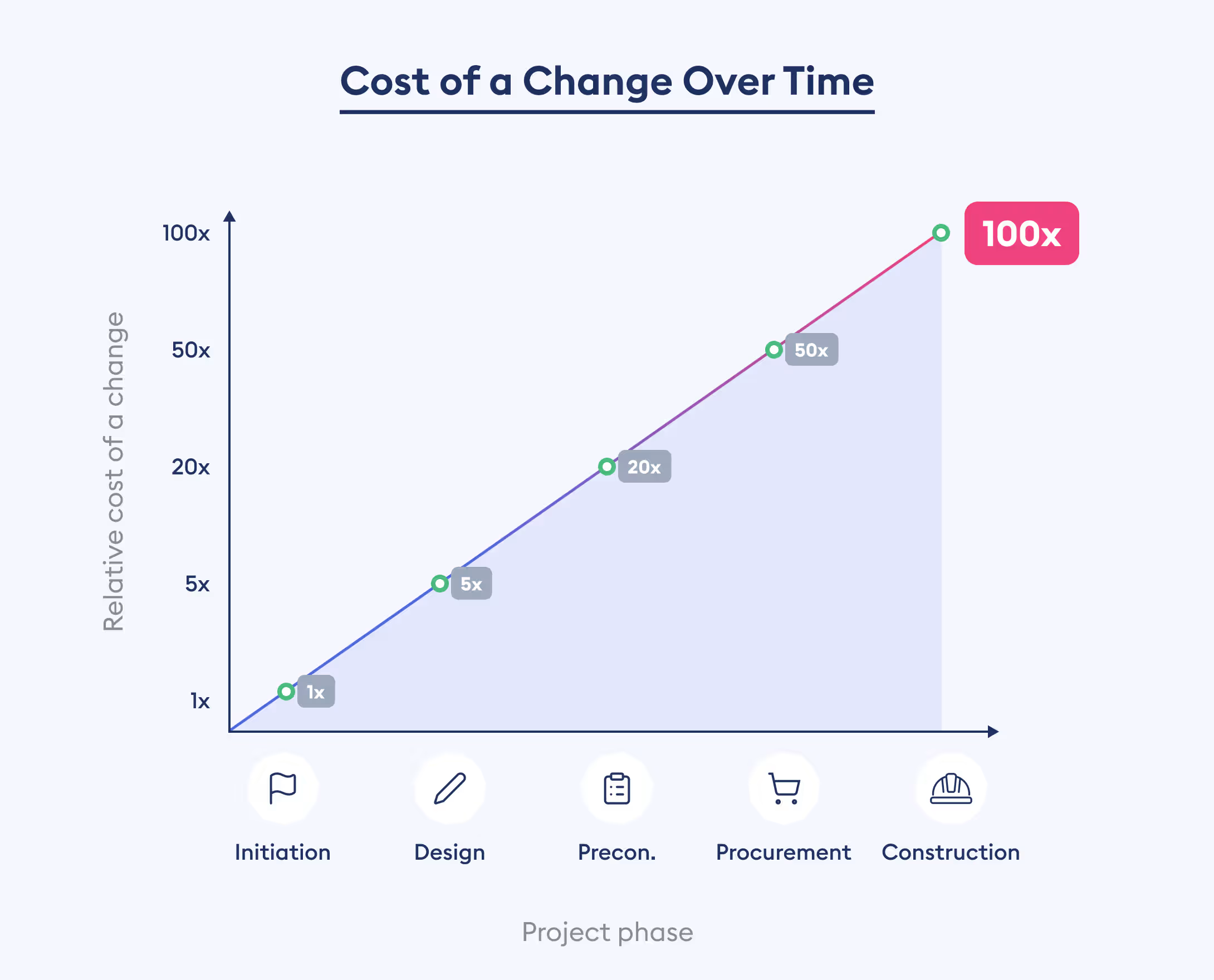
Common pitfall: Approving changes after construction documents are complete. A change that takes one hour to make in schematic design takes ten hours in construction documents and ten times the cost to fix in the field.
Phase 3: Preconstruction
Stages of construction research consistently identify that the preconstruction stage is by far the most commonly underfunded and that skipping this stage results in the highest degree of added cost. This preconstruction phase serves as the link between the design and the physical build. For a deeper look at what makes this phase work, see our full guide on preconstruction planning.
What Preconstruction Covers
Contractor selection happens in this phase, whether through competitive bidding, negotiated contracts, or a construction management delivery model. The chosen general contractor then begins lining up subcontractors, reviewing the construction documents for constructability issues, and working with the project owner to finalize contracts.
Detailed scheduling is another core preconstruction deliverable. The project schedule, typically built as a Gantt chart or a Critical Path Method network, identifies every major work activity, its duration, its dependencies, and its relationship to the final completion date. A schedule built with care at this stage becomes the single most useful project management tool throughout construction. A schedule built in a rush becomes a source of conflict.
Site logistics planning considers functional aspects of construction, including where to store equipment and material, how to get to the site with equipment, where workers will park their vehicles, utility connections during construction for utilities, and safety procedures/protocols for the project throughout construction. For urban projects or constrained sites, this planning is particularly involved.
Typically taking place before mobilization, the pre-construction meeting brings together for the first time the general contractor, all key subcontractors, the owner of the project, and the design team to be on the same page about the scope, schedule, communication protocols, and expectations before work begins.
Preconstruction Checklist
Who Is Involved
The general contractor, construction manager, subcontractors being brought into scope, and the project owner are the primary parties. The design team remains available for clarification and constructability review.
Common pitfall: Rushing contractor selection to hit a start date. The schedule pressure is real, but signing contracts with a general contractor whose team has not been properly evaluated creates problems that persist for the full duration of construction. Preconstruction exists for a reason, and compressing it generates downstream problems.
Phase 4: Procurement
Procurement runs parallel to preconstruction and often continues into the early weeks of construction. The procurement phase consists of purchasing materials, executing subcontractor contracts, and securing equipment, all of which must be done according to a time frame that supports the construction schedule. For a full breakdown of procurement methods and best practices, see our guide on construction procurement.
Why Procurement Is Critical
The procurement phase often feels like paperwork and coordination, but when things go wrong, the impact is very real on-site.
For example, a delay in the steel delivery will set back the construction schedule by three weeks for the steel frame, which causes the roofers to be behind schedule as well. This will not only set back the rough trades (electrical, plumbing, HVAC, etc.) but also set back the finish trades (drywall, painting, flooring, etc.).
By the time this delay goes through the schedule, a procurement mistake made during the project’s second month may have delayed your project’s substantial completion date by more than six weeks.
The most important concept in procurement is lead times for long-lead items. Structural steel typically carries eight to twelve week lead times from order to delivery, depending on market conditions and supplier capacity.
Custom HVAC units often run twelve to sixteen weeks. Specialty glass, custom millwork, elevator equipment, and electrical switchgear can all carry lead times that require orders to be placed weeks or months before those items are needed on site.
Identifying long-lead items early, often during preconstruction, and placing orders before the construction schedule requires them is one of the highest-leverage actions a project team can take. It costs nothing to order early. It costs significant money to expedite late.
What Procurement Covers
- Material purchasing against the construction schedule and design specifications
- Subcontractor contracts for all specialty trades
- Equipment rental arrangements for cranes, lifts, and other major equipment
- Delivery scheduling to align material arrivals with the sequence of construction
- Supplier qualification and backup sourcing for critical materials
Common pitfall: Not tracking lead times for long-lead items. The solution is simple. Identify all of your long lead items at preconstruction and create a procurement log that includes order dates, estimated delivery dates, and the people responsible for procuring them. Review the log on a weekly basis. Delayed procurement contributes to the most schedule overruns in construction, and almost all of them can be prevented.
Phase 5: Construction and Execution
The phases of construction that get the most attention are the ones visible from the street, and the construction and execution phase is the longest of all of them. It is also the most sequential. Every sub-stage depends on the one before it, which means delays at any point cascade forward through everything that follows.
Site Preparation and Foundation (2-4 weeks)
Construction starts with site preparation. Vegetation is cleared, existing structures are demolished, and the ground is prepared. Excavation and grading set the correct elevations for the building and site. The earliest technically demanding activity is normally foundation work. This involves forming and pouring concrete footings, grade beams, stem walls, or a slab, depending on the structural system. Framing may not begin until after the foundation is inspected and approved. Nothing moves forward until the ground below it is solid.
Framing and Structure (3-6 weeks)
With the foundation in place, the structural frame rises. For wood-frame residential construction, this means dimensional lumber forming walls, floors, and roof framing. For commercial construction, it typically means structural steel, concrete, or a combination of both. Roof decking and exterior sheathing are installed, giving the building its weather enclosure. The framing stage is when the building first becomes recognizable as a building, which is also when project owners tend to start making changes, an expensive habit at this stage.
Rough Trades (2-4 weeks)
Once the structure is up and the weather enclosure is in place, the rough trades move in. Plumbers run supply, drain, waste, and vent piping behind the walls and under the floors. Electricians run conduit and wire, rough in panels, and coordinate with the mechanical contractor for power to equipment. HVAC contractors install ductwork, equipment curbs, and refrigerant piping. All of this work takes place within the walls before they are closed, so inspections are important at this stage. Anything missed by rough inspection will be covered by drywall and inaccessible without demolition.
Interior Finishes (4-8 weeks)
After rough inspections are passed and walls are insulated, drywall is hung and finished. Painting follows. Then, flooring, cabinetry, countertops, plumbing fixtures, electrical devices, and light fixtures are installed in a coordinated sequence, each trade has learned through experience. This is when the building becomes a space rather than a shell. It is also the phase when schedule pressure tends to build up as the interior finish sequence is long and the trades are interdependent.
Punch List
As construction nears substantial completion, the project team will conduct a punch list walk-through. The punch list is the official record of all that isn’t finished or is not right yet: a door that doesn’t latch, a paint touch-up, a fixture installed at the wrong height. The general contractor goes through the punch list thoroughly. Building officials conduct final inspections to confirm code compliance. The project is only moved to closeout when the punch list is finished and the inspections are passed.
Who Is Involved
The general contractor leads construction execution. Subcontractors perform the specialized work. The project owner and design team conduct periodic site visits and reviews. Building officials conduct code inspections at each required milestone.
Common pitfall: Poor communication between trades working in the same space. When the plumber does not know that the HVAC contractor is working in the same ceiling space on the same day, conflicts lead to rework. This is a coordination failure, and it is precisely where project management tools fill the gap left by email chains and phone calls.
Phase 6: Post-Construction and Closeout
The project doesn't finish when construction is over. Often, in practice, many projects fail to close the loop in the post-construction phase, leaving owners with incomplete documentation, unresolved warranty questions, and a contractor relationship that soured at the finish line.
What Happens During Closeout
The inspection of the building at the end of the construction phase is conducted by building officials to verify that the building has been constructed according to the local building code. Once the inspector determines that the building is in compliance with the building code, he/she will issue a Certificate of Occupancy, the legal document required before a building can be used for its intended purpose.
A building cannot be used unless a Certificate of Occupancy is issued, regardless of how complete the building may appear. Both the final payment and the completion of the punch list are tied to each other.
Most contracts provide for withholdings, or retainage, from the amounts due to the contractor until the project is completed and the punch list items have been resolved. Once all punch lists have been completed and the contractor has provided all the required closeout documents to the owner, the final payment will be issued to the contractor.
As-built drawings are marked-up construction documents that reflect the building as it was actually constructed, including any field changes made during construction. As-built drawings are critical for any future renovation, maintenance, or tenant improvements to the building.
Operational & maintenance manuals consist of documentation for all building systems, including equipment model numbers, maintenance schedules, and contact information for equipment suppliers. Warranty documents provide information about coverage, including the duration and who provides it.
For commercial projects, owner training on MEP systems is part of closeout. Facilities managers need to know how to operate the building's mechanical, electrical, and plumbing systems before the contractor leaves the site.
Typical Timeline
The post-construction phase typically runs two to four weeks from substantial completion to final closeout, assuming punch list items are addressed promptly and documentation is prepared in advance rather than assembled after the fact.
Who Is Involved
Primary participants include the building official, general contractor, project owner, and, for commercial projects, a facilities manager. The design team may be involved in reviewing as-built documentation, warranty questions, etc.
Key Deliverables
- Certificate of occupancy
- As-built drawings
- Operations and maintenance manuals
- Warranty documentation for all systems and materials
- Lien releases from all subcontractors and suppliers
- Final pay application and contract closeout
Common pitfall: Incomplete documentation upon handover. Operations manuals that are partially put together, warranties that are not transferred to the owner, and as-built drawings that depict what was designed, instead of what was actually constructed. These gaps seem minor at closeout, but can turn into costly problems during the first maintenance cycle or when the first warranty claim is submitted. Contractors who provide a clean close-out on their projects get repeat business. Contractors who rush the handover do not.
How Long Does Each Phase Take?
The duration of each phase of a construction project varies greatly based on project size, complexity, delivery method, and permitting jurisdiction. Below are ranges based on a real-world mid-size commercial project and a typical single-family residential project. These ranges assume steady decision-making, no significant scope changes, and a permitting jurisdiction with typical review time frames.
Permitting alone can add two to six months, depending on the jurisdiction and project type. In high-density urban markets, complex commercial projects, or jurisdictions with lengthy environmental review requirements, permitting timelines at the longer end of that range are common. This variable should be accounted for in the initial project schedule, not discovered after the design phase is complete.
Common Pitfalls at Each Phase
Wrapping Up
Each construction phase has deliverables, dependencies, deadlines, and handoffs between teams. Managing all of that manually, through spreadsheets, email, and shared drives, is not just inefficient. It’s a structural threat. Problems are born and fester in the gaps between tools when information is spread across them.
What good phase management looks like in practice: clear timelines with milestone dates assigned to responsible parties; real-time budget tracking against the approved estimate; centralized documentation so the current version of every drawing and contract is always easy to find; and automated notifications when deliverables are approaching or overdue.
Beam AI is built specifically for the teams managing these phases. From accurate AI-powered quantity takeoffs during the design phase that prevent budget shock before ground breaks to real-time project dashboards that track progress through construction and into closeout, Beam AI gives project teams the visibility and control that manual workflows cannot provide.
Teams using Beam AI save up to 90% of takeoff time and can pursue three times more bids without increasing headcount. That capacity is what directly translates into competitive advantage in every phase of the construction lifecycle.
Book a demo with Beam AI and see what structured, AI-powered phase management looks like in practice.



.jpg)