




A Guide on Structural Material Preferences That Goes Beyond Material Cost
The choice of structural steel or concrete is rarely a simple material choice. Which is better depends on span, loads, schedule, fire requirements, site conditions, cost and what the building is going to be used for.
Structural steel is a high-strength framing material used for beams, columns, trusses, braces, and other load-bearing members. ASTM A992 wide-flange steel commonly has a 50 ksi yield strength and 65 ksi tensile strength.
Reinforced concrete combines concrete's compressive capacity with steel reinforcement's tensile capacity. A typical 3,000 psi concrete mix provides 3,000 psi compressive strength at 28 days.
So, structural steel vs concrete which is better? There is no universal winner. The right structural system depends on what the building needs to accomplish.
How Steel and Concrete Differ in Structural Construction?
Structural steel creates relatively lightweight building frames with high strength and long spans.
That makes it useful for warehouses, industrial buildings, high-rises, bridges, and open-plan commercial spaces.
Structural concrete uses reinforced concrete members to carry loads through columns, beams, walls, and slabs.
It provides mass, stiffness, compression capacity, and strong fire performance when properly designed.
The biggest difference is how each material handles structural forces.
Steel performs exceptionally well in tension and compression while maintaining a high strength-to-weight ratio.
Concrete is naturally strong in compression but relies on rebar for significant tensile capacity.
That makes steel vs concrete strength comparison more nuanced than comparing compressive strengths alone.
AISC highlights steel's longer spans, lighter weight, and faster erection as major advantages over concrete framing.
What Really Drives the Cost of Steel and Concrete?
Short answer: Not always.
Steel frame structures can be more expensive per structural ton, but they can save money on foundations and time to erect with lower total construction costs.
Again, comparing concrete to steel, if local conditions (labor, aggregates, forms, ready mix) are favorable to concrete, then concrete may be the less costly choice.
2026 market guides show that commercial steel framing costs $20 to $45 per square foot to frame an office or retail space.
Basic concrete slab work can fall around $4–$8 per square foot, but that is not an equivalent frame comparison.
This distinction matters when evaluating steel vs concrete construction cost.
A fair comparison should include:
- Structural materials
- Reinforcement
- Formwork
- Fabrication
- Erection
- Labor
- Foundations
- Fireproofing
- Equipment
- Schedule impacts
- Long-term maintenance
The cheapest material on paper can become the expensive option after installation and schedule costs are included.
For deeper estimating context, see this guide to concrete cost per square foot.
Factors Affecting Durability of Structural Steel & Concrete Material
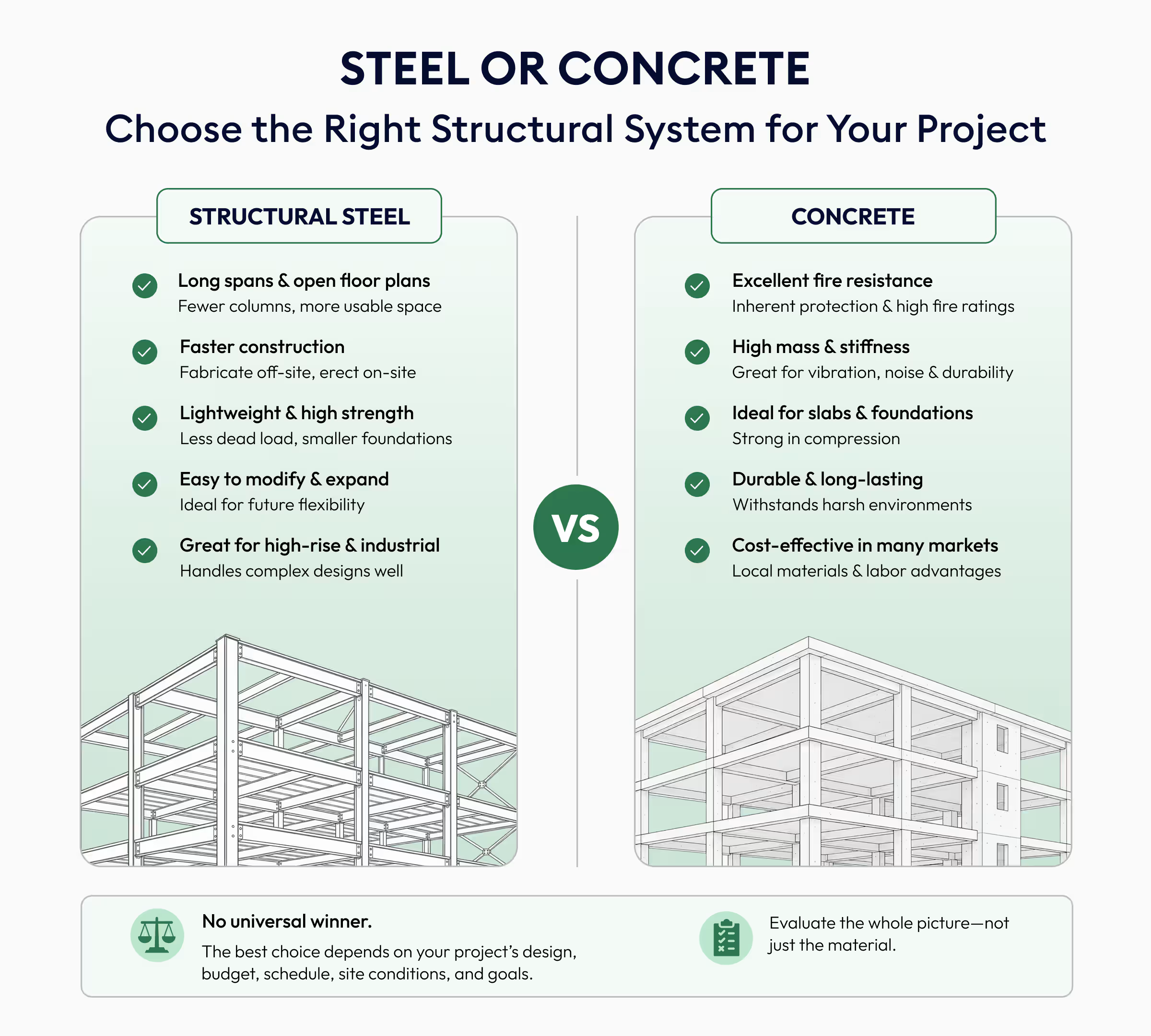
Long spans and open floor plans
Steel is often the better choice when column-free space matters.
Longer spans can reduce column counts and create flexible interiors.
This works especially well for warehouses, manufacturing facilities, aircraft hangars, and large commercial spaces.
Faster construction schedules
Steel members can be fabricated while foundations and other site work continue.
Once delivered, the frame can be erected without waiting for concrete curing.
AISC specifically identifies this sequencing advantage as a major reason steel can accelerate construction.
That makes steel vs concrete construction speed an important consideration for projects facing tight deadlines.
High-rise and complex structures
Steel's strength-to-weight ratio can reduce structural weight.
This can lower the complexity of transportation, assembly, and foundation requirements.
Steel is a good choice when trying to achieve design flexibility with respect to column spacing, transfer structures, and open floor plans.
Renovations and structural retrofits
Structures already present in construction projects are better strengthened through steel additions: it may form part of existing beams, frames, and braces with less of the overall material volume that would be needed in concrete form; hence, steel is preferred as the building expands when structures are adaptable to existing reuse and under conditions of low accessibility.
Fire resistance
Generally, concrete will be preferred if inherent resistance is the consideration. Its behavior is governed by the size of members, coverage, aggregate, moisture, reinforcement, and exposure condition.
Steel loses strength as temperatures rise and often needs fireproofing.
The steel vs concrete fire resistance question, therefore, depends on the required fire rating and protection system.
NIST provides guidance covering fire-resistant design for both steel and concrete structures.
Mass and compressibility
The compressive behavior of concrete makes it useful for foundations, cores, walls, and heavily loaded elements.
Its mass can also be beneficial for stiffness and acoustics.
Plates and foundations
A concrete slab is still the practical choice for many floors and foundations.
Concrete can also be very effective where the structural system requires a lot of mass.
Some local markets
Concrete is the winner when you have ready-mix supply, formwork crews, aggregates, and labor available.
The local economy is more important than any generic material comparison.
Precast Concrete vs. Structural Steel: Which Is Better?
The choice is not always steel versus cast-in-place concrete.
Precast concrete can compete strongly when repetitive components, controlled production, and rapid installation are priorities.
NIST describes precast concrete as an efficient building material produced in factory conditions.
Cast-in-place concrete offers greater flexibility around complex geometries and monolithic structural systems.
Steel usually wins when lightweight framing and long spans dominate.
Precast can win when repetition, mass, durability, and rapid component installation matter more.
When Should You Use a Steel vs. Concrete Structure?
Often the project type makes the decision clear.
Warehouse: Steel generally wins out because long spans and rapid erection count.
Industrial Facility Steel: Often attractive for equipment loads, clear spans and future modifications.
Mid-rise office: Both systems can work, depending on floor-to-floor height, fire requirements and local costs.
High-rise: Steel, concrete and composite systems can all compete effectively.
Parking structure: Concrete often has an advantage because of durability, mass and repetitive floor construction.
This is the practical answer to when to use steel vs concrete structure.
How Do Takeoffs Change Between Steel and Concrete?
The estimating process changes significantly when the structural system changes.
A steel estimate focuses heavily on member sizes, lengths, weights, connections, plates, bolts, and structural steel fabrication requirements.
A concrete estimate focuses on volume, reinforcement, formwork, slabs, footings, walls, columns, and placement requirements.
For example, a concrete scope may include:
- Concrete volume
- Rebar weight
- Formwork area
- Concrete blocks
- Concrete anchors
- Slab thickness
- Pour sequences
A retrofit scope could additionally include concrete repair, concrete leveling, demolition, and cutting.
A concrete saw may become part of the equipment estimate for demolition or modifications.
Even a concrete slab calculator only solves part of the problem because labor, reinforcement, waste, access, and finishing still affect the bid.
For estimators, construction takeoff software can help organize these quantities across different structural scopes.
Beam AI also provides dedicated structural steel takeoffs and concrete takeoffs, helping estimators quantify each system from project drawings.
What About Sustainability and Embodied Carbon?
Neither material automatically wins the sustainability argument.
Steel has strong recycling advantages.
AISC reports that American structural steel contains an average of 92% recycled content and remains fully recyclable.
Concrete's embodied carbon is heavily influenced by cement content, mix design, strength, and manufacturing.
The Carbon Leadership Forum's baseline data shows substantial variation across both materials.
For example, its 2021 baseline listed 4001–5000 psi ready-mix concrete at 406 kg CO₂e/m³ typical.
Its baseline for hot-rolled structural steel ranged from 0.8 to 1.7 kg CO₂e/kg, depending on production characteristics.
These figures should not be compared directly without considering structural quantities and functional performance.
The better approach is project-level embodied-carbon analysis using product EPDs.
Building Transparency's EC3 tool provides material-specific data for comparing those impacts.
So, Which Is Better: Steel or Concrete?
The steel frame vs concrete frame building debate is not really about choosing a winner.
Steel tends to win when speed, span, light weight, flexibility, and future modification matter most.
Concrete tends to win when fire resistance, mass, compression, durability, and local cost advantages matter most.
Composite systems can sometimes capture the strengths of both.
The smartest decision starts with the building's requirements rather than material preference.



.jpg)