





Electrical conduit explained: What it is, how it works, and why it matters in every building
You have probably been on a project where someone made a conduit decision that looked fine at the time and became a problem six months later.
Maybe it was the wrong conduit type for a corrosive environment. Maybe underground electrical conduit runs were buried too shallow. Maybe the electrical conduit connectors were not sealed properly in a wet location. The conduit itself was fine. The electrical wiring inside it was fine. But a single specification or installation decision — made quickly, under schedule pressure, without enough thought — created a maintenance issue or a failed inspection that cost real money to fix.
This is the reality that electricians, contractors, and estimators all live in. You are not working in a vacuum. Decisions made in the field affect the estimate. Decisions made in the estimate affect what the field has to work with. And decisions made at the specification stage affect both. Electrical conduit sits at the intersection of all three.
Whether you are an electrician looking for a clear reference on electrical conduit types, an electrical contractor trying to understand what drives conduit specification decisions across different project types, or even an estimator trying to understand why conduit takeoffs are so tricky, this guide is built for you.
Let's get started.
What is an electrical conduit?
Electrical conduit is a protective tubing system used to route and safeguard electrical wiring in residential, commercial, and industrial buildings — and to carry it through underground distribution systems between them.
Its core purpose is threefold: mechanical protection for cables against physical damage, environmental protection against moisture and heat, and long-term accessibility so wiring can be maintained, replaced, or expanded without opening walls. That last one is what separates conduit-based systems from direct-burial or open-wiring methods. The conductors - or data lines in a commercial structured cabling installation - that run through the pathway can be pulled out and replaced as bandwidth demands increase. New circuits can be added to existing runs if fill capacity allows, and faults can be repaired without a demolition crew.
Open wiring vs. conduit-based wiring systems
Open wiring — cable running without a wiring protection system — still exists in specific, limited applications. Type NM cable (Romex) inside residential walls is the most familiar example. It is permitted in specific locations where the wall cavity provides adequate protection, and the risk of physical damage is low.
But open wiring has hard limits. No mechanical impact protection. No rerouting or replacement without opening walls. No defense against moisture or corrosive environments. In commercial, industrial, and most exposed applications, it simply is not code-compliant.
Conduit-based electrical wiring systems cost more upfront — materials, labor, fittings, supports. They last longer, they are repairable, and they are safer over the building's full lifecycle. In most professional construction environments, that trade-off resolves itself. Electrical conduit is the standard.
The five types of electrical conduit
This is where real decision-making happens. Electrical conduit types are not a default — the choice is driven by environment, exposure, location, and code requirements. Here is a clear breakdown of each.
PVC electrical conduit
PVC electrical conduit is the most widely used type across residential and commercial construction. Lightweight, corrosion- and moisture-resistant, non-conductive, and lower-cost than metal options. It comes in two grades:
Schedule 40 is the standard. Larger inside diameter, easier wire pull, lower cost. Works well for general indoor and underground use where impact resistance is not a primary concern.
Schedule 80 has thicker walls for higher physical stress. Used in exposed locations where the conduit could take a hit — behind equipment, high-traffic areas, or anywhere mechanical contact is realistic.
Want a more detailed anaysis? Head to this guide.
The limitations matter: PVC electrical conduit becomes brittle in extreme cold, has limited fire resistance, and is not a match for metal conduit when subjected to direct physical impact. For exposed industrial runs, it is generally the wrong call.
Rigid metal conduit (RMC)
Rigid electrical conduit is the heavy end of the spectrum. Thick-walled galvanized steel pipe that provides maximum mechanical protection in demanding environments — industrial plants, exposed exterior runs, commercial buildings where walls or ceilings do not protect the cable routing system.
It handles physical impact, resists crushing, serves as a grounding path, and, in galvanized form, withstands significant exposure to corrosion. The trade-off is weight and installation labor — rigid electrical conduit is heavier, requires threaded fittings, and takes longer to install than lighter conduit types. Bending large-diameter RMC requires hydraulic equipment.
EMT (Electrical Metallic Tubing) is the lighter-weight sibling — thinner walls, no threads, compression or set-screw fittings. EMT is extremely common in commercial interior work where metal protection is needed without the full weight of rigid electrical conduit.
Flexible electrical conduit
Flexible conduit is a connection device, not a long-term solution. Its job is the final connection to equipment that vibrates, moves, or needs isolation from structural vibration transmission — such as HVAC units, motors, and compressors. It is also used to navigate tight spaces where a protective conduit system cannot make the turns required.
Liquid-tight flexible conduit (LFMC) adds a plastic jacket for wet or outdoor locations. Standard flexible metal conduit (FMC) is for dry, indoor locations only. Code limits most flex applications to around 6 feet — if you are trying to use it as a substitute for a rigid run, that is a problem.
Stainless steel electrical conduit
Stainless steel electrical conduit is the specialist option for environments where standard metal conduit would corrode and fail. Chemical processing plants, coastal facilities, food and beverage manufacturing, pharmaceutical production — environments where chlorides, acids, or aggressive cleaning agents would degrade galvanized steel within years.
Type 316 stainless is the standard for most corrosive environments. Type 304 is used where exposure is more moderate. Specifying the wrong grade of stainless steel electrical conduit is one of those mistakes that looks fine at installation and becomes a serious problem three to five years later when corrosion sets in.
Underground electrical conduit
Underground electrical conduit deserves its own category because its installation requirements differ significantly from those for above-grade work. The most common materials for buried runs are Schedule 40 PVC electrical conduit and HDPE — both corrosion- and moisture-resistant and rated to withstand soil pressure and ground movement over time.
Depth requirements under the NEC vary by conduit type and circuit voltage. Direct-buried PVC electrical conduit for residential circuits typically requires 18 inches of cover. Rigid electrical conduit (RMC) in the same application can be installed at a height of 6 inches. The logic is mechanical protection — thinner-walled materials need more soil cover to be safe from surface damage.
Moisture sealing at entry and exit points is critical. A wiring containment system that is properly buried but poorly sealed at the building entry becomes a moisture pathway. This is the kind of detail that fails inspections and creates maintenance problems years after the original installation.
Which conduit should I use?
This flowchart will help you choose. We’ve factored in the actual decision logic for when a conduit spec needs to be confirmed or challenged.
.avif)
The flowchart above is based on NEC 2023. One thing to note about the final branch: the 2023 revision introduced an allowance for EMT in direct burial and concrete encasement applications, provided the conduit is specifically listed for underground use. If you are in that situation, verify the listing on the conduit itself before specifying EMT underground — not all EMT carries that listing. When in doubt, Schedule 40 PVC electrical conduit is the safe default.
How is an electrical conduit installed
Electrical conduit installation is where conduit selection meets real-world constraints. Good planning separates a clean, code-compliant electrical wiring system from one that creates problems after walls are closed.
Planning the route
Before anything is cut or bent, the route needs to be mapped — accounting for structural members, other trades' systems, and the NEC's conduit fill requirements. Fill is the percentage of the conduit's interior cross-section that electrical wiring can occupy. For three or more conductors, the NEC caps at 40%. Getting conduit sizing right at the planning stage is far less expensive than discovering a fill problem after electrical conduit installation. Conduit and conductor sizes for each circuit are typically listed right on the panel schedule — here's how to read an electrical panel schedule, including the conduit and load columns.
Cutting and bending
Clean cuts matter more than they sound. A cut that leaves burrs inside the metal conduit can damage electrical wiring during the pull — a failure mode that goes unnoticed until something goes wrong later. PVC electrical conduit needs deburring, too. The ream step is not optional, even when the schedule is tight.
Bending is the skill that separates fast, clean installations from slow, messy ones. Electrical conduit bending tools include hand benders for EMT and smaller-diameter rigid electrical conduit, hydraulic benders for larger-diameter and high-volume commercial work, and spring benders or heat guns for PVC electrical conduit. The failure mode to avoid with any of these electrical conduit bending tools is a kink — a collapse of the conduit wall that narrows the interior and makes wire pulling difficult or impossible. A kinked section means cutting it out and rerouting, which, in a closed wall, is an expensive fix.
Supporting conduit with clamps
NEC specifies maximum support spacing for every conduit type and size. For EMT, that is typically every 10 feet and within 3 feet of every box or fitting. Improperly spaced electrical conduit clamps allow the conduit to sag over time, stressing fitting connections and creating code compliance issues. The right electrical conduit clamps for the substrate matter too — a masonry anchor into concrete holds very differently from a screw into wood framing.
Joining sections with connectors and fittings
Every electrical tubing system is assembled from sections joined by fittings — couplers for straight-line joins, elbows for direction changes, electrical conduit connectors to transition into boxes and panels, and junction fittings for branch points. Fitting material must match conduit material. A poorly sealed fitting in a wet or outdoor location creates a moisture entry point that compromises everything the protective conduit system was installed to protect.
Underground conduit installation: The rules are different here
Trench depth for underground electrical conduit is determined by NEC tables that vary by circuit voltage, conduit type, and whether the application is residential or commercial. For most residential installations with Schedule 40 PVC electrical conduit, the minimum cover is 18 inches. Rocky or sharp-edged soil can damage buried conduit over time. Sand or gravel bedding under and around underground electrical conduit is common practice on quality installations.
Where an underground electrical conduit enters a building, the penetration must be sealed to prevent moisture, insect, and gas infiltration. An underground wiring containment system is a natural pathway for all three if the entry point is left open. Conduit sealant compound or foam-in-place sealant is the standard solution.
One thing worth noting: not all PVC electrical conduit is rated for underground installation. The listing on the conduit itself confirms what it is approved for. Using non-listed underground electrical conduit is a code violation that may not surface until inspection or until the material degrades and a problem develops.
Conduit accessories: The hardware that holds the system together
Electrical conduit clamps, electrical conduit connectors, couplers, and elbows are the supporting cast of any electrical conduit installation — and the most undercounted items in electrical takeoffs.
The estimator's reality: a single conduit run from panel to device requires electrical conduit connectors at each end, couplers every 10 feet, electrical conduit clamps every 10 feet, and at least one elbow for each change in direction. On a project with 200 conduit runs, that is easily 1,000+ accessory line items. Manual takeoffs routinely miss a significant percentage of these — not because estimators are careless, but because counting every fitting on hundreds of runs across dozens of plan sheets is genuinely difficult to do without errors.
And this is exactly why many firms are now pivoting to Beam AI, an AI-powered takeoff and estimating software that delivers bid-ready Excel estimates in under 72 hours. A Florida-based electrical firm using Beam AI reported saving up to 10 hours per project and higher bid throughput. Read the success story here.
Common conduit installation mistakes
These are predictable, preventable, and expensive when they go wrong.
- Improper bending — kinked EMT or cracked PVC electrical conduit — narrows the interior, makes wire pulls difficult, and, in a closed wall, requires cutting out the section and rerouting. Using the right electrical conduit bending tools for the material and diameter is not optional. The cost of fixing a bad bend after drywall is many times higher than doing it right in the first place.
- Incorrect spacing of electrical conduit clamps causes sagging conduit, which stresses fittings and results in a failed inspection. Adding supports after the fact is always harder than installing them correctly during the original run.
- Poorly sealed electrical conduit connectors in wet or outdoor locations let moisture in. Over time, moisture inside the electrical tubing system degrades wire insulation and corrodes metal fittings. In freeze-thaw climates, water inside the conduit freezes, expands, and can damage fittings.
- Using the wrong conduit type for the environment is a slow-burning mistake. Standard galvanized rigid electrical conduit in a food processing plant looks fine at installation. Three years of cleaning chemical exposure later, it is corroding from the outside in, and the replacement cost is significantly higher than the original cost of specifying stainless steel electrical conduit.
- Shallow underground electrical conduit installation leaves buried conduit vulnerable to frost heave, landscaping activity, and surface damage. A cable routing system running at 10 inches when code requires 18 might survive indefinitely — or it might get hit by a shovel next spring.
- Overfilling the conduit creates a heat-dissipation problem, makes future electrical wiring replacement extremely difficult, and results in an inspection failure. The NEC fill tables exist for good reason.
The conduit cost trap: Why electrical estimates consistently come up short
Here is the honest version of something most estimators already know but rarely say out loud: electrical conduit is one of the most consistently undercounted elements in electrical bids.
It is not a skills problem. It is a volume problem. Manual electrical conduit installation takeoffs require tracing every run on a set of electrical drawings, calculating linear footage by conduit type and size, and then separately identifying and counting every fitting, electrical conduit connectors, electrical conduit clamps, and support that run requires. On a commercial project with hundreds of circuit runs across dozens of plan sheets, the fittings are where the count breaks down.
An estimator who accurately counts 2,400 linear feet of ½" EMT but misses 30% of the associated electrical conduit connectors and couplers has left real money on the table. Multiply that across multiple electrical conduit types, multiple sizes, and a project with underground electrical conduit runs that carry their own material and labor requirements — and the gap between the estimate and actual job cost becomes significant.
The other pressure point is addenda. When drawings get revised mid-bid — a new panel location, a revised equipment layout, a relocated mechanical room, conduit routes change, and so do all their associated accessories. Re-taking a revised electrical wiring system set manually under a tight bid deadline is where errors compound.
Beam AI's electrical takeoff automates conduit quantity extraction directly from uploaded electrical drawings — capturing linear runs by type and size, associated fittings and supports, and underground conduit requirements as separate line items. QA-reviewed outputs are returned within 24–72 hours as ready-to-price Excel files. Estimators plug costs into quantities rather than spending days building the quantity list.
The stakes climb fast on large orders - see why industrial electrical suppliers are moving to AI takeoff.
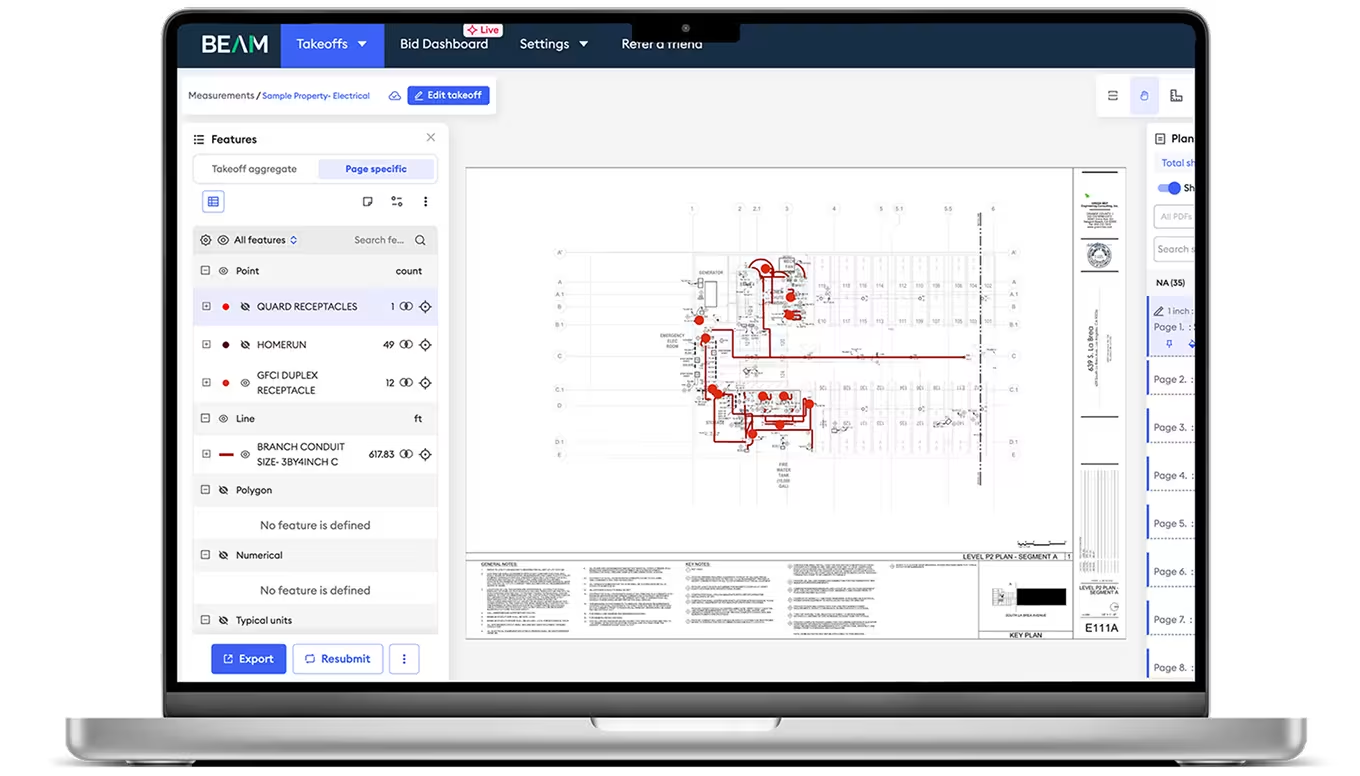
For electrical contractors bidding more work without adding estimating headcount, the platform makes the most immediate difference.
Risks and limitations worth knowing
Using any takeoff tool — AI-powered or otherwise — does not replace field judgment. A few things to keep in mind:
- Blueprint quality affects output quality. Low-resolution scans, missing annotations, or handwritten plan markups create ambiguity that any takeoff process struggles with. The better the input, the cleaner the output.
- AI captures what the drawings show. Scopes that live in specifications, addenda, or verbal agreements with GCs need to be verified and added manually. No tool reads what is not on the plans.
- Conduit routing assumptions matter. A drawing may show a 10-foot conduit run that requires 15 feet of material to route around an obstacle in the field. Experienced estimators factor in routing complexity. That judgment layer still belongs to the estimator.
Beam AI's QA layer — where an in-house team reviews every output before delivery — addresses a lot of this. But the point stands: the tool accelerates the electrical conduit installation takeoff; it does not replace the estimator's knowledge of what the job actually requires.
Conclusion
Electrical conduit is a system, not a line item. The decisions that drive any protective conduit system — type selection, sizing, support spacing, fitting selection, and underground electrical conduit requirements — all have downstream consequences for installation cost, code compliance, and long-term maintainability. Getting those decisions right at the planning and estimating stage is key to keeping projects on budget. Getting them wrong is where the expensive surprises live.
If you are an electrical contractor or estimator looking to get conduit takeoffs done faster and with fewer accessory misses, Beam AI's electrical takeoff software automates quantity extraction from your drawings. It delivers QA-reviewed, bid-ready outputs in 24–72 hours. For more information on Beam AI, we recommend reading this guide.
Ready to take the next step? Book a demo and see what it looks like on your actual project drawings.





.jpg)