




Understanding Landscaping Industry at its Depth
A landscaping project can look beautiful on paper and still become a financial headache in the field. Most contractors have experienced some version of this story.
The drawings arrive late in the evening. The bid deadline is approaching. Someone opens PDFs on one screen, spreadsheets on another, and begins measuring planting beds, hardscape areas, and irrigation lines as quickly as possible. Numbers are copied, revised, and checked again. By the time the estimate is submitted, everyone feels relieved.
Then the project starts.
A few weeks later, the surprises begin to surface. Material quantities were lighter than expected. Labor productivity was overestimated. The irrigation scope turned out to be more extensive than originally assumed. Suddenly, the project that looked profitable during bidding becomes stressful during execution.
This is exactly why Landscaping Estimating and Takeoff Workflows matter.
Landscaping projects are no longer limited to simple lawn installation or planting packages. Modern jobs may include decorative hardscape, irrigation systems, drainage work, retaining walls, outdoor lighting, and detailed planting designs - all bundled into a single bid. When estimating becomes rushed or inconsistent, profit is often the first casualty.
Successful contractors today don't approach estimating the way they did even a few years ago. Gone are the days of measuring everything manually and inputting it into a disconnected spreadsheet. The modern approach combines more organized workflows with AI-enhanced tools to deliver accuracy and efficiency that contractors have never achieved before. For this reason, takeoff services and sophisticated landscaping estimating systems are in greater demand than ever for both residential and commercial contractors.
In this guide, we will examine how landscaping estimating works, why the way contractors approach it directly impacts their bottom line, and how contractors can establish efficient landscaping estimating systems using the GROW Workflow, a systematic process that eliminates complexity in estimating.
What Is Landscaping Estimating?
At its core, Landscaping estimating is the process of predicting the total cost of a landscape project before construction begins.
That sounds simple. In reality, it involves far more than assigning prices to plants or measuring turf areas.
A thorough estimate should encompass the project scope, quantities, labor needs, required equipment, subcontractor coordination, overhead costs, and profit. It is not enough to come up with a number. We want to come up with a number that is both competitive and profitable.
This is where the landscape estimator plays a critical role. A landscape estimator analyzes the drawings, specifications, and site conditions to fully grasp what needs to be constructed and the associated costs. Their expertise extends beyond just the numbers. They also recognize risks, clarify scope, and ensure contractors do not make costly assumptions.
Take a commercial landscape renovation, for instance.
The plans might involve:
- Decorative hardscape
- Planting areas
- Irrigation system upgrade
- Stormwater management system update
- Outdoor lighting
- Site amenities
All of these different elements of scope will have their own distinct quantities, labor estimates, and cost factors. When just one is missed, it will skew your bid accordingly. This is why estimating matters so much for contractors.
An inaccurate estimate does not simply affect the office team - it affects procurement schedules, labor planning, field productivity, and ultimately project profitability. For growing landscape contractors, estimating often becomes the foundation of business stability.
Increasingly, contractors are moving toward connected estimating environments that combine estimator expertise with digital workflows and cloud collaboration. Platforms focused on AI-supported construction workflows are helping teams streamline this process and reduce repetitive takeoff work through integrated systems such as those offered at Beam AI.
Why Landscaping Estimating Directly Impacts Profitability
The loss of profit is rarely because of a big mistake. More often than not, loss of profit comes from dozens of tiny estimating mistakes. A few missing shrubs.
An underestimated labor crew. A rushed sprinkler estimate. An overlooked delivery charge.
Individually, these issues may appear minor. Combined, they can significantly affect project margins. This is why landscaping estimating should never be treated as administrative paperwork. It is a business strategy.
Many experienced contractors eventually discover that bidding for more work does not automatically improve profitability. What matters is bidding the right work at the right price.
A profitable estimate usually creates a balance between three competing goals:
- Remaining competitive
- Protecting project margins
- Managing execution risk
Finding this balance can be difficult. A contractor who bids too aggressively may win the project but struggle during execution. On the other hand, pricing too conservatively can reduce bid success and limit growth opportunities.
The challenge becomes even greater when projects include multiple disciplines such as hardscape estimating, softscape estimating, and irrigation estimating under a single contract.
Imagine pricing a mixed-use development.
The planting package is straightforward, but the hardscape package includes retaining walls and decorative paving. The irrigation design includes both sprinkler zones and drip lines. All of a sudden, it is no longer the dimensions that are being measured, but rather the system itself, and the synergy between systems.
This is why standard procedures are so vital. Estimators who follow a predictable, repeatable system are generally far more precise with their bids than a group of people who simply estimate based on memory or a frantic rush estimate. Today, most firms offer training in estimation to establish these types of systems. Educational sites with resources for knowledge assessment and digital workflows include Beam AI Academy among others.
How to Perform Landscaping Estimating?
Every experienced estimator develops personal habits, but most successful workflows follow similar stages.
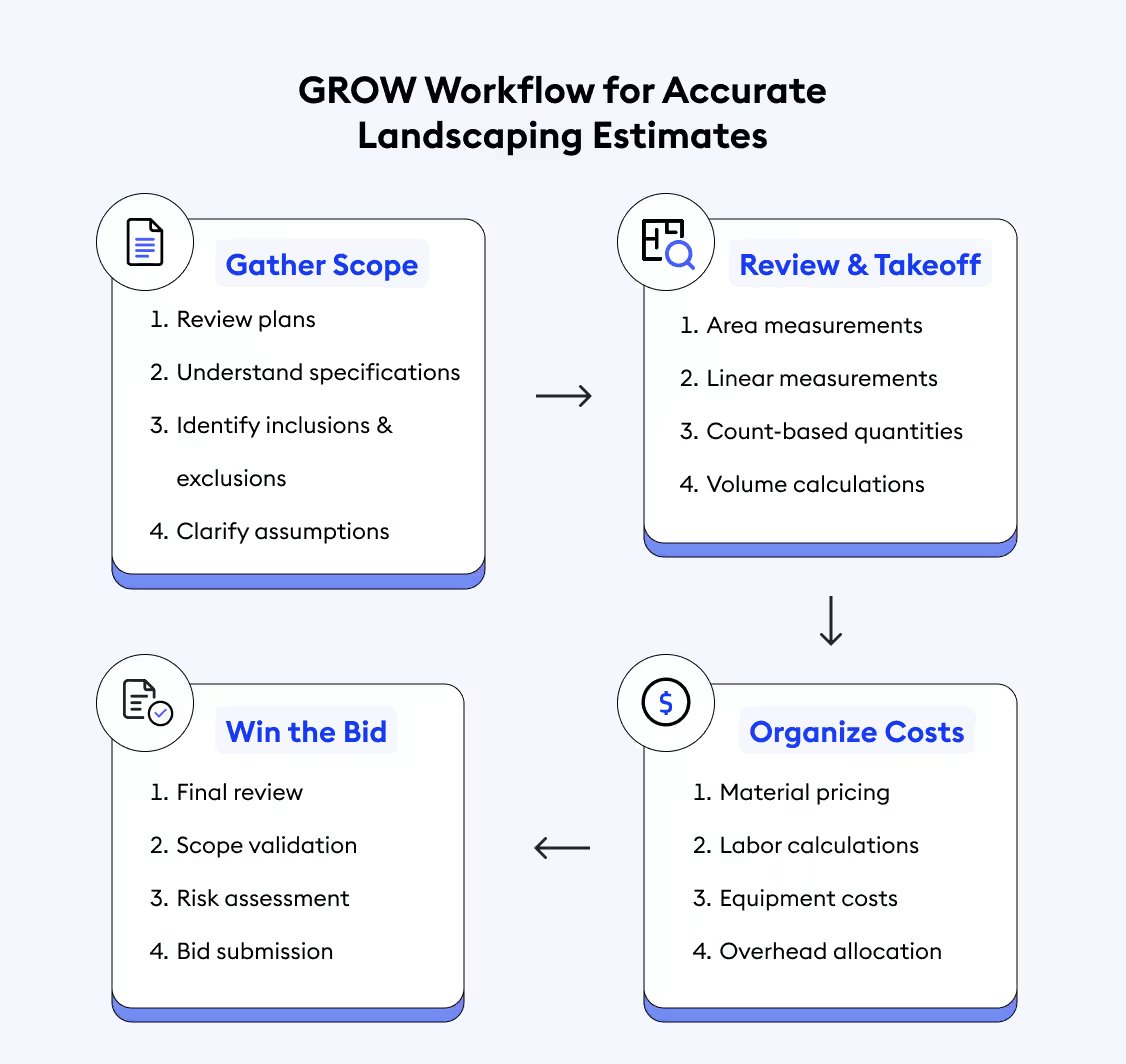
For this guide, we use the GROW Workflow:
G – Gather Scope
R – Review and Takeoff
O – Organize Costs
W – Win the Bid
The purpose of this framework is simple: reduce chaos and create a repeatable estimating system.
Step 1 – Understanding Project Scope
Before opening measurement tools or assigning prices, estimators need to understand the project itself. This first stage - Gather Scope - is where many estimating mistakes either begin or are prevented.
A contractor reviewing plans should ask:
- What is included?
- What is excluded?
- Are the drawings complete?
- Are specifications aligned with plans?
- Does the owner expect phased construction?
This may seem trivial, but incorrect assumptions at this stage can cause problems further down the line. For instance, if the estimate describes replacing an irrigation system but doesn't specify whether the current network can be used, estimators may incorrectly assume it can, even when field conditions necessitate replacement. Good estimating starts with a good understanding.
That principle sits at the center of effective Landscaping Estimating and Takeoff Workflows.
Step 2 – Landscaping Takeoff
Once the scope becomes clear, the estimator enters the Review and Takeoff stage. This is where drawings are translated into measurable quantities. A Landscaping takeoff is essentially the bridge between design and cost.
Without accurate quantities, pricing becomes guesswork. Typical takeoffs may include turf measurements, planting areas, stone quantities, irrigation lengths, edging, tree counts, and drainage systems. While experienced estimators once performed most of this work manually, many teams now rely on digital measurements and specialized landscaping takeoff services to improve speed and consistency.
This shift has become especially important for firms handling multiple bids simultaneously.
Instead of spending hours repeating measurements across drawings, contractors increasingly prefer workflows that automate repetitive tasks while preserving estimator oversight. Field-focused estimating environments designed for landscaping and sitework have become valuable for this reason, particularly in projects involving irrigation, hardscape, and outdoor construction, such as those supported by Beam AI field services.
But takeoff is not merely about speed. It is about confidence. When quantities are reliable, pricing decisions become stronger.
Crews can also submit takeoffs and capture site conditions right from the field, keeping the office and job site in sync.
Step 3 – Material Cost Estimation
Once quantities are measured, the conversation shifts from how much work exists to what that work will cost. This stage - Organize Costs is where estimators begin translating takeoff data into real project dollars.
Material pricing in landscaping is rarely static. Costs fluctuate with region, supplier availability, transportation, and seasonality. A pallet of pavers priced today may look very different six weeks later. Plant material can vary by nursery and availability. Irrigation components may shift depending on the manufacturer's lead times.
That is why experienced estimators avoid relying on outdated pricing libraries.
Instead, they build estimates around current supplier data and realistic procurement assumptions.
A landscaping estimate often includes several material categories working together:
This stage becomes particularly important when dealing with projects that involve both hardscape and softscape estimating.
Consider costing an outdoor living space renovation on the residential side. Homeowner wants an ornamental patio, planting beds, supplemental lighting, and updated irrigation. While the patio material might appear to be the most expensive portion visually, the planting selections and irrigation system can easily become just as much of an issue to the final bottom line.
A skilled landscaping estimator understands these relationships. They know that material pricing is not isolated - it interacts with labor, installation difficulty, and scheduling. Another important consideration is waste. Few landscaping materials are installed with zero loss.
Stone requires cuts. Sod may require trimming. The irrigation pipe may need additional allowances. Plant replacement contingencies may be necessary depending on site conditions. Ignoring waste may make a bid look attractive on paper, but it often creates problems in the field.
Step 4 – Labor and Equipment Costs
If materials build the project, labor determines whether the project remains profitable. Many estimates that initially appear accurate struggle because labor assumptions were too optimistic. This is why labor deserves its own careful analysis. Labor pricing is influenced by far more than hourly wage rates.
Estimators must consider:
- Crew productivity
- Site accessibility
- Weather exposure
- Crew experience
- Equipment availability
- Project sequencing
A simple example makes this easier to understand. Two projects may each require 3,000 square feet of pavers. On paper, the quantity looks identical.
But the first project involves an open commercial courtyard with direct material access. The second sits behind an occupied residential property with limited equipment entry and restricted staging. The material quantity remains the same. The labor does not.
This is where experienced estimators separate themselves from purely quantity-based pricing. Labor forecasting becomes even more important in sprinkler system estimates and irrigation estimating work.
The method of installing the pipe varies with trench depth, soil type, zoning considerations, and restoration requirements. An area with difficult access or very rocky terrain might increase the time required to dig the trench and may require special equipment.
Equipment costs must also be considered realistically. Common landscape equipment may include:
- Skid steers
- Mini excavators
- Trenchers
- Compactors
- Dump trailers
- Lifts and grading equipment
Many contractors underestimate how quickly equipment-related expenses accumulate. Rental duration, mobilization, maintenance, and operator availability all influence cost. Successful estimating treats labor and equipment as dynamic systems rather than fixed numbers.
What's beneath the surface matters too — see how ground investigation data shapes accurate takeoffs.
Step 5 – Adding Overhead and Profit Margins
One of the most common estimating mistakes happens near the end. The takeoff looks accurate. Material pricing is complete. Labor appears reasonable.
Then the estimator submits the job without properly accounting for business overhead. This is where profitability quietly disappears. Projects do not operate in isolation. Every contractor incurs business expenses whether crews are on site or not.
These may include:
- Insurance
- Administrative salaries
- Fuel and transportation
- Office operations
- Supervision
- Software and technology
- Licensing and compliance costs
Ignoring these costs creates misleading estimates. Many contractors mistakenly believe profit equals whatever remains after direct expenses are paid. In reality, profit must be intentionally planned. Healthy estimating protects both operational costs and business growth.
A simple pricing structure often looks like this:
The exact margin varies by company, project type, and market competition. But one principle remains consistent: Profit should be designed into the estimate - not hoped for after project completion.
Step 6 – Final Landscape Bidding
Experienced contractors are aware of this reality. The best bid offers the clearest and most reliable information. Before a bid is submitted, a careful review is done for:
- Scope assumptions
- Quantity verification
- Supplier pricing
- Labor exposure
- Schedule risk
- Bid inclusions and exclusions
During the final review, most problems can be spotted. It may be determined that the restoration of irrigation has been neglected. It may be identified that equipment mobilization has to be changed. It may even be that a specific pricing assumption can be stated more explicitly before a bid is turned in. An uncluttered bid tells a story; it spells out what is included, what is assumed, and how the contractor will execute the work. Owners and general contractors have become more interested in receiving clear bids. During competitive bidding, clarity of the bid can be its edge.
Understanding Landscaping Takeoff
If the financial plan for a project is estimated, then the landscaping takeoff is the project's measurement engine. This is the point where plans become quantifiable work. Without an accurate takeoff, even sophisticated pricing models cannot be reliable. Typically, there are four types of takeoff work. Understanding each one will allow contractors to bid more precisely and be more precise when bidding:
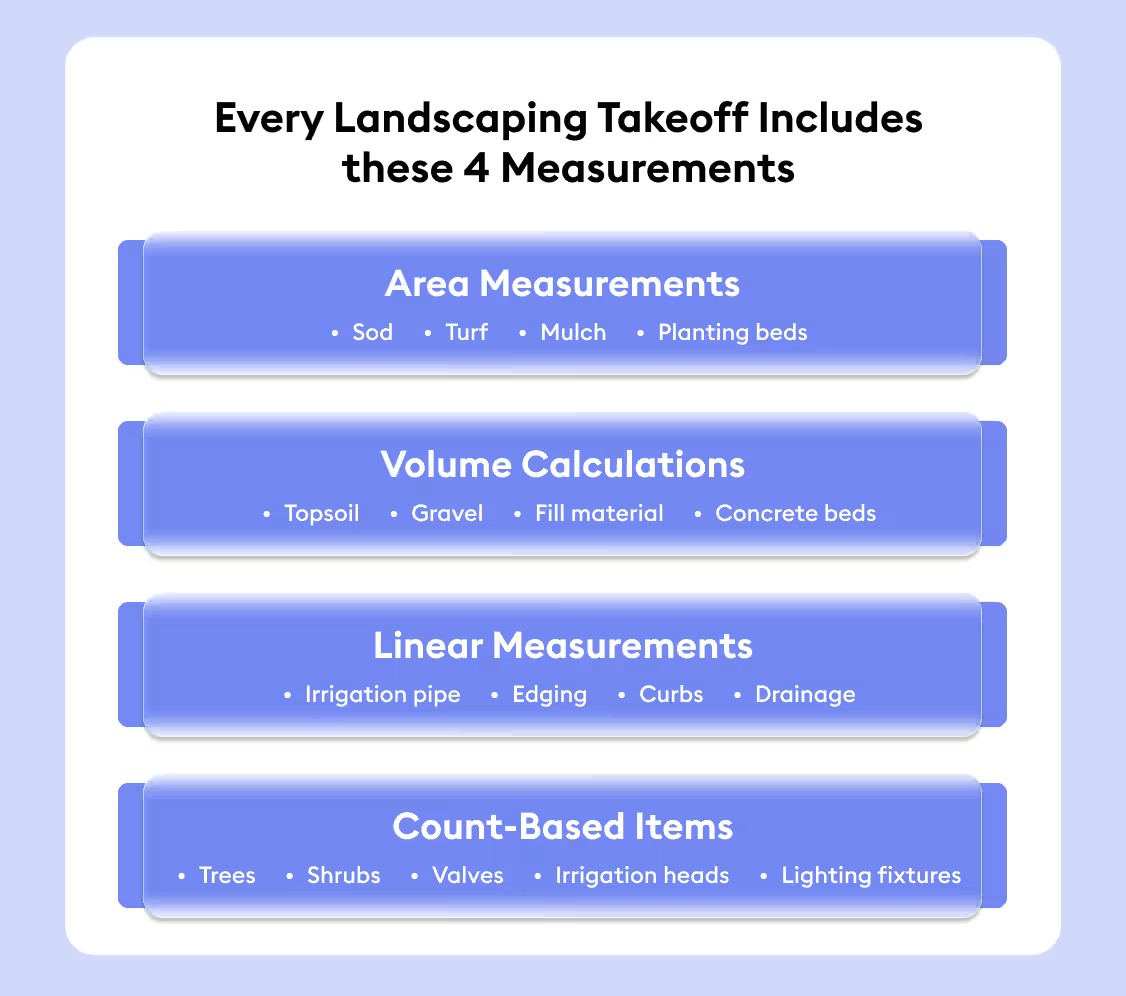
Area Measurements
Calculated in sq. ft., sq yds, and/or acres, area measurements provide the framework of a large number of landscape jobs. They are most often used when calculating quantities for sod and turf installation, planting areas, groundcover areas, mulch areas, and erosion control materials.
In a municipal park, an area measured for turf installation has implications that extend beyond the quantity of turf sod. This area will affect soil preparations, irrigation coverage, labor, and maintenance planning. This explains how one measurement will cause many others to be priced.
Volume Calculations
Some materials cannot be measured effectively through area alone. They require depth. This is where volume calculations become essential.
Volume-based estimating is common for:
- Topsoil
- Gravel
- Mulch
- Concrete
- Fill materials
These quantities are usually measured in cubic yards or cubic meters. Errors here can be expensive. Ordering insufficient material creates delays and emergency procurement costs, while excessive quantities increase waste and transportation expenses.
For projects involving retaining walls and grading, accurate volume calculations often become central to reliable hardscape estimating.
Linear Measurements
Linear measurements may appear simple, but they influence several high-value scopes.
These include:
- Edging
- Curbs
- Drainage systems
- Irrigation pipe
- Fencing and borders
This stage plays a major role in sprinkler estimate preparation and broader irrigation estimating workflows.
Even modest pipe length errors can affect valve placement, trenching requirements, and labor hours. For this reason, many estimators double-check linear measurements before final pricing.
Count-Based Items
Some landscape elements are neither area-based nor linear. They are counted individually.
Common count-based items include:
- Trees
- Shrubs
- Valves
- Irrigation heads
- Lighting fixtures
- Site furniture
Count-based estimating may look straightforward, but mistakes here remain surprisingly common.
A missed valve or overlooked tree count may seem minor during takeoff, yet create meaningful cost exposure later. Reliable landscaping takeoff services often place strong emphasis on count validation for precisely this reason.
Types of Landscaping Estimating You Must Know
Not all landscape projects behave the same way. A planting-focused residential project requires different estimating logic than a commercial hardscape package or irrigation-heavy development.
Understanding these estimating categories helps contractors build more accurate workflows and assign resources appropriately.
Hardscape Estimating
When people picture landscaping, they often imagine greenery first. But many of today’s projects are built just as much with stone, concrete, and structural materials as they are with plants. This is where hardscape estimating enters the conversation.
Hardscape work covers the constructed elements of a landscape project. These features shape movement, usability, and long-term durability.
Typical hardscape scopes include:
- Patios and walkways
- Retaining walls
- Decorative stonework
- Concrete paving
- Outdoor gathering areas
- Site steps and seating walls
Estimating hardscape work requires more than measuring visible surfaces. A patio, for instance, is not simply paver square footage.
The estimator must account for excavation, grading, base preparation, compaction, edge restraints, drainage considerations, and waste allowances. Retaining walls become even more detailed, often involving geogrid reinforcement, backfill, drainage systems, and structural assumptions.
Consider a mixed-use commercial plaza. The drawings may show elegant paving patterns and clean retaining walls, but underneath those finishes lies substantial preparation work. Missing that hidden scope can quickly erode margins.
This is why hardscape estimating is often among the most detail-sensitive parts of Landscaping Estimating and Takeoff Workflows.
Softscape Estimating
If hardscape creates structure, softscape estimating brings landscapes to life. Softscape focuses on living and organic landscape components.
This may include:
- Trees and shrubs
- Sod and seed
- Mulch and soil amendments
- Groundcover
- Seasonal planting
- Native vegetation
At first glance, softscape estimating appears simpler than structural work. But experienced estimators know otherwise. Plant selection, seasonal availability, nursery sourcing, transportation, and survival contingencies all influence pricing.
A commercial campus landscape, for example, may require hundreds of shrubs and mature trees sourced from multiple suppliers. Delivery schedules and replacement allowances suddenly become just as important as plant quantities themselves. Softscape work also carries environmental considerations.
Weather conditions, irrigation coordination, and installation timing can directly affect labor productivity and plant establishment. This makes softscape estimating a balancing act between design intent, horticultural realities, and construction logistics.
Irrigation Estimating
A beautiful landscape still depends on something invisible. Water. That is why irrigation estimating remains one of the most critical and frequently underestimated parts of landscaping work.
Modern irrigation systems are increasingly sophisticated.
They may include:
- Mainline and lateral piping
- Control valves
- Controllers
- Pressure regulation
- Smart irrigation systems
- Drainage coordination
- Spray and rotor zones
Preparing reliable sprinkler system estimates involves much more than counting sprinkler heads. Estimators must understand zoning layouts, water pressure requirements, trenching conditions, and restoration scope. Imagine a school campus project.
The drawings call for multiple irrigation zones serving turf fields, planting beds, and decorative landscaping. Pipe lengths span long distances, controllers require programming, and trench restoration affects labor planning.
In this situation, the estimating process becomes closely tied to constructability.
A strong sprinkler system installation cost estimate accounts for not only hardware but also field conditions and installation complexity.
Because irrigation systems interact with planting, grading, and utilities, many contractors now prefer coordinated digital workflows that reduce repetitive manual measurements and improve revision control.
Drip Irrigation Cost Estimation
Water conservation has changed how many landscapes are designed. As municipalities and property owners prioritize sustainability, drip irrigation systems have become increasingly common. This creates new estimating considerations.
A drip irrigation cost estimate typically involves:
- Tubing and emitters
- Pressure regulators
- Filtration systems
- Zone design
- Controller integration
- Maintenance access requirements
Unlike traditional spray systems, understanding what dripline is and where it is used requires looking closely at layout geometry, emitter flow rates, and filtration. A small design change can significantly alter total tubing linear footage, row spacing, and pressure zoning.
This is why preparing a drip irrigation cost estimate often requires careful coordination between drawings and installation strategy. For estimators, this means looking beyond material counts and understanding how water delivery interacts with planting design and maintenance expectations.
Common Challenges in Landscaping Estimation
Even skilled estimators run into issues. Not due to lack of expertise, but landscaping projects are inherently unstable. They grow and shrink, prices rise and fall, and field conditions are the ultimate surprise. Awareness of typical estimation difficulties allows contractors to plan for risk rather than be consumed by it.
Incomplete Drawings and Scope Gaps
One of the most common issues is poor documentation. We are likely to receive drawings with no notes, dimensions that contradict each other, or very vague specification text. Because of these facts, estimators will need to make educated guesses.
And guesswork can leave you vulnerable. Irrigation replacement specified without mentioning where to tie in can lead to very different cost interpretations. Clear communication is needed, as well as clearly stated assumptions.
Time Pressure and Bid Deadlines
No one gets blamed when a bid is lost for not having the right estimator. It gets lost because time vanishes. It's only the time pressures that make Landscaping takeoffs incomplete, with suppliers getting bid over and prices missed. Bidding quickly is a necessity. However, being quick and not systematic almost never ensures accuracy.
Material Volatility
The Landscaping trade is greatly reliant on external supply chains. Stone prices vary. The season of the year dictates which plants are available. Irrigation materials might experience long lead times. Variability significantly affects the estimating process in the Landscaping trade. A bid may appear factually correct if dated materials costs are used; however, it is financially suspect.
Many contractors now maintain live supplier relationships and updated cost databases for this reason.
Manual Errors and Workflow Fragmentation
Traditional estimating often involves multiple disconnected tools. PDFs. Spreadsheets. Emails. Handwritten notes. The problem is not that any single tool is ineffective. The problem is fragmentation.
Having information spread out leads to problems with version control and redoing work. These problems have driven most companies to look toward cloud-based and AI-driven workflows that consolidate takeoff and estimating within a unified system instead of distributing it across numerous separate systems.
Traditional Estimating Methods vs Modern Workflows
The world of estimating is in transition. Manual processes had been the way contractors bid on work for decades. Estimators used paper plans, scales, spreadsheets, and experience gained through repetition. They still do, but the process around them is shifting.
The difference becomes easier to see side by side.
Manual estimating comes with its own benefits of a learning curve and hands-on control, but has its limitations once bid volume rises. A contractor taking on single projects may thrive on the traditional methods. The booming company facing multiple deadlines has a very different story to tell. Modern workflows do not eliminate the need for estimator expertise. They magnify it.
Rather than spend hours on measures and manual revisions, estimators may be able to spend additional hours on scope analysis and pricing. This shift alone is a key factor in contractors adapting to connected estimating environments with multi-estimator collaboration, digital takeoffs, and review capabilities enabled by cloud-based solutions and growing AI-powered construction platforms.
How Cloud-Based Estimating Software Improves Landscaping Workflows
Estimating used to be tied to office desktops. Today, that assumption feels increasingly outdated.
Cloud-based estimating software changes how teams collaborate, review projects, and manage revisions. Instead of passing files between individuals and hoping everyone works from the same version, cloud workflows centralize information.
This creates several practical advantages.
Teams can:
- Remotely access projects
- Real-time updates
- Fewer version control problems
- Increase collaboration between the office and the field
- Centralized records of estimates
This is the kind of flexibility that will appeal to the landscape contractor trying to reconcile a few different bids. Perhaps one project manager is on-site conducting a feasibility study, another is estimating the cost of changes to the irrigation system, while the buyer is reviewing material prices on the supplier's site. Without cloud collaboration and shared access, this single request would have to pass through countless email chains and individual file transfers.
This is indicative of the broader trend in estimating today: a shift from individual calculations to collaborative, connected processes. This is part of the broader transition happening across estimating today - moving from isolated calculations toward integrated workflows where information stays connected throughout the bidding process.
Key Features to Look for in Landscaping Estimating Software
Not all estimating systems are created equal when it comes to solving problems. Certain platforms emphasize measurements. Other software will have a primary focus on project management, while another may look toward integrating with the accounting systems of the construction business.
The true problem a contractor faces when evaluating estimating technology is not which software is best, but which workflow issues they are trying to overcome.
- A good estimating system should help support the estimator rather than burden him.
- When exploring software options, certain features should really catch a contractor’s eye.
Accurate Digital Takeoff Tools
The first requirement is reliable takeoff capability. If one value does not correlate with another, the remainder of the estimate will be unreliable. Digital takeoff systems must be capable of:
- Area measurements
- Linear measurements
- Count measurements
- Revision of measurements
- Plan organisation
This matters especially for firms that perform frequent Landscaping takeoff work across the planting, grading, and irrigation scopes.
A system that reduces the time spent on repetitive measurements allows estimators to focus more on pricing strategy and scope review.
Workflow Automation Without Losing Oversight
There are misconceptions surrounding automation. Some contractors feel they will be relinquishing control and power over their work. Automation is usually quite the reverse.
The most effective use of automation has been to take repeatable tasks away from humans, allowing them time to focus on higher-order thinking and the review stage of a project. For example, AI-based workflows may help identify measurements or organize quantities, but estimator judgment still guides pricing and bid decisions.
This balance, technology supporting rather than replacing expertise, is becoming increasingly important across modern Landscaping, Estimating, and Takeoff Workflows.
A growing number of contractors investigating AI-assisted takeoff services want exactly this: speed in takeoff with the safety net of human review and estimator control. Both construction intelligence workflow platforms and estimators' support systems will continue to adapt by offering these features along with connected digital environments and training opportunities.
Cloud Collaboration and Version Control
Maybe one of the most undervalued software features is revision management. Landscape plans change frequently. Drawings are updated, addenda are issued, and specs are changed. Estimators may work off outdated plans unknowingly-a mistake that can prove costly.
A strong cloud-based estimating software application will enable teams to work from a single unified source of project information, and is especially critical when estimators, project managers, and procurement professionals collaborate across different office locations. With the emergence of more collaborative estimating processes, learning about digital collaboration and workflow management is becoming equally important; this learning is provided by training ecosystems in construction technology and estimating processes, and is often facilitated by an explicit learning environment like Beam AI's features.
Reporting and Shareable Outputs
An estimate should not be bound to the estimating software. It should be shareable and transparent. A sound system will provide:
- Reports can be exported
- Summaries are easy to share
- Customer documents can be generated
- Quantities can be derived
- The scope is easy to identify
Communication improves (both internal and external). It is easier to get to the core of a landscape bid conversation when estimators can easily share what has been bid and on what basis.
When to Use Professional Estimating Services
Others perform everything in-house. There are some that work in a hybrid fashion, combining in-house services with external. Each approach has pros and cons, and neither is "better" than the other. It depends greatly on volume when determining which approach to take. However, there are some instances where professional takeoff services are absolutely essential.
During High Bid Volume
Most firms will experience cyclical or market-driven spikes in bids. All of a sudden, estimators have more business than hours in the day.
This sets up a tough compromise:
- Bid everything quickly or bid selectively.
- Professional support helps relieve this pressure.
Instead of forcing internal teams into rushed workflows, contractors can maintain estimating consistency while handling larger workloads.
For Specialized Scope Packages
Not all jobs are that simple. Others include:
- Complex hardscape estimating
- Sophisticated irrigation estimating
- Coordination of municipal infrastructure
- Multiple construction phase planning
Unique and specialty scopes. Specialized scopes can be contracted out to others to help make the process more efficient and precise. A company could do a good softscape job but rely on a specialist for detailed irrigation and structural hardscape packages.
For Growing Contractors
When a contractor takes the step from residential house construction into commercial or public jobs, the problems that arise for estimators are usually:
- Larger drawings
- More players involved
- More paperwork
- Greater bid exposure
Estimating systems often have to change at this point. Many firms have discovered that the key to growth is not hiring more people but implementing repeatable processes.
Field services-based estimating support and digital coordination services are facilitating a higher degree of scalable work execution, particularly as projects grow in complexity across landscape, irrigation, and sitework scopes, within workflow ecosystems.
Future Trends in Landscaping Estimating
The pace of change within the estimating profession is arguably faster than many realize. The bedrock principles of good estimating - an understanding of scope, a command of quantity, and the discipline of pricing - are constant. It is the tools with which they are executed that are in rapid flux. Key trends include:
AI-based Takeoffs
The job of quantity and drawing takeoff is increasingly aided by computers and artificial intelligence. By generating automated estimates for landscape contractors, modern platforms eliminate hours of tedious manual measurement. Estimators can then spend less time counting heads or measuring square footage and more time assessing scope, managing risk, and fine-tuning their bid strategy.
Smarter Irrigation Design Integration
Water management continues to influence landscape design. This will increase demand for:
- Integrated sprinkler system estimates
- Better drip irrigation cost estimate workflows
- Smart controller coordination
- Water-efficiency analysis
Irrigation estimating will likely become more connected to environmental planning and lifecycle performance.
Connected Project Ecosystems
Estimating is increasingly becoming part of a larger workflow. Rather than operating independently, estimating systems are beginning to connect with:
- Procurement
- Scheduling
- Field execution
- Project management
This minimizes information gaps between departments and ensures smooth workflow. This can reduce handoff issues for contractors and improve project visibility.
Final Thoughts
Your landscaping project might begin with plans and drawings, but your profit begins with the bid. That's what most contractors realize after years of estimating work. Proper estimating is not just a back-office function; it is a decision-making system.
The most effective Landscaping Estimating and Takeoff Workflows rely on strong technical skills, organized processes, and reliable teamwork. From softscape estimation to a precise plan for sprinkler installation, the key is converting drawings into actionable decisions you can rely on.
This is where the GROW Workflow comes in.
Gather Scope.
Review and Takeoff.
Organize Costs.
Win the Bid.
The framework is simple by design. Because estimating does not need more chaos. It needs more clarity.
As technology keeps evolving and transforming the building process, a lot of builders are now realizing that the future of estimating is neither paper versus digital nor digital versus paper - but expertise that is being used in concert with smarter systems, integrated communication, and increased visibility, from the time of takeoff to final bid.




.jpg)