




Why Mechanical Contractors Are Ditching Manual Takeoff Software for Automated Estimating Tools
Mechanical contractors are moving away from manual estimating tools like FastPIPE for several reasons: bid volume is climbing faster than estimator hiring can keep up, deadlines are getting tighter, and margin pressure means a single missed fitting count carries more weight than it used to.
Underneath it all is one constraint: these tools still need a trained estimator to trace and measure every plan manually, and that's exactly the step that no longer scales.
FastPIPE and PlanSwift were built for a different era: one estimator, one project, one careful click-through at a time. They digitized the takeoff process — but they never removed the estimator from it. That was a real improvement over paper takeoffs. It's a much weaker fit for a shop trying to submit three times as many bids as it did five years ago, with no more estimators on staff.
That's the estimating bottleneck in one sentence. It's not a FastPIPE problem specifically — it's a category problem, and it's exactly why "done-for-you AI takeoffs" exist now, rather than just another version of the same click-based tool.
Why 90s-era estimating tools are no longer working for mechanical contractors
- Built for manual takeoff, not volume
FastPIPE is a click-based system at its core. You upload a plan, then trace pipe runs, count fittings, and measure duct runs by hand — one screen, one scroll, one measurement at a time.
That was a legitimate leap forward compared to paper takeoffs. It's a much weaker fit for a shop trying to submit 15 bids a week instead of 5.
The tool didn't get worse. The job got bigger.
- The estimating bottleneck no seat-based tool solves
Add more seats of FastPIPE, and you've added more licenses — not more estimators. That's the estimators shortage problem in practice: the constraint was never software access; it was skilled labor to run it.
Experienced mechanical estimators are hard to hire, harder to train, and take months to get productive on a full plan set.
A faster interface doesn't fix a hiring problem.
- Platform limits still show up in daily searches
It's telling that "FastPIPE alternative for Mac" and "FastPIPE mac alternative" are common searches. A tool built for a specific OS in a specific decade carries that baggage forward, and it's another reason contractors look for alternatives to FastPIPE rather than sticking with it.
Beam AI vs. FastPIPE: A direct comparison
| What Matters | FastPIPE | Beam AI |
|---|---|---|
| Who Does the Takeoff | A trained estimator manually traces and measures | The platform’s AI scans the uploaded plans, extracts quantities, and, based on the workflow that the estimator opts for, produces instant bid-ready estimates or delivers results within 24–72 hours with an added QC layer. |
| Setup/Learning Curve | Weeks to months to get proficient | Highly intuitive interface that does not require a significant learning curve. |
| Turnaround | Depends entirely on estimator hours available | 24–72 hours for Done For You workflow; instant for AI takeoffs on HVAC, plumbing, and steel with the Do It Yourself workflow. |
| Scalability | Capped by number of licensed, trained estimators | Scales with bid volume. No added headcount. |
| Accuracy / QA | Dependent on individual estimator | 99%+ accurate, with every takeoff QA-checked before delivery. |
| Platform | Legacy desktop software, historically Windows-first | Fully cloud-based. Works on any device, including Mac. |
| Pricing Model | Per-seat software license | Takeoff/service-based, scoped to your bid volume. |
| Bid Management | Not included — separate manual tracking | ITB capture, bid tracking, and addenda management built in. |
| Scale/Error Checking | Manual — depends on estimator catching it | Automatic scale inconsistency flagging before delivery. |
If you're weighing an alternative software for FastPIPE against sticking with what you have, the practical difference isn't feature parity —it's whether someone on your team still has to sit down and manually run the takeoff. With FastPIPE, that answer is always yes. With Beam AI, it isn't.
For anyone specifically searching free alternative to FastPIPE or FastPIPE free alternative — there isn't a truly free version of a service-based, QA-checked takeoff, since real human review is part of what makes it accurate. Instead, Beam AI offers a model where the cost scales with bids won, not with software seats sitting idle.
For a full breakdown of how FastPIPE compares to Beam AI, take a look at our comparison page.
What "Done For You AI takeoffs" actually means in action
This is the part worth being precise about, because "AI takeoff" gets used loosely across the industry.
AI-driven, human-vetted — not just automated clicking
Within the Beam AI platform, estimators can choose between two workflows: Done For You (DFY) and Do It Yourself (DIY). Both workflows start the same way, but the output differs based on how involved the estimator wants to be.
Here’s an article that clearly explains how Beam AI works and how it compares to other AI tools.
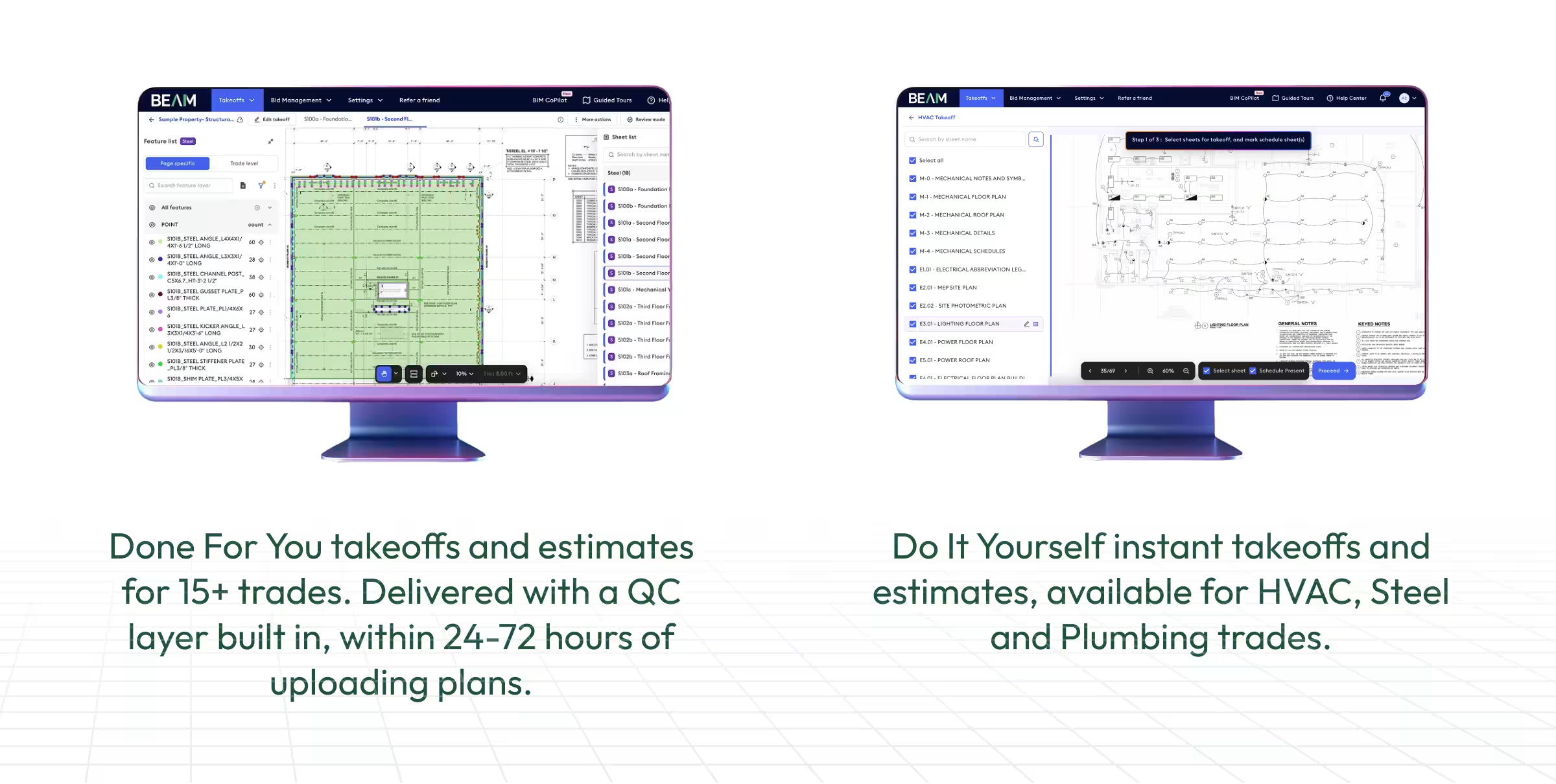
In the DFY workflow, you upload the PDF plans, specs, legends, and any supporting docs, confirm the quantities and instructions you need, and Beam AI's system extracts quantities. The AI then processes everything in the background, and the platform’s internal estimating team QA-checks the output before it reaches you, delivered in 24–72 hours as ready-to-use estimates.
In the DIY workflow, the platform produces instant AI takeoffs for HVAC, plumbing, and steel, built for contractors who want to validate quantities and generate estimates on the spot rather than wait on a full turnaround.
Either way, the estimator's job shifts from tracing lines to reviewing outputs and pricing strategy — which is a fundamentally different use of their time.
What's actually covered
Piping & ductwork takeoff and HVAC assemblies & fittings sit at the center of Beam AI's mechanical trade coverage, alongside broader material takeoff across plumbing and steel scopes. Outputs land in Excel and PDF, ready to plug directly into your pricing models or bid packages — no reformatting required.
Self-service software vs. a managed service
This is the real dividing line. FastPIPE is self-service: you own the process end to end.
Beam AI's done-for-you model is a managed service layered with AI — the takeoff work happens off your desk, and what comes back is already QA-checked. That's the structural difference underneath every other comparison point in this article.
Beyond takeoffs: Bid management built into the workflow
Done For You takeoffs solve the measuring problem. But estimating doesn't end at quantities — it moves into pricing, tracking, and juggling every open bid's paperwork.
Beam AI extends past the takeoff itself to handle that layer too:
- Automatic ITB capture — Beam AI pulls invitations to bid directly from your inbox instead of requiring manual entry, so nothing gets missed in a busy bid week.
- Bid tracking — status, due dates, owners, RFIs, and addenda are tracked in one organized view instead of scattered across email threads and spreadsheets.
- Addenda handling — when a plan set gets revised mid-bid, addenda are captured and tracked alongside the original ITB, so revisions don't slip through while a takeoff is already in progress.
This matters for the same reason done-for-you takeoffs do: it's another manual, easy-to-drop task that scales badly as bid volume goes up. FastPIPE and PlanSwift don't touch this layer at all — they stop at the takeoff. Beam AI's workflow covers estimating and bid management together.
The bid capacity problem: And how Done For You AI takeoffs solve it
Bid volume vs. bid capacity
Bid volume is how many jobs are out there to chase. Bid capacity is how many of those your team can actually respond to with an accurate estimate before the deadline.
Manual takeoff tools cap capacity at "however many estimator-hours we have this week." That ceiling doesn't move no matter how much opportunity is on the table.
Scaling without headcount
Scaling without headcount is the direct payoff of removing manual tracing from the equation.
Contractors using Beam AI have reported bidding 3X more jobs and saving 15–20 hours per week per estimator — hours that go straight back into pricing accuracy and chasing better-fit work instead of measuring drawings.
Bid turnaround time as a competitive lever
Bid turnaround time isn't just an internal efficiency metric; it decides whether you're even in the room for time-sensitive opportunities.
A 24–72 hour turnaround on a full takeoff means tight-deadline bids stop getting passed over by default.
How Done For You AI takeoffs help in protecting margin with accurate, consistent takeoffs
Profit margin protection starts at the takeoff, not the pricing sheet. A missed fitting count, an under-measured duct run, or overlooked fire and smoke dampers at rated wall penetrations don't show up until the job is already priced—and by then the shortfall is baked into the bid. Manual tracing is only as consistent as the estimator doing it, and consistency drops as volume goes up and time per takeoff goes down.
How QA-checked takeoffs protect margin at scale
Pricing accuracy at 99%+ isn't just a number — it's what keeps a busier bidding calendar from turning into a riskier one.
Every Beam AI takeoff goes through QA before delivery specifically so that higher volume doesn't come at the cost of the numbers being right.
Beyond the QA review itself, Beam AI's system flags scale inconsistencies directly: If a plan's stated scale doesn't match what's actually drawn (a common source of quietly wrong quantities in manual takeoffs), it's caught before delivery rather than surfacing after the bid is already priced.
That's a failure mode that outdated, manual takeoff platforms like FastPIPE have no built-in check for; it depends entirely on the individual estimator noticing.
Framework for evaluating your estimating stack
When searching for the best mechanical estimating software, it helps to look past feature lists and run what we call the Capacity-Accuracy-Turnaround check against whatever you're using today, FastPIPE included:
- Capacity: Can your current tool 3X your bid capacity without adding more staff?
- Accuracy: Is takeoff accuracy independently verified, or does it rest entirely on one estimator's attention that day?
- Turnaround: Can you commit to a same-week bid deadline without knowing in advance if you have the estimator-hours to hit it?
If any answer is "no," that's less a software gap and more a category gap, which is exactly what preconstruction workflow optimization is meant to close.
What to expect when switching from manual to automated estimating
Moving off a tool like FastPIPE isn't a simple rip-and-replace event. It's a shift in where your estimator's time goes.
What changes: Your team stops tracing and starts reviewing. Plans get uploaded instead of opened in a desktop app. Quantities arrive instead of getting built line by line.
What to vet in a provider: Ask specifically about the QA process behind the takeoff, which trades and scopes are actually covered (piping, ductwork, HVAC assemblies, fittings), and what turnaround commitment you're getting in writing — not just "fast," but 24–72 hours, stated plainly.
Realistic onboarding: The first project is mostly about aligning instructions and output format to your pricing workflow. After that, it's upload, confirm scope, receive takeoff — not a multi-week software rollout.
The advantages of pivoting from manual estimating to automated takeoffs are in the numbers. A commercial HVAC construction business reduced takeoff time by ~75%, doubled weekly bid volume, and saved 20-30 estimating hours per week.
Another Beam AI customer, Vinco Builders, is now saving 6 to 12 hours on each takeoff, doubling weekly bid throughput, and improving accuracy on every output.
Conclusion
This was never really a FastPIPE-vs-Beam-AI decision.
It's a manual-takeoff-era-tools-vs-done-for-you-category decision, and FastPIPE just happens to be one of the names that most mechanical contractors recognize from the old category. The tools did their job for the volume they were designed around. That volume has changed, and the tools haven't.
If bid volume, estimator hours, and turnaround time are the real constraints on your growth—not software features- that's the conversation worth having.
See what a Done For You takeoff looks like on your own plans. Book a demo with us today.





.jpg)