




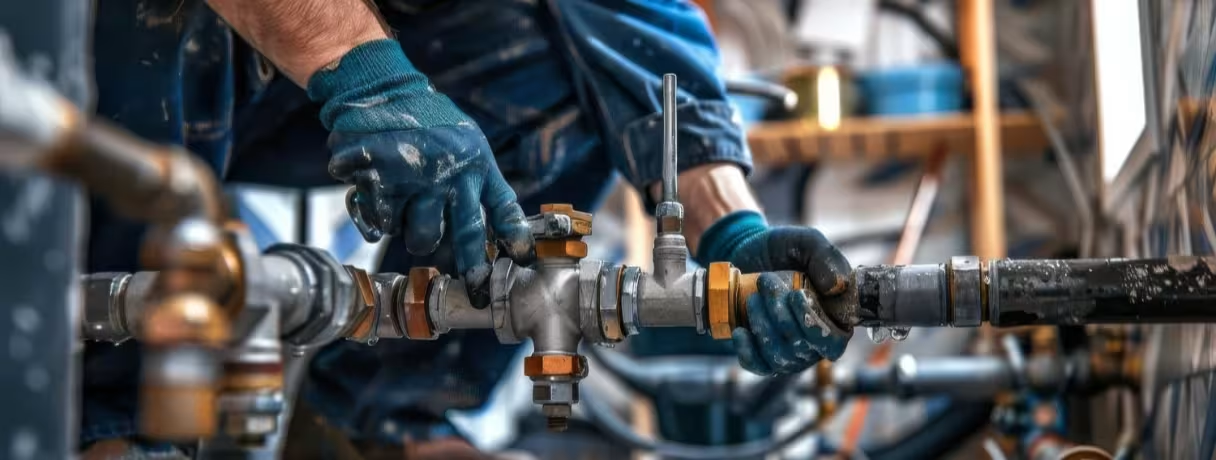
PEX pipe vs. copper pipe: Which plumbing system makes more sense?
Choosing between PEX pipe and copper pipe defines the plumbing system of a structure. Initially, it may sound straightforward, but every plumbing contractor knows it’s not just about the type of material. The difference between both shows up in labor hours, fitting counts, installation speed, durability, maintenance calls, and eventually the final number on the bid.
For years, copper pipe was trusted as the standard in residential and commercial building plumbing. It has the durability these structures require, with a “build to last” kind of reputation. But then PEX pipes entered the picture, and changed the entire math. Contractors suddenly had a plumbing system that was flexible, faster to install, and more cost-effective.
So, is PEX better than copper? Not always. Is copper outdated? Definitely not.
The real answer depends on the project. A single-family home, a multifamily building, a commercial facility, and a high-demand mechanical room will not always need the same water distribution pipe system.
This guide breaks down PEX pipe vs copper pipe across cost, installation, durability, sizing, fittings, insulation, thermal behaviour, common mistakes, and real-world performance.
What is PEX pipe?
Let’s start with the basic question: what is PEX pipe?
PEX stands for cross-linked polyethylene. In plumbing, PEX pipe is a flexible plastic pipe used for hot and cold water distribution. It is widely used in residential plumbing, remodels, repiping work, and modern building plumbing systems.
A PEX plumbing pipe system is popular because it is flexible. It can bend around corners, move through really tight spaces without effort, and run long distances without any joints. This kind of flexibility is a major advantage when it comes to the final price of the bid.
Unlike rigid metallic piping, PEX does not need elbows at every small change in direction. This reduces fitting counts, speeds up installation, and lowers the number of potential leak points.
That is one of the biggest reasons PEX pipes for plumbing have become so common in modern construction. They help plumbers work faster without unnecessarily complicating the system.
Key characteristics of PEX pipe include:
- Flexible routing
- Faster installation
- Corrosion resistance
- Freeze-resistant behavior compared to metal piping
- Fewer fittings in many layouts
- Strong use in residential and renovation work
- Compatibility with manifold distribution systems
This does not mean it's a cheap alternative. It is a practical, flexible plumbing system designed for faster and more efficient installation.
Additionally, the PEX pipe market is valued at 2.20 billion dollars in 2025 and is on track to reach 2.35 billion dollars this year. The forecast for it is USD 4.54 billion by 2036 at a 6.8% CAGR. These numbers clearly show the growth of this material in the current market, mainly because it is easy to install, procure, and use.
.avif)
What is a copper pipe?
Now let’s talk about copper pipes. It is a rigid metallic plumbing pipe used in water supply systems for decades. It is known for durability, strength, temperature resistance, and long service life.
Copper has an earned reputation. It is a high-performing metal that does really well in demanding environments, handles heat better than any other plastic alternative, and is still widely used across commercial, institutional and premium residential plumbing systems.
It also has natural antimicrobial properties, which help inhibit bacterial growth inside the pipe. That is one reason copper continues to be trusted for potable water systems.
But copper also requires more skill and planning during installation. Because it is rigid, every turn, branch, or change in direction usually requires fittings. Sections often need to be soldered, brazed, or joined with compression fittings.
A well-installed copper system can last for decades. A poorly soldered joint, however, can become a leak waiting to happen.
That is why the PEX pipe vs copper discussion is not just about old versus new. It is about which system makes more sense for the building, the installation crew, the budget, and the plumbing system's expected lifecycle.
.avif)
PEX pipe vs. copper pipe: Core comparison
When you’re looking for PEX pipe vs. copper pipe, the best way to understand the difference is that PEX is flexible, fast, and saved you money and copper is rigid, durable, proves, but is more expensive.
PEX does win when it comes to speed and cost, but copper will always win when it comes ti durability. Here is how they compare across the areas that matter most.
.avif)
Flexibility
PEX is highly flexible. That is its biggest jobsite advantage.
A PEX pipe system can bend around framing, route through tight spaces, and reduce the need for elbows and couplings. This makes it especially useful in residential construction, renovations, and multifamily projects where installers need to move quickly across repeated layouts.
Copper is rigid. That can be helpful in exposed mechanical spaces where straight, clean runs are preferred, but it also means the layout needs more planning. Every change in direction usually needs another fitting.
In simple terms, PEX works with the building. Copper asks the building to be planned around it.
Installation speed
PEX usually installs much faster than copper.
With PEX pipe and fittings, plumbers can use crimp, clamp, expansion, or push-fit connection systems. These methods eliminate the need for soldering and reduce the time spent preparing each joint.
Copper installation is very labor intensive. Installers need to be very careful when they measure, cut, clean, flux, heat and even test the joints. This kind of work takes years of skill, time and careful quality control.
For plumbing contractors working on very tight schedules, this kind of a difference is a make or break. Faster installation can reduce labor hours by half, and speed up the project.
Cost
PEX generally has a lower total installed cost. The savings comes from the material type, but also the about of labor volume that takes to install it. Faster installation, fewer fittings, easier routing, and less specialized installation work can all reduce the final cost.
Copper is usually more expensive because the material price is higher and installation takes more skilled labor. Copper pricing can also fluctuate, which makes estimating more challenging on larger projects.
For estimators, this decision is one of the most important ones. The pipe’s material affects the unit piercing but also fitting quantities, labor, scope and overall bidding strategy.
Corrosion resistance
PEX is highly resistant to corrosion because it is a polymer piping network, not a metal pipe system.
That makes it useful in areas where water chemistry may damage metallic piping over time. PEX is not affected by the same corrosion issues that can cause pinhole leaks in copper.
Copper has moderate corrosion resistance, but it can degrade in certain water conditions. Acidic water, aggressive minerals, poor installation practices, or incompatible materials can reduce copper’s service life.
So, while copper is durable, it is not immune to failure. Water quality matters.
Material lifespan
Copper has the longest proven track record.
A properly installed copper plumbing system can last for decades. It has been used in buildings for a very long time, and that history gives engineers, contractors, and building owners confidence.
PEX also has strong longevity when installed correctly and protected from UV exposure, high heat, and incompatible conditions. However, since copper has been used much longer, it still has the advantage in long-term field history.
Now, this does not mean PEX is unreliable. It is used in many construction projects. But this simply means that copper has had more time to prove itself across massive infrastructure projects.
Maintenance
PEX usually requires very less overall maintenance. Because of it’s material, it resists corrosion, uses fewer fittings, and survives better in freezing conditions.
Copper on the other hand can be low-maintenance when installed correctly. Repairs though may require more skill.
The maintenance question comes down to the building owner’s expectations. If the goal is lower first cost and easier future access, PEX may be more attractive. If the goal is premium long-term durability, copper may still be preferred.
PEX pipe sizes and specifications
Understanding PEX pipe sizes is important because it affects water flow, fixture performance, and pressure consistency.
Common PEX pipe sizes used in residential plumbing include:
- 3/8 inch
- 1/2 inch
- 3/4 inch
- 1 inch
Smaller sizes are often used for fixture branches, while larger sizes are used for main distribution lines or high-demand areas.
The right size of this kind of pipe depends on the fixture count, run length, pressure, local plumbing codes, and general flow demand. An undersized pipe can easily create a pressure drop, and slow down the performance. An oversized pipe on the other can waste material and increase the volume of water sitting in the system.
This is where PEX pipe specifications matter. PEX is rated for specific pressure and temperature conditions. Hot water lines, recirculation systems, and high-pressure applications should always be checked against manufacturer ratings and code requirements.
In short, sizing is not a small detail. It directly affects how the plumbing system performs after the walls are closed.
Copper pipe sizes and dimensions
Copper pipe sizes are based on nominal pipe sizing, but the wall thickness can vary depending on the type of copper used.
The most common types of copper pipe are Type K, Type L, and Type M.
Type K has the thickest wall and is often used in underground or high-pressure applications.
Type L is commonly used for interior water distribution and many commercial plumbing applications.
Type M has a thinner wall and is often used in residential plumbing, where allowed by code.
Understanding copper pipe dimensions is important because wall thickness affects pressure handling, durability, and cost. Heavier wall copper can handle more demanding conditions, but it also costs more. Lighter-gauge copper wall tubing may be suitable for standard residential applications, but it may not be appropriate for every commercial or high-pressure system.
With copper, sizing is not just about diameter. It is about diameter, wall thickness, application, pressure, and code compliance.
PEX pipe installation
PEX is popular because it simplifies installation.
Since pex pipe is flexible, installers can route long continuous runs with fewer fittings. This reduces labor time and lowers the number of hidden connections behind walls or ceilings.
Common connection methods include crimp fittings, clamp fittings, expansion fittings, and push-fit fittings. Each method has its own tools, installation process, and performance characteristics.
That is why pex pipe fittings and tools should be selected carefully. A crew using crimp fittings will need different tools than a crew using expansion fittings. The fitting system should match the pipe type, manufacturer guidance, and project requirements.
PEX also works well with manifold distribution systems. In this layout, individual lines run from a central manifold to each fixture. This can reduce leak points, simplify shutoffs, and make future maintenance easier.
The practical advantages are clear:
- Faster rough-in
- Fewer fittings
- Less labor dependency
- Easier routing in tight spaces
- Fewer hidden joints
- Strong fit for repeated residential layouts
Copper pipe installation
Copper installation is more demanding.
Because copper is rigid, installers need to plan the layout carefully before work begins. Pipe sections must be measured, cut, cleaned, joined, and tested correctly.
Many copper systems depend on soldered or brazed joints. This requires years of training and the proper knowledge of installation techniques. The pipe must be entirely clean, the heat has to be controlled, and the solder must flow properly into the join.
A good solder joint is reliable. A bad solder joint is a future problem hiding inside the wall.
Copper also needs more fittings because it cannot bend around obstacles like PEX. More fittings mean more material cost, more labor, and more potential leak points.
This is why copper installation typically costs more, even when the pipe itself is only one part of the total plumbing package.
Installation and thermal behavior
Pipe insulation plays a major role in energy efficiency, freeze protection, and long-term system durability.
PEX has better freeze-resistant behavior than copper because it can expand slightly when water freezes inside the line. This does not make it freeze-proof, but it does make it more forgiving than rigid metal piping.
That is why insulating pex pipe is still important in attics, crawlspaces, garages, exterior walls, and other cold or semi-conditioned spaces.
Common pex pipe insulators include foam pipe sleeves, flexible elastomeric insulation, and approved plumbing insulation products designed for use around flexible tubing.
Copper behaves differently. It conducts heat quickly, which can be useful in some hot water applications, but it also means uninsulated copper can lose heat faster. In cold environments, copper is more vulnerable to bursting because it does not expand like PEX.
That makes copper pipe insulation important for cold areas, long hot water runs, condensation control, and energy efficiency.
The key point is simple: insulation is not optional thinking. It affects system performance, durability, and operating cost.
PEX fittings vs. Copper fittings
Fittings are where both cost and leak risk concentrate.
PEX uses crimp, clamp, expansion, and push-fit connections. These systems are designed for speed and ease of installation. They also reduce the need for open flame, which can be helpful in tight or occupied spaces.
But PEX fittings still need proper installation. Wrong ring placement, incompatible parts, poor tool calibration, or skipped pressure testing can create failures.
Copper fittings are usually soldered, brazed, or compression-based. These connections can be very strong and permanent, but they require more skill and time to install correctly.
So, the question is not “which fitting never leaks?” Every fitting can fail if installed poorly.
The real question is: which fitting system matches the project, crew skill level, schedule, and inspection requirements?
Types of PEX pipes
There are several types of pex pipe, commonly known as PEX-A, PEX-B, and PEX-C.
PEX-A is known for flexibility and is often used with expansion fitting systems.
PEX-B is widely used and commonly paired with crimp or clamp fittings.
PEX-C is less common but may be used in certain applications depending on manufacturer and project requirements.
The best option depends on routing complexity, fitting method, budget, crew familiarity, and project specifications.
.avif)
Types of copper pipes
The main types of copper pipe are Type K, Type L, and Type M.
Type K is the thickest and is used for demanding conditions.
Type L is commonly used for interior plumbing and commercial water distribution.
Type M is thinner and often used in residential applications where code allows it.
Choosing the right copper type matters because wall thickness affects pressure capacity, durability, and cost. Using the wrong type can create performance problems or inspection issues.
.avif)
Real-world performance across building types
Using PEX piping has become common in many residential buildings. As discussed in the above sections, it can be quickly installed, is flexible and cost-effective. These qualities make this material attractive for single-family homes, townhomes, apartments, and more.
In renovation work, PEX is even more popular and useful. It can be routed through tight spaces without opening up walls and ceilings entirely, This kind of flexibility reduces overall disruption.
In commercial buildings copper still has a very strong hold. It is often used in mechanical rooms, risers, high-pressure mains, exposed areas, water heater connections, and applications where long-term durability is a priority.
Many projects have also started using a hybrid model. Copper may be used for mains or high-demand areas, while PEX is used for branch distribution to fixtures.
That is often the smartest approach. Use copper where strength and durability matter most. Use PEX where speed, flexibility, and cost efficiency create the most value.
Common installation mistakes
Even the right pipe can fail if it is installed badly.
One common mistake is wrong pipe sizing. Undersized lines restrict flow and create pressure issues. Oversized lines waste material and can reduce hot water efficiency.
Another mistake is poor insulation. Skipping insulation in cold areas can lead to freezing, heat loss, condensation, and callbacks.
PEX-specific mistakes include using incompatible fittings, over-bending the pipe, exposing it to UV light, using the wrong support spacing, or choosing the wrong fitting system.
Copper-specific mistakes include poor soldering, excessive bending, using the wrong copper type, failing to account for expansion and contraction, or ignoring water chemistry.
Another major issue is pressure mismatch. The pipe, fittings, valves, and system design all need to match the operating pressure and temperature requirements.
A plumbing system is only as strong as its weakest connection.
How to choose between PEX pipe and copper pipe?
When choosing between PEX pipe vs copper, do not start with preference. Start with project conditions.
Choose PEX when:
- Budget is a major concern
- Installation speed matters
- Labor availability is limited
- Flexible routing is required
- Freeze risk is a concern
- The project has repeated residential layouts
- Lower total installed cost is the priority
Choose copper when:
- Long-term durability is the top priority
- The system has high heat exposure
- The application involves high-pressure zones
- The pipe will be exposed
- The project has strict commercial specifications
- The owner prefers a premium material
- Code or engineering requirements favor metallic piping
Consider a hybrid system when:
- The project needs both durability and cost efficiency
- Copper makes sense for mains or risers
- PEX makes sense for branch distribution
- The goal is to balance performance, labor, and budget
The smartest plumbing decisions are not about picking one material everywhere. They are about using the right material in the right place.
Why pipe selection matters beyond material preference
Pipe selection affects much more than the plumbing material list.
It impacts installation timelines, labor planning, fitting counts, water pressure, maintenance cycles, insulation requirements, energy efficiency, and long-term building performance.
For estimators, it also affects takeoff accuracy. A manifold-based PEX system and a traditional copper branch system can produce very different quantities, fittings, labor hours, and cost assumptions.
That is why plumbing takeoffs need to capture more than linear footage. They need to account for pipe size, fitting type, insulation scope, fixture connections, system layout, and addendum changes. Linear footage itself is easy to undercount too — here's why plan-view pipe length falls short of the real route once risers and offsets are added.
The material decision may happen during design, but the cost impact shows up during estimating. A manifold PEX layout and a copper branch system produce very different quantities, which is exactly where the right takeoff software saves estimators hours.
Before you go
PEX offers flexibility, faster installation, corrosion resistance, and cost efficiency, while copper delivers durability, heat resistance, pressure performance, and a long proven track record. There is no universal winner in the PEX pipe vs copper debate because the right choice depends on project scope, building type, climate, budget, and long-term expectations.
In many real building plumbing systems, the best answer is a hybrid approach that uses each material where it performs best.





.jpg)

.png)