


.jpg)


Why corrosion protection matters in concrete construction
Steel reinforcement has been the lifeline of concrete construction since the inception of the industry; however, durability is now becoming as critical as strength. Engineers are putting an increasing focus on reinforcement that is designed to last generations without extensive repairs, as infrastructure owners expect longer-lasting bridges, highways, marine structures and commercial buildings.
This change is evident in the market. MarketsandMarkets estimates that the global steel rebar market to expand from USD 246.6 billion in 2024 to USD 284.6 billion by 2029, fueled by rising infrastructure investments, urbanization, and the need for longer-lasting construction materials.
This brings the focus to galvanized rebar, a reinforcing steel coated with zinc through a hot-dip galvanizing process. The zinc coating protects the steel against corrosion, thereby extending the service life of reinforced concrete structures exposed to moisture, chlorides, and other harsh environments while maintaining the strength needed for structural reinforcement.
Among the many corrosion-resistant reinforcement options available today, galvanized rebar strikes a balance between performance, durability, and lifecycle cost. So, in this guide, we'll explain how galvanized rebar is made, where it's used, how it compares with other reinforcement types, and when paying the premium makes practical and financial sense.
What Is Galvanized Rebar?
Galvanized rebar is reinforcing steel that has been coated with zinc to improve its resistance to corrosion. Rather than changing the steel itself, the galvanizing process adds a protective outer layer that shields the reinforcement from moisture, oxygen, and chlorides, which are 3 of the primary causes of steel corrosion inside concrete.
Unlike standard black (uncoated) rebar, galvanized steel rebar is specifically designed for structures expected to face aggressive environmental conditions throughout their service life.
The protective zinc coating serves two important functions:
- It creates a physical barrier between the steel and corrosive elements.
- It acts as a sacrificial coating, meaning the zinc corrodes before the underlying steel does.
This second property makes galvanized reinforcement particularly valuable. Even if small scratches or minor coating damage occur during transportation or installation, the surrounding zinc continues protecting the exposed steel through galvanic action.
To ensure consistent coating quality, galvanized reinforcing bars in North America are generally manufactured according to ASTM A767/A767M, the industry standard covering zinc-coated reinforcing steel bars.
Because of its enhanced corrosion resistance, galvanized rebar is commonly used in making bridge decks, coastal infrastructure, parking garages, marine construction, water and wastewater facilities, and exposed reinforced concrete structures.
While it isn't necessary for every project, galvanized reinforcement has become a preferred solution wherever long service life outweighs the lowest initial material cost.
How Is Galvanized Rebar Made?
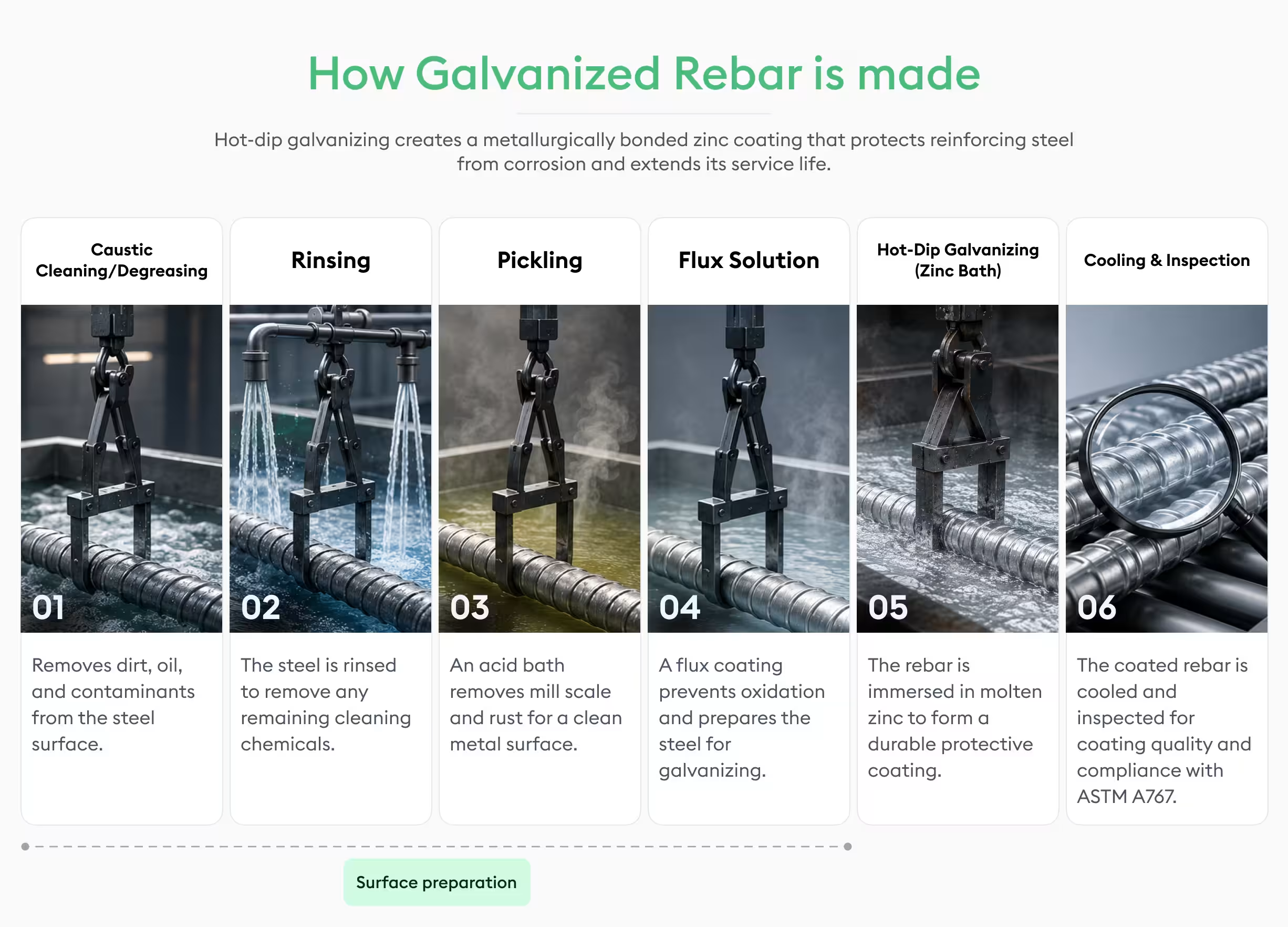
The most common method of producing galvanized rebar is hot-dip galvanizing. Unlike painted or surface-coated products, hot-dip galvanizing creates a metallurgical bond between zinc and steel, resulting in a durable coating that resists peeling and mechanical damage.
The process goes as follows:
Surface preparation
Reinforcement bars are cleaned of dirt, oil, mill scale, and rust before galvanizing. This preparation typically involves chemical cleaning and pickling to remove all the contaminants from the surface of the steel.
It is important to clean the surface properly, as any residue may prevent the zinc from bonding properly.
Flux treatment
After cleaning, the bars are then treated with a flux solution that prevents oxidation prior to galvanizing and enhances the adhesion or bonding between the molten zinc and the surface of the steel.
Hot-dip galvanizing
The prepared reinforcing bars are dipped into the molten zinc at a temperature of about 450°C (840°F).
This zinc immersion process causes the zinc to react with the steel to form several zinc-iron alloy layers before creating a pure zinc outer layer. And these layers are not painted or epoxy coated, but instead they are permanently bonded to the steel.
Cooling and inspection
The bars are removed from the zinc bath, then allowed to cool to room temperature naturally or submerged in water, before being inspected for coating thickness, continuity and general quality as specified in ASTM A767.
The finished product has the same structural characteristics of the conventional reinforcing steel but has significantly better corrosion resistance.
Why Is Galvanized Rebar Used?
The primary reason contractors and engineers choose galvanized rebar is simple: corrosion is one of the biggest threats to reinforced concrete structures.
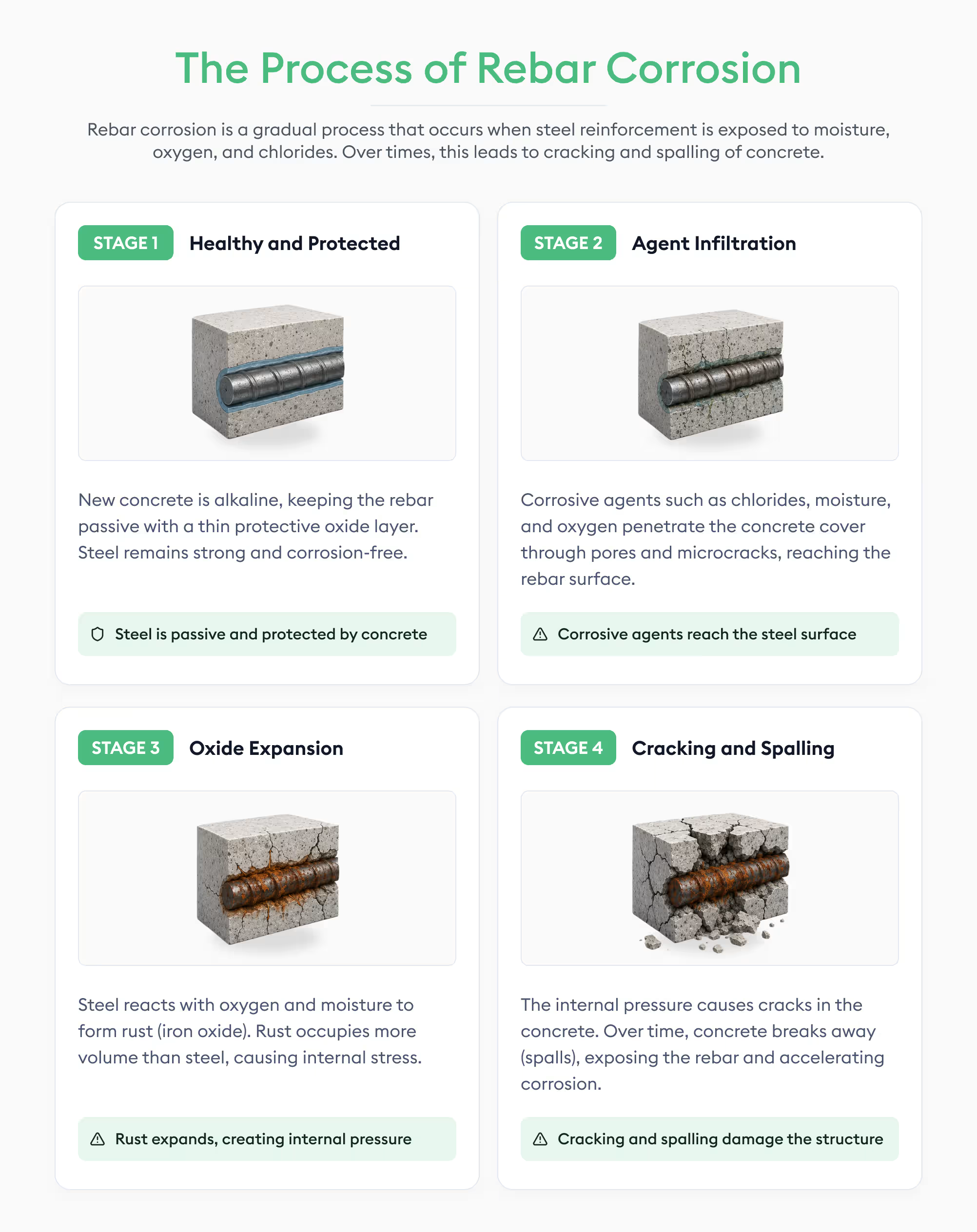
Concrete naturally provides some protection for embedded steel, but that protection gradually breaks down when chlorides, carbonation, or moisture reach the reinforcement. Once corrosion begins, expanding rust creates internal pressure that causes cracking, delamination, and eventually concrete spalling.
The zinc coating helps delay this process, allowing structures to remain in service much longer before requiring major repairs.
Superior corrosion resistance
One of galvanized rebar's biggest advantages is its ability to resist corrosion in environments where conventional reinforcement deteriorates much more quickly.
According to Galserv, zinc protects reinforcing steel through both barrier protection and sacrificial protection. Even if minor areas of the coating become damaged during handling or installation, the surrounding zinc continues protecting the exposed steel because zinc corrodes preferentially to steel.
This characteristic is particularly valuable in environments exposed to:
- Chloride exposure
- Saltwater spray
- Marine environments
- Coastal climates
- De-icing salts
- High humidity
Because corrosion starts much later than with black rebar, maintenance intervals are often extended significantly.
Longer service life
For many infrastructure owners, the real value of galvanized reinforcement lies not in the coating itself but in the additional decades of usable service life it can provide.
Galserv notes that galvanized reinforcement may provide two to six times the service life of conventional black reinforcement, depending on the exposure conditions and chloride concentrations.
That longer lifespan can translate into:
- Fewer structural repairs
- Lower maintenance costs
- Reduced disruption to facility operations
- Improved long-term asset value
This is one reason galvanized reinforcement is frequently selected for public infrastructure expected to remain in service for many decades.
Better durability in harsh environments
Some structures operate in conditions where corrosion protection is absolutely necessary, such as coastal developments, marine infrastructure, bridge decks, parking structures, wastewater treatment facilities, industrial plants, and more.
These environments expose reinforcing steel to constant moisture, chlorides, or chemical contaminants that accelerate corrosion. Galvanized reinforcement helps delay deterioration, allowing the surrounding concrete to maintain its structural integrity for much longer.
Lower lifecycle costs
Galvanized rebar generally costs more than black reinforcement at the time of construction. However, many owners evaluate projects using lifecycle cost rather than initial material cost alone.
Replacing deteriorated bridge decks, repairing parking garages, or restoring marine infrastructure often costs far more than selecting corrosion-resistant reinforcement during initial construction.
When maintenance, repairs, traffic disruption, and future rehabilitation are considered together, galvanized reinforcement can become the more economical option over the life of the structure.
Excellent bond with concrete
Another advantage that’s often overlooked is concrete bond performance.
Unlike some protective coatings that rely primarily on surface adhesion, hot-dip galvanized rebar forms a metallurgically bonded zinc coating that remains firmly attached to the steel. According to Galserv, this coating does not adversely affect the bond between reinforcing steel and concrete while providing enhanced corrosion protection in aggressive environments.
This allows engineers to improve durability without compromising the reinforcing bar's structural role within the concrete.
Galvanized rebar vs. the others
The right choice of rebar for a specific project depends on the structure's exposure conditions, expected service life, maintenance strategy, and budget. So here’s how galvanized rebar compares with the 3 most common alternatives.
Black rebar - Black rebar remains the industry's standard reinforcement for projects where corrosion risk is low. It offers the lowest material cost but provides little protection once chlorides or moisture reach the reinforcing steel.
Epoxy-coated rebar - Epoxy-coated reinforcement adds a protective barrier that performs well under many conditions. However, if the coating becomes chipped or damaged during transportation or installation, localized corrosion may begin at those exposed areas.
Stainless rebar - Stainless reinforcement delivers the highest corrosion resistance available but often costs several times more than galvanized alternatives. That’s why it’s typically reserved for projects with extremely demanding durability requirements or exceptionally long design lives.
Galvanized rebar - Galvanized reinforcement combines strong corrosion resistance with excellent durability against handling damage. Because zinc provides sacrificial protection, minor coating imperfections do not immediately expose the underlying steel to corrosion.
Where Is Galvanized Rebar Used?
Galvanized rebar delivers the greatest value in structures where corrosion is expected throughout their service life. This is why projects exposed to moisture, chlorides, and harsh weather often justify the additional investment in galvanized reinforcement.
And here are some of the most common applications.
Coastal and marine structures
Coastal construction faces constant exposure to salt-laden air and seawater. Chloride ions can penetrate concrete over time, eventually reaching the reinforcing steel and initiating corrosion. The zinc coating in galvanized rebar delays chloride-induced corrosion, helping extend the structure's service life while reducing maintenance.
That’s why galvanized rebar is commonly used to build seawalls, piers and docks, ports and harbors, coastal residential and commercial buildings, and marine retaining walls.
Bridges and highways
Bridge decks are repeatedly exposed to water, freeze-thaw cycles, and de-icing salts. These conditions accelerate reinforcement corrosion and contribute to cracking, spalling, and costly repairs.
Hence, using corrosion-resistant reinforcement can significantly reduce long-term maintenance and traffic disruptions. Many transportation agencies specify galvanized reinforcement for bridge decks, bridge barriers, highway retaining walls, overpasses, and tunnel entrances.
Parking garages
Parking structures experience some of the harshest conditions for reinforced concrete. Vehicles continuously introduce moisture, chlorides, and de-icing salts into the structure. Over time, these contaminants can penetrate the concrete and corrode conventional reinforcement.
Galvanized rebar helps extend the lifespan of parking garages by delaying corrosion and reducing the frequency of structural repairs.
Water and wastewater facilities
Water treatment plants, wastewater facilities, reservoirs, and similar infrastructure are exposed to constant moisture and chemically aggressive environments.
Galvanized reinforcement provides additional protection in these conditions while supporting long-term durability.
Exposed architectural concrete
Some projects prioritize appearance as much as structural performance. When exposed concrete must remain free of cracking and rust staining for decades, galvanized reinforcement helps minimize corrosion-related deterioration and reduce future maintenance requirements.
What Are the Drawbacks of Galvanized Rebar?
Although galvanized rebar has great corrosion protection, it's not the best choice for all projects. Understanding its limitations helps you choose reinforcement for the specific project rather than assuming one material fits every application.
Higher upfront material cost
The most obvious drawback is price. Hot-dip galvanizing adds manufacturing steps and zinc material costs, making galvanized rebar more expensive than conventional black reinforcement.
And for projects in low-corrosion environments, the additional investment may not provide sufficient long-term value.
May be unnecessary for low-risk environments
Interior buildings, dry foundations, and structures with minimal chloride exposure may find that conventional reinforcement works well enough.
In these cases, galvanized reinforcement may provide benefits that exceed the project's actual durability requirements.
So, the following factors should be taken into account when selecting materials:
- Environmental exposure
- Design life
- Maintenance expectations
- Owner budget
Welding and fabrication considerations
Most galvanized reinforcing bars are galvanized after fabrication.
Hence, contractors should follow proper procedures if a field weld, cut, or bend is needed since this can compromise the zinc coating and decrease the corrosion protection at the modified area. And, whenever possible, reinforcement should be fabricated before galvanizing.
Material availability
Although galvanized rebar is widely available, it is generally less common than black reinforcement.
Large infrastructure projects or specialized bar sizes may require longer procurement times, making early coordination with suppliers important during project planning.
What are Galvanized Rebar Stakes?
The term galvanized rebar stakes often refers to a different application than structural reinforcing steel.
Instead of reinforcing concrete, these galvanized stakes are commonly used for:
- Securing concrete formwork
- Landscape edging
- Erosion control
- Temporary fencing
- Ground anchoring
- Garden and agricultural applications
Like structural galvanized rebar, these stakes benefit from the same hot-dip zinc coating, allowing them to resist rust when exposed to weather for extended periods.
However, it's important not to confuse galvanized rebar stakes with structural reinforcement specified by engineers. While both products use galvanized steel, their intended applications and performance requirements are very different.
How much does galvanized rebar cost?
One of the first questions contractors ask is whether galvanized reinforcement justifies its higher upfront price. Yet, the answer depends less on the purchase cost and more on the expected service life of the structure.
Generally, reinforcement materials compare as follows:
In many markets, galvanized rebar typically carries a premium over black reinforcement, although the exact difference depends on:
- Bar size and grade
- Steel market conditions
- Zinc prices
- Project volume
- Geographic region
- Supplier availability
And while galvanized reinforcement increases initial construction costs, owners often recover that investment through:
- Reduced maintenance
- Fewer repairs
- Longer service life
- Lower lifecycle costs
For structures and assets expected to remain in service for several decades, lifecycle savings can outweigh higher material costs.
Estimating Galvanized Reinforcement for Construction Projects
The estimating process is pretty much the same, no matter whether the reinforcement is black, epoxy coated, or galvanized. Contractors still need accurate quantities before pricing materials, labor, and fabrication.
Typical reinforcement takeoffs include bar sizes and grades, bar lengths, bend shapes, lap splices, hook details, reinforcement schedules, and total weight. And that’s the reason it becomes tedious to do a manual quantity takeoff, even more so when dealing with projects that have dense reinforcement layouts or multiple drawing revisions.
This is why contractors today are turning to rebar takeoff software that automatically identifies reinforcement quantities from drawings before preparing project estimates. What this helps with is to boost, and then maintain, that accuracy and reduce manual measuring.
If you'd like to learn more about automated reinforcement estimating, explore our guide to rebar takeoff software, which explains how contractors automate quantity takeoffs and improve bidding efficiency. Whatever the bar type, small misses stack up - here's how rebar estimates quietly lose tonnage on every bid.
Wrapping up
Galvanized rebar is a viable alternative between standard black rebar and high quality stainless steel. Its ability to withstand harsh environments and minimise long-term maintenance requirements is achieved by combining the strength of reinforcing steel with the corrosion protection of a hot-dip zinc coating.
Galvanized reinforcement does carry a higher upfront cost, but delivers greater value in projects where durability is most important. And a few examples of where its extended service life can outweigh the initial investment is in making bridges, parking structures, coastal developments, marine infrastructure, and water treatment facilities.
Finally, the choice of reinforcement will be dependent on environmental exposure, design life, maintenance requirements, and project budget. For engineers, contractors and owners, knowing these trade-offs enables them to select the reinforcement that will offer them the most benefit over the long haul, rather than the cheapest initial cost.





.webp)

