




The rise of estimating platforms in the market is increasing, and most estimating tools work well until you actually need them to scale. The moment you handle multiple large projects, the cracks start showing up, and one of the main drivers adding to it is poor estimating.
Research suggests that construction firms lose up to 10% of project value due to poor estimates, and slow platforms only result in adding hours of delay each week. However, with AI in the workflow, estimators are able to process large volumes of drawings and automate time-consuming tasks with remarkable speed and accuracy. An AI-based platform such as Beam AI helps you to deliver takeoffs faster, saving 90% time and increasing bid capacity by up to 3X.
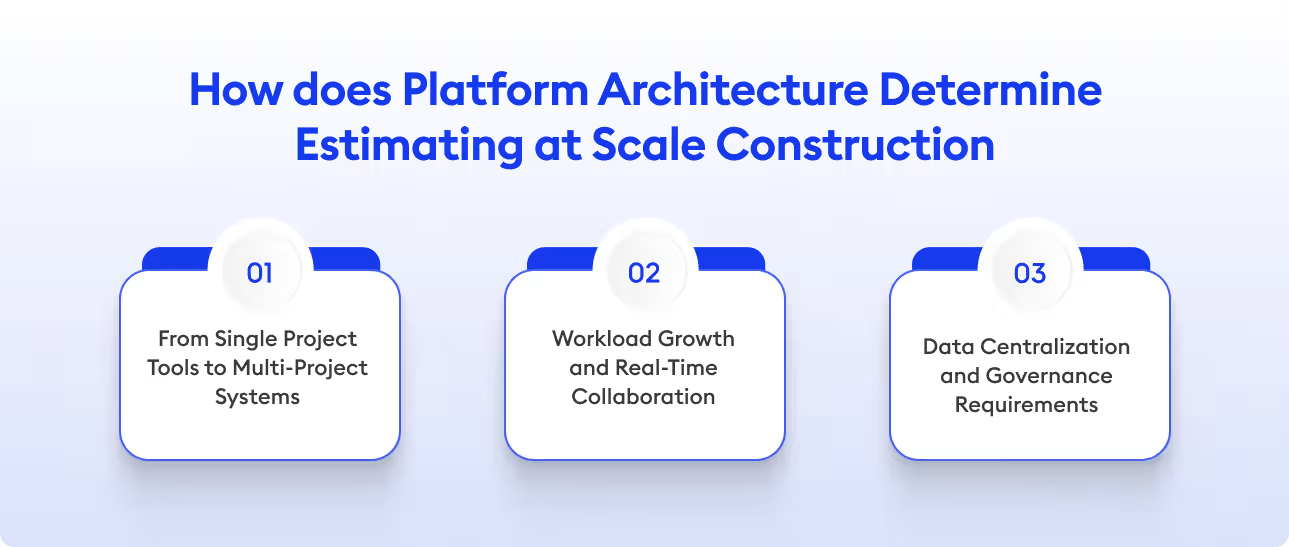
How does Platform Architecture Determine Estimating at Scale Construction
Usually, when you start with one project, everything seems fine, but the moment you add more bids, data, and other users, that's when you get to see whether your platform keeps up the pace or slows down.
The only difference here is how the estimating platform is built, and this is exactly where architecture, meaning the underlying design and structure of the platform, decides how well your estimating tool handles growth and complexity.
From Single Project Tools to Multi-Project Systems
As estimators take on multiple projects, relying on AI-based takeoff and estimating tools has become a game-changer. With AI-based takeoff and estimating platforms such as Beam AI, estimators are growing project volume without increasing their headcount while keeping humans in the loop, so that you don’t need to spend time double-checking numbers for accuracy.
For example, Rocky Mountain Steel, a steel fabricator and supplier based in Colorado, US, witnessed significant improvements using Beam AI. Earlier, they struggled with slow manual takeoffs that took 2-3 days for standard projects and up to 5 for larger ones, which significantly reduced their bidding capacity. But after Beam AI, Rocky Mountain Steel saved 15 hrs per week and 90% time on takeoffs, which helped them increase bid volume and submit bids faster.
Workload Growth and Real-Time Collaboration
As your business grows, more people use the platform simultaneously, which means estimators, project managers, and reviewers all access the same data. This collaboration may sometimes cause sync issues for you or your team, and, if unfortunate, it can even result in loss of updates.
That is why you need a platform that not only handles multiple actions at once but also automates tasks in parallel so that your team can scale even during peak bidding periods.
Data Centralization and Governance Requirements
Estimating team often relies on the platforms to obtain accurate and consistent data. While this is one of the main reasons why estimating platforms are designed, in a poorly designed system, data gets duplicated or outdated. Meaning, teams may end up using different versions of the same data, causing errors in your estimates.
How Parallel Processing Works in Large-Scale Estimating Workflows
As an estimator, you just don’t work on one single scope of work because even a single project can involve multiple trades, teams, and timelines. And as your workload grows, you need your estimating platform to handle multiple tasks simultaneously without slowing down. This is where parallel processing is required to manage multiple activities together.
AI takeoff and estimating platforms are designed to multitask while saving hours by processing multiple takeoffs on time, pursuing more bidding opportunities, and meeting bid deadlines rather than forcing everything through a single flow.
Handling Multiple Scopes and Tasks at the Same Time
In a typical workflow, estimators generally break a project into different scopes like concrete, electrical, or plumbing, with each scope requiring its own takeoff, pricing, and further review.
If your platform handles only one task at a time, your team will spend time waiting for the output, which will eventually delay your entire workflow and create dependencies between tasks.
Having an AI-based takeoff and estimating software, such as Beam AI, helps estimators pursue 3x more opportunities and save 90% time on doing takeoffs. For precon teams, the time saved translates into moving towards high-value tasks such as scope review, value engineering, chasing more opportunities, coordinating with vendors, and more. See why architectural estimates go wrong at scale.
Impact on Bid Volume and Overall Turnaround Time
As most estimators work under tight bid timelines, speed, also referred as “bid turnaround time,” becomes one of the most critical factors. Because in this competitive market, even small delays in takeoffs can reduce the number of bids you submit.
To overcome these challenges, AI takeoff & estimating platforms such as Beam AI are designed to help you save 90% of time by automating takeoffs, while having human quality assurance to improve accuracy. With that, you can handle more bids without increasing team size, with reduced last-minute rush and improved quality of your submissions.
Read how MGT increased 3-4X more bids using Beam AI
How Reusing Data Across Projects Improves Your Estimates
Estimators don’t start every estimate from scratch. Over time, as you take on more projects, you start generating valuable data such as cost structures and past estimates.
Using a robust estimating platform that incorporates historical data helps you carry insights from one project to the next instead of repeating the same work.
Standardized Data and Reusable Cost Structures
When it comes to estimating, cost consistency is the key. If your cost data is structured differently across projects, it becomes hard to reuse because you spend extra time adjusting or rebuilding estimates.
That’s why estimators rely on a well-designed platform that standardizes how data is stored and used. The cost structures, assemblies, rates, and past estimates follow a consistent format that allows you to reuse data across projects without rework.
Building Organizational Knowledge
With all the data from every project, ensuring it is in one place becomes important for using it as a reference for future bids. When this data stays scattered across files or spreadsheets, it becomes hard to use, and your team misses out on valuable insights.
With an estimating platform that captures and organizes this data in a single shared space, historical estimates help compare projects, refine pricing, and make better pricing decisions.
How Cloud Infrastructure Supports Scalable Estimating
As your estimating projects grow, handling multiple bids, revisions, and tight deadlines all at once becomes a bottleneck.
Therefore, estimators rely on an infrastructure such as a cloud-based setup to adjust to changing workloads, so performance stays steady even as your estimating activity grows.
Scale Performance During Peak Workloads
One thing about estimating is that the demand is not constant. One week, you may handle a few bids, and the next, you’re dumped with a surge of projects.
If your platform cannot keep up with the workload, you will face problems such as files taking longer to load and updates lagging, wasting your team’s valuable time.
To avoid these scenarios, choosing an AI-based estimating software for large projects, such as Beam AI, to automate takeoff enables estimators to review material quantities, track changes, and validate pricing more confidently, even during peak bidding periods.
Consistency Across Scattered Teams and Locations
Estimating teams often spread across different offices or job sites, with everyone needing access to the same data and often at the same time.
If you experience data not syncing properly and teams working with different versions, you’re definitely dealing with a poorly designed platform, which can only lead to errors and confusion.
A cloud-based AI takeoff and estimating platform ensures consistency across locations where your team works from the same information, no matter where they are, keeping your estimates aligned and reliable.
Collaboration Infrastructure for Distributed Estimating Teams
As estimating teams grow and spread across locations, coordination becomes just as important as speed. It helps the team understand which tasks need attention and how things are progressing, and when you have a platform that enables seamless coordination, it becomes way less challenging.
AI-powered takeoff and estimating platforms built on cloud infrastructure make it easier by connecting teams in a shared environment, where updates and progress are visible in real time without disrupting workflows.
Shared Work Environments and Coordination
Estimating involves multiple stakeholders working on the same project at different stages. So, without an environment where your team can track every change and update in one common place, information often gets scattered across emails, files, or disconnected tools.
This can be mitigated by switching to a shared work environment and using a platform such as Beam AI that is built on cloud infrastructure, bringing everyone into a single workspace where teams can collaborate on the same data in real time. This improves coordination and keeps the entire estimating process aligned with the project scope.
Role-Based Access and Governance
Coordination in estimating often involves multiple teams working together across different parts of a project, but not everyone in the estimating process needs the same level of access because estimators and managers use data differently.
That's why platforms such as Beam AI ensure role-based access, so each user can view or edit only what is relevant to them. This helps reduce the risk of errors and maintain data integrity, while keeping control over critical project information.
Real-Time Visibility into Estimating Progress
When multiple people work on different parts of an estimate, it becomes difficult to track progress without clear visibility on updates about who is working on what, what is completed, and what still needs attention.
An estimating platform with cloud infrastructure helps you by providing real-time updates, enabling teams to stay on schedule and avoid unexpected delays.
System Design Considerations for Enterprise Estimating Platforms
As your projects grow, maintaining performance, consistency, and flexibility across different enterprise projects becomes very critical to ensure operations run efficiently, and that largely depends on the platform’s underlying design or architecture.
With multiple projects coming in, most estimating platforms start lagging in updates and slowing down. However, a well-designed estimating platform is built to scale with more projects by consistently organizing and managing data, so it remains easy to access and reuse as your workload increases, while ensuring real-time updates with every change in the data.
Data Architecture and Standardization Models
Even a small error in the data can affect your entire estimate, especially with larger projects and more inputs. A strong data architecture ensures that all estimating data follows a consistent structure, as it becomes difficult to manage or reuse without a standard format.
This is why estimators these days prefer a well-designed estimating tool that ensures all data is captured and stored in a single source so that information remains organized and usable across projects, improving both speed and accuracy for cost structures, assemblies, and other pricing.
Workflow Orchestration Across Projects
Enterprise estimating often involves managing multiple projects at the same time, each with its own timelines and requirements, but juggling multiple teams and timelines may also quickly lead to coordination gaps and delays, making it difficult to keep workflows aligned across projects.
However, with a robust estimating and takeoff platform, it coordinates workflows across projects, ensuring tasks move efficiently from one stage to the next without bottlenecks while increasing productivity even as workloads grow.
Integration Readiness Across Construction Systems
Estimating does not happen in silos because estimating tools are usually connected to different project management, procurement, and financial tools. That’s why your estimating platform should be built to be well integrated with other tools to reduce any data gaps, duplication, and extra manual work.
Platforms such as Beam AI support this by enabling smoother data flow across systems through centralized data handling and automated syncing for real-time updates, helping teams stay aligned and reducing the need for repetitive manual updates.
Traditional Technology vs AI Technology in Enterprise Estimating
Within the enterprise estimating space, many platforms such as HeavyBid, B2W Estimate, and AGTEK have been traditionally used for managing large-scale estimating operations and were also widely adopted for their structured workflows, data consistency, and scalability in enterprise environments.
Similarly, modern AI-based takeoff platforms such as Beam AI are built on this foundation by incorporating automation, real-time collaboration, and AI-driven processing to handle increasing complexity and volume, saving 90% time on manual takeoffs and a 3X increase in bid volume while having a human-reviewed QA for more accurate and ready-to-takeoff estimates.
One of Beam AI’s customers, Builder’s Stone & Supply, a leading supplier and installer of manufactured & natural stone, stucco, pavers, and masonry solutions, earlier struggled with time-intensive takeoffs and slow turnaround time for large masonry projects. But with Beam AI, they saved a week on a larger project takeoff and increased 3X bid potential, allowing them to use their saved time on increasing bid wins and pursuing other high-value tasks.
Operational Outcomes Enabled by Scalable Architecture
The benefits of a scalable platform show up directly in day-to-day estimating performance, especially as projects, teams, and data grow.
An AI takeoff and estimating platform helps estimators to scale even when multiple projects are added, rather than slowing down. Platforms such as Beam AI help estimators save time on takeoffs while guaranteeing ±1% of your in-house accuracy, so the team can focus on other important areas, including value engineering, vendor coordination, and more job submissions.
Consistent Performance Across Projects
As you handle more projects, one of the most critical factors is staying consistent. That’s why modern takeoff and estimating tools are designed to maintain the same level of speed and reliability, regardless of workload.
Efficient Handling of Large Bid Volumes
With growing demand, teams need to process more bids within tight timelines. Platforms like Beam AI, with its automated takeoffs, allow estimators to increase output without slowing down or increasing the headcount.
Improved Coordination Across Teams
When multiple teams work together, clarity and alignment become crucial. Having a centralized, collaborative platform with cloud infrastructure ensures everyone stays on the same page, reducing errors and rework.
Sustainable Estimating Capacity Growth
As your business expands, estimating gets challenging, especially if you are using manual tools. Therefore, estimators often rely on a scalable platform that supports long-term growth, allowing you to take on more complex projects and larger workloads without switching to multiple tools.
Conclusion
The impact of architecture shows up in your day-to-day preconstruction work. When you use an AI-based platform that is built to scale, you see that your estimating process becomes faster, accurate, and more predictable. And as your workload grows, you need your estimating platform to stay consistent, no matter how many projects or users you add, thus requiring a system built to scale and maintain steady performance, so your team can work without delays or disruptions.
At the same time, with more bids and tighter timelines, your platform must keep up with higher volumes without rushing or missing opportunities, and increase output while maintaining quality.
Over time, this creates a strong foundation for your estimating operations, enabling you and your team to take on larger projects, manage more data, and boost productivity without worrying about platform limitations.



.jpg)