



What is risk management in preconstruction?
Risk management in preconstruction is the process of identifying and reducing risk during the planning phase, before construction begins.
It’s just like a filter. Bad assumptions, unrealistic budgets, and unvetted subcontractors all pass through preconstruction first. Anything caught here doesn't reach the field.
On-site risk management is different. It responds to problems that already exist: a flooded trench, a late delivery, a subcontractor who stopped showing up. Preconstruction risk management works earlier. It stops those problems from developing in the first place.
Scope clarity is the most important factor at this stage. Vague drawings and unclear specs create ambiguity. That ambiguity later turns into an RFI, a dispute, or a change order.
A tight scope reduces risk across the rest of the project. It's also the step most commonly rushed under bid deadlines, which is exactly where solid early risk identification in construction starts.
Which risks matter most before construction starts?
Four risk categories cause most of the early damage. Each one has a recognizable warning sign.
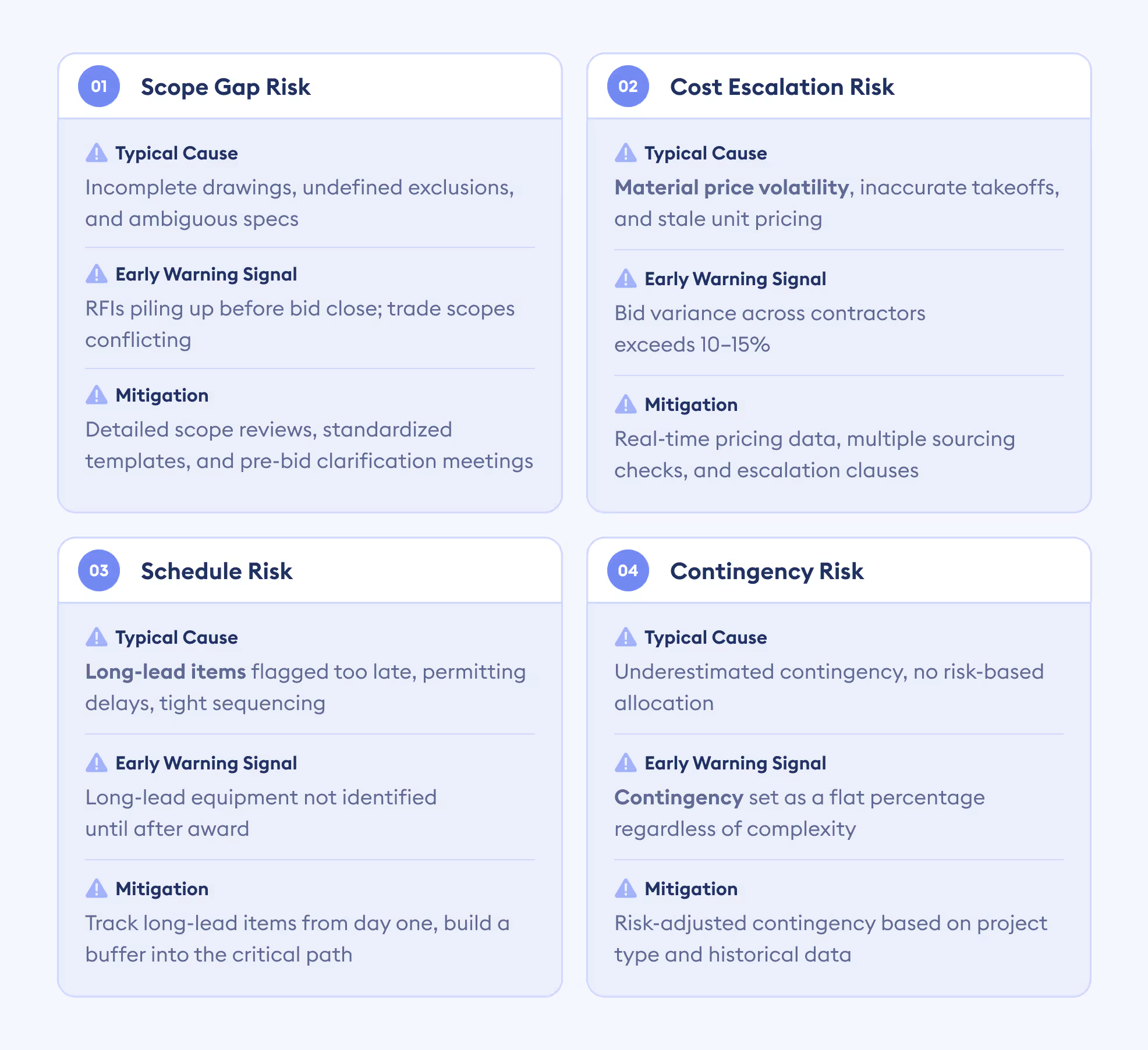
These risks often overlap. A poorly defined scope leads to inaccurate takeoffs. Inaccurate takeoffs lead to a bad estimate. The estimate is what the budget is built on.
- Cost escalation is directly tied to estimate accuracy. One missed quantity or one outdated material price can throw off the entire budget.
- Schedule risk often receives less attention at the bid stage, mainly because the focus is on price. It’s also easy to miss because a long-lead item that's missed doesn't cost money immediately. It costs much more later, when a crew is waiting on equipment nobody ordered on-site.
- Contingency mistakes usually come from habit, not carelessness. A flat 5% or 10% across all projects overprotects low-risk jobs and underprotects high-risk jobs.
Why is preconstruction the first line of defense against project risk?
A widely cited study by Flyvbjerg, Holm, and Buhl found that roughly 9/10 infrastructure projects come in over budget, with actual costs averaging 28% above the original estimate. This gap traces back to decisions made in preconstruction, not mid-build surprises.
Another study states direct field rework averages around 5% of total construction value, with a 90th percentile of 12.4%. On a $50 million project, even the lower figure means millions of dollars in avoidable costs.
Rework is fixed on-site, but it starts earlier: in unclear scope, uncoordinated drawings, and subcontractors who weren't properly vetted.
AIA Contract Documents data show the average project sees 1.7 change orders on smaller jobs and more than 11 on larger ones. Each change order reflects something that wasn't finalized before the contract was signed.
Cost overruns, rework, and change orders come from the same source: preconstruction gaps that went unnoticed. Fixing the gap removes the downstream cost.
How does subcontractor prequalification reduce risk?
A financially unstable subcontractor creates cost and schedule risk on top of whatever else is already on the project. Which is why subcontractor prequalification is one of the most important checks to perform. By screening subs before awarding contracts, not after a problem appears on-site. It's a low-cost control with a high return.
A prequalification process should look for:
Experience – relevant project history, comparable scope and scale
Financial stability – bonding capacity, credit history, cash flow, exposure to default risk
Safety record – OSHA incident rate, experience modification rate (EMR)
Compliance – active licensing, current insurance, required certifications
Current workload – backlog capacity relative to new commitments
Experience and safety record are checked most often because they're easy to verify. However, financial stability and current workload are skipped more often. Make sure you check for those as they're the strongest predictors of default.
To put this into perspective, a subcontractor can have a clean safety record and solid experience and still be financially overextended.
Checking workload against bonding capacity catches risks before they become problems mid-project.
How do data and AI improve risk visibility in preconstruction?
Historical data and data standardization are crucial in helping teams catch risks before they're locked into a contract. The method is simple: Compare current estimates and schedules against outcomes from similar past projects.
This 3-step process works regardless of which software a team uses.
Step 1: Pull historical cost and schedule data
Step 2: Compare the stats against current assumptions
Step 3: Flag deviations before they become commitments.
The biggest benefit of AI risk insights? It helps process more historical data than a person can manually track. It surfaces patterns, such as recurring scope-gap risk in certain project types or trades with historically higher default risk.
Industry analysis based on AIA data shows change orders can account for 8% to 14% of a project's contract value on average, and as much as 25% on distressed projects.
Teams that benchmark early estimates against historical change-order data catch these gaps before award, not after.
The same applies to cost escalation. Comparing a current takeoff against historical pricing for the same materials and project type surfaces outliers before they get built into a bid.
Where preconstruction risk management still falls short
No system, human or automated, catches every risk.
Bad historical data produces bad benchmarks. If past project data wasn't recorded accurately, comparisons against it aren't reliable.
Automated flags need human interpretation. Sure, tools surface anomalies, but an experienced estimator or PM has to determine what they mean. Some risk depends entirely on judgment. No dataset replaces a site-experienced person reviewing a scope for what's missing.
Rework and cost overruns can still happen even with strong checks in the preconstruction process, particularly on projects with unusual site conditions or new scope. The goal with this exercise is to reduce risk, not eliminate it.
In conclusion
Risk management in preconstruction covers scope, cost, subcontractor vetting, and data benchmarking, all before construction starts.
As we’ve reiterated multiple times throughout the blog, catching scope gaps, cost escalations, and subcontractor issues early is the only way to keep them cheap to fix and avoid disrupting on-site processes.
Beam AI brings AI-powered takeoff and estimating accuracy to preconstruction, reducing estimate errors that lead to change orders and rework. We offer a Done-for-you (DFY) model where you get bid-ready Excel estimates with a human QA review layer added within 24 to 72 hours of uploading plans. This means that the takeoffs you generate undergo two layers of checks: AI that is trained on trade plans and an experienced estimator.
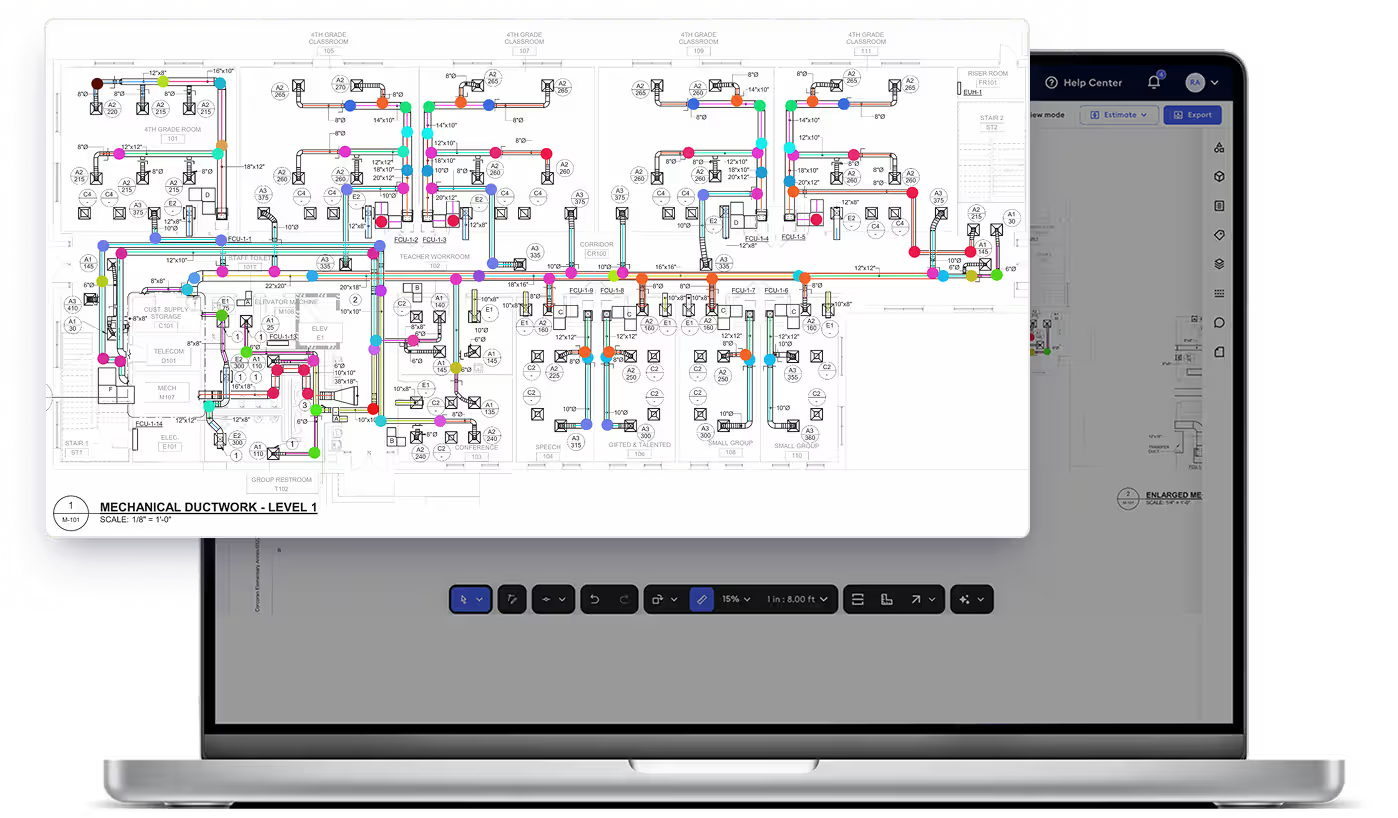
Wondering how Beam AI balances speed with accuracy? This blog shares how we stay transparent in our risk mitigation and accuracy process.
Many businesses that use Beam AI to automate takeoffs report using the time saved to focus on other high-value tasks, such as risk management, value engineering, and procurement analysis. This further helps spot and prevent risks that might have slipped through the cracks.
One of our clients. National Wholesale Supply Inc. reports doing 60% more business with improved accuracy.
Another customer, Ace Rebar, saved up to 5 days per takeoff. And redirected the time they saved towards validating estimates, improving their accuracy, and thus, reducing risk.
The point of sharing these examples is to show that risks can be mitigated with other constraints removed. Currently, more than 1200 construction businesses across the USA and Canada trust Beam AI by Attentive.ai for takeoffs, estimates, and bid management.
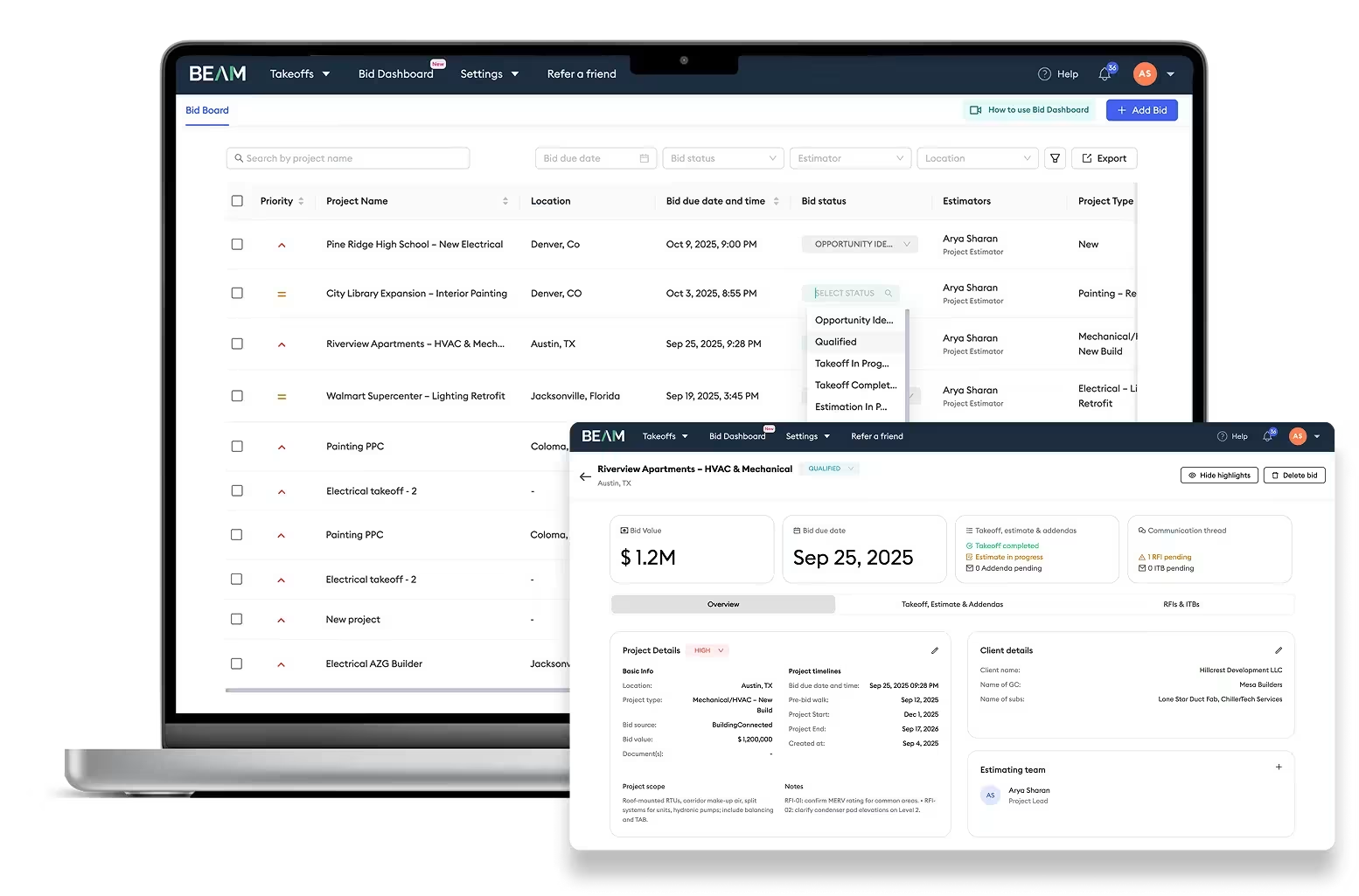
Want to see how AI-powered estimating can reduce preconstruction risk on your next bid? Schedule a demo today.




.jpg)