

.jpg)

What Are the Types of Mortar and How Do You Choose the Right Mix?
Mortar is a workable mixture of cement, lime, sand, and water that's used to hold bricks, concrete blocks, and stone in a single and strong structure. There are 5 main types of mortar - Type M, S, N, O, and K - where each has different strength, flexibility, and uses. The best mix for your project depends on the masonry material, the load it will carry, the weather, and if the work is above or below ground.
If you're building a brick wall, repairing historic masonry, or estimating materials for a commercial job, picking the right mortar matters as much as choosing the right bricks or blocks. Using the wrong mortar can lead to cracks, trapped moisture, or even damage to the surrounding masonry over time.
Many people also confuse mortar with concrete, cement, or grout. While these materials may look similar, each serves a different purpose on a construction site.
In this guide, we'll explain what mortar is, what it's made of, the different types available, and how to choose the right mix for every application. We’ll also discuss mortar mix ratios, quantity calculations, and practical estimating tips used by contractors.
But First, What Is Mortar?
Mortar is used in construction to hold bricks, blocks, and natural stone together. It fills the gaps between them, making the structure stable and helping to spread out the weight evenly.
Unlike concrete, mortar contains fine aggregates instead of coarse gravel. This makes it easier to spread, shape, and compress into narrow joints during installation.
Mortar serves several important purposes:
- Bonds bricks, blocks, and stone together
- Seals joints against water and air infiltration
- Helps distribute structural loads
- Accommodates minor building movement
- Improves the overall durability of masonry
Mortar does help make a wall stronger, but its main job is not to hold up the weight. Its main purpose, instead, is to create a strong bond so the bricks or blocks work together as one unit.
The performance of a masonry wall depends on more than just the quality of the bricks or blocks. Selecting the appropriate mortar type is equally important because every project has different structural and environmental requirements.
For example, a retaining wall requires a much stronger mortar than an interior partition wall. Similarly, historic brick buildings often need softer mortar to prevent damage to aging masonry.
Understanding these differences starts with knowing how mortar compares to other common construction materials.
Mortar vs. Concrete vs. Cement vs. Grout
Contractors often use these four materials as if they are the same, but each one serves a different purpose. Knowing the differences will help you pick the best option for your project.
A simple way to remember the difference is this:
Cement is an ingredient.
Mortar bonds masonry units.
Concrete creates structural elements.
Grout fills gaps, joints and voids.
Understanding these distinctions helps avoid one of the most common construction mistakes: using the wrong material for the job.
What Is Mortar Made Of?
Although there are several types of mortar, nearly every traditional mortar mix contains the same four basic ingredients:
- Portland cement
- Hydrated lime
- Sand
- Water
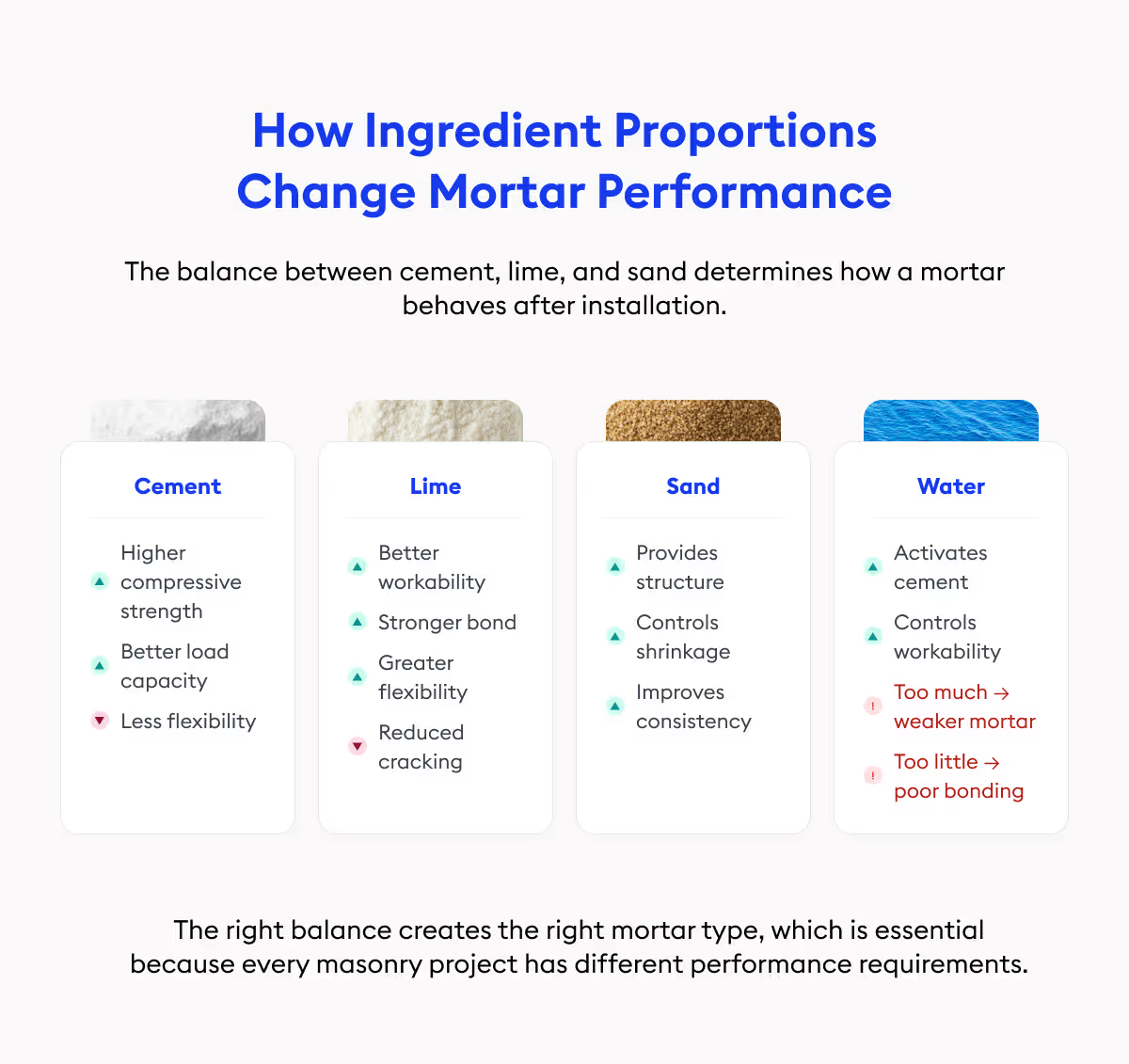
The proportions of these ingredients determine the mortar's strength, flexibility, workability, and resistance to weather. So let's look at what each component contributes:
Portland Cement - This is the primary binding material in mortar. When mixed with water, it undergoes a chemical reaction called hydration, allowing the mortar to harden over time.
Higher cement content generally produces stronger mortar with greater compressive strength. However, stronger isn't always better. Excessive cement can make mortar more brittle, increasing the likelihood of cracks and damaging softer masonry units.
Hydrated Lime - Lime improves workability and helps mortar retain moisture during installation. It also increases flexibility, allowing the masonry to accommodate small movements without cracking.
Mortars with higher lime content are often used for historic restoration and softer masonry units.
Sand - Sand makes up the largest portion of most mortar mixes. It reduces shrinkage, improves consistency, and provides the body needed to fill masonry joints effectively.
Construction-grade masonry sand is carefully graded to produce a smooth and uniform mortar, while using poorly graded or contaminated sand can weaken the mortar and affect its appearance.
Water - Water activates the cement and gives mortar its workable consistency.
However, the amount of water is critical. Too much water weakens the finished mortar and increases shrinkage, while too little makes the mix difficult to spread and prevents proper bonding.
What Are the Different Types of Mortar?
Not every construction project needs the same type of mortar. For example, a foundation wall experiences very different forces than an interior partition or a historic brick façade. This is why the types of mortar used in construction are classified based on their compressive strength, durability, flexibility, and intended application.
Masonry mortars are classified under ASTM C270, the industry standard that defines mortar specifications for unit masonry. Rather than using a single mix for every project, ASTM categorizes mortar into five primary types: M, S, N, O, and K. And each type is designed for specific structural and environmental conditions.
Mortar Types Comparison
Note: The compressive strengths and proportion specifications shown above are based on ASTM C270 – Standard Specification for Mortar for Unit Masonry, which allows mortars to be specified either by property (tested performance) or proportion (ingredient ratios). The ratios above are commonly referenced proportion specifications and should not be altered without considering project requirements.
Now let's look at each mortar type in more detail.
Type M Mortar: Maximum Strength for Heavy-Duty Construction
This is the strongest standard masonry mortar. With a minimum compressive strength of 2,500 psi, it is designed for projects that must withstand significant structural loads and soil pressure.
Because it contains the highest proportion of cement and relatively little lime, Type M offers excellent compressive strength but less flexibility than other mixes. It is commonly used for:
- Foundations
- Retaining walls
- Below-grade masonry
- Driveway entrance walls
- Heavy load-bearing structures
- Natural stone installations carrying substantial weight
Its high strength makes it well suited for underground applications where moisture and earth pressure are constant concerns. However, Type M is rarely recommended for exposed brick walls or restoration work, since its rigidity can cause softer bricks to crack before the mortar itself fails.
Choose Type M when: maximum structural strength matters more than flexibility.
Type S Mortar: The Contractor's Choice for Structural Masonry
This provides an excellent balance of strength and durability. With a minimum compressive strength of 1,800 psi, it is widely used for structural masonry exposed to wind, moisture, and freeze-thaw conditions.
Its additional lime content improves bond strength and workability compared to Type M. It’s common applications include:
- Exterior brick walls
- Reinforced masonry
- Concrete block walls
- Retaining walls with moderate loads
- Pavers
- Patios and walkways
- Foundations in many residential projects
Choose Type S when: your project requires structural strength and long-term durability above or below grade.
Type N Mortar: The Most Common Choice for Residential Construction
This is often called the general-purpose mortar because it works well for most above-grade masonry projects. With a compressive strength of 750 psi, it provides a balanced mix of durability, flexibility, and workability, so it fits most everyday masonry jobs.
Most residential masonry projects in North America use Type N mortar almost exclusively. This is because its higher lime content makes a smoother mix that sticks well to brick and stone, and allows for some movement in the building. Common uses include:
- Residential brick walls
- Chimneys
- Garden walls
- Stone veneer
- Interior and exterior above-grade masonry
- Fireplace surrounds
Choose Type N when: you're constructing above-grade brick or stone walls that don't require exceptionally high compressive strength.
Type O Mortar: Best for Interior and Repair Work
This is a low-strength mortar designed primarily for interior applications and light-duty repairs due to its minimum compressive strength of 350 psi that makes it unsuitable for structural or exterior load-bearing walls.
However, its higher lime content makes it easy to work with and ideal for repair projects where flexibility is more important than compressive strength, and its common uses include:
- Interior partition walls
- Non-load-bearing masonry
- Repointing relatively modern brickwork
- Decorative masonry
Since it remains more flexible than stronger mortars, Type O helps reduce cracking in low-stress environments. But, it should not be used below grade or anywhere exposed to significant structural loading.
Choose Type O when: repairing interior masonry or constructing non-load-bearing walls.
Type K Mortar: Preserving Historic Masonry
This type has the lowest compressive strength of the five standard mortar types, with a minimum compressive strength of 75 psi, but it plays an important role in historic preservation.
Many older buildings were constructed with soft bricks that can be damaged by modern high-strength mortars. Type K remains softer than the surrounding masonry, allowing the wall to move naturally without harming the original materials.
It is commonly used for:
- Historic brick restoration
- Heritage structures
- Museums
- Preservation projects
- Lime-based masonry repairs
Choose Type K when: restoring historic masonry built with soft, older bricks.
How to Choose the Right Mortar for Your Project
Now that you understand the different types of mortar, the next question is simpich one should you actually use?
And yes, the answer depends on more than compressive strength. Because selecting the strongest mortar isn't always the right decision. Masonry systems perform best when the mortar and masonry units work together. A mortar that's too strong can transfer stress into the surrounding bricks or stone, increasing the risk of cracking over time.
The best choice depends not only on compressive strength but also on the masonry material, exposure conditions, and the intended use of the structure.
So here’s a quick selection guide for you:
Mortar Mix Ratios Explained
Yes, every mortar type uses the same four basic ingredients, which are cement, lime, sand, and water, but the proportions change based on the desired performance.
Generally:
More cement increases strength.
More lime improves flexibility and workability.
Sand provides volume and reduces shrinkage.
Water controls consistency during mixing.
The standard proportion specifications are as follows:
These ratios are based on ASTM C270's proportion specifications. However, many contractors use preblended mortar products that are manufactured to meet the required performance standards.
Rather than modifying the mix yourself, choose the mortar type that matches your project's structural requirements.
How Much Mortar Do You Need?
Choosing the right mortar is only half the job. You also need to estimate how much material the project requires. Estimating mortar accurately helps reduce waste, avoid material shortages, and keep projects on budget.
The amount of mortar needed depends on several factors, including:
- Wall dimensions
- Brick or block size
- Joint thickness
- Joint profile
- Waste allowance
- Masonry pattern
Because these variables change from project to project, contractors typically calculate mortar based on wall area or the total number of masonry units. And here is a mortar calculator you can use for the same.
How Contractors Estimate Mortar for Masonry Projects
Estimating mortar accurately involves more than just figuring out how many bags you need. Contractors also have to consider labor, material costs, waste, and productivity before they can put together a competitive bid.
The process usually starts with a detailed review of the project drawings.
Estimators measure the lengths, heights, and openings of walls to figure out the total masonry area. Next, they work out how many bricks or blocks are needed, estimate the amount of mortar based on joint size, and factor in material waste.
Additional considerations often include:
- Masonry unit type and size
- Wall thickness
- Reinforcement requirements
- Mortar type
- Delivery and handling costs
- Project complexity
- Local material pricing
On larger projects, manually reviewing hundreds of drawings can become time-consuming, especially when revisions arrive late in the bidding process.
Many contractors now use automated takeoff tools to automate quantity calculations for masonry materials. These tools can quickly measure wall areas, count masonry units, and generate material quantities, allowing estimators to spend more time reviewing costs and refining bids.
Some platforms further streamline this process by automating construction takeoffs and estimates, which are checked for accuracy before they’re delivered to you. So rather than replacing estimators, these tools help them prepare more accurate bids, faster, while reducing manual calculations and repetitive work.
The final pricing decision, however, always depends on project specifications, labor rates, local market conditions, and estimator expertise.
Common Mistakes When Choosing Mortar
Selecting the right mortar isn't just about strength. Several common mistakes can reduce the durability of a masonry structure or even damage the surrounding materials.
Here are some of the most frequent issues contractors and homeowners encounter:
Remember, the goal isn't simply to build a strong wall. It's to create a masonry system where the mortar and masonry units perform together over time.
Concluding Thoughts
Mortar may seem like a simple mixture of cement, lime, sand, and water, but picking the right type can make a big difference in how strong and long-lasting your masonry will be.
Whether you're building a residential brick wall, installing concrete blocks, restoring a historic building, or constructing a foundation, selecting the appropriate mortar type ensures the masonry performs as intended for years to come.
Remember that stronger isn't always better. The ideal mortar matches the type of masonry, the project needs, and the structure’s requirements.
And finally, accurate material estimation is just as important as selecting the right mix. Careful calculation of mortar amounts can help you avoid waste, save money, and plan your project better.