





Introduction
It was 11:47 PM when Marcus, a senior estimator at a mid-sized electrical contractor in Ohio, finally pushed back from his desk. He had spent the last nine hours manually counting outlets, tracing conduit runs across twenty-three PDF drawings, and cross-referencing labor rates in a spreadsheet that was three years out of date. The bid was due at 8 AM. He still had six panels left to price.
He submitted the bid. They won the job. And then, three weeks in, they discovered he had missed an entire sub-panel run on floor four, a mistake buried in drawing revision 7B, a version he had never received. The cost overrun wiped out the margin entirely.
Marcus is not an outlier. Across the electrical contracting industry, estimating electrical costs with outdated methods costs contractors thousands, sometimes millions, every year. The problem is not a lack of skill. It is a lack of the right tools.
The good news is that the tools have changed a lot. In the period of the last few years, electrical takeoff software has gone from simple PDF markup tools to intelligent, AI-powered platforms that can scan full drawing sets, automatically count every symbol, measure conduit runs, and even flag revisions, all in a fraction of the time it used to take.
This guide walks you through every category of tool used in electrical quantity takeoff and estimating today: what each one does, who it suits, and how the industry is moving forward. Whether you are still working off printed plans or evaluating your first AI-powered platform, this is where the conversation starts.
Understanding Electrical Takeoff and Estimating
What Is Electrical Quantity Takeoff?
Electrical quantity takeoff is the process of extracting and counting all the materials needed to complete an electrical project directly from construction drawings. This includes outlets, switches, light fixtures, panels, conduit lengths, wire runs, junction boxes, and every other component specified in the plans.
The goal of a takeoff is not to price anything. It is simple to produce an accurate, complete list of what is needed. Think of it as the inventory phase: before you can price a job, you need to know exactly what you are pricing.
Takeoffs are performed by reviewing electrical drawings, identifying every component or run, measuring lengths and distances, and compiling everything into a structured quantity list that feeds into the estimating process.
What Is Electrical Estimating?
Electrical estimating takes the quantity list produced during electrical quantity takeoff and applies costs to it. This means pricing materials, calculating labor hours, factoring in overhead, applying markups, and producing a total bid figure.
Estimating is where experience and business judgment really come into play. Two estimators working from the same takeoff may produce very different bids based on their labor rate assumptions, material supplier pricing, and project complexity adjustments. This is where the right electrical estimation software and electrician bidding software make a measurable difference."
Common Challenges in Electrical Takeoffs
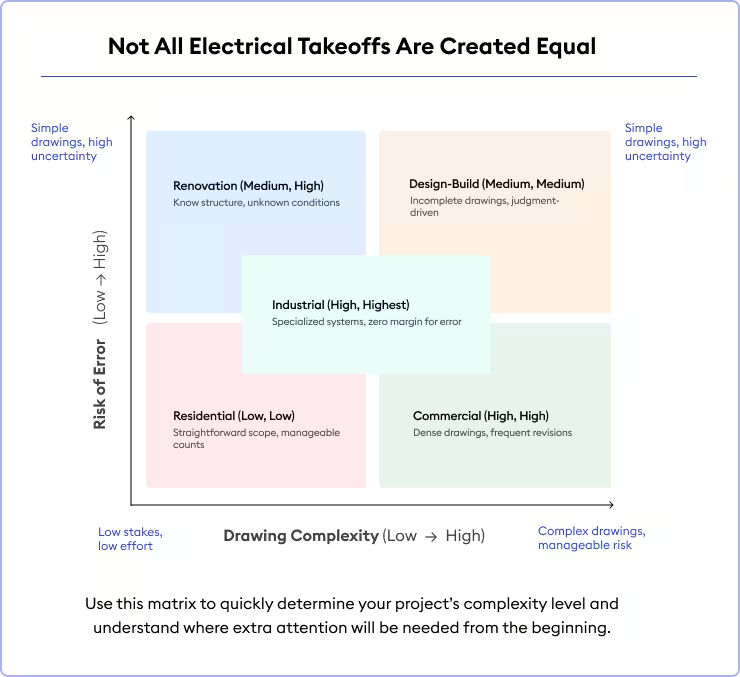
Before exploring the tools, it helps to understand why accurate electrical quantity takeoff is so difficult in the first place. These are the pain points that have driven the evolution of the tools described in this guide.
The consequences of getting electrical takeoffs wrong are not an isolated incident. In fact, it is an industry-wide pattern.
- Manual counting errors. Human error on symbol-dense drawings is nearly unavoidable. Missing a single lighting circuit or miscounting a panel run can significantly affect bid accuracy.
- Drawing revision management. Construction drawings are rarely static. Revisions, addenda, and updated sheets arrive throughout the bid period, and missing one update, as in Marcus's case above, can be catastrophic.
- Time constraints. Thorough manual takeoffs on large commercial projects can take days. When bid windows are short, estimators are forced to cut corners or work around the clock.
- Inconsistent pricing data. Labor rates and material costs change frequently. Estimators working from static spreadsheets or outdated cost databases routinely under- or overprice jobs.
- Collaboration gaps. On larger projects where multiple estimators share a workload, version control and communication breakdowns create duplicate work and missed items.
Types of Electrical Takeoff Tools Used Today
The electrical estimating tools available today fall into four broad categories. Understanding where each one fits helps contractors evaluate what they actually need, rather than what is simply most familiar.
Manual Takeoff Methods
Manual methods remain in use today, primarily for smaller residential jobs and quick quotes. Estimators print drawings, use a scale ruler to measure conduit runs, and count components by hand with colored markers. Spreadsheet templates handle the pricing side. There is no software cost, but there is a significant time cost: manual takeoffs on anything beyond a simple job are slow, inconsistent, and entirely dependent on the estimator catching every revision themselves.
Digital Takeoff Tools
Digital takeoff tools have moved electrical takeoffs off paper and onto screens. Instead of working with prints, estimators now review PDF plans, mark up symbols digitally, draw calibrated measurement lines, and keep track of everything across sheets, all in one place.
The biggest improvement over manual methods is speed, along with a clear audit trail. Every count and measurement is captured, and most platforms offer basic revision tracking.
That said, the core limitations remain, and some desktop-only tools also limit which devices estimators can use, which matters if you are looking for electrical estimating software for Mac. Quantities still have to be manually moved into a separate pricing tool, and the estimator is still responsible for doing the actual counting. These tools make the process smoother, but they do not fully remove the bottleneck.
Advanced Electrical Estimating Software
Purpose-built electrical estimation software does more than just takeoff. It helps with the full estimating process, from going through drawings to putting together a priced bid. These tools can pull quantities more consistently than manual methods, and the better ones come with built-in material libraries and labor databases, which allow estimators to price work without jumping between systems. Many of them also support multiple trades, making them a practical choice for general contractors managing multiple scopes.
The limitation is that the estimator still has to do part of the work. They need to identify the symbol types first, and only then does the software take over the counting. In other words, the tool helps with the numbers, but it is not fully reading or understanding the drawings on its own.
AI-Powered Takeoff Software: Where Beam AI Fits
This is where Beam AI fits in. Instead of making estimators go through every symbol and count things one by one, it reads the drawings for them. It is trained on thousands of electrical plan sets, so it can pick up common symbols like outlets, panels, fixtures, and conduit, along with project-specific legends and even custom notations. It also reads specifications, notes, and other details in the set, so the context is not lost.
Once the drawings are uploaded, it processes the full set together. It counts components across all sheets, pulls conduit lengths straight from the geometry in the drawings, and matches wire schedules with panel schedules. The result? A clean, structured quantity list that is ready to be used for bidding, usually within 24 to 72 hours.
When revised drawings come in, it handles that in the same flow. Beam AI compares the new set with the old one and points out exactly what changed, whether that is new items, removed items, or updated dimensions. That way, estimators do not have to go back and recheck everything from scratch.
There is also a QA step before anything is delivered. A human reviewer checks the output to make sure it matches real-world estimating standards. This mix of automation and review helps teams take on more bids without needing to expand their estimating team. The same shift is reaching the supply side - see why industrial electrical suppliers are moving to AI takeoff.
How to Find the Right Electrical Estimating Tool
.avif)
There isn’t one “best” takeoff software for every contractor. The right choice depends on the specific workflow and operational needs of each team. Here’s a simple framework to help you compare your choices.
Based on Project Size
Small residential and light commercial jobs can usually be managed with spreadsheets or a basic digital takeoff tool. But as projects get bigger, like commercial, industrial, or multi-floor work with heavy drawing sets, more advanced or AI tools start to matter. They save a lot of time, and accuracy becomes harder to ignore at that scale.
Based on Team Size
Solo estimators tend to benefit most from ai electrical estimating tools that are quick to pick up and don’t add much extra admin work. Larger estimating teams, on the other hand, need more structure, things like collaboration features, version control, and the ability to split takeoff work across multiple people at the same time.
Based on Complexity
Single-trade electrical projects with straightforward drawings often do not need the full capabilities of an enterprise-level estimating platform.
But once projects involve multiple trades, frequent scope changes, or complex conduit routing across large facilities, more advanced platforms become far more useful because they are built to handle that level of complexity.
Based on Budget and ROI
Software investment needs to be evaluated against the time savings it delivers. A platform like Beam AI that reduces electrical quantity takeoff time by 90% on a team of three estimators represents a significant labor cost saving, one that can often cover the software cost within a small number of bids. The ability to bid 3x as many jobs without adding headcount makes the ROI case undeniable.
How Beam AI Compares
The following table compares the leading electrical takeoff software platforms currently available, based on key capability indicators relevant to electrical contractors.
What Is Coming Next?
The electrical takeoff software market is moving quickly, and a few emerging trends are starting to shape what the next generation of tools will look like.
The overarching direction is clear: estimating electrical costs is moving from a labor-intensive, inconsistent manual process toward a data-driven, automated discipline, one where AI handles the repetitive work and estimators focus their expertise on judgment calls, client relationships,
and strategic pricing decisions. Platforms that combine full AI automation with human quality assurance, such as the model Beam AI has built, represent where the industry is heading.
If you’re ready to transform your workflow, book a demo today!




.jpg)