


The Hidden Cost of Speed in Transparent AI Construction Estimating
Construction estimating has always been a balancing act between speed and certainty.
However, labor shortages are causing an increasing problem for estimating teams, especially as bid deadlines are rapidly approaching. And with margins tightening across the industry, estimators are expected to turn around more bids in less time without compromising accuracy.
That explains why AI estimating tools are gaining interest so quickly. With faster takeoffs, reduced manual work & shorter turnaround times, estimators can focus less on repetitive tasks and more on reviewing scope, validating assumptions & improving bid quality.
Nevertheless, there is one concern many contractors cannot ignore: What happens when the estimate arrives quickly, but no one can explain how it got there?
That question sits at the center of a growing debate around transparent AI construction estimating software. Because in construction, speed without visibility is not efficiency but exposure.
If you cannot rationalize an estimate, it becomes a liability the moment someone questions the quantities, changes the plan, or the margins evaporate.
And that’s exactly why the next generation of estimating technology isn’t simply about generating numbers more quickly. This is about creating numbers that estimators can look at, validate, explain, and support.
Why Instant AI Is Not Always the Safest Option
Many AI estimation tools promise the same thing, i.e., instant results. You upload drawings, push a button & get quantities in minutes. Faster takeoffs & less manual labor sound great, but speed without visibility can bring new risks to the estimating process.
There is a reason transparent construction estimating has never been completely automated. Good estimators know to look closely at scope interpretation, addenda, drawing inconsistencies & missed quantities. Whether using black-box automation or dealing with the hidden costs of free estimating software where accessories and unpriced scope slip through basic templates, eliminating review checkpoints allows errors to flow straight into bids—and even small quantity mistakes can have a big impact on margins.
The problem isn’t so much that AI makes mistakes but that outputs are accepted without validation. When teams can't readily review assumptions or see how numbers were calculated, quick estimates can foster a false sense of certainty. That’s why modern estimating is about accountability, not just speed.
Why a 24-72 Hour Turnaround Can Actually Improve Bid Confidence
Speed isn't the only value in construction estimating. Often, it’s not the highest value at all. A workflow with a typical deadline of 24-72 hours may sound longer than immediate estimating tools, but that window often allows for a much more confident estimate.
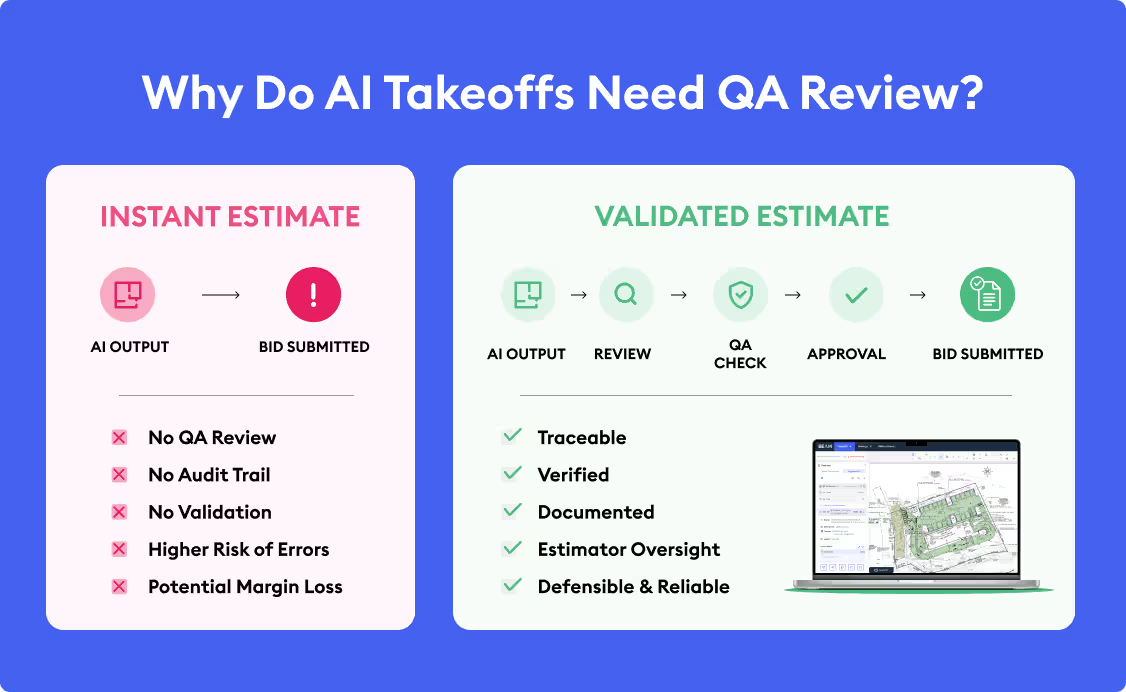
Here is what takes place during that time. Instead of simply generating quantities and moving on, strong workflows introduce structured validation layers such as:
- AI-generated takeoffs are reviewed
- Scope alignment is verified
- Quantities are checked for inconsistencies
- Addenda are compared
- Variance reports are generated
- QA checkpoints are completed
This is where AI takeoff with QA workflow becomes more valuable than instant automation.
A same-day estimate that contains hidden errors costs more than a carefully reviewed estimate submitted 48 hours later.
For estimators and preconstruction managers, turnaround time should not be measured solely by speed. It should also be measured in confidence. Because a viable estimate reduces rework, minimizes disputes, protects margins & improves internal trust.
What Transparent AI Estimating Actually Means
If confidence matters as much as speed, what exactly makes an estimate trustworthy?
The answer is transparency.
The term transparent AI construction estimating software gets used frequently, but many contractors still struggle to define what it means in practice. Transparency is not simply receiving a completed spreadsheet or a list of quantities. It has complete visibility into how those numbers were generated in the first place.
When you're reviewing an estimate before a bid submission, you need more than an output. You need context to understand where quantities came from, what assumptions influenced the calculations, who reviewed the estimate & how revisions impacted the final numbers.
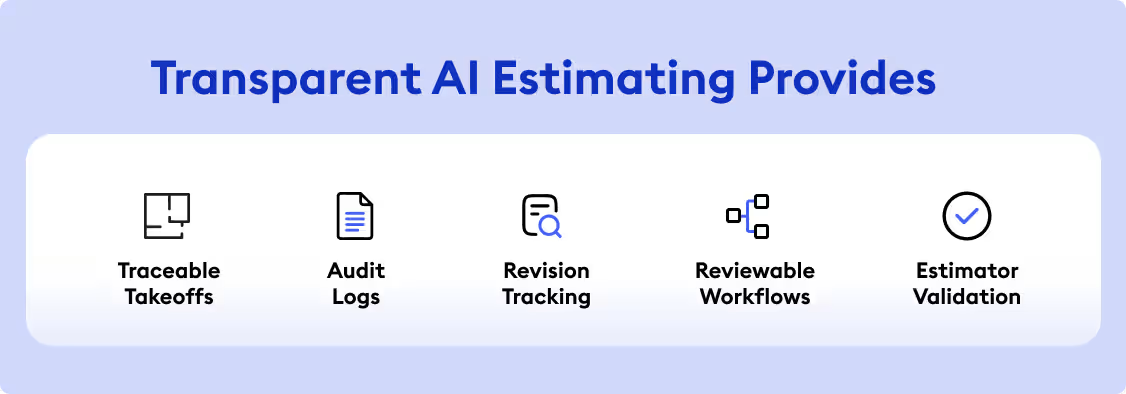
True transparency gives you that visibility through:
- Traceable quantities
- Documented assumptions
- Reviewable workflows
- Version tracking
- Audit logs and construction preconstruction audit tools
- QA checkpoints
- Annotated takeoffs
- Visibility into drawing revisions
In practical terms, transparency allows you to answer standard inquiries during bid reviews:
- Where did this quantity originate?
- What changed between plan versions?
- Who approved this estimate?
- What assumptions affected the final takeoff?
This is where explainable AI construction estimating becomes valuable. Instead of forcing you to trust a system blindly, it allows you to review, validate & challenge outputs before they become part of a bid where you remain in control of the decision-making process.
Where Black-Box Estimating Tools Fall Short
While modern estimating tools can significantly reduce manual work & accelerate bid turnaround time, not every platform is designed to provide the visibility contractors need.
Many tools perform exceptionally well during demonstrations. They process plans quickly, generate quantities in minutes & produce polished outputs that appear ready for submission.
Real projects, however, are rarely that simple.
As you know, drawings evolve throughout the bidding process. Including scope shifts, addenda arriving at the last minute & multiple stakeholders reviewing estimates under tight deadlines. In that scenario, visibility matters just as much as speed.
When estimating tools generate quantities without documentation or supporting context, several problems begin to surface. This is often referred to as black-box estimating, where results are delivered, but the process behind those results remains largely invisible to the estimator.
Lack of Traceability
One of the first issues is the inability to track where numbers came from.
Without construction estimating with audit logs, it becomes difficult to understand how quantities were generated or what changed between revisions. During internal reviews, bid approvals, or post-bid discussions, that lack of visibility can create unnecessary confusion.
When a quantity changes unexpectedly, your team should be able to identify why. Without a clear audit trail, finding those answers becomes far more difficult.
Limited Accountability
The conversation around AI vs manual takeoff accountability often comes down to one simple factor: visibility.
Manual takeoffs are not perfect, but experienced estimators can explain their decisions, assumptions, and methodology. That accountability helps teams defend their estimates when they are challenged.
Black-box systems remove much of that visibility. If the workflow lacks review checkpoints and documentation, responsibility becomes harder to define.
Hidden Assumptions
Every estimate contains assumptions, but it becomes a problem when those assumptions are buried.
Whether the software is making decisions about assemblies, measurement rules, or drawing interpretation, you need visibility into those choices. Otherwise, you may inherit risk without realizing it.
Unfortunately, those issues often surface after the bid has already been submitted.
Revision Management Challenges
Perhaps the biggest challenge comes when plans change, which they always do.
Without construction estimating variance reports, tracking revisions quickly becomes a manual and time-consuming exercise. Estimators find themselves comparing drawing sets, searching for scope changes, and trying to determine how updates affect quantities.
That process not only consumes time but also introduces additional opportunities for error. Fast outputs without validation can create risks that remain hidden until they become expensive.
How Beam AI Builds Accountability Into Every Estimate
This is where Beam AI takes a different approach.
Rather than focusing exclusively on speed, Beam AI is designed around verification and accountability. The objective is not to remove estimators from the process. It is to give them better tools to review and validate their work.
That approach shows up throughout the workflow, delivering:
Structured QA Workflows
Every estimate follows a defined construction estimating review workflow with built-in validation checkpoints.
The system accelerates quantity generation, but estimators remain actively involved in reviewing outputs, confirming scope alignment & validating assumptions before bids move forward.
Addendum Variance Reports
Managing revisions remains one of the most time-consuming parts of preconstruction.
Beam AI's construction estimating variance reports help you compare drawing versions, identify quantity changes, and understand how revisions affect project costs.
Instead of manually reviewing hundreds of sheets, you gain clear visibility into what changed & why it matters.
Audit-Ready Reporting
Because strong estimates should be easy to review and defend.
Beam AI produces audit-ready construction estimating reports that document revisions, assumptions, review checkpoints, and quantity changes throughout the estimating process.
That documentation supports internal approvals while making estimates easier to explain to project stakeholders.
Standardized QA Checklists
Even experienced estimators benefit from consistency.
By incorporating a structured construction estimating QA checklist, Beam AI helps teams follow the same validation process across every project.
Rather than relying solely on individual judgment, estimators work through repeatable review steps that strengthen the overall construction estimating verification process & reduce the likelihood of costly oversights.
Why Addendum Variance Reports Matter More Than Most Contractors Realize
If you've spent any time in preconstruction, you know that the first set of drawings is rarely the last.
Plans change, addenda arrive days before bid submission, scope gets revised & suddenly, your team is digging through multiple drawing sets trying to figure out what changed and how it impacts the estimate.
For many estimators, that process is one of the most frustrating parts of the job.
The challenge isn't finding the changes. It's finding every change and understanding its impact before the bid goes out.
That's where addendum variance reporting becomes so valuable.
Rather than manually comparing drawing versions sheet by sheet, you can quickly identify quantity changes, understand how revisions affect costs & spot potential risks before they become pricing mistakes.
More importantly, you gain a documented record of what changed and when.
That visibility helps your team move faster during bid revisions while maintaining accountability throughout the process. It also strengthens your construction estimating compliance documentation when project stakeholders, owners, or internal reviewers need to understand the reasoning behind bid adjustments.
And that's important because some of the most expensive estimating mistakes don't happen during the initial takeoff. They happen when revisions slip through unnoticed.
How QA Checklists Turn AI Output Into Defensible Estimates
Generating quantities is only part of the estimating process.
The real value comes from knowing those quantities have been reviewed, verified, and approved before they become part of a bid.
That's why a structured construction estimating QA checklist remains such an important part of modern estimating workflows.
Think about how experienced estimators work today. You don't simply accept numbers at face value. You review scope, validate assumptions, check for omissions & compare results against project requirements before moving forward.
A well-defined QA process brings that same discipline into every estimate.
First, quantities are generated and organized. Then, the estimator reviews scope assumptions and confirms alignment with the drawings.
From there, quantities are checked for missing items, inconsistencies, and unusual variances.
If drawing revisions exist, those changes are reviewed and documented before pricing adjustments are made.
Finally, the estimate moves through approval & documentation before submission.
Each step adds another layer of confidence, where instead of relying on assumptions or individual judgment alone, your team follows a repeatable process that strengthens accuracy across every project.
That is what transforms automation into accountability.
The purpose of construction estimating risk reduction software should never be to remove oversight. It should be to help you identify and reduce risk before it reaches the final bid.
Why Transparency Matters Even More for Mid-Market Contractors
Large contractors often have more resources, larger estimating departments, and greater financial flexibility when mistakes occur.
Most mid-market contractors don't have that luxury.
When you're working with leaner teams and tighter margins, every estimate carries more weight. A missed quantity or overlooked revision can have a much bigger impact on profitability.
At the same time, as your business grows, clients expect a higher level of accountability. Internal reviews become more formal & projects get more complex as bid volumes increase.
That creates a difficult balancing act wherein you need to increase estimating capacity without sacrificing quality.
That's exactly why construction bid transparency tools matter so much for growing contractors.
When every estimate includes clear documentation, review checkpoints & traceable quantities, your team can scale more confidently. You create consistency across bids & improve internal accountability, while reducing the likelihood of costly errors slipping through the cracks.
Hence, for many growing contractors, visibility becomes just as important as efficiency.
Why Instant Tools Can Create Hidden Risk
There is no question that instant estimating tools can be impressive. You upload plans, wait a few minutes, and receive a completed takeoff.
The problem is that speed can sometimes create a false sense of confidence.
When outputs look polished and complete, it's easy to assume the work is accurate. But confidence and accuracy are not always the same thing.
If quantities haven't been reviewed, assumptions haven't been validated, and revisions haven't been tracked, hidden issues can make their way into the bid without anyone noticing.
That might include:
- Missing scope items
- Drawing interpretation errors
- Quantity discrepancies
- Revision-related changes
- Incorrect assumptions
The risk becomes even greater when documentation is limited.
Weeks later, when someone asks why quantities changed or questions a pricing decision, your team may struggle to retrace the path back to the original estimate.
That's why more contractors are looking for defensible construction bids software that provides visibility alongside speed.
Human-in-the-Loop Estimating Is the Real Advantage
One of the biggest misconceptions about estimating technology is that the ultimate goal is full automation.
In reality, most estimators aren't looking to hand over complete control. They're looking to eliminate repetitive work while keeping oversight where it belongs.
That's the idea behind human-in-the-loop AI estimating.
The technology handles the time-consuming tasks that traditionally consume hours of an estimator's day. The estimator reviews the results, validates the output, and makes the final decisions.
Each side plays a clear role: Automation improves efficiency & estimator expertise provides judgment.
The combination creates a stronger outcome than either approach could achieve alone.
That's also why teams often see stronger AI estimating reliability construction outcomes when human oversight remains part of the process, creating a workflow where technology and expertise work together.
What a Defensible AI Takeoff Looks Like in Practice
It's easy to talk about transparency in theory. But what's more important is understanding how it works during an actual estimate.
A defensible workflow typically follows a straightforward process where project drawings are uploaded & reviewed, reducing hours of manual measurement work.
The estimator then reviews quantities, confirms scope assumptions, and checks for potential inconsistencies.
If addenda or revised drawings exist, variance reports highlight changes between versions and show how those revisions affect quantities.
The estimate then moves through a structured QA review process before documentation is finalized.
Once complete, the team has a clear record of quantities, revisions, assumptions, approvals & supporting documentation.
At that point, you're submitting an estimate you can explain and defend if questions arise later.
How Transparency Becomes a Competitive Advantage
Most contractors think about transparency as a risk-management tool. And while it is, it also creates opportunities.
When you can clearly explain your quantities, justify changes & provide supporting documentation, conversations with owners, project managers & stakeholders become much easier.
Questions get answered faster, reviews move more smoothly & confidence increases on both sides of the table. Over time, that level of clarity builds trust.
And trust matters in construction.
Contractors who can confidently support their numbers often create stronger client relationships than those who simply present estimates without context.
That's one reason construction estimating transparency tools are becoming more valuable as projects become larger and more complex.
The ability to explain your numbers can be just as important as the numbers themselves.
Risk Reduction Is the Real Value of Modern Estimating
When you look beyond the headlines about speed and automation, the real objective becomes clear.
Construction estimating isn't just about producing takeoffs faster. It's about producing estimates you can trust.
The most effective estimating workflows combine speed with accountability, automation with verification & efficiency with oversight.
That's the promise of transparent AI construction estimating software.
Not blind automation, not black-box outputs, but a process that gives you visibility into every quantity, every revision & every decision that influences the final bid.
Beam AI was built around that philosophy.
By combining review checkpoints, audit trails, addendum variance reporting, QA validation, and estimator oversight, the platform helps teams move faster without sacrificing confidence.
Because in construction estimating, the biggest risk isn't taking a little longer to review an estimate. It's submitting a bid without fully understanding what's behind the numbers.
And that's why the future of estimating isn't instant estimating but defensible estimating.



.jpg)