





What Is an LVL Beam?
If you've ever wondered what an LVL beam is, think of it as engineered lumber built specifically for structural performance.
LVL stands for Laminated Veneer Lumber. Instead of being cut from a single tree like traditional dimensional lumber, it's manufactured by bonding multiple thin wood veneers together under heat and pressure. The grain of each veneer runs in the same direction, creating a structural member with consistent strength throughout its length.
That manufacturing process is what makes a lumber LVL beam so predictable. Unlike solid sawn lumber, it contains fewer natural defects such as knots, splits, or grain inconsistencies that can reduce strength.
This provides an engineered framing member capable of carrying significant structural loads but with relatively light weight.
Why contractors prefer LVL
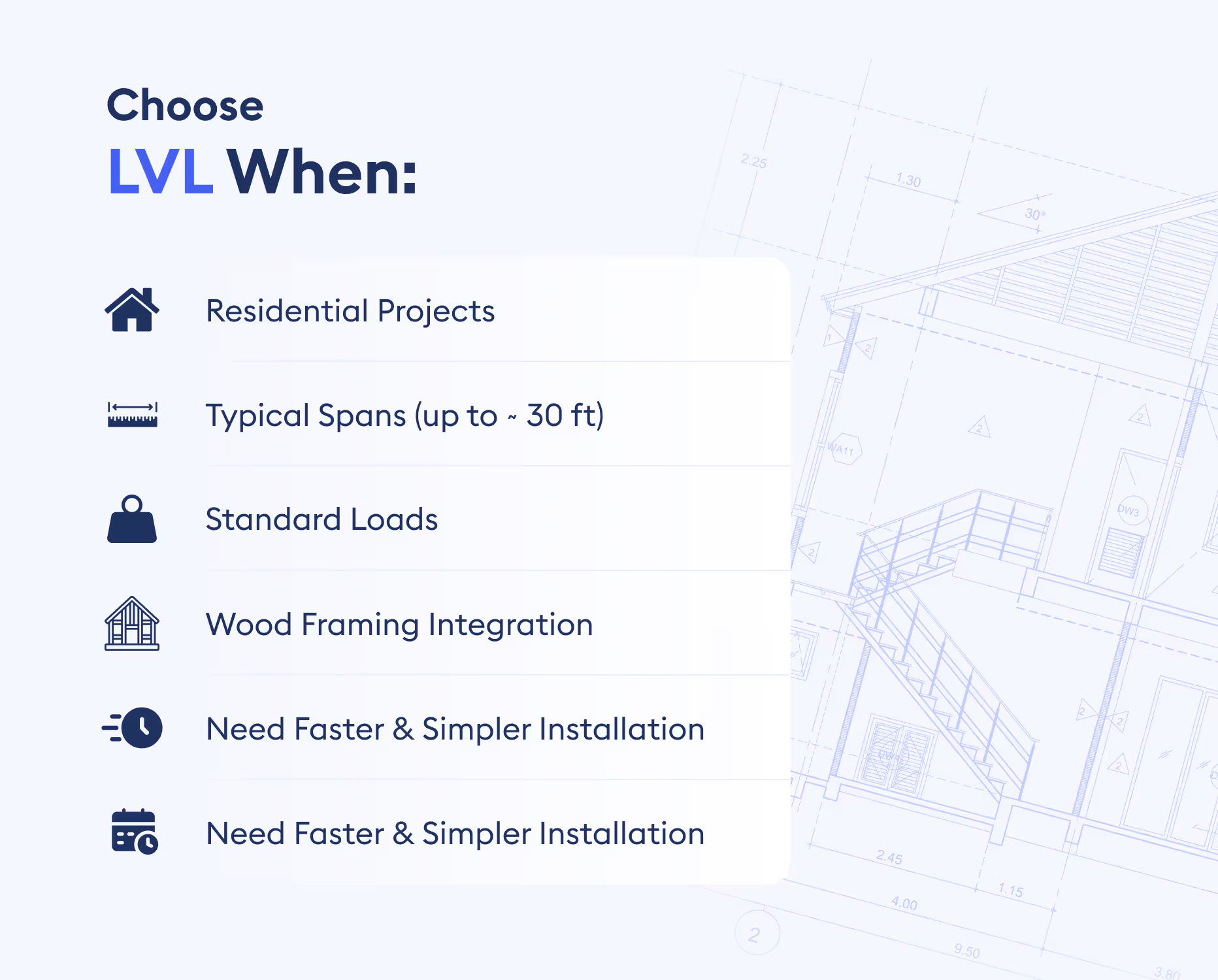
Imagine framing a custom home with several large window openings and an open-concept kitchen. Your crew wants materials that can be delivered easily, lifted without cranes, trimmed on site if necessary, and integrated directly into standard wood framing.
That's exactly where LVL shines.
Compared to steel, LVL wood beams are:
- Much lighter to handle
- Easier to transport
- Simpler to cut and modify in the field
- Compatible with conventional wood framing
- Faster to install using standard carpentry tools
Instead of introducing a completely different structural system, LVL fits naturally into residential construction.
Common applications
You'll commonly see LVL wood beams used for:
- Support beams for the floor
- Framing of the roof
- Over garage door lintels
- Support beams for basement
- Windows and doors openings
- Load bearing wall replacement
- Residential additions
For most houses, these engineered components provide more than enough structural capacity without the added complexity of steel installation.
Understanding Structural Steel Beams
While LVL dominates residential framing, structural steel beams, on the other hand, occupy an entirely different category of structural performance.
Steel beams are fabricated structural members designed to carry very large loads across long unsupported distances.
Unlike engineered wood, steel achieves exceptional strength because of its material properties. It resists compression, tension, bending, and twisting far better than timber products of similar size.
You'll typically encounter several common beam profiles, such as:
I-Beams
An I-beam has two narrow flanges joined by a central vertical web, creating the familiar "I" shape that is commonly used in residential and commercial buildings.
Wide Flange (W) Beams
Often referred to simply as W-beams, these provide greater bending resistance and are among the most commonly specified structural members today.
H-Beams
H-beams feature wider and thicker flanges than I-beams, making them well-suited for supporting heavier loads in industrial and large-scale construction.
Where steel performs best
Steel is commonly selected for:
- Commercial buildings
- Storage Areas
- Manufacturing facilities
- Multistory structures
- Large residential homes
- Long-span roof systems
- Heavy structural renovations
Whenever an engineer needs maximum strength with minimal beam depth, steel usually becomes the preferred solution.
Is an LVL Beam Stronger Than a Steel Beam for the Same Span?
Let's go back to the question that brings most people here.
If you place an LVL beam and a steel beam side by side and ask which one is stronger for the same span, the answer is clear: A steel beam is significantly stronger than an LVL beam for the same span.
But that's only part of the story. Because strength alone doesn't determine which beam should be used.
Buildings aren't designed around the strongest material but are designed around the loads they need to carry. If a properly sized LVL can safely support the required span, choosing steel may not improve the structure at all. It may only increase material costs, equipment needs, and installation time.
Comparing structural performance
The comparison makes one thing clear: steel outperforms LVL in raw structural strength, offering greater stiffness, higher tensile & compressive strength, and better resistance to bending. These properties allow steel to carry heavier loads and span longer distances with greater efficiency.
LVL, however, excels where most residential projects demand it. Its predictable engineering properties, lighter weight and compatibility with conventional wood framing make it easier to transport, install and incorporate into a home’s structural system. It offers more than enough structural capacity for floor joists, roof framing, garage headers and many load bearing wall applications without the complications of steel.
That's why choosing between the two is about balancing structural performance with installation efficiency, project cost, and the specific demands of the span.
LVL Beam Sizes, Dimensions, and Span Capability
One of the biggest misconceptions is that LVL beams come in one standard size. In reality, they don't, as beam sizing depends on several variables working together.
These include:
- Span length
- Dead load
- Live load
- Tributary width
- Building layout
- Deflection requirements
Standard LVL beam dimensions
LVL beams are available in various standard thicknesses and depths depending on the application. Typical thicknesses range from 1-1/3 inches to 2, 3, and 4 pleys for 3-½, 5-¼, and 7 inches and above. Standard LVL sizes come in 9 ¼” to 24” depths for ease in combining plies to obtain the desired load capacity.
Another advantage of engineered lumber is its manufacturing flexibility. Typical LVL beam lengths range from 20 feet to well over 60 feet, depending on the manufacturer. Longer beams reduce the need for field splices, simplify installation, and make it easier to support large openings with fewer joints.
While thickness does affect a beam’s load capacity, depth often has a greater impact on structural performance. Since the deeper beam is more resistant to bending, it can span longer distances with deflection controlled. This is why engineers will often increase the beam depth before adding more plies to make sure the beam meets both strength and serviceability requirements.
Steel Beam Sizes and Span Efficiency
Steel follows a completely different sizing philosophy.
Typical residential wide-flange steel beams can easily span 25-40 feet for most house applications, while larger structural sections used in commercial buildings may exceed 60 feet, depending on loading and beam size.
Instead of focusing primarily on depth, engineers evaluate structural properties such as:
- Section modulus
- Moment of inertia
- Yield strength
- Load distribution
- Span requirements
Because steel is much stronger than wood, structural steel beams can span much farther while keeping relatively shallow profiles.
Imagine designing a modern home with twelve-foot ceilings and a completely open great room. Every additional inch of beam depth reduces ceiling clearance.
Using steel allows the engineer to achieve the required span without sacrificing interior space.
That's one reason architects frequently specify steel in contemporary homes featuring dramatic open layouts.
Steel beam length
One of steel's biggest advantages is its ability to support long spans with minimal beam depth. Because it is much stiffer than engineered wood, it resists bending under heavy loads, allowing engineers to design larger open spaces with fewer support columns.
Steel in residential houses
Although often associated with commercial buildings, a steel beam house is becoming increasingly common. You'll frequently find steel supporting:
- Large kitchen openings
- Multi-car garage headers
- Basement renovations
- Cantilevered balconies
- Contemporary open-concept homes
Many custom homes actually combine both systems, using LVL throughout most of the structure while reserving steel only where exceptionally long spans are required.
Load Capacity and Deflection Comparison
While span is an important consideration, how a beam performs under load matters just as much. A beam may safely support the required weight, but if it bends too much, you'll notice problems like floor bounce, squeaky floors, cracked drywall and uneven finishes over time.
That’s where steel comes out on top. Its higher stiffness means that it can take more bending than engineered wood under the same loading conditions. Steel is therefore less deflected which is ideal for long spans, heavy point loads and spaces where minimising movement is critical.
LVL, however, performs exceptionally well in most residential applications when it's properly engineered. In many cases, engineers size an LVL beam not because it lacks the strength to carry the load, but because they need a deeper or multi-ply beam to keep deflection within acceptable limits.
The difference is that a beam with good strength can carry a load but the one that has good deflection will do the same over time. With either LVL or steel, the end result should be a structure that will be stable, comfortable, and long lasting.
Installation and Cost Comparison Differences Between LVL and Steel Beams
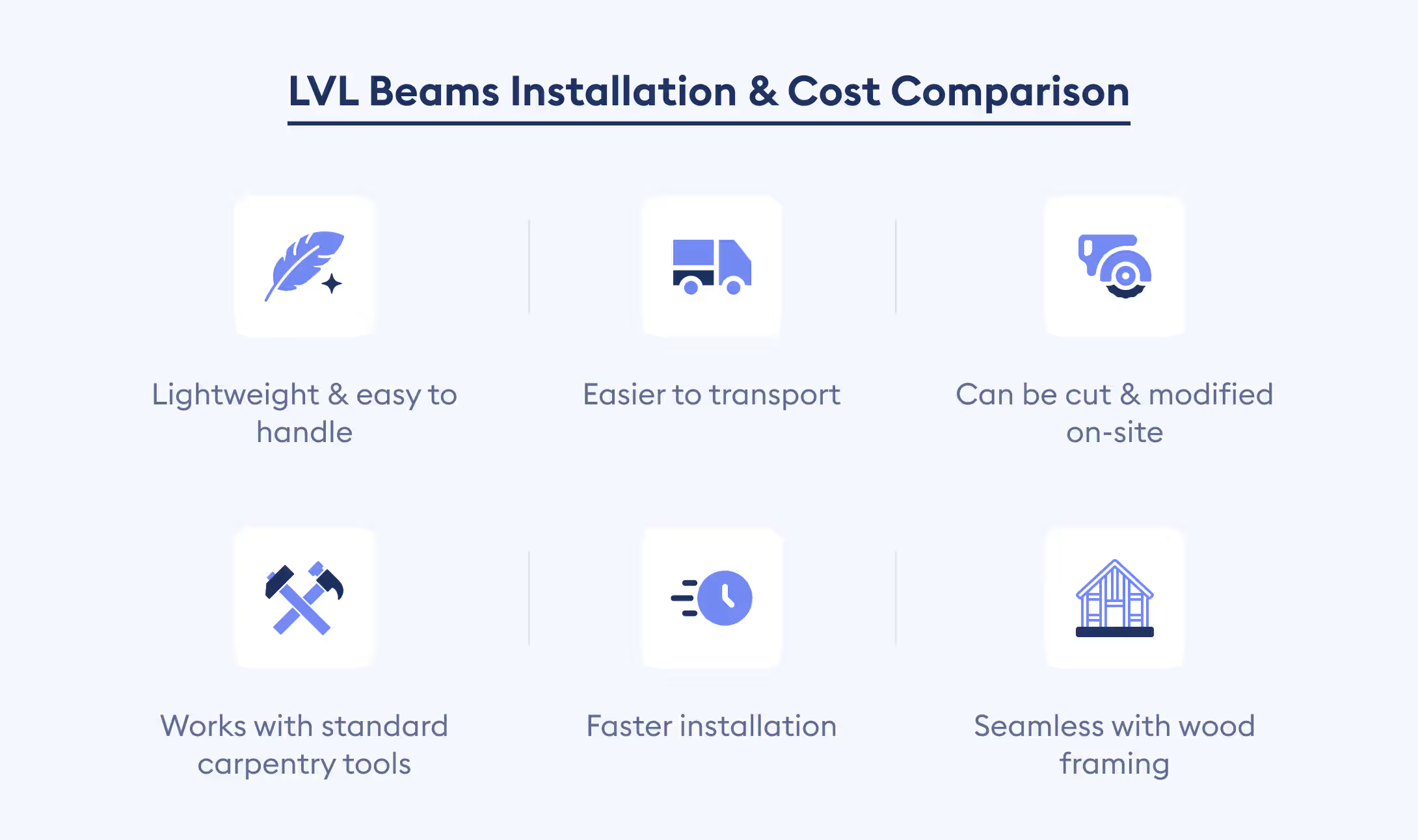
The largest practical difference between LVL and steel is in the installation which directly affects project costs. Because LVL works with standard wood framing, crews can usually move, lift and install it with normal carpentry tools and without cranes or specialized labor. It’s also easier to cut or modify on-site, making it ideal for remodels and residential framing.
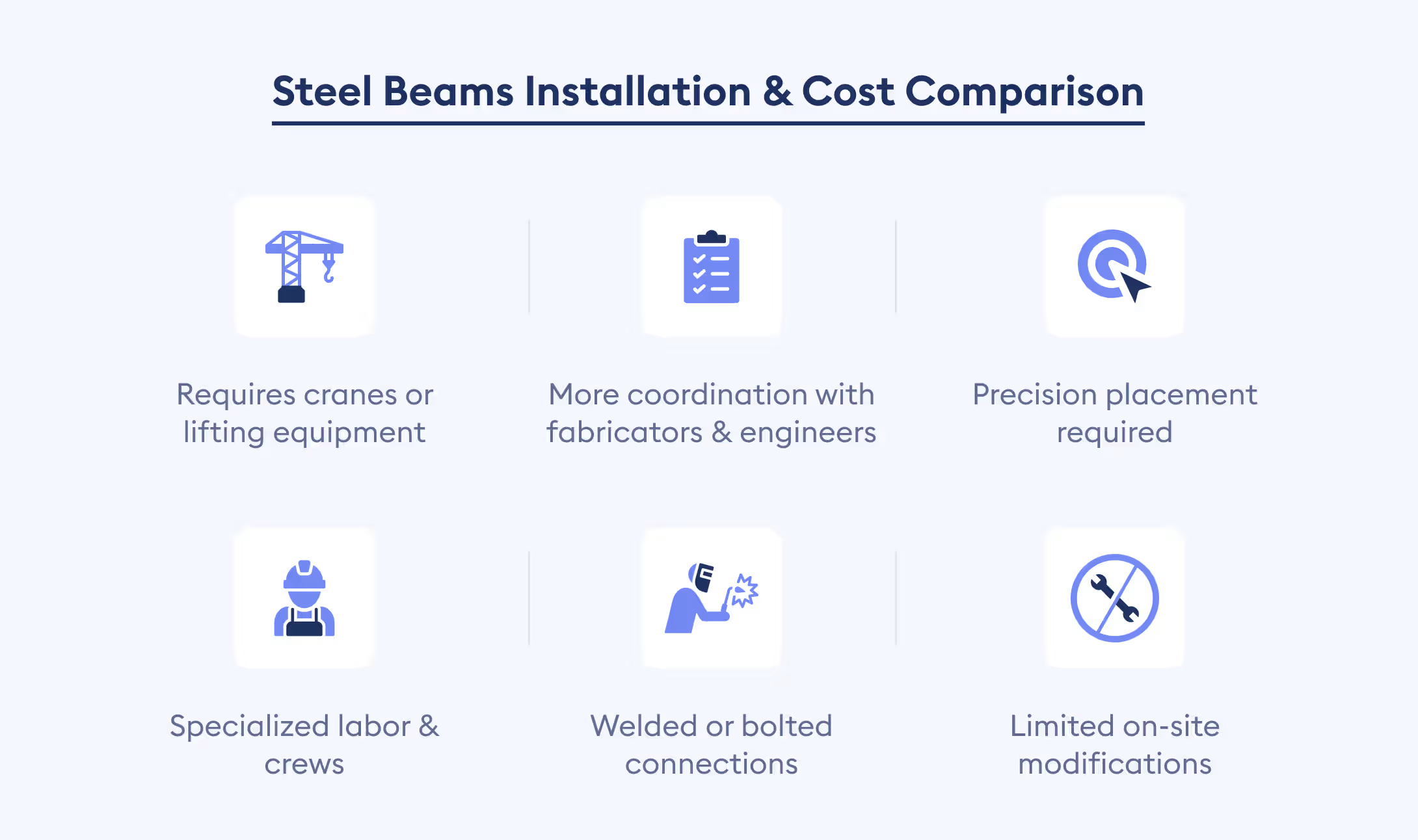
Installation of steel is more complex. It’s heavy, requiring cranes or other lifting equipment and welded or bolted connections require specialized crews and careful coordination. Once the beam is established, there are also limits on field changes.
Overall, steel tends to be more expensive due to fabrication, transportation, rental of equipment and labor for installation. The price of the material itself depends on the size and span. When both systems meet the structural requirements, LVL often offers a better value for residential projects because it reduces labor, equipment and construction time.
Fire, Moisture, and Typical Applications
LVL and steel react differently to environmental conditions. Steel does not burn. However, it quickly loses strength when exposed to extreme heat . This is why fireproofing is often needed for commercial buildings . LVL burns gradually in fire, leaving the inner core with some structural capacity for some time. LVL when wet should be protected from prolonged exposure to moisture, and untreated steel can corrode if not properly coated.
Another key differentiator is its application. LVL is the choice in residential construction for floor and roof framing, garage headers, basement beams, home additions and load-bearing wall removals because it works so well with wood framing. Steel is selected for commercial buildings, warehouses, multi-story buildings, and homes where very long spans or minimum beam depth are required. Many custom homes employ a hybrid framing approach, using LVL for the bulk of the framing and steel only for longer spans.
Common Beam Selection Mistakes
Many beam-related issues stem from choosing the wrong system rather than poor construction. Common mistakes include:
- Using a smaller-sized LVL beam than what is required.
- No deflection limits considered.
- Steel when engineered wood will suffice.
- Insufficient bearing at beam supports.
- Failure to insulate beams from long-term exposure to moisture.
- Ignoring installation logistics.
These mistakes can lead to sagging floors, excessive vibration, higher construction costs, or installation delays.
When to Choose LVL vs. Steel
For most residential projects, contractors prefer LVL because it's lighter, easier to install, works with standard framing practices and reduces labor and equipment costs. As long as it's properly engineered, it provides excellent structural performance for floors, roofs and load-bearing walls.
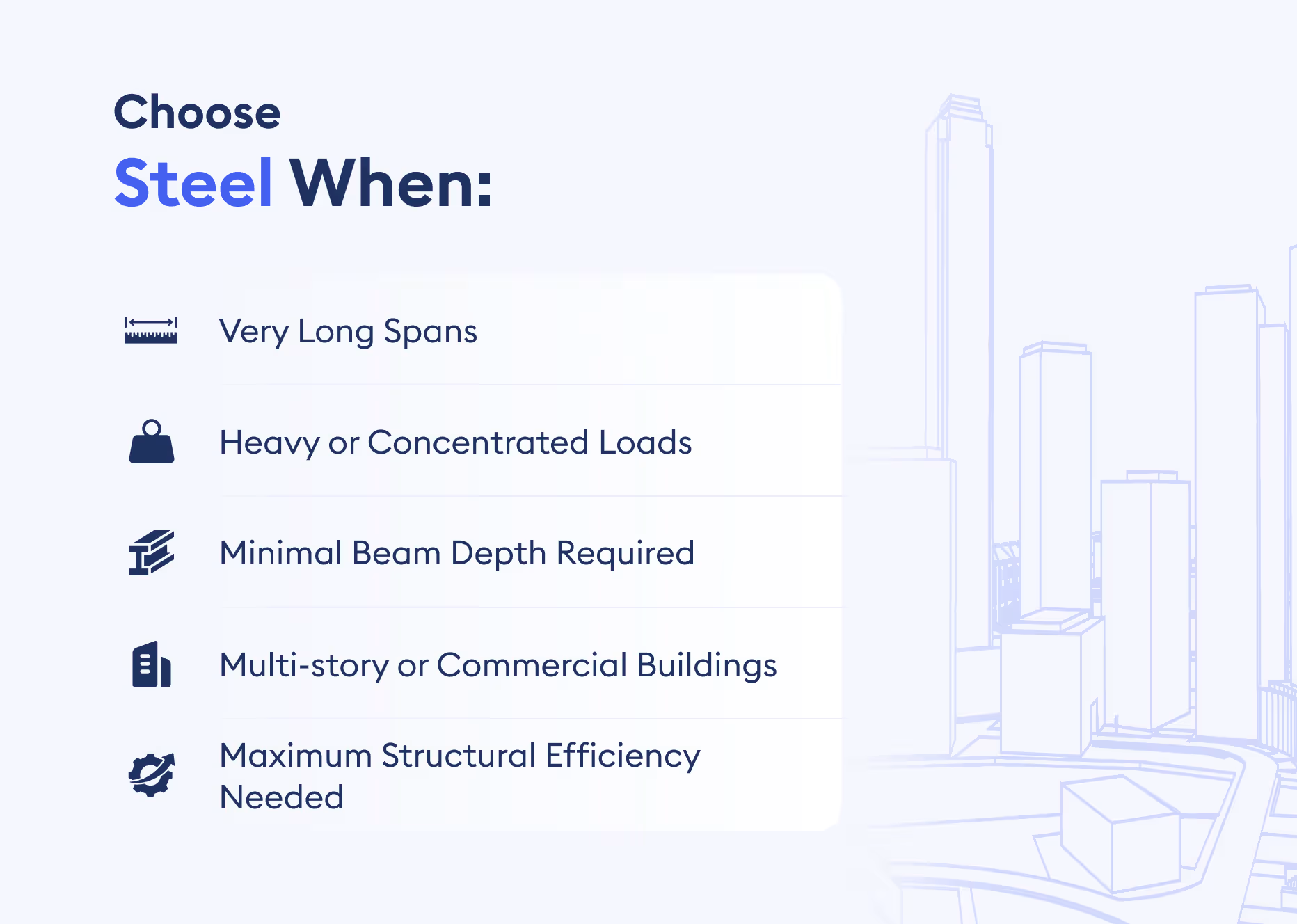
Steel is needed where spans exceed the practical limits of engineered wood, beam depths are to be kept to a minimum, heavy concentrated loads are encountered or where the utmost structural efficiency is required in commercial structures. In these cases the extra strength and stiffness of steel justify the more difficult installation and higher cost.
Why Beam Selection Is More Than Strength
It is not a matter of Which beam is stronger? It is What’s the best beam for the project? A good structural choice is one that considers span requirements, load capacity, deflection control, complexity of installation, framing compatibility, labor, equipment, and overall cost. The hardest material is not always the best solution in practice or price.
The same principle goes for estimating. Even if you have selected the correct structural system, faulty takeoffs can result in costly errors or missed bid opportunities. On the steel side, one of the most common of those errors is counting members by eye — here's why reading steel by piece mark, not by appearance keeps your tonnage takeoff accurate. For example Steel West increased bid volume by 34% by automating steel takeoffs with Beam AI. The result was faster, more confident bids, without additional estimating resources.
Conclusion
Steel beams offer greater strength, stiffness, and long-span performance, making them the preferred choice for demanding structural applications. However, for most residential construction, LVL provides an ideal balance of strength, affordability and installation simplicity. It integrates seamlessly with wood framing, requires less equipment, and often reduces both labor and project costs.
The best beam in the end is not the strongest beam, but the beam designed to meet the project’s structural, practical and financial requirements safely. Whether you're estimating a residential remodel or a commercial build, choosing the right structural system is just part of the puzzle. The accuracy of takeoffs and cost estimates is equally important, and Beam AI helps streamline both lumber and steel estimating workflows for faster, more confident bidding.







.jpg)