

.jpg)

What's the Difference and Which One Do You Need?
Although backfill and fill dirt are often used interchangeably, they serve different purposes in construction and earthwork.
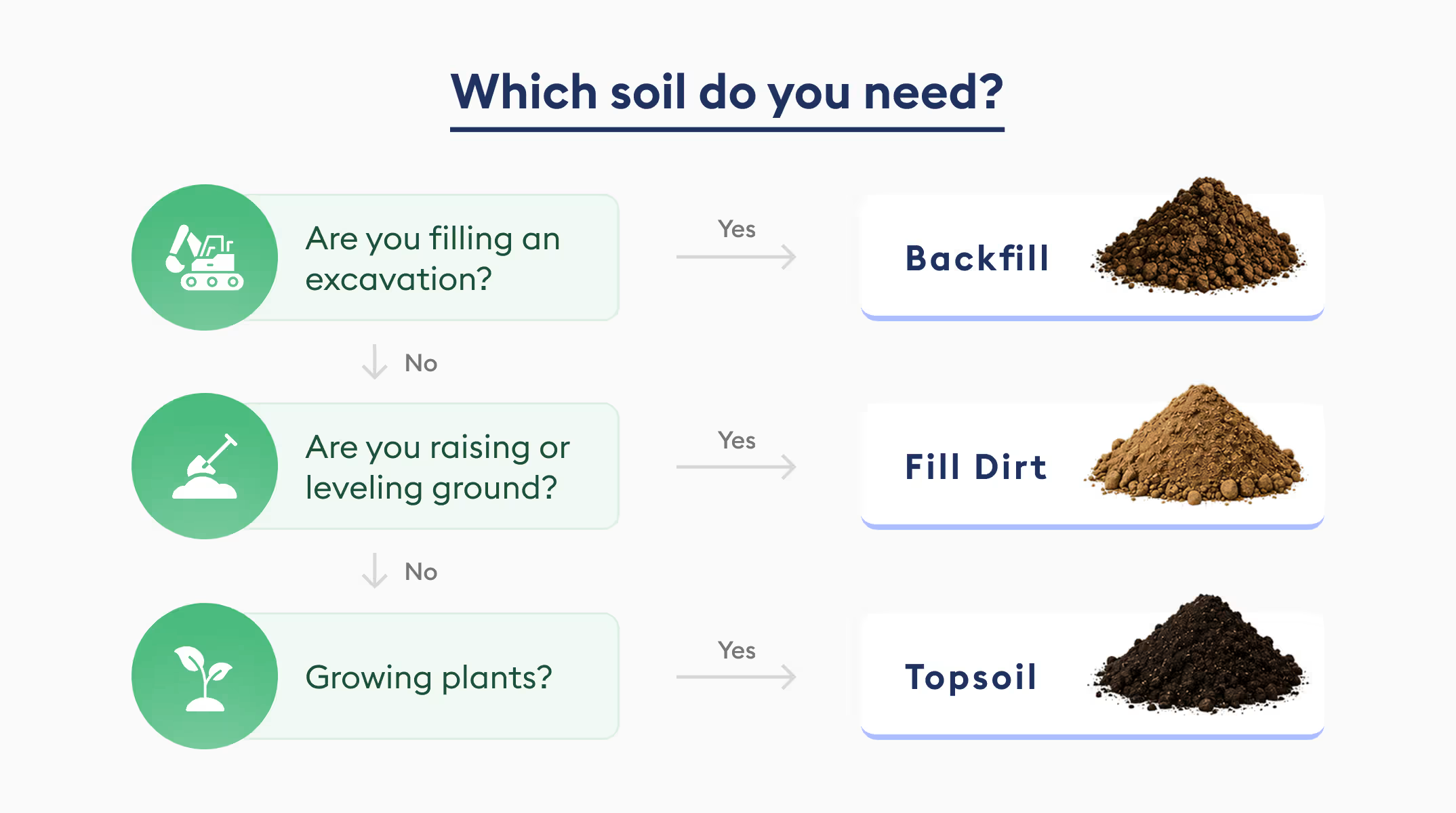
Backfill is the material used to fill in after construction to provide support for the foundation, trench, retaining wall, and underground utility. Fill dirt is compactable soil that is used to raise elevations, to provide building pads, and to fill low areas prior to construction, while topsoil is not compactable and is used for vegetation only.
The Federal Highway Administration (FHWA) recommends using appropriate backfill material and compacting it effectively to enhance the load-bearing capacity and to reduce long-term settlements. That is why, for most people, selecting the right fill material is more critical when creating a foundation, laying underground utilities, leveling a site, or landscaping a property.
About Backfill, Fill Dirt, and Topsoil in Detail
What Is Backfill in Construction?
Backfilling in construction is the act of filling spaces in an excavation, such as around structures like a foundation, utility lines, basements, or retaining walls, after work is finished. Contractors use native soil, sand, gravel, crushed stone, or engineered structural fill depending on the application.
Good backfill should compact well, provide adequate bearing capacity, and offer suitable drainage for the project, since it directly affects the long-term stability of a project. Poorly selected or improperly compacted backfill can lead to settlement, erosion, water accumulation, and structural movement over time.
Good backfill has a number of important benefits:
- Holds foundations and underground structures in place
- Slows soil movement around excavations
- Improves drainage where required
- Prevents erosion and washouts
- Safely restores ground levels
- Maintains soil bearing capacity
Engineers frequently design the backfill materials to their properties of drainage, load bearing and compaction instead of recycling the soil removed from the excavation site for structural applications.
And here are the best materials for backfill:
For projects requiring engineered compaction, ASTM D698 (Standard Proctor) and ASTM D1557 (Modified Proctor) are the industry standards commonly used to establish optimum moisture content and maximum dry density for soils.
Granular materials such as sand and crushed stone generally perform better in areas where drainage is important. Clay-rich soils, although inexpensive, retain moisture and can expand or shrink with changing weather conditions.
What Is Fill Dirt?
Unlike backfill, which is defined by its application, fill dirt is a material used across many different phases of construction.
Fill dirt is clean, compactable soil used to raise site elevations, create building pads, fill depressions, and prepare land before construction. Because it comes from below the topsoil layer, it contains very little organic matter and forms a stable base once compacted.
Contractors commonly use fill dirt to:
- Raise site elevations
- Create level building pads
- Fill depressions and sink areas
- Prepare foundations
- Support road construction
- Improve grading before paving
- Complete cut-and-fill earthwork operations
- Build embankments
One important distinction is that fill dirt should not be confused with screened topsoil. While topsoil promotes healthy plant growth, fill dirt is designed for structural stability.
What is Topsoil?
Topsoil is the uppermost layer of soil, typically rich in organic matter, nutrients, microorganisms, and decomposed vegetation. Its primary purpose is to support healthy plant growth rather than to provide structural stability.
Because organic materials continue to decompose, topsoil settles over time and should not be used beneath foundations, driveways, roads, or other load-bearing structures.
Topsoil is best suited for lawns, gardens, flower beds, landscaping, and final grading before planting. In many landscaping projects, contractors first establish the desired grade using fill dirt before spreading 4-6 inches of topsoil to create a healthy growing surface.
Key Differences Between Backfill, Fill Dirt, and Topsoil?
Although these materials are all "soil," they aren't interchangeable. Their composition, strength, drainage characteristics, and intended applications vary significantly. Understanding these differences is the first step toward selecting the right material for your project.
Choosing the wrong material affects everything from drainage and bearing capacity to long-term stability, so here’s everything you need to know about the key differences.
When Should You Use Backfill, Fill Dirt, or Topsoil?
The best material depends on what you're trying to accomplish.
Backfill - Use backfill whenever you need to restore support after excavation. Common applications include:
- Filling around foundations after concrete work
- Backfilling utility trenches for water, sewer, or electrical lines
- Supporting retaining walls
- Stabilizing underground tanks and structures
- Restoring excavated areas around drainage systems
In these applications, the material must compact well, support structural loads, and often provide adequate drainage, as backfill does.
Fill Dirt - Use fill dirt when you need to reshape or raise the ground before construction begins. It's commonly used for:
- Raising site elevations
- Creating level building pads
- Filling depressions or low spots
- Grading lots before paving
- Cut-and-fill earthwork
- Building embankments
Because fill dirt contains very little organic matter, it compacts into a stable base that can support roads, foundations, and other structures.
Topsoil - Topsoil should only be used where healthy plant growth is the goal. Typical applications include:
- Lawns
- Gardens
- Flower beds
- Landscaping
- Final surface layer after grading
Although nutrient-rich topsoil is ideal for vegetation, it should never be used beneath foundations or pavement. Its organic content decomposes over time, causing settlement that can damage structures.
Although the materials often overlap, different construction activities place different demands on the soil. So here are the common applications of Backfill and Fill Dirt.
Let's look at these applications in more detail.
Trenching and Backfilling - This is a typical method used in utility construction projects where water lines, sewer services, electrical conduits or communication cables are installed. Once installed, the trench must be graded and backfilled in controlled layers to minimize damage to the utility and settlement.
Granular materials like sand are often used directly against the pipe to give uniform support and to promote good drainage. On top of this bedding layer, contractors can apply native soil or engineered fill as per project requirements.
Proper trench backfill reduces the likelihood of pavement depressions and utility failures after construction.
Foundation Backfill - Foundation backfill supports the walls of a structure after excavation is complete.
The material should not allow water to settle on the foundation and must have the ability to allow water to drain away. Inadequate drainage causes hydrostatic pressure to build up, which may eventually cause damage to foundation walls or lead to moisture issues in the basement.
Many engineers specify granular backfill with drainage systems rather than clay-rich soils around foundations because coarse materials compact well while allowing water to pass through more easily.
Backfill for Retaining Walls - Retaining walls require one of the most carefully selected backfill materials in construction.
Moisture that builds behind the walls from a backfill retaining wall can cause hydrostatic pressure that can lead the walls to crack, bulge or even fail over time. Thus, it is often common to put gravel or crushed stone directly behind the wall, sometimes in conjunction with drainage pipes and filter fabric. These materials allow water to drain freely while maintaining structural support.
Using heavy clay directly behind a retaining wall is generally discouraged because it retains moisture and increases pressure against the structure.
Building Pads - Fill dirt is the preferred material for building pads because it creates a level, compactable base for foundations. Once placed and compacted, it provides the stable support needed before concrete or structural work begins.
Road Grading - Road grading relies heavily on fill dirt to establish the desired elevation and slope before pavement is installed. Properly compacted fill helps distribute loads evenly, minimizes settlement, and improves the long-term performance of roads, parking lots, and driveways.
Landscaping Fill Dirt - Landscaping fill dirt serves a different purpose than structural backfill.
Contractors use it to reshape terrain, improve drainage slopes, fill low areas, and create level surfaces before adding topsoil. Once the desired elevation is achieved and properly compacted, several inches of topsoil are spread over the surface to support vegetation.
This layered approach provides both structural stability and healthy growing conditions.
How Much Fill Dirt, Backfill, or Topsoil Do You Need?
One of the most common questions contractors and homeowners ask is: How much fill dirt do I need? Because ordering too little delays the project. Ordering too much increases hauling costs and creates unnecessary waste.
So here’s how its done: The simplest way to calculate both fill dirt and backfill volume is by determining the total volume of the excavation or area being filled.
Basic Formula
Volume = Length × Width × Depth
If your measurements are in feet, the result will be in cubic feet. To convert cubic feet into cubic yards:
Cubic Yards = Cubic Feet ÷ 27
And this final conversion is essential when placing material orders since most suppliers sell fill dirt by the cubic yard.
Example Calculation
Suppose you're backfilling around a foundation measuring:
Length: 40 feet
Width: 20 feet
Average depth: 1.5 feet
Step 1
40 × 20 × 1.5 = 1,200 cubic feet
Step 2
1,200 ÷ 27 = 44.4 cubic yards
So in this case, you would need approximately 45 cubic yards of backfill material, allowing for some additional volume to account for compaction.
The same volume formula applies when estimating topsoil for landscaping projects. The key difference is that topsoil is usually spread as a thin surface layer rather than used to fill deep excavations.
For example, if you're covering a 1,000-square-foot lawn with 4 inches of topsoil:
Convert the depth to feet: 4 ÷ 12 = 0.33 ft
Volume = 1,000 × 0.33 = 330 cubic feet
Cubic yards = 330 ÷ 27 ≈ 12.2 cubic yards
Always account for slight settling and supplier recommendations when ordering topsoil.
Accurate volume calculations become even more important on commercial projects involving excavation, grading, and cut-and-fill operations. Here, estimators must also account for factors such as soil shrinkage, swell, and compaction when determining final material quantities.
How Do You Compact Backfill?
Selecting the right material is only half the job. Proper compaction determines whether the backfill remains stable or settles over time.
Compaction increases soil density by reducing air voids between particles. Well-compacted backfill helps maintain finished grades, supports structural loads more effectively, and extends the service life of roads, foundations, retaining walls, and other earthwork projects.
The Federal Highway Administration (FHWA) also recommends placing earthwork in controlled lifts and compacting each lift to the specified density to improve stability and minimize long-term settlement.
Taking the time to compact each lift significantly reduces these risks while improving overall earthwork performance.
Poorly compacted backfill can create problems long after construction is complete. As the soil settles, it may cause uneven ground, cracked pavements, foundation movement, damaged underground utilities, and poor drainage. These issues often lead to expensive repairs that could have been avoided during installation.
Although this section focuses on backfill, proper compaction is equally important when using fill dirt for building pads, site grading, and cut-and-fill operations. Both materials rely on compaction to achieve the required stability and bearing capacity. Topsoil is the exception. Because it supports vegetation, it is typically spread loosely or only lightly compacted to allow roots, air, and water to penetrate the soil.
Place Soil in Lifts
Rather than filling an excavation all at once, contractors place backfill in thin layers called lifts. Each lift is compacted before the next one is added.
Typical lift thickness depends on the soil type and equipment used, but ranges from 6 to 12 inches. But thicker lifts make it difficult for compaction equipment to reach the lower layers, increasing the risk of future settlement.
Tip: If you're placing both fill dirt and topsoil on the same site, compact the fill dirt first to create a stable base. Apply topsoil only after grading is complete, and avoid heavy compaction so vegetation can establish healthy root systems.
Use the Right Compaction Equipment
Different soils require different equipment. For example, a backfill tamper may be enough for small residential projects but commercial earthwork typically requires powered compactors or rollers to achieve the required density. So here’s more about all:
Control Moisture Content
Even the best compaction equipment cannot compensate for improper moisture. Contractors often add water to dry soils or allow saturated soils to dry before compaction begins.
This is because dry soil does not compact efficiently because particles cannot bind together, while excessively wet soil behaves like mud and loses strength.
Estimating Backfill and Fill Dirt Quantities for Construction Projects
Earthwork quantities calculation is quite easy when you deal with a simple rectangular site. But getting a perfectly formed site is a rare case. Estimators often need to measure foundations, utility trenches, retaining walls, road embankments, grading areas, cut-and-fill operations, and sloped sites, where manual calculations end up consuming time and increasing the risk of errors.
These projects require accurate earthwork quantities to estimate excavation, imported material, hauling, and labor costs. Even small quantity errors can lead to purchasing too much material or running short during construction.
A lot of earthwork can take too long and be very time consuming as well as having too many errors.
A lot of these site projects have required earthwork quantity to evaluate excavation, borrowed item, transportation, and manpower charges. A lot of tiny estimation can have been bought too much or maybe missing item to finish the work.

Traditionally, estimators traced plans manually, measured dimensions, and calculated volumes using spreadsheets. While effective, this process becomes time-consuming on large or complex projects.
Today, many contractors use AI-powered takeoff platforms to speed up earthwork estimating.
For example, Beam AI automatically identifies grading areas, trenches, and excavation boundaries from construction drawings, helping estimators calculate earthwork quantities more efficiently. Because every takeoff is reviewed by experienced estimators before delivery, teams can validate quantities with greater confidence while significantly reducing manual effort.
Instead of spending hours manually measuring plans, estimators can focus on evaluating project risks, value engineering, and preparing competitive proposals.
For contractors bidding multiple projects every week, accurate quantity takeoffs improve budgeting, reduce material waste, and increase confidence in every estimate.
How to Choose Between Backfill, Fill Dirt and Topsoil
Choosing the right material depends on what you're trying to accomplish rather than the material itself.
Use backfill to restore support after excavation, fill dirt to raise or level the ground before construction, and topsoil as the final layer for lawns, gardens, and other landscaped areas. The table below provides a quick reference.
Whenever structural loads or drainage are involved, always follow the project specifications or consult the design engineer before selecting a material.