





Choosing a takeoff tool isn’t just about features anymore. As the construction sector advances rapidly, estimating workflows are changing accordingly. And today, estimators have access to a growing number of digital takeoff tools, each promising faster bids, better accuracy, and improved productivity.
But did you know this increase in choices actually creates a new problem, i.e., choosing the right tool to match how you actually work.
Because you’re no longer just deciding between paper and digital but between fully manual control and AI-assisted automation tools. So with the increasing bid volumes, shrinking timelines, and limited estimator capacity, what used to be a simple measurement process is now a strategic decision.
Therefore, to make the right choice, you need to understand not just what these tools do but how they change your workflow, save time, introduce risk, and fit into your day-to-day estimating process.
What Digital Takeoff Software Does in Construction Estimating

There are dozens of takeoff and estimating tools widely used across the US & Canada. Tools such as Square Takeoff represent an established, estimator-driven approach in which results come directly from your input. Meaning, you are responsible for identifying, measuring, and classifying every element on the drawing, whether it’s lengths, areas, counts, or assemblies.
On the other hand, you have digital platforms such as Beam AI that use AI automation to significantly reduce the time spent on repetitive tasks. Here, instead of estimators manually identifying and measuring every element, it analyzes drawings and automatically detects quantities such as areas, counts, and other components.
From Plan Measurement to Quantity Generation
Most of the time, estimators struggle to extract usable data from drawings because plans are not designed to be quantifiable. They are designed to communicate the design intent visually, but do not provide structured, ready-to-use data for estimating. As a result, you have to interpret the drawing details and layouts before you can even begin measuring.
However, platforms like Beam AI help estimators by automatically converting drawing details and layouts into structured, measurable material quantities, reducing the need for manual interpretation.
Estimator’s Role in Digital Workflows
As you work on multiple projects, you may find yourself spending too much time on repetitive tasks. Traditional workflows depend heavily on manual effort, where you are required to identify, measure, and categorize similar elements again and again across different drawings.
But with digital tools incorporated in your estimating workflows, your role shifts toward reviewing and validating outputs. AI takeoff and estimating tools automate the entire takeoff process and include a human-reviewed QA process to deliver ready-to-takeoff estimates. This saves time for estimators to focus on other high-priority tasks and win more bids.
Where Time Is Typically Spent
One of Beam AI’s customers, MSB Development, a full-service civil contracting company based in Wilmington, NC, struggled with time-intensive takeoffs and workflows. The takeoffs were handled manually, with each project taking about 3 hours and even longer for complex cut-and-fill work due to added calculations and interpretation. Further, most of the workload was handled by a single estimator, creating a clear bottleneck and limited efficiency.
But after adopting Beam AI, MSB Development significantly reduced takeoff time by 75% reducing a 3-hour process into a fraction of the time. This freed up capacity to focus on bid strategy, project planning, and higher-value tasks.
Overview of Traditional Digital Takeoff Workflow
For many teams, traditional digital takeoffs are still the standard approach to estimating, where most of the workflow is still manual, even in a digital setup. These tools often struggle to scale as the workload increases and face a higher risk of errors, leading estimators to invest significant time in supervising every step of the takeoff process or reworking changes and revisions.
For instance, platforms such as Square Takeoff help you move faster than paper-based methods, but they still require you to perform every measurement and enter every input yourself.
While this can give you control and flexibility, it also means your productivity is directly tied to the time and effort you put in. As a result, when your project volume increases, this dependency on manual work can quickly become a limiting factor affecting growth and productivity.
Manual Measurement with Digital Tools
When you manually measure every element on the drawing using digital tools, it sure improves accuracy, but takes a lot of time because these tools require you to trace, count, and enter quantities yourself. Which means even with full control, the output is limited by how much work you can complete manually.
But with modern digital tools such as Beam AI, much of this repetitive work is automated, allowing it to extract quantities from drawings so you can focus on reviewing and refining the results instead of measuring everything manually.
Estimator Control and Accuracy
Manual digital takeoff software, such as Square Takeoff, offers complete control over how quantities are measured and interpreted, covering what to include, how to handle details, and how quantities are classified. However, this also means that accuracy depends entirely on your consistency and your attention to detail which may occasionally lead to errors or oversights, especially when working under tight deadlines or across multiple projects.
Whereas, with AI takeoff and estimating software such as Beam AI, estimators work with a more standardized process, reducing inconsistencies while focusing on reviewing the final output. By analyzing drawings using AI models that automatically detect and quantify elements, including areas, counts, materials, and applying consistent rules across the entire plan, you don’t have to measure and
Common Use Cases and Environments
Estimators usually depend on traditional digital tools such as Square Takeoff for projects where flexibility and manual control are critical. Especially, in smaller teams or environments where established processes are already in place, and there is less pressure to scale quickly.
In such cases, the ability to manually review and adjust every detail ensures accuracy, even if it requires more time and effort.
Additionally, you’ll often see traditional digital takeoff tools used in situations when:
- Drawings are inconsistent and poorly detailed, which requires manual interpretation at every step
- Teams are slow to adopt newer technologies
- Projects requiring frequent design changes that demand repeated manual rework
- There is limited access to automation tools or a lack of training to implement them effectively
Overview of AI-Driven Takeoff Workflow
As more projects come in, estimators often take on additional work to keep up with the growing bid volume. And with increased workload, estimators often struggle to juggle multiple jobs at the same time, leading to delays in takeoffs, missed opportunities, and reduced accuracy.
That’s where estimators shift from traditional digital workflow to an AI-driven platform such as Beam AI.
Besides automating quantity extraction, Beam AI also analyzes drawings, generates structured outputs, and keeps revisions in sync while involving a human QA process for better accuracy to deliver ready-to-takeoff estimates and reduce manual effort across the entire estimating workflow.
Automated Quantity Recognition from Drawings
If you are an estimator spending too much time identifying repeated elements, you’re not alone. This happens because manual workflows require constant attention. Every step of the process needs human supervision, but a construction quantity takeoff software such as Beam AI, reads the specification, calculates area, and automatically detects and extracts quantities to deliver bid-ready outputs with ±1% accuracy while saving 90% of the time spent on manual takeoffs and increasing bid capacity by 3X.
Estimator Oversight and Validation Role
With so many digital tools available in the market, estimators may sometimes question the accuracy of digital outputs, as these tools can occasionally make mistakes, requiring your attention to review and correct the results.
However, this can be overcome by using a modern digital platform such as Beam AI. The platform automates takeoffs while giving estimators full control to review, adjust, and validate every quantity, ensuring ±1% accuracy with a human-in-the-loop QA review process to significantly reduce the time spent on manual checks.
Workflow Acceleration Mechanisms
As the bid timelines get close and manual tasks pile up, estimators often find their workflow slowing down because traditional tools follow step-by-step manual processes, which makes it difficult to keep up as the workload increases and multiple bids demand your time at once.
Instead of relying on sequential, manual processes, estimators are now moving towards tools that enable parallel processing, which means multiple takeoffs and tasks run at the same time.
With tools such as Beam AI, takeoffs are automated and processed in parallel, allowing you to work on multiple bids simultaneously instead of one at a time. This helps you boost bid submissions by up to 3X, regain 15-20 hours a week, and focus more on high-impact tasks without needing to add another estimator to your team.
Core Workflow Differences
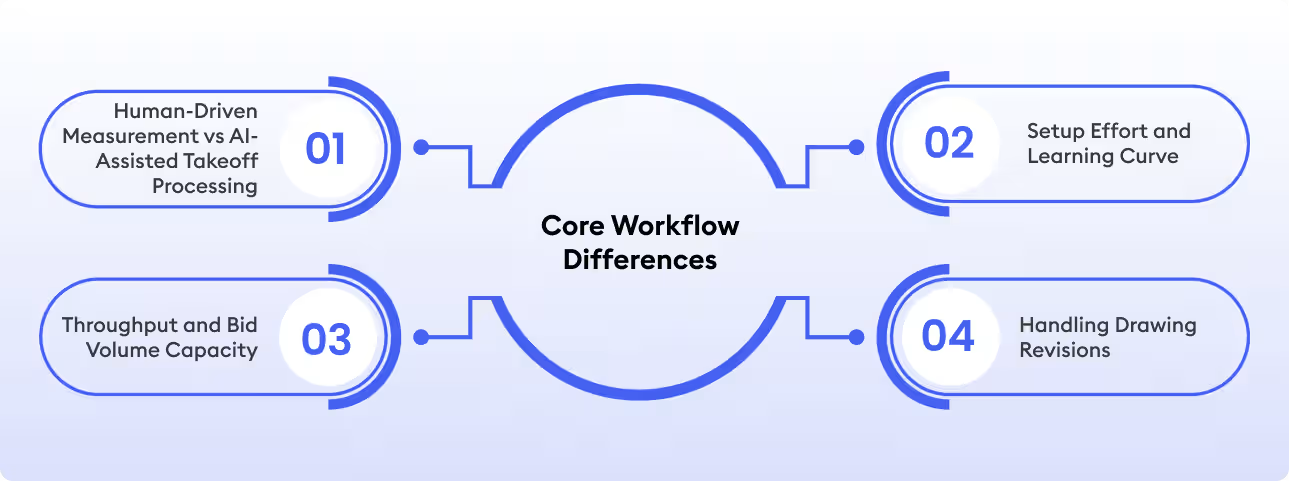
Handling more bids isn’t just about working faster, it depends on how your workflow is structured. If your process relies on step-by-step manual work, you can only move as fast as each task gets completed. But with the right tool, you can have multiple tasks run in parallel, helping you handle more bids without slowing down.
Human-Driven Measurement vs AI-Assisted Takeoff Processing
As estimators often need to handle tasks such as tracing drawings, measuring quantities, and double-checking every detail before moving forward, having the right workflow setup can directly impact how much you’re able to get done and how efficiently you deliver your bids.
Traditional digital takeoff tools, such as Square Takeoff, give you full control over measurements and quantities, but they also take up a significant amount of time, especially as the workload increases.
But with AI-based tools, much of this effort is reduced as quantities are automatically extracted. Similarly, with Beam AI, this runs in the background with built-in validation and human-in-the-loop QA, allowing you to focus more on reviewing and refining instead of measuring everything from scratch.
Setup Effort and Learning Curve
With so many tools available, adopting a new one can feel like a hurdle, especially when your team is already stretched. While traditional tools may feel familiar at first, they often start to show limitations as your workload grows.
On the other hand, AI tools may require some initial training, but they are designed to reduce effort over time. With Beam AI, once your workflows are set, you can save up to 90% of the time spent on manual takeoffs, freeing up hours each week and making the upfront effort worth it in the long run.
Throughput and Bid Volume Capacity
Over time, handling multiple bids simultaneously becomes difficult when your workflow depends on manual effort. Meaning, your output is tied to how quickly you can complete each takeoff, which limits how much work your team can take on. Most traditional tools struggle to scale as demand increases because they rely on step-by-step manual work and cannot handle multiple takeoffs at once, limiting to keep up as the workload increases.
However, with AI-driven workflows such as Beam AI, you can work on multiple takeoffs simultaneously. By processing takeoffs in parallel, the tool helps you increase bid volume by up to 3X without adding more headcount.
Handling Drawing Revisions
With more projects comes a higher number of drawings and frequent revisions, and that’s where things start to slow down. Every time any plans change, your team ends up redoing the work, which ultimately affects both speed and overall output because even small updates can take up valuable time when handled manually.
But with construction quantity takeoff software, these changes can be identified and processed much faster. With Beam AI, updated drawings can be reprocessed without starting from scratch, helping you keep your bids moving forward without delays.
Side-by-Side Capability Comparison
When you start to comparing tools, the differences aren’t always clear at first. But as your workload grows, they start to show in how your workflow performs day to day.
Breaking down the capabilities of traditional and modern takeoff and estimating tools helps you understand what supports your speed and accuracy, and where you can improve efficiency.
Takeoff Speed
When it comes to construction estimating, your speed directly affects how many bids you can submit. With manual tools, your output depends on how quickly you can work, which often creates bottlenecks as timelines get tighter.
But with an AI takeoff and estimating tool such as Beam AI, quantity extraction happens much faster and takeoffs are completed quickly, saving 90% time on manual tasks, helping you keep up with deadlines while increasing your bid throughput.
Estimator Effort Distribution
Estimators generally spend a large part of their time measuring and verifying quantities which leaves them less time for higher-value tasks such as reviewing scopes or improving bid quality. Using traditional digital tools that rely on manual input, estimators are still tied up in repetitive work, investing almost the same amount of time instead of moving the estimate forward.
However, with an AI-based estimating tool, your role shifts more toward review, validation, and other high-priority tasks such as vendor coordination and profit. Beam AI supports this by delivering ready-to-takeoff outputs with a human-in-the-loop QA process, so your effort goes where it matters most.
Scalability Across Projects
With more takeoffs and more bids, the workload also increases. And with increased volume, manual workflows often slow down or lag, creating bottlenecks that affect estimators' ability to keep up. Ultimately, scaling becomes difficult because your output is dependent on how quickly a takeoff is completed.
Nonetheless, with AI construction estimating software such as Beam AI, you can handle multiple projects at once through parallel processing and work on several takeoffs simultaneously, making it easier to scale without overloading your team.
Consistency Across Teams
Estimating involves multiple teams working on the same project, and different estimators often follow different approaches, which leads to inconsistencies in outputs and quality. While this seems manageable at first, it becomes more problematic as your team grows. Traditional digital tools often demand a step-by-step workflow, making it hard to keep up as bid volume increases because a lot of time goes into measuring, verifying, and reworking takeoffs.
With AI-driven workflows such as Beam AI, outputs are standardized from the start, so every estimator works with the same structure and format. This reduces variation in how takeoffs are done and keeps your team consistent across projects while still allowing you to review and validate the results.
Adaptability to Project Complexity
As you handle different type of projects, the level of complexity can differ from one job to another. While, some projects require detailed manual adjustments, others benefit from more standardized workflows.
Choosing the right workflow depends on the type of projects you’re working on and how consistent your scope is across bids.
Accuracy Considerations in Different Takeoff Approaches
When it comes to takeoffs, accuracy is something you can’t compromise on. Because even small errors in quantities can impact your estimates and overall bid quality. The challenge is that no single approach is completely error-proof.
Manual workflows can lead to inconsistencies in how quantities are measured, especially when estimators work under tight timelines or use different approaches, which can affect the accuracy and reliability of your estimates.
But with AI-driven workflows, much of this variability is reduced through standardized extraction and structured outputs, improving speed and giving you more consistent and reliable estimates across projects.
Sources of Human Variability
When working under pressure, it’s easy for details to be misinterpreted or overlooked which may affect final measurements. But even fatigue, differing interpretations, or simple oversight can also affect how quantities are measured.
That’s why having a more structured and consistent workflow becomes important to reduce variation across takeoffs. For instance, Beam AI.
Sources of Model Variability
Traditional digital tools can speed up quantity extraction, but they may not always interpret every drawing perfectly due to variations in drawings or limitations in how the technological model is trained.
However, advanced AI tools, such as Beam AI, are supported by built-in checks along with a human QA review process for better accuracy, so you can review and validate ready-to-take-off outputs instead of depending completely on the system-generated results.
Role of Estimator Verification
No matter which approach you use, your role in reviewing and validating outputs still remains critical as an estimator, because the final accuracy ultimately depends on how thoroughly the results are checked before submission.
With Beam AI, you stay in control of this process, using automated outputs as a base while ensuring everything is verified before it goes into your estimate.
When Traditional Digital Takeoffs Are a Practical Fit
Estimators today have access to multiple tools and workflows, but not every workflow needs to change.
In certain situations, traditional digital takeoff tools still work well, especially when your workload and project requirements are more controlled.
Project Scale and Volume Conditions
When you’re handling a smaller number of bids or working on limited-scope projects, manual takeoffs can still be manageable. As the volume is low and speed is not a challenge, you have the time to measure and review, and adjust without feeling pressured by deadlines.
Team Structure Considerations
If your estimating team is small but highly experienced, manual workflows may already be well-established. Which means, everyone knows how to approach takeoffs, and there’s less variation in how work gets done.
Workflow Familiarity and Control Preferences
Some teams prefer sticking to familiar processes, especially when accuracy depends on detailed manual input. Here, traditional tools allow you to control how every quantity is measured and calculated.
When AI-Assisted Takeoffs Provide Operational Advantage
As estimators, there always comes a time when your workload grows, and timelines tighten. While manual workflows are good to begin with, as project volume increases, traditional digital tools starts to show limitations.
And this is where AI-assisted takeoffs begin to make a noticeable difference in how efficiently your team operates.
High Bid Volume Environments
When you’re handling a high number of bids, speed becomes critical. Manual workflows can slow you down when your output is tied to how quickly each takeoff gets completed. But with AI-driven workflows such as Beam AI, multiple takeoffs can run in parallel. This helps you increase bid capacity by up to 3X while keeping up with tight deadlines, without adding more people to your team.
Standardized Scope Conditions
If your projects follow similar scopes across jobs, manual rework often becomes inefficient since you keep repeating the same steps for similar takeoffs. AI works best in these conditions by automating quantity extraction and maintaining a consistent structure across projects. With Beam AI, this reduces repetitive effort and helps you deliver faster, more consistent outputs.
Multi-Project Estimating Demands
Handling multiple projects at the same time can quickly create bottlenecks in manual workflows such as switching between tasks, managing timelines, and keeping everything aligned becomes difficult. But AI-based workflows, such as Beam AI, allow you to manage several takeoffs simultaneously by running tasks in parallel, helping your team stay on track across projects without slowing down or feeling overloaded.
How Teams Evaluate Takeoff Technology Today

With the dozens of software today, estimators focus on more than just features; they look for how well the tool supports the workflow as the business grows.
Productivity Expectations
Teams today expect more output in less time because simply completing takeoffs is no longer enough, you need to move faster while maintaining accuracy. This is why tools are evaluated based on how much they improve speed and reduce manual effort, not just how they assist with measurements.
Estimator Capacity Constraints
As most teams already work at or near capacity, adding more bids without changing the workflow often leads to burnout or lower-quality estimates. Thus, the focus has shifted toward tools that help you do more with the same team. AI-driven workflows such as Beam AI support this by reducing manual workload and increasing overall capacity.
Technology Adoption Considerations
Finally, adopting new technology always comes with some hesitation especially when your current workflow feels familiar. The initial learning curve and setup can seem like a barrier, however, teams are now looking beyond short-term comfort and focusing on long-term efficiency.
With Beam AI, the upfront effort leads to significant time savings - up to 90% on manual takeoffs, increasing bids by 3X, while delivering ±1% accuracy ready to takeoff output, making the transition worthwhile as your workload grows.





.jpg)