



Flooring Installation Systems: Everything Contractors and Building Owners Need to Know
Flooring is one of the most visible elements of any building, but its long-term performance depends on much more than appearance. The success of a floor is determined not only by the material selected but also by the installation system used beneath it.
A premium hardwood floor can fail prematurely if installed incorrectly, while a properly installed mid-range flooring system can perform exceptionally well for decades.
In construction, flooring installation is the process of placing and securing floor-surface materials over a prepared structural base.
This includes selecting the appropriate material, preparing the subfloor, managing moisture, and choosing the right installation method for the environment.
Whether you're evaluating laminate, hardwood, or LVP flooring installation, understanding the complete flooring system is critical to achieving durability, comfort, and long-term value.
What Is Flooring Installation?
Floor installation is the process of placing a finished floor system over a prepared subfloor using a specified installation method.
The system encompasses all the following procedures:
- Material choice
- Preparation of the subfloor system
- Moisture control method
- Treatment Planning for the floor system to work properly
- Allow for natural contraction and expansion
- Finishing the installed floor covering system
For the most part, a floor performs as successfully as its installation system does.
Why Flooring Installation Systems Matter
When you step into a room, you primarily perceive one surface - the floor. But what many do not realize is that a floor is a complex engineered assembly designed to support both live and dead loads. In addition, there needs to be managed humidity, control of building movements, and ensuring aesthetic and structural resilience.
A floor system includes a carefully coordinated collection of building components beneath the walking surface, namely, the subfloor, underlayment, moisture barrier, and fasteners or adhesives.
Should one element fail, the integrity of the whole assembly could be compromised. Industry data reveal that installation-related failures of these building components are a significant source of flooring deficiencies.
The NWFA cites moisture-related challenges as the most common basis for hardwood flooring insurance claims – including gapping, cupping, buckling, and related visual and structural floor distortions.
In addition, flooring producers and commercial flooring organizations report insufficient subfloor preparation, inadequate moisture testing, and inappropriate adhesives as the primary causes of flooring replacement.
The economic consequences can be considerable, with the remediation or replacement of flooring running $3–$15+ per square foot, while very large commercial flooring failures can add hundreds of thousands of dollars to a job budget.
Experienced contractors will consider a facility’s ambient conditions, the nature of the substrate, and an overarching moisture-control plan before selecting a specific floor product.
Understanding the Four Main Flooring Systems
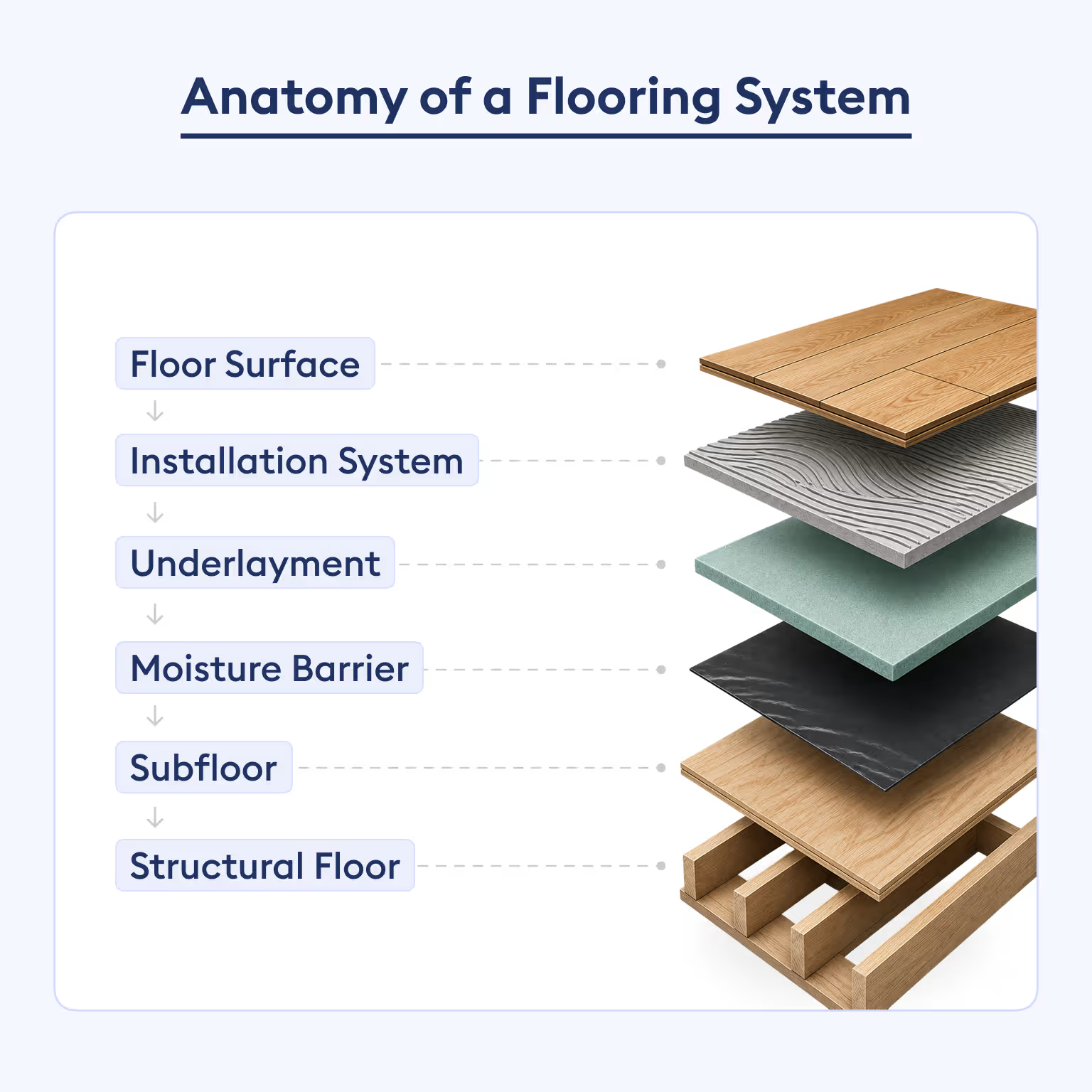
But before we jump to which materials come out on top against each other in this comparison, it’s worth understanding what the four fundamental flooring installation systems in commercial and residential construction are.
Your flooring choice also depends on how you want the materials to be installed. A glue-down vinyl, for instance, will yield a more stable commercial floor than a floating system but is more challenging to remove.
If you want the convenience of an interior surface system and quick and easy floor replacement, opt for a floating click-lock.
Factors that dictate which installation method to choose include project costs, your floor's long-term performance, maintenance requirements, and scheduling preferences.
Laminate Flooring Installation
As one of the preferred home renovation choices due to its relatively low cost and speedy installation, laminate flooring has remained one of the most widely implemented options.
One of the biggest reasons for this comes from how the laminate flooring assembly system is usually installed. Most laminate planks feature a click-lock installation system that doesn’t require glue or nails to hold the planks in place.
Rather, each plank connects to an adjacent one with engineered locking profiles, creating a flooring system that “floats” on an underlayment layer.
To begin installing the laminate, first, the sub-floor must be cleared of any debris, and the surface must be flattened to be ready for laying. Once a suitable underlayment has been laid, the first laminate planks are installed, row by row.
Each plank is click-locked to the previous one; maintain an expanding gap in the flooring as you reach the wall bases. This is caused by the natural expansion and contraction that materials undergo in response to changes in environmental temperature or atmospheric humidity.
Advantages of Laminate
The benefits laminate flooring provides are relatively low per-sqft material costs, lower additional installation costs, and a quicker overall turnaround for project completion.
It’s a material found in very convincing-looking real hardwood styles, and it’s easier to repair than hardwood flooring, too.
Disadvantages of Laminate
The primary concern with Laminate is water resistance; if water pools, it tends to warp and balloon.
Laminate is definitely not suited for places such as your washroom, areas with significant past water issues, or areas at high risk of water spillage.
So, laminate is an appropriate option if you want to create a good appearance for a few years with a surface finishing layer, and the risk of water damage is low.
If cost and time are overriding factors, laminates are a decent, logical, and useful choice for your home renovation needs.
Hardwood Flooring Installation
Still at the top of the flooring market, solid hardwood continues to draw consumer demand with its authentic, natural beauty, durability, and ability to be refinished and revitalized for decades to come.
Compared with laminate wood flooring, installation demands are much greater and require greater attention to environmental conditions and subfloor preparation.
When installed, a floor base installation system or hardwood can go a long way, whether you are looking for home installation and flooring that will withstand the test of time. There are two common ways that solid hardwood is installed:
Nail-Down Hardwood Installation
How is solid hardwood flooring typically installed? Nail-down installation is the classic technique for installing solid hardwood planks, in which floorboards are secured to plywood or OSB subflooring with a special flooring nailer.
This approach gives you the best feel under your feet and is durable over many years, but installation requires professional expertise and is typically performed only over a wood subfloor.
Glue-Down Hardwood Installation
Hardwood installed over a concrete substrate typically uses a glue-down system that bonds it directly to the subfloor, preventing unnecessary movement and ensuring the most secure fit.
Often with hardwood and in glue-down scenarios, many prefer engineered hardwood over solid, as it does not have the potential for the type of movement solid flooring is prone to.
Environmental Control Matters
Wood floors are prone to dimensional changes due to fluctuations in moisture and humidity. Hardwood must be introduced into the installation space and properly conditioned or acclimated to allow the material to respond to the prevailing temperature and humidity before flooring installation begins.
Temperature, relative humidity, and moisture levels must be controlled throughout. Otherwise, you run the risk of cupping, gapping, expansion, or contraction, which will all ruin hardwood floors. That is why you can't treat the installation of hardwood flooring as just a simple material upgrade.
The case highlights an important lesson for flooring contractors: installation quality drives project performance, but accurate takeoffs and faster estimating workflows determine how many opportunities a business can pursue.
By reducing manual measurement work, estimators can spend more time reviewing scope, refining bids, and winning profitable flooring projects.
Vinyl Plank Flooring Installation
There aren't many flooring categories that have seen as rapid development and popularisation as vinyl plank in the last few decades.
Today, new vinyl flooring installation systems combine water resistance, longevity, aesthetics, and installation speed to suit the needs of builders, homeowners, and building managers.
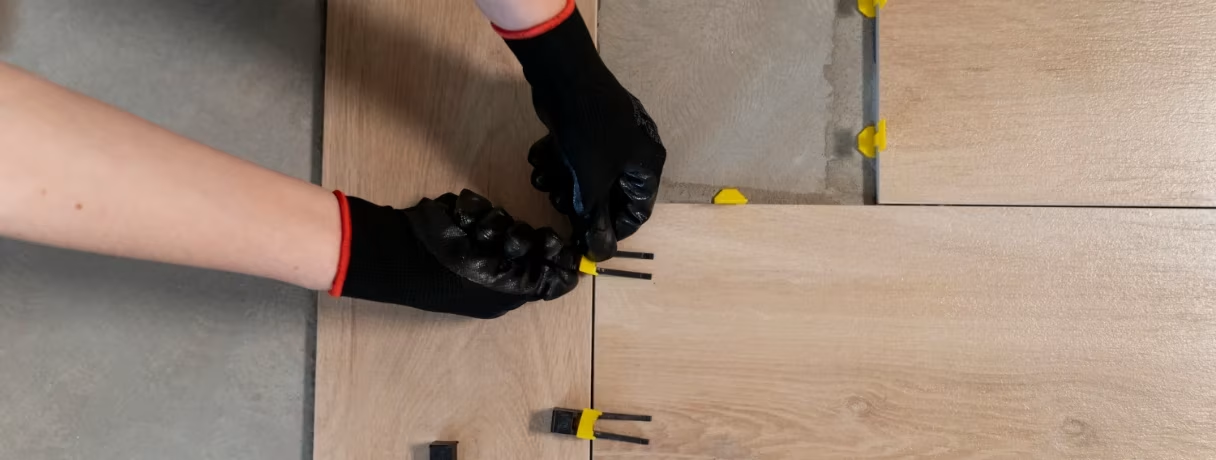
Vinyl flooring plank systems can be divided into click-lock floating systems and glued-down systems, depending on the project.
How to Install Vinyl Plank Flooring
To get started, they prepare your existing substrate or subfloor by ensuring it is clean, level, and dry. This helps to avoid the risk of sub-floor shift or surface humps down the road.
The installers will then create a layout to optimize flooring placement, reduce waste, and ensure a more balanced look and feel.
Installation then occurs with either planks being attached via their click-lock features or adhered to your existing substrate, depending on the product.
Finally, the transition strips and perimeter trim are installed to complete the look. Best of all, vinyl's high water resistance makes it ideal for areas prone to water and moisture, such as bathrooms, basements, and kitchens.
What Is LVP Flooring Installation?
The process of installing LVP flooring is very similar to that of traditional vinyl, but the flooring is high-performing and more attractive-looking.
LVP flooring provides homeowners and businesses with the look of hardwood but with better water resistance and durability, making it the flooring of choice for most multifamily projects and many residential, retail, healthcare, and office buildings.
LVP doesn’t simply excel in one or two areas; it performs well in almost all aspects of the following categories: ease of installation, ease of maintenance, water resistance, and design features.
With a multitude of desirable traits, it’s easy to see why LVP is one of the fastest-growing categories of flooring available in the industry.
Flooring Installation Tools and Equipment
Whether installing floor coverings, an underfloor system, underlay, or a membrane, the tools you use play a big part in the quality of your work.
Certain materials call for specific tools, and investing in the right products can improve work rate and reduce material waste.
Best LVP Flooring Installation Tools
Hardwood Floor Installation Tools
You will be able to lessen errors in your installation. In this way, you will also be able to ensure good overall performance of your projects. Choosing the right tool makes work less messy, too.
Hardwood vs Vinyl vs Laminate: Material Performance Comparison
When it comes to selecting flooring, it's all about performance specs and not simply going for the cheapest initial option.
Unmatched in lifespan and visual appeal, hardwood makes an excellent choice for homeowners who are in it for the long haul.
Laminate. The ideal choice for an inexpensive, fast installation, laminate flooring is an excellent fit for tight-budget residential renovations.
With many pros and very few cons, this typically seems to be the overall floor in this top contender. The flooring's durability and water resistance make it ideal for homes with small children or pets.
Subfloor Preparation: The Foundation of Flooring Performance
The flooring pro is one person everyone would take to: Most of the Flooring Fails Originate Beneath Finished Surface. The surface floor will last as long as the underlying surface is adequate for the chosen flooring material.
Surface contamination may interfere with adhesion; the surface’s ability to hold securely must be there. Unevenness in the surface could create flex in floating-type flooring, resulting in creaking, noisy floors, and joint failures.
Extra moisture might compromise adhesive bonds, cause wood to rot, and promote mold growth.
In the short term, one may save a little time by cutting corners, but this will often call for the cost of rework.
Click-Lock vs Glue-Down vs Nail-Down Systems
All three installation methods and the BIM workflow have distinct pros and cons. Click lock systems boast fast, easy installations and are common for laminate and LVP; in the event of plank damage, they can be replaced individually more easily.
Glue-downs provide an incredibly strong attachment between the flooring and the substrate. These are often found in high-traffic commercial installations where strength is valued above all else.
Nail-down has long been the preferred installation method for many hardwood floor installations. Though time-consuming and labor-intensive, requiring skilled artisans and specialized tools, nail-downs provide a very substantial feel and a long-lasting floor.
When choosing the right method, it comes down to weighing factors such as budget, timeframe, floor substrate, and intended use.
Heated Floor Installation and Radiant Heat Compatibility
Radiant floor heating is a growing trend in both residential and commercial construction. As one might expect, not every floor covering is created equal when it comes to radiant floor heating.
Your thermal conductivity of materials, material thickness, and expansion properties have a lot to do with the system’s performance.
For heated-floor installations, flooring materials and heating systems are typically designed to complement one another, so they work reliably together for years.
Common Flooring Installation Mistakes
For the most part, flooring failures are the consequence of a small list of installation errors-errors that any installer can easily avoid.
The number one flooring installation issue has the number one symptom: an uneven subfloor leads to noise, movement, and separated seams, in that order.
Not leaving enough expansion and contraction space may result in material cupping, bowing, or buckling.
The incorrect adhesive might be applied, and no subfloor moisture testing may be done before a problem appears months down the road.
Using an old or worn tool or even the wrong tool for the job can ruin locking elements or the finished edge.
Why Flooring Installation Contractors Matter
In fact, whether your new flooring performs optimally almost always hinges on the installation.
Top-tier flooring contractors know how to assess the subfloor, handle moisture, and determine which of the myriad installation methods will perform best for the product and application.
While you’re reviewing installation contractors, be sure to focus on their experience with the flooring system in question, subfloor prep, moisture management protocols, top-notch tools, and extensive warranties.
Choosing the Right Flooring System for Your Project
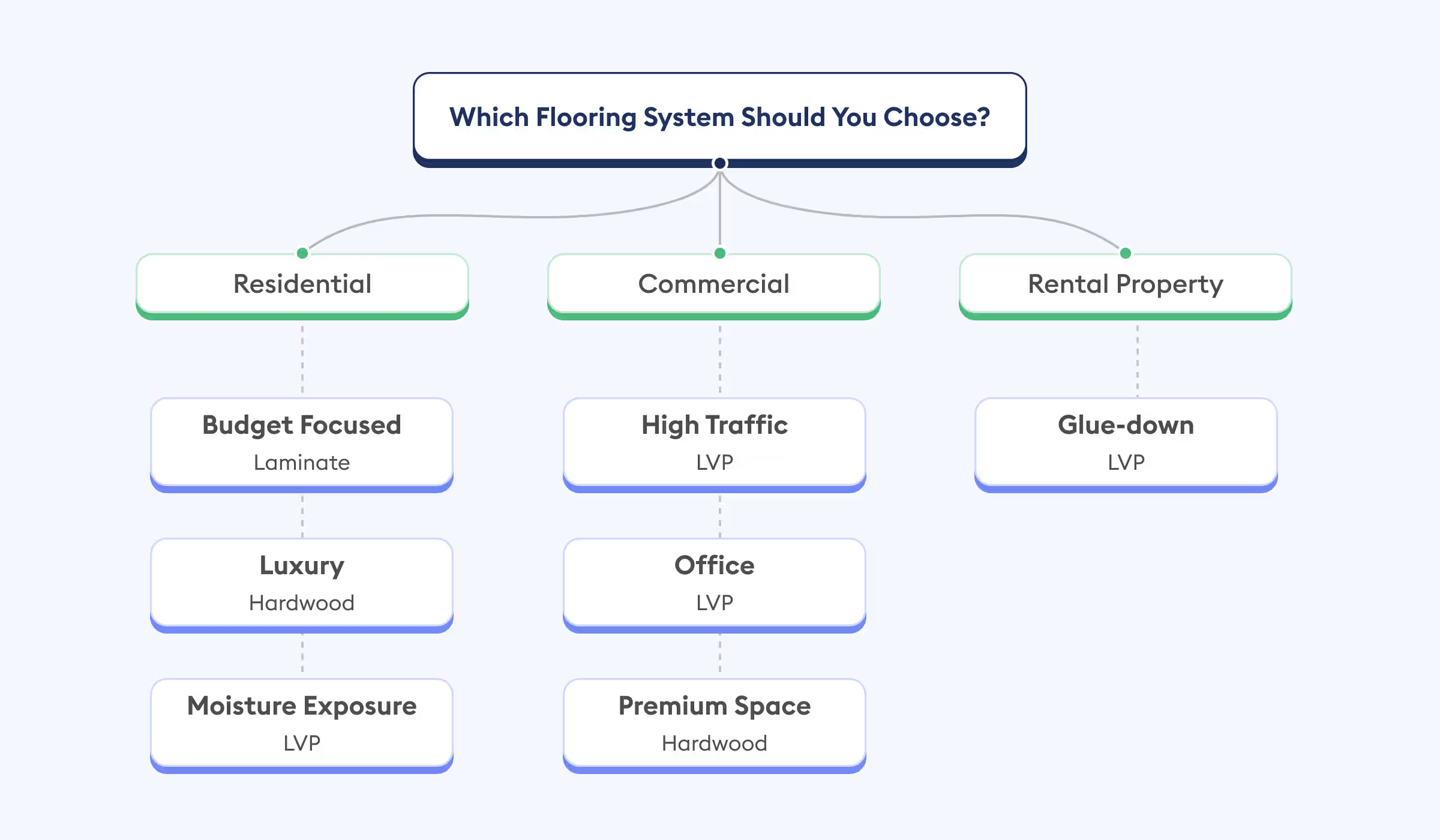
However, the ‘best’ flooring choice really boils down to individual project needs and goals: For residential renovation projects, inexpensive and quick installation is likely the top criterion, and laminate and click-lock LVP would be good options.
For rental properties, an inexpensive, durable installation process is typically ideal, which may point to the ease of installing a glue-down LVP system.
Luxury homes, on the other hand, will justify the cost of hardwood thanks to its elegant appearance.
In a commercial space, flooring systems may need to account for traffic loads, maintenance, humidity levels, and budget.
Ultimately, project owners need to take a comprehensive look at the system, not just a product specification sheet, when making their purchasing decision.
Why Flooring Installation Systems Matter More Than Material Branding
Among the most pervasive errors in building design is the idea that the material used alone determines floor performance.
Flooring is a system, and its performance depends not only on the material but also on the substrate, installation practices, moisture control, and the quality of the artistry.
A competently installed, moderately priced floor may easily outlive its more expensive but improperly laid counterpart for a generation or more. Hence, experienced contractors analyze flooring systems alongside materials.
The most satisfying flooring projects are system-oriented rather than solely product-oriented.
Conclusion
All flooring installations are a combination of performance, cost, durability, and installation needs. Laminate still works well for quick, easy, low-budget renovations to spruce up a house. Wood, a long-term investment and classic beauty, is a time-honored choice for installation.
For many applications, durability, water resistance, low maintenance, and quick installation all favor vinyl or LVP.
The choice of installation is as important as the brand or style of flooring you choose. If your sub-floor preparation is bad and installation sloppy, even the brand you chose cannot redeem it.
Improved results, lower lifetime costs, and ultimately, better project outcomes occur when contractors, estimators, and building owners start viewing floor materials not as floor coverings, but as floor systems.
Discover Beam AI's floor takeoff software and construction takeoff and estimating services, and make flooring takeoff estimates more accurate and competitive.