


.jpg)


What is a Flex Duct?
A flex duct is a flexible air distribution duct used to move heated or cooled air from an HVAC system to individual rooms and spaces. Unlike rigid metal ductwork, which is fabricated from steel or aluminum sections, flexible ductwork can bend and curve around obstacles, fit into tight spaces, and be installed much faster.
A typical flex duct consists of a flexible inner liner supported by a spiral wire coil. Around that liner sits insulation and an outer protective vapor barrier. Together, these layers create a lightweight duct system with branch runs that connect the main supply trunk to air registers throughout the home.
The popularity of HVAC flex duct comes from one primary benefit: installation efficiency. Contractors can complete duct installations faster while reducing labor costs, making flexible ductwork one of the most common ducting solutions in residential construction today. However, improper installation can reduce airflow efficiency, so understanding how the system works is essential.
Flex Duct Explained
HVAC systems depend on ductwork to move conditioned air throughout a building. While traditional rigid duct systems dominated the industry for decades, the introduction of flex duct changed how contractors approach HVAC installations, as resported by many studies as well.
Flexible ductwork became popular because it is faster to install, lightweight, easier to transport, and more adaptable to tight spaces than metal ductwork. Instead of fabricating and fitting multiple metal sections, installers can route a flexible HVAC duct system around obstacles with far less labor.
However, lower installation costs do not automatically make flexible ductwork the best choice for every project.
The reality is that both flexible and rigid duct systems have advantages, limitations, and ideal use cases. Understanding how each works can help contractors, technicians, and homeowners make better decisions when designing, installing, or upgrading an HVAC system.
In this guide, we'll cover what a flex duct is, how it works, the different types available, common flex duct sizes, installation methods, and how it compares to rigid metal ductwork.
How HVAC Flex Duct Works
An HVAC system moves conditioned air from the air handler through a network of ducts and into occupied spaces, and generally follows this path:
Air Handler → Main Trunk Duct → Branch Ducts → Supply Registers
Flex duct is most commonly used for branch runs that connect the main trunk line to individual rooms. Now, to understand how it performs, it helps to understand its construction.
A typical HVAC flexible duct consists of four layers:
Inner Liner
The inner liner forms the air passageway. This flexible tube carries heated or cooled air from the HVAC equipment to the supply register. Because air travels directly through the liner, any compression, kinking, or sagging can significantly increase airflow resistance.
Wire Coil Support
Wrapped around the liner is a spiral wire coil that gives the duct its shape while allowing flexibility. This coil allows the duct to bend around framing, plumbing, electrical systems, and other obstacles without collapsing.
Insulation Layer
The insulation surrounding the inner liner helps maintain the air temperature as it travels through the duct. Without insulation, conditioned air can lose heat in winter or gain heat in summer before reaching the occupied space. This is why insulated flex duct has become the standard choice for most residential HVAC installations.
Outer Vapor Barrier
The outer layer protects the insulation from moisture and physical damage. Then, it also helps prevent condensation from forming on the duct surface when cool air travels through unconditioned spaces such as attics or crawl spaces.
Together, these four components create a flexible, insulated air distribution system that balances installation convenience with acceptable airflow performance.
Types of Flex Duct and Their Applications
Not all flexible ducts are designed for the same applications. Different applications require different materials and configurations.
Insulated Flex Duct
This is the most common type used in residential HVAC systems. Because insulation is built into the duct assembly, insulated air ducts help maintain air temperature while minimizing energy loss. Along with this, they also reduce sound transmission.
Compared to systems that require separate rigid duct insulation, insulated flex ducts simplify installation while providing thermal protection from the start. They’re commonly used for residential supply ducts, return air systems, attics, crawl spaces, and unconditioned building areas.
Aluminum Flex Duct
Commonly used in ventilation and exhaust applications, this type of flex duct is lightweight, corrosion and heat resistant, and easy to install.
While aluminum flex duct is often used for bathroom exhaust fans, kitchen ventilation, and specialized airflow applications, it is less commonly used as a primary HVAC supply duct because it typically lacks the insulation needed to minimize thermal losses and condensation in residential HVAC systems.
Oval Flex Duct
This is designed for areas with limited vertical clearance. When standard round ductwork will not fit inside a wall cavity, soffit, ceiling space, structural opening, or any other tight space, oval configurations prove to be a practical alternative with their compressed profile that maintains airflow.
Rectangular Flex Duct
These are less common but serve specialized applications, like when space constraints prevent round duct installation, custom airflow paths are required, or compact mechanical systems are being designed.
Although less common than round duct systems, rectangular configurations provide additional flexibility in certain installation scenarios.
Flex Duct Sizes and Why They Matter
Choosing the correct flex duct size is one of the most important decisions in HVAC design. This is because even a perfectly installed duct system can perform poorly if the sizing is wrong.
Common flex duct sizes include:
But how does a wrongly-sized duct affect performance? If that’s what you’re wondering as well, here's the answer: proper sizing directly affects airflow volume, air velocity, static pressure, system efficiency, and occupant comfort.
Because HVAC systems are designed around precise airflow requirements, selecting appropriate flex duct sizes is essential for overall performance. Contractors often use industry sizing methodologies developed through organizations such as ASHRAE to calculate airflow requirements, static pressure, and duct sizing for HVAC systems.
Flex Duct Connectors and Saddles
Even the highest-quality duct system can perform poorly if supporting components are installed incorrectly. So now, we’ll talk about two of the most important components, i.e., flex duct connectors and flex duct saddles.
What Is a Flex Duct Connector?
A flex duct connector joins flexible ductwork to:
- Supply boots
- Return boxes
- Supply plenums
- Rigid ducts
- Registers
- Air handlers
Poorly sealed joints can cause significant loss of HVAC efficiency over time and lead to high operating costs, so all connections must be sealed correctly with approved HVAC tape or mastic sealant, tight vapour barrier sealing or mechanical fastening to prevent air leakage.
What Are Flex Duct Saddles?
Flex duct saddles can be used to create a structural support for horizontal duct runs. They are to:
- Prevent excessive sagging
- Maintain duct shape
- Reduce airflow restrictions
- Extend duct lifespan
Without proper support, flexible ducts may sag between hangers, causing obstructions to air flow and lowering the overall performance of the system. But when installed correctly, flex duct saddles will help maintain smoother airflow as it travels the length of the duct.
How to Install Flex Duct Properly
One of the primary reasons contractors choose flexible ductwork is installation speed. However, poor installation can eliminate many of the benefits.
This is why knowing how to install flex duct correctly is essential to maintain performance and energy efficiency.
Step 1: Measure the Duct Run
Start by accurately measuring the distance between connection points. Here, it’s also necessary to avoid excessive slack and unnecessary length since longer runs increase airflow resistance and reduce efficiency.
Step 2: Cut the Duct to Length
Now, cut the duct slightly longer than required to allow proper attachment at both ends.
But before you actually cut the duct, measure carefully. It's generally easier to trim excess material than to replace a section that was cut too short. We'll also cover how to cut flex duct properly in the next section.
Step 3: Attach the Flex Duct Connector
Secure the flex duct to the appropriate connector, plenum, or boot. Use approved fastening methods and ensure the inner liner is properly attached before securing the insulation and vapor barrier.
Step 4: Seal Every Connection
Air leaks can significantly impact performance. This is why you seal the joints using HVAC foil tape, mastic sealant, or approved mechanical fasteners, and make sure all connections are airtight.
Step 5: Support the Duct Properly
Install hangers and saddles at recommended intervals. The goal is to support the duct while minimizing sagging, which ends up being one of the most overlooked aspects of installation quality.
Step 6: Protect and Insulate Exposed Sections
If portions of the duct run through unconditioned spaces, ensure insulation remains intact and vapor barriers are properly sealed. This helps prevent energy loss and condensation problems.
Most Important Installation Rule: The biggest mistake installers make is allowing excessive bends, kinks, compression, or sagging, where every unnecessary one increases airflow resistance.
A poorly installed flexible duct system can lose a significant portion of its airflow capacity even when the HVAC equipment itself is functioning perfectly. The U.S. Department of Energy reports that 20% to 30% of the air moving through a typical residential duct system may be lost due to holes, leaks, and poorly connected ducts.
How to Cut Flex Duct Correctly
From shortening an existing run or installing one that’s new, knowing how to cut flex duct helps ensure airtight connections and reliable airflow. Fortunately it's pretty simple with the right tools.
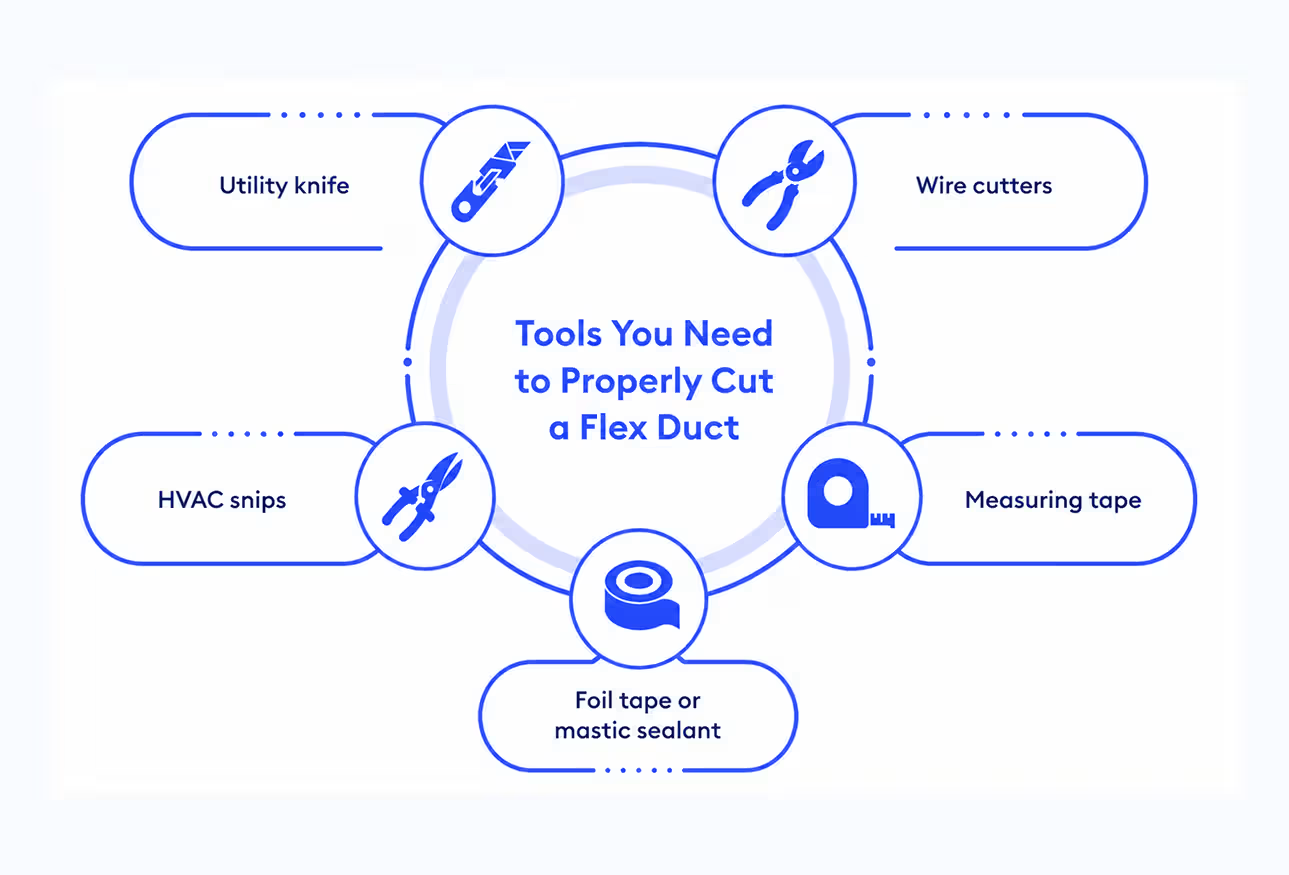
Step 1: Measure the required duct length and mark the cutting location.
Step 2: Using a utility knife, carefully cut through the outer vapor barrier and insulation layer.
Step 3: Pull the insulation layer back to expose the inner liner and wire coil.
Step 4: Use wire cutters to cut the supporting wire helix. This typically requires more force than cutting the liner itself.
Step 5: Once the inner liner is exposed, cut it cleanly using the utility knife. A clean cut makes reconnection and sealing easier.
Step 6: After installation, pull the insulation and vapor barrier back into place and reseal all connections. Maintaining the vapor barrier’s integrity is essential for preventing condensation and preserving insulation performance.
When and How to Add Branch to Flex Duct
Sometimes an HVAC system needs to serve an additional room, register, or renovated space. In these situations, contractors may add a branch duct to an existing duct run rather than installing an entirely new supply line from the HVAC unit.
Branches are typically created using Y-connectors, takeoff fittings, or branch collars that split airflow from the main duct into a secondary run. Those fittings are easy to underprice in a takeoff — here's why a duct transition is often more than a simple reducer once it has to offset around a beam or piping. However, adding a branch isn't simply a matter of cutting into the duct and attaching a new line. The system must still deliver adequate airflow to all connected spaces, making proper sizing and airflow balancing critical.
And that’s why understanding how to add branch to flex duct can help. In most cases, the process involves:
- Identifying the correct location along the main duct run.
- Installing a takeoff collar or Y-connector.
- Attaching the new branch duct securely.
- Sealing all of the joints with mastic or foil tape.
- Supporting the new branch with hangers or saddles.
- Verifying that airflow remains balanced throughout the system.
Before adding a branch, it's important to confirm that the existing HVAC system has sufficient airflow capacity. Adding additional outlets without proper sizing can reduce airflow to existing rooms and create comfort issues.
Flex Duct vs Metal Duct: Which Is Better?
The debate around flex duct vs metal duct isn't really about which product is universally superior. Instead, it's about choosing the right solution for a specific application, since both have their strengths and weaknesses.
In practice, many HVAC systems use both duct types together. Contractors often install rigid duct for main trunk lines where airflow efficiency matters most and use flex duct for shorter branch connections serving individual rooms. Where that ductwork runs also drives cost — here's how concealed vs. exposed ductwork changes the installed price, from hidden access labor to architectural finish requirements.
This hybrid approach balances performance, installation speed, and project cost, and that’s why it’s common across both residential and commercial HVAC projects. You can also see a real-world example of how an HVAC team used AI-powered takeoffs and estimating workflows to reduce manual effort and improve overall project efficiency here.
What Is Rigid Duct?
A rigid duct system uses fixed metal sections, typically galvanized steel or aluminum, to distribute air throughout a building.
Unlike flexible duct systems, rigid ducts do not bend easily and require fittings to change direction. And they’re commonly made with galvanized steel, aluminum, stainless steel, and fiberglass-lined metal systems.
Rigid ducts are commonly used in commercial buildings, hospitals, schools, industrial facilities, and large residential systems.
Because rigid ducts do not flex, installers fabricate fittings, elbows, reducers, and transitions to navigate building layouts. Their airflow efficiency is generally higher than those of flex ducts, since their internal surfaces remain smooth and consistent.
And unlike insulated flexible ducts, metal systems often require separate external insulation wraps when installed in unconditioned spaces.
Rigid Dryer Duct vs Flexible Dryer Duct
Dryer venting deserves its own discussion because its requirements differ from those of HVAC air distribution systems.
For most dryer applications, a rigid metal dryer duct remains the safest and most widely recommended choice. And here’s why:
- Better airflow
- Reduced lint accumulation
- Easier cleaning
- Improved fire safety
- Smooth interior surface helps lint move through the vent system
While flexible vent connectors may be permitted in some situations, rigid metal systems typically provide better long-term performance and safety.
Advantages and Disadvantages of Flex Duct
Like any construction product, flexible ductwork involves tradeoffs.
Advantages
Lower Material Costs - Flex duct generally costs less than fabricated metal duct systems.
Faster Installation - The flexibility dramatically reduces installation labor.
Easier Routing - Flexible runs can navigate around obstacles without extensive fittings.
Better Noise Absorption - The insulated construction helps reduce sound transmission throughout the system.
Excellent for Retrofit Projects - Installing new ductwork in existing buildings is often easier with flexible systems.
Disadvantages
Higher Airflow Resistance - Flexible interiors create more friction than smooth metal surfaces.
Shorter Lifespan - Flexible systems generally do not last as long as rigid metal ductwork.
Vulnerable to Damage - Punctures, crushing, and compression can negatively affect performance.
Improper Installation - Many performance complaints are not caused by the product itself but by improper installation.
Sealing Issues - Sagging, kinks, sharp bends, and poor sealing can significantly reduce system efficiency.
Where Each Type Works Best
The best duct system depends on the project requirements.
Final Thoughts
Flex duct became popular because it solved a major challenge in HVAC installation: reducing labor, time, and complexity.
It is flexible enough to be used for residential constructions, retrofit work, and where bends are needed in branch duct runs. If installed properly, insulated flexible ductwork can provide reliable performance while helping contractors complete projects faster and more cost-effectively.
But, convenience should not be confused with universal superiority.
A poorly installed flexible duct system can experience significant airflow losses, while a properly designed rigid duct system may deliver better long-term performance and efficiency.
In fact, neither is better in all circumstances.
Ultimately, the best choice depends on the building layout, HVAC design goals, installation conditions, and long-term performance expectations. Understanding the strengths and weaknesses of both systems allows contractors, installers, and homeowners to make more informed decisions and build HVAC systems that perform as intended for years to come.
Moreover, in many projects, the best approach is not to use just one or just the other, but to use both flexible and rigid ductwork in combination, strategically, to balance project performance, cost, and installation efficiency.