
.jpg)


Demand in construction is accelerating, fueled by infrastructure expansion, data center growth, and large-scale industrial investment tied to AI and advanced manufacturing, a recent study states. Industry reports show skilled trades roles growing faster than average, with many openings projected annually.
Yet increasingly, companies find themselves in a bind: senior estimators are overwhelmed by workload, and the estimating workforce is aging. Many of the most experienced professionals are approaching retirement, carrying decades of institutional knowledge that isn’t easily documented or replaced. As a result, there is less time, fewer mentors, and growing pressure to transfer critical estimating expertise before it walks out the door.
This combination leaves little room to properly train the next generation of estimators. Skills transfer stalls, estimating consistency suffers, and operational bottlenecks become more likely when experienced staff are tied up or unavailable. Without a more scalable approach to estimator training, companies risk not only missing bids today but also long-term capacity and continuity challenges tomorrow.
Why Traditional Estimator Training Fails Under High Demand
Training a new estimator has traditionally relied on one-on-one mentoring: a new estimator works alongside a seasoned professional, watching them break down blueprints, perform quantity takeoffs, compile costs, and refine bids. This shoulder-to-shoulder approach works well when time and bandwidth are available.
The challenge is that senior estimators rarely have that bandwidth anymore. They are often stretched thin across live projects, proposal deadlines, client negotiations, risk reviews, and internal coordination. As workloads increase, training time is usually the first thing to disappear. Learning becomes rushed, fragmented, or postponed altogether.
In many companies, estimator training stalls because senior staff are repeatedly pulled back into active estimating work. There is little space to slow down and explain nuanced processes like interpreting specifications, assessing scope gaps, or evaluating subcontractor pricing.
To compensate, some teams rely on ad-hoc shadowing or informal knowledge transfer. And while it’s well-intentioned, this approach lacks structure. Without a clear learning path, trainees often pick up inconsistent methods and develop gaps in critical skills.
Designing an Effective Training Program for New Estimators
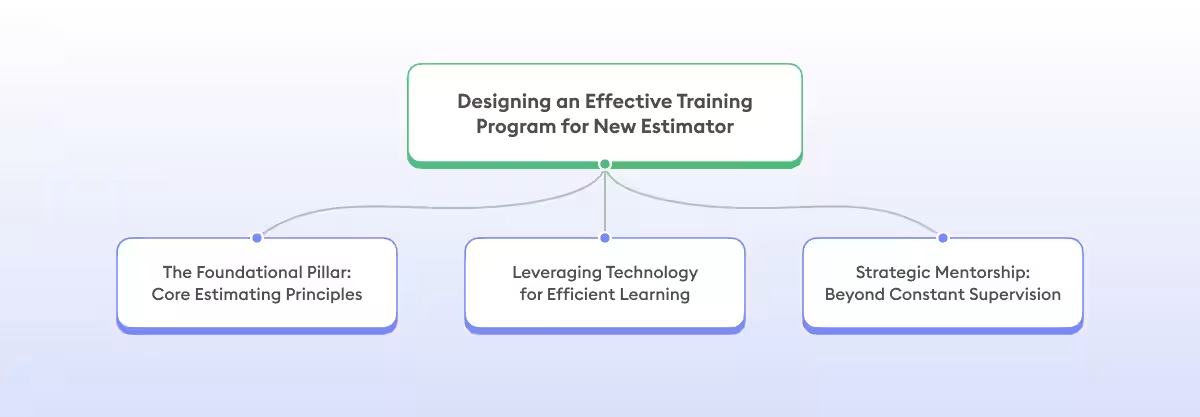
Companies can design training programs that don’t depend solely on constant human supervision. The core idea is to blend structured learning content with opportunities for guided practice and mentorship checkpoints, rather than continuous oversight.
A strong training program starts with establishing the foundational principles that every estimator must grasp. That includes core competencies like blueprint reading, quantity takeoff workflows, cost compilation, pricing strategies, risk allocation, and bid presentation structure.
Many professional organizations, such as the American Society of Professional Estimators (ASPE), offer certificates and structured courses that cover these essentials.
The Foundational Pillar: Core Estimating Principles
At the heart of effective estimator training is a strong understanding of construction documentation and the math that supports cost prediction. These fundamentals shape how accurately an estimator can interpret scope, measure quantities, and build reliable estimates.
Teaching basics like how to interpret symbols on drawings or systematically measure quantities forms the foundation of estimating competence. Courses and structured training that focus on these essentials, supported by real project examples and applied exercises, help new estimators move from abstract concepts to practical skills they can use on real work.
For example, quantity takeoff fundamentals, like measuring linear feet, square footage, or cubic volumes from drawings, are not just math exercises. They’re the basis upon which all cost modeling is built. Without this foundation, even advanced estimating tools produce unreliable results.
Trainees need repeated exposure to takeoff tasks in realistic contexts. Working through representative drawings allows them to internalize both the mechanics of measurement and the purpose behind their work. Effective training programs gradually move estimators from isolated takeoff tasks to full-scope estimates, building confidence and consistency along the way.
Another critical subject area is blueprint reading and interpretation. Architectural and structural documents are complex and rarely intuitive for newcomers. Structured training that breaks down plan layers, specifications, and divisions helps trainees understand what they are seeing and why it matters to accurate cost prediction.
Blueprint Reading and Interpretation
Blueprint reading deserves focused attention because it is where many entry-level estimators struggle silently. Plans are dense, layered, and filled with assumptions that experienced professionals interpret instinctively. New estimators, however, often don’t know what information is critical versus contextual. Structured blueprint training breaks this down systematically, helping learners understand how architectural, structural, and MEP drawings interact and where scope gaps commonly hide.
By slowing down plan interpretation early in training, you reduce downstream errors in takeoffs and pricing. When estimators learn how to cross-reference sheets, interpret symbols, and reconcile drawings with specifications, they gain confidence and accuracy simultaneously. This foundational clarity reduces review cycles later and allows senior estimators to focus on risk and strategy instead of basic corrections.
Quantity Takeoff Fundamentals
Quantity takeoff training is where theory turns into measurable output. A quantity takeoff is the process of extracting material quantities directly from drawings for accurate pricing. Without strong takeoff fundamentals, cost models are built on shaky assumptions. Training should emphasize not just how to measure, but why consistency, unit alignment, and scope awareness matter.
Repeated practice on real-world drawings helps junior estimators recognize patterns, avoid double-counting, and understand how design decisions influence quantities. Over time, this repetition builds speed without sacrificing accuracy.
Cost Compilation and Bid Preparation
Once quantities are established, new estimators must learn how to translate those numbers into a complete bid. Cost compilation involves assembling material pricing, labor productivity, equipment costs, subcontractor quotes, overhead, and contingency into a coherent estimate. This is where many junior estimators feel overwhelmed, especially when senior staff don’t have time to explain why certain allowances or markups are applied.
Clear training around cost structure helps estimators understand how estimates are shaped. When juniors learn the difference between an internal estimate, a formal bid, and a negotiated price, they begin thinking like business partners rather than data processors. This clarity also reduces errors when estimates move between preconstruction, procurement, and operations.
Essential Estimating Software Training
Estimating software plays a critical role in scalable training, as it helps with consistency, reduces manual errors, and makes reviews more efficient.
When software is integrated into training early, juniors learn how to structure takeoffs, organize assumptions, and document decisions in ways that senior estimators can quickly validate. Platforms that support collaboration and audit trails allow seniors to review work simultaneously, reducing the need for constant live supervision while maintaining quality control.
Leveraging Technology for Efficient Learning
When senior estimators lack the time for coaching, technology becomes an invaluable ally. Training platforms, online courses, and self-paced modules enable new estimators to build knowledge outside real-time mentorship. Modern learning systems allow trainees to study lessons at their own pace, revisit complex topics, and demonstrate their learning through quizzes or exercises before staff intervene for clarification.
Professional online courses often integrate real construction scenarios into their curriculum so learners can connect instruction to real-world application, which is far more effective than rote theory. Furthermore, many courses emphasize workflow continuity, i.e, showing how reading plans leads directly into quantity takeoffs, which then inform cost assembly, rather than isolating tasks. This helps trainees see the logic of estimating as a process, mirroring actual practice in the field.
Strategic Mentorship: Beyond Constant Supervision
Mentorship remains indispensable. But in high-workload environments, it must evolve from continuous oversight to structured checkpoints and feedback loops.
Instead of expecting seniors to be available at all times, set measurable milestones for trainees and conduct periodic reviews. For example, after a trainee completes a foundational blueprint interpretation module, schedule a feedback session to evaluate their work. Similarly, when a trainee completes a mock quantity takeoff, have a senior estimator conduct a focused review that highlights both strengths and areas for improvement.
Peer-to-peer learning and junior-senior pairing can also alleviate training pressure on the most senior figures. Pairing a new estimator with a mid-level colleague or grouping trainees for collaborative exercises nurtures shared insights and reinforces learning through explanation and observation. These methods distribute training effort across the team and offer multiple perspectives on the same estimating tasks.
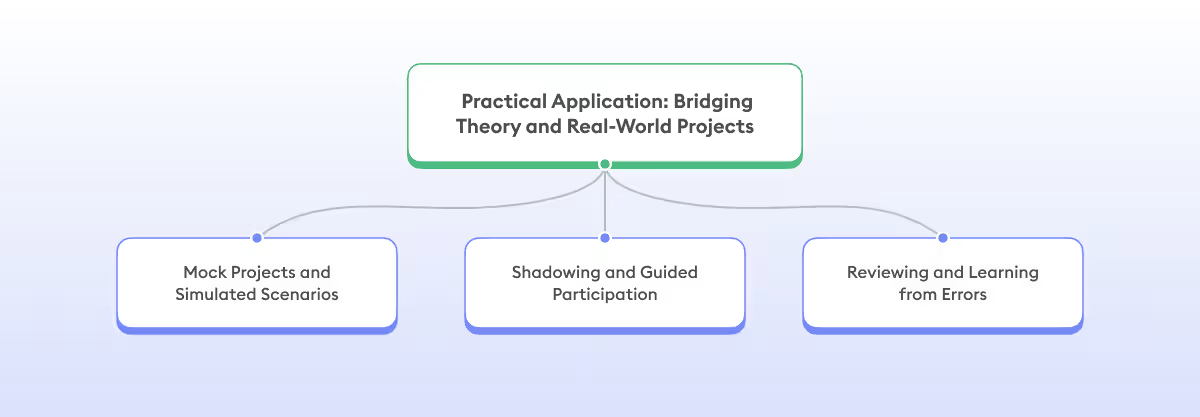
Practical Application: Bridging Theory and Real-World Projects
Theory alone doesn’t produce competent estimators; practical and applied experience is essential as well. Integrating mock projects into your training program, where trainees go through each step of a real estimate, builds confidence and reveals gaps in understanding early. Starting with smaller, controlled projects allows trainees to learn without the pressure of active bids, while receiving structured feedback from mentors keeps them aligned with company expectations.
Shadowing experienced estimators during real estimations, even for limited periods, helps trainees contextualize their classroom learning. Watching a seasoned estimator handle complexities, prioritize tasks under time constraints, and communicate assumptions to project teams complements formal education and builds practical judgment skills.
Mock Projects and Simulated Scenarios
Mock projects and simulated estimating scenarios give new estimators a safe environment to apply what they’ve learned without putting live bids at risk. Instead of learning in fragments, you give them a complete estimating experience, from reviewing drawings and specifications to completing takeoffs, compiling costs, and presenting a final estimate. This end-to-end exposure helps trainees understand how individual tasks connect to the bigger picture.
With simulated scenarios, new estimators can work through problems independently, document assumptions, and make judgment calls without waiting for constant approval. When reviews do happen, senior estimators can focus on logic, risk awareness, and decision-making rather than correcting basic process errors. Over time, these simulations accelerate confidence and prepare trainees to step into live projects with far less handholding.
Shadowing and Guided Participation
Shadowing remains one of the most effective ways to translate classroom learning into real-world understanding, but it works best when it’s intentional rather than informal. Instead of passive observation, guided participation allows new estimators to actively contribute while senior estimators retain control over final decisions. You might have a junior estimator complete specific takeoff sections, review subcontractor quotes, or prepare pricing summaries while observing how senior staff handle risk, scope gaps, and time pressure.
This approach exposes trainees to real constraints like tight deadlines, incomplete drawings, last-minute revisions, and more without overwhelming them. They see how experienced estimators prioritize tasks, communicate assumptions, and adapt when information changes.
Guided participation also protects senior bandwidth. By assigning clearly defined responsibilities, you avoid constant back-and-forth while still giving juniors meaningful exposure. Over time, this builds trust, accelerates skill development, and allows senior estimators to delegate more confidently as trainees demonstrate readiness.
Reviewing and Learning from Errors
Mistakes are inevitable during training, but they are also some of the most powerful learning tools. Structured reviews of estimating errors help juniors understand not just what went wrong, but why it mattered. Reviewing missed scope, incorrect assumptions, or pricing inconsistencies reinforces accountability without blame.
When error reviews are normalized during training, they build analytical thinking and reduce fear of ownership. This creates estimators who are more proactive, more accurate, and more willing to surface risks early.
Cultivating a Culture of Continuous Learning and Support
Training shouldn’t be a one-time event but part of an ongoing culture of growth. But that becomes tough when estimators spend most of their time buried in repetitive, manual takeoffs and spreadsheet-heavy workflows. In many teams, talented professionals remain stuck in execution mode, with little opportunity to develop higher-level judgment, risk assessment, or strategic pricing skills.
Creating space for learning requires removing some of that operational drag. Leveraging technology, especially modern takeoff and estimating platforms like Beam AI, can reduce the time spent on manual measurements, data entry, and rework. When repetitive tasks are streamlined, estimators gain back time to review assumptions, study past bids, understand project risk, and build the analytical thinking that defines senior-level performance.
Encourage team members to pursue professional development opportunities, such as earning certificates, attending industry conferences, and expanding their technical knowledge. At the same time, build internal systems that support learning on the job. Shared knowledge bases, standardized templates, documented bid reviews, and accessible historical estimates ensure that institutional knowledge doesn’t exist only in the minds of senior team members.
When technology handles the heavy lifting and knowledge is systematically shared, estimators are no longer confined to producing numbers; they’re positioned to grow into strategic contributors who strengthen the entire estimating function.
The ROI of Investing in New Estimator Training
Investing in structured estimator training yields tangible returns. Better-trained estimators produce more accurate cost forecasts, reducing the risk of cost overruns and schedule delays.
According to industry insights, enhanced estimating accuracy alone can mitigate financial stress and improve project predictability. When trainees are equipped with the right tools, methods, and opportunities for applied learning, they contribute to higher bid success rates and more consistent project performance.
Beyond immediate project benefits, training builds resilience into your organization. When knowledge is shared, documented, and continually reinforced, companies are less vulnerable to senior staff turnover and better able to scale their estimating capacity without sacrificing quality.
Future-Proofing Your Estimating Department
Training the next generation of estimators is about future-proofing your operations. By blending structured education, technology-enhanced learning, and smart mentorship practices into your workforce development strategy, companies can develop a deep bench of estimating talent capable of handling complexity, embracing new tools, and sustaining high performance even under workload pressure.
Structured programs backed by professional courses, practical application through real and mock projects, and a culture of continuous improvement will ensure that even when senior staff are maxed out, your estimator training efforts remain effective, scalable, and aligned with long-term business goals.