





Beam Sizing Explained: What Structural Engineers Actually Do (And When You Need One)
Picture this: a homeowner decides to open up their kitchen. The contractor swings the sledgehammer, the wall comes down — and then someone notices the ceiling is starting to sag. Turns out, that wall wasn't just drywall and studs. It was carrying the floor above it, and now that load has nowhere to go.
This is the scenario that sends people scrambling for a structural engineer. But here's the thing — by that point, you're already in damage control mode. Their job isn't to show up after things go wrong. It's to make sure they never do.
Beam sizing is one of the most visible and searchable parts of structural design, and it's a useful lens for understanding the broader discipline. So let's start there — and build outward.
What is a structural engineer?
A structural engineer is a licensed professional who oversees structural design and evaluates the load-bearing elements of buildings and infrastructure. We're talking beams, columns, foundations, walls, and frames — every element that carries force and transfers it safely to the ground.
The work sits at the intersection of physics, mathematics, and material science. The output isn't just drawings. It's calculations that determine whether a structure is safe under every condition it will face — normal use, extreme weather, and everything in between.
Their services typically include:
- New building design and structural drawings
- Renovation assessments and load-bearing wall evaluations
- Foundation analysis and repair recommendations
- Load calculations for permit applications
- Compliance sign-offs required by building departments
- Post-disaster structural assessments
If a building element carries load, a licensed engineer has — or should have — weighed in on it.
Where structural engineering fits in the bigger picture
People searching for "structure of engineering" are usually trying to figure out how the disciplines relate to each other. Here's the short version.
Engineering broadly breaks into mechanical, electrical, civil, and several other branches. Structural engineering is a specialization within civil engineering, focused specifically on the integrity and load capacity of built structures.
In a typical building project, the structural design team works alongside architects, geotechnical engineers, MEP engineers, and contractors. The architect shapes the building. The geotechnical engineer evaluates the soil. The MEP team handles mechanical, electrical, and plumbing systems. They ensure the building can physically withstand everything those systems — and the people inside — will impose on it.
Their calculations underpin the safety of everything else on the project.
Civil engineer vs. structural engineer: What's the difference?
This is one of the most commonly searched distinctions in the field, and it's worth clearing up.
Civil engineers work across a broad range of infrastructure — roads, drainage, water systems, bridges, and site development. Structural engineers specialize in the analysis and design of load-bearing systems within buildings and structures.
In practice, many engineers in this field hold civil engineering degrees and are licensed as civil engineers. The distinction is in specialization and scope of work, not in a completely separate profession or licensing track.
When do you specifically need a structural engineer? Anytime the project involves the load-bearing integrity of a building, such as wall removals, structural additions, foundation assessments, or any engineered drawing required for a building permit. A general civil engineer handles site work and infrastructure. A structural specialist handles what keeps the building standing.
How do structural engineers size a beam?
This is the core of it. And it's not guesswork.
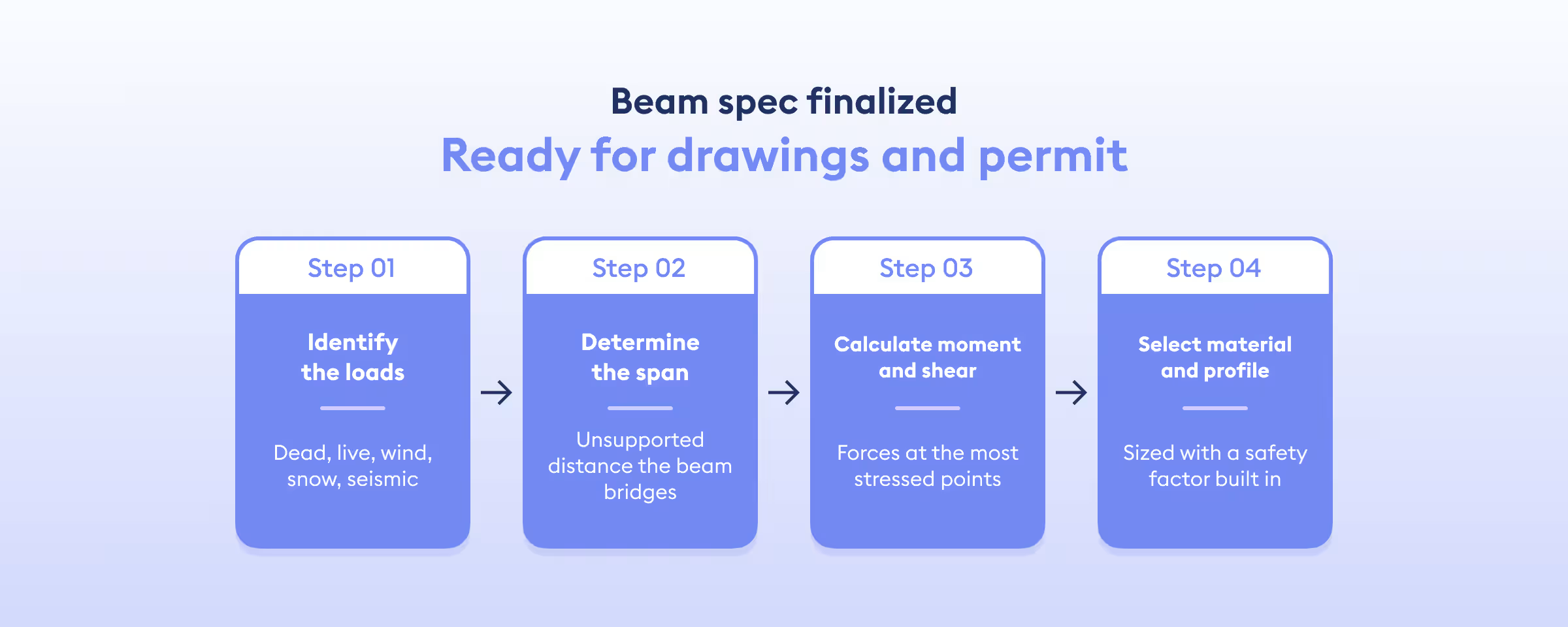
Beam sizing follows a logical sequence, but there's real complexity at each step. Here's how it works.
Step 1: Identify the loads
Before the engineer can size anything, they need to know what the beam is carrying. That means accounting for dead load — the permanent weight of the structure above the beam, including slabs, roofing materials, walls, and the structure itself. It also means accounting for live load — the variable weight from occupants, furniture, and equipment. Depending on geography and building type, wind, snow, and seismic loads may also apply.
The engineer doesn't design for average conditions. They design for the worst credible combination of all loads acting simultaneously.
Step 2: Determine the span
The span is the unsupported distance the beam must bridge. A longer span means the beam experiences higher bending forces under the same load, so span and load together drive the sizing calculation.
Step 3: Calculate bending moment and shear forces
Using structural theory, the engineer calculates the bending moment — the rotational force that tends to bend the beam — and the shear force — the force that tends to slice through it — at the most stressed points along its length. These are the numbers that determine what the beam must actually withstand.
Step 4: Select material and profile
With bending moment and shear forces in hand, the engineer selects a beam material and a specific size and cross-sectional profile that provides adequate strength, with an appropriate safety factor built in.
What makes undersized beams particularly dangerous? Beams don't fail all at once. An undersized beam deflects excessively first — you'll see it in cracked finishes, sticking doors, and uneven floors. The structural compromise builds gradually, so the visible warning signs are often dismissed or overlooked until the damage becomes significant. That's what makes getting the sizing right from the start so critical.
This isn't a small-stakes mistake. Most rework on construction sites doesn't start on the site — it starts on the drawing board. Engineering and design errors account for up to 70% of construction rework, well ahead of anything that happens during execution. Get the beam sizing right the first time, and you're not just avoiding a structural problem. You're cutting off the rework chain before it starts.
The building loads that engineers calculate.
Load calculation is where much of the complexity lies, and it's worth going a level deeper.
Dead load is permanent and predictable: the weight of concrete slabs, roofing materials, walls, framing, and finishes. It doesn't change once construction is complete.
Live load is variable: people, furniture, equipment, and stored materials. Building codes specify minimum live load assumptions based on occupancy type, because an office floor and a storage warehouse carry very different loads.
Environmental loads vary by geography. Snow loads apply in cold climates and are calculated based on ground snow accumulation and roof geometry. Wind loads depend on building height, location, and exposure. Seismic loads depend on the seismic zone and the building's dynamic properties.
Point loads behave differently from the loads above because they don't spread out. A dead load or live load is distributed — it acts evenly along the length of a beam. A point load is concentrated at a single location, like where a column lands on a beam below it. That concentration creates a sharper spike in bending moment and shear right at that point, rather than a gradual curve across the span. A beam sized only for distributed load can fail under a point load it was never designed to carry, which is why engineers treat them as a distinct category, not just "more load."
Structural engineers don't calculate these loads in isolation and add them up one at a time. Building codes define specific load combinations — dead plus live, dead plus live plus wind, dead plus live plus seismic, and so on — and require the engineer to design for whichever combination produces the worst-case effect at every point in the structure.
Wondering how Beam AI fits into the bigger picture?
By the time a beam is sized, you've got a structural drawing with hard numbers on it — material, profile, dimensions. The next job is figuring out exactly how much of that material you need to order, at what cost, across every beam and structural element in the project.
That's where the manual grind usually starts. Beam AI takes structural drawings like the ones this process produces and turns them into accurate material takeoffs and cost estimates in a fraction of the time.
Curious to know how Beam AI reads structural drawings? Read this blog.
Materials used in structural design
Material selection is one of the most consequential decisions in structural design — and it flows directly from the load and span calculations.
Steel offers a high strength-to-weight ratio and highly predictable behavior under load, making a steel beam the dominant choice for long spans and commercial construction. Steel's consistency is a major advantage — engineers can rely on published material properties with high confidence.
Timber and engineered lumber — including the LVL beam (laminated veneer lumber) and glulam beam (glued laminated timber) — are the standard for residential construction and are increasingly used in mass-timber commercial projects. Engineered lumber products offer more consistent properties than dimensional lumber and can span longer distances. This is where teams weigh LVL against steel for the same span.
Reinforced concrete combines concrete's compressive strength with steel reinforcement's tensile capacity. Reinforced concrete is used widely in foundations, slabs, columns, and walls. It's also heavy, which means its dead load contribution must be factored into the overall structural calculation.
This is where structural engineering and materials engineering meet. Engineers aren't just calculating how much load a material can take on day one — they're evaluating how that material performs over the life of the building.
They also consider how materials behave over time — concrete creeps under sustained loads, steel can fatigue under repeated cycles, and timber shrinks and swells with changes in moisture. This overlap is sometimes called structural and materials engineering, and it shows up constantly in real building projects — particularly in renovation and assessment work, where existing materials must be evaluated against current loads and standards.
Structural engineering software
Modern engineers don't do structural calculations by hand — at least not at scale. Software has transformed how structural analysis is performed and how designs are iterated.
The main categories of tools they use:
Software accelerates calculations and allows engineers to evaluate far more design iterations than manual methods would. But it doesn't replace engineering judgment.
Residential structural engineering: What homeowners need to know
Homeowners interact with structural engineering more often than they realize — they just don't always know it until a building department tells them they need a stamped drawing.
The most common residential scenarios that require involvement are:
- Load-bearing wall removal during a renovation — the most frequent trigger
- Home additions that add floor area or load above existing foundations
- Foundation problems — cracks wider than a hairline, uneven settlement, or walls that are bowing
- Deck and balcony design — particularly for elevated or heavily loaded structures
- Roof structure changes, including additions of dormers or skylights that interrupt existing framing
- Any structural change that a building department flags as requiring an engineered drawing for permit approval
Load-bearing wall removal is worth a closer look here, since it's the single most common reason homeowners end up needing a licensed engineer in the first place. Construction costs for removing a load-bearing wall typically run $2,000 to $5,000 for a single-story home, climbing to $9,000–$15,000 for a second-story wall that needs additional structural support, and that's before permits or engineering fees are factored in.
When to hire a structural engineer
If you're unsure whether your project needs one, here's a practical trigger list:
- Any load-bearing wall removal
- Foundation cracks that are wider than a hairline or actively growing
- New construction requiring engineered drawings for permit
- Additions that add floor area or load above the existing structure
- Roof structure changes or additions
- Commercial fit-outs that change floor loading significantly
- Post-disaster assessments after flooding, fire, or seismic events
There are situations where a structural engineer is legally required — the building department won't issue a permit without stamped drawings. And there are situations where they're not required but strongly advisable — because the cost of a structural review is always less than the cost of a structural failure.
When in doubt, hire one early. The earlier you involve them, the more options exist for how to solve the problem — and the cheaper those solutions tend to be.
Common structural engineering mistakes in building projects
Most structural problems in buildings aren't acts of nature. They're the result of decisions made — or not made — during design and construction.
Undersized beams are the most visible failure mode. Before a beam fails outright, it deflects. Floors bounce, ceilings crack, doors stick. The damage accumulates gradually, which is exactly why it gets ignored until it's expensive to fix.
Foundations without adequate soil investigation settle unevenly. A foundation designed for one soil condition, when built on a different one, will move — and whatever sits on top of it moves with it.
Load-bearing walls removed without proper replacement beams redirect loads to elements not designed to carry them. This is the most common DIY structural mistake and one of the most dangerous.
Undersized connections between structural elements are a quiet failure point. A beam can be perfectly sized and still fail if the hardware connecting it to its support can't handle the force being transferred.
Mid-construction modifications without engineering review happen when site conditions differ from the original design. This is where many post-construction structural problems originate.
The pattern across all of these is the same: structural engineering got skipped, rushed, or overridden. The fix is always more expensive than the review would have been.
What structural engineering services cost (and what they include)
Structural engineering fees vary by project scope, complexity, and location. A simple beam calculation for a residential wall removal is significantly less expensive than a full commercial structural design.
The fee is always proportional to the risk being managed. The Construction Industry Institute puts the average cost of construction rework at 5% of the total project value, with some projects reaching as high as 20%. On a $50 million project, even the conservative estimate works out to $2.5 million in avoidable costs.
Conclusion
Structural engineering isn't a bureaucratic box to check. It's the professional discipline that determines whether a building stands safely under every load it will ever face — normal use, worst-case weather, and everything in between.
Beam sizing is one visible piece of that process. But behind every correctly sized beam is a sequence of calculations — load identification, span analysis, bending moment, shear force, material selection — that only works when it's done right the first time.
Whether you're a homeowner opening up a floor plan, a contractor managing a commercial fit-out, or a developer breaking ground on new construction, the same principle applies: get a structural engineer involved early. The cost of a review is a rounding error compared to the cost of getting it wrong.
Ready to see how Beam AI fits into your construction workflow? Book a demo today.