





Why Beam AI Outperforms zzTakeoff on Estimating Capacity
A takeoff can live in the cloud and still consume most of an estimator's day.
Plans arrive with architectural, structural, and MEP sheets mixed together. Some sets already have an addendum attached. Scales need checking. Walls, fixtures, pipe, duct, steel, or finishes still have to be measured before anyone can start putting real pricing against the job.
Modern cloud takeoff tools have made that work easier to organize. Estimators can access projects from different devices, collaborate on the same drawings, and get away from some of the limitations of older desktop software. But moving the same work into a browser does not automatically reduce the amount of measuring involved.
This is where the products start to separate clearly. zzTakeoff is designed around the estimator performing the takeoff with better digital tools. Beam AI is built around taking a larger portion of the takeoff workload away from the estimator altogether.
For firms looking at a zz Takeoff alternative, that difference becomes more important as bid volume rises. A team may already have software it likes using. The harder question is whether there are enough estimator hours available to price every opportunity coming in.
The sections below compare how both platforms deal with that workload.
Beam AI vs zzTakeoff: An Overview
Both products are browser-based, but they take different routes from plan set to estimate.
Beam AI is Attentive.ai's AI-based takeoff, estimating, and bid management platform. It is built for contractors who want to handle more bids without increasing estimating overhead at the same rate.
There are two ways to use it:
- Done For You (DFY): QA-checked takeoffs and estimates delivered within 24 to 72 hours, with the output fitting into the contractor's existing review process.
- Do It Yourself (DIY): Instant AI takeoffs for HVAC, plumbing, and steel, along with review tools and Excel-ready outputs.
Takeoffs sit alongside bid activity in Beam AI. Invitations to bid, deadlines, RFIs, and addenda can all be tracked through the platform rather than maintained separately.
zzTakeoff is more closely aligned with a conventional digital takeoff workflow. Estimators open the plans and carry out the measurements themselves, using browser-based tools designed to make the process quicker and easier to manage.
Its feature set includes:
- Real-time collaboration and multi-user editing
- Auto-scale, page auto-naming, and sheet numbering
- Manual area takeoff, linear takeoff, and count takeoff tools
- Assemblies and formulas for repeatable estimating logic
That makes zzTakeoff a substantial improvement over older desktop takeoff software for teams that want to keep measurement in-house. The estimator, however, is still responsible for tracing, counting, checking, and revisiting those quantities when drawings change.
For teams researching alternatives to zz Takeoff, the real distinction is how much estimating labor remains attached to every bid. If capacity is already tight, that matters more than whether both tools run in a browser.
Beam AI vs zzTakeoff: Feature-by-Feature Comparison
Here is how Beam AI vs zzTakeoff compares across the areas most likely to affect day-to-day estimating work.
| Feature | Beam AI | zzTakeoff |
|---|---|---|
| AI-Based Takeoffs | Yes. DFY provides QA-checked results in 24 to 72 hours. DIY provides instant takeoffs for HVAC, plumbing, and steel. | No. AI supports setup, while takeoff measurement remains manual. |
| Human QA Review | Yes. Every DFY takeoff is reviewed by Beam AI's in-house QA team. | No third-party validation. Accuracy is handled by the user. |
| Typical Turnaround Time | 24 to 72 hours for DFY, instant for supported DIY trades. | Depends on estimator availability and project size. |
| Real-Time Collaboration | Yes. Cloud collaboration, version control, and view-only shareable links. | Yes. Multiple users can work on the same live plan set. |
| Auto-Scale & Page Auto-Naming | Handled during AI processing. | Yes. |
| Sheet Numbering | Managed during processing. | Yes. Sheet numbering and organization tools are available. |
| Automatic Revision Comparison | Yes. Changes between revisions are highlighted automatically. | No. Revision review uses manual plan overlay. |
| Bid Management | Yes. Bid Dashboard covers ITBs, deadlines, addenda, and RFIs. | Not part of the core workflow. |
| Assemblies & Formulas | Quantities can move into existing estimating logic. | Yes. Built-in assemblies and formulas. |
| Trade Coverage | 15+ trades on one platform. | Trade-agnostic manual tools. |
| Export Formats | PDF and Excel. | Excel. |
| Mac & iPad Compatible | Yes. Browser-based. | Yes. Browser-based. |
| Pricing Model | Annual trade-based license. DFY Standard: $15K to $25K per trade. DIY: $8K per trade. Enterprise pricing available. | Per-seat monthly subscription. |
| Free Trial / Demo | Free tailored demo. | Free trial. |
Why Manual Takeoffs Create the Biggest Estimating Bottleneck
The first hour spent opening a drawing set is rarely what puts an estimating team under pressure. The time adds up later.
A commercial project may require measurements across dozens or hundreds of sheets. Counts need to be checked. Scales change between pages. Different plan views have to be reconciled. Then an addendum lands, and part of the job has to be reviewed again.
Even very good manual takeoff software still depends on someone having enough time to perform those steps.
Construction has struggled with productivity more broadly as well. A Federal Reserve Bank of Richmond economic brief published in August 2025 found that U.S. construction labor productivity has fallen by more than 30% since 1970, while productivity across the wider U.S. economy roughly doubled over the same period. The researchers tied that difference to about $1 trillion in lost economic value every five years.
Bureau of Labor Statistics data updated in September 2025 shows that the picture is not uniform across construction. Some industries have improved productivity while others have moved backward, which reflects how uneven technology adoption remains from one part of the industry to another.
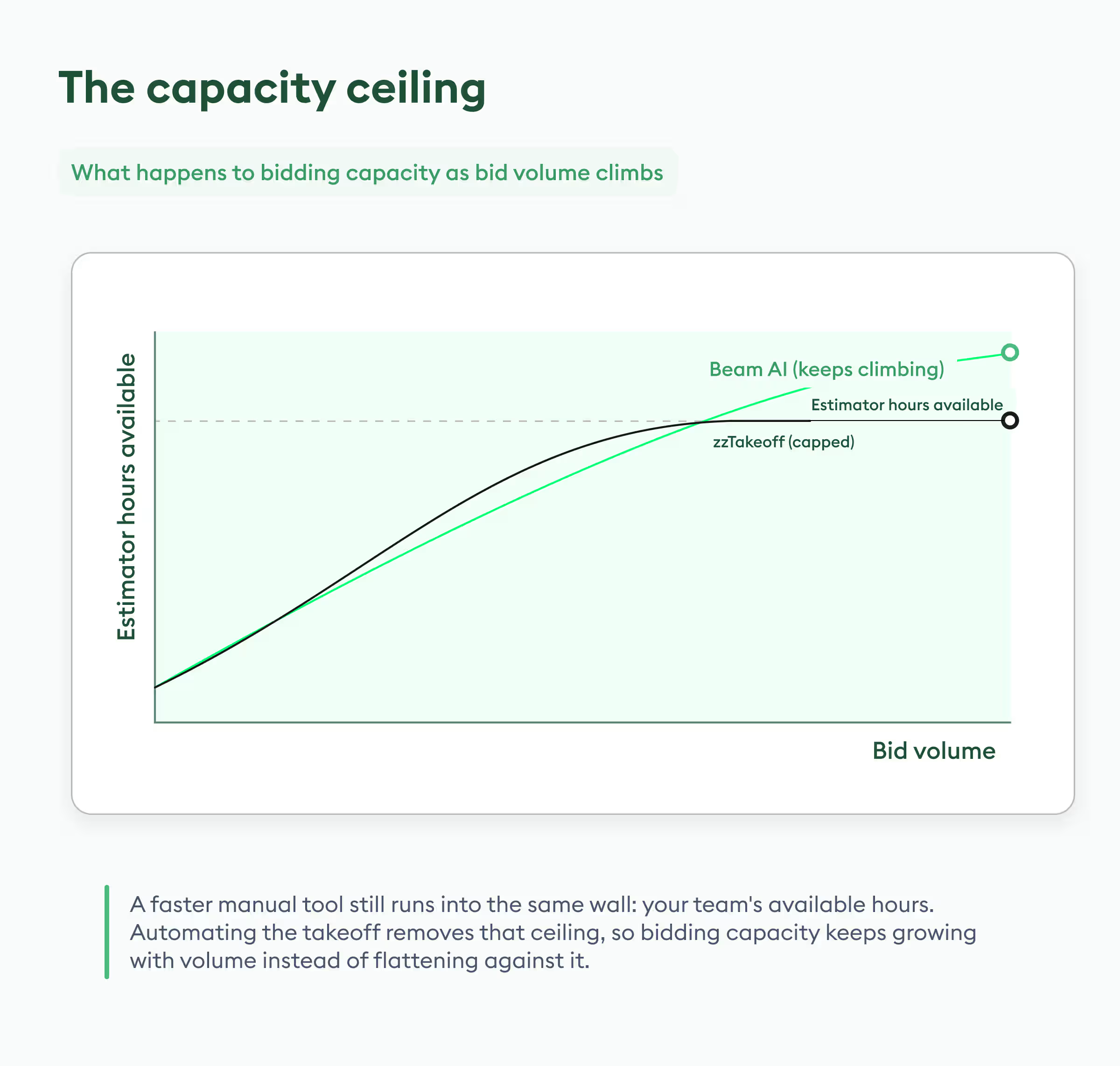
Estimating has its own version of that capacity problem. Software may shave minutes off page setup or measurement, but the available hours in the estimating department do not increase as a result.
Once every estimator is fully loaded, another bid either waits, gets rushed, or gets turned down.
Where Beam AI Handles Estimating Capacity Better
Beam AI approaches takeoff with less emphasis on improving the mechanics of manual measurement and more emphasis on reducing how much of that measurement the internal estimating team has to perform.
AI-Based Takeoffs Without the Manual Measurement
For supported scopes, Beam AI processes the drawing set and produces quantities without requiring an estimator to trace every item manually.
The DIY workflow currently provides instant AI takeoffs for HVAC, plumbing, and steel. Estimators can review the output, make adjustments where necessary, export quantities to Excel, and use in-app estimates for HVAC and plumbing.
The DFY workflow covers the takeoff and estimate end-to-end, with 99%+ accuracy and human QA before delivery.
That difference becomes noticeable on larger drawing sets. An estimator still reviews the work and makes the final pricing decisions, but a large block of measurement time has already been handled.
Beam AI's guide to automating concrete takeoffs shows how the workflow applies to a specific trade.
Every DFY Takeoff Gets a Human QA Review
Automation is only useful if the quantities can be trusted.
Beam AI's DFY workflow includes an in-house QA step before the takeoff reaches the contractor. The estimating team receives a reviewed output rather than raw AI extraction that still needs a complete line-by-line audit internally.
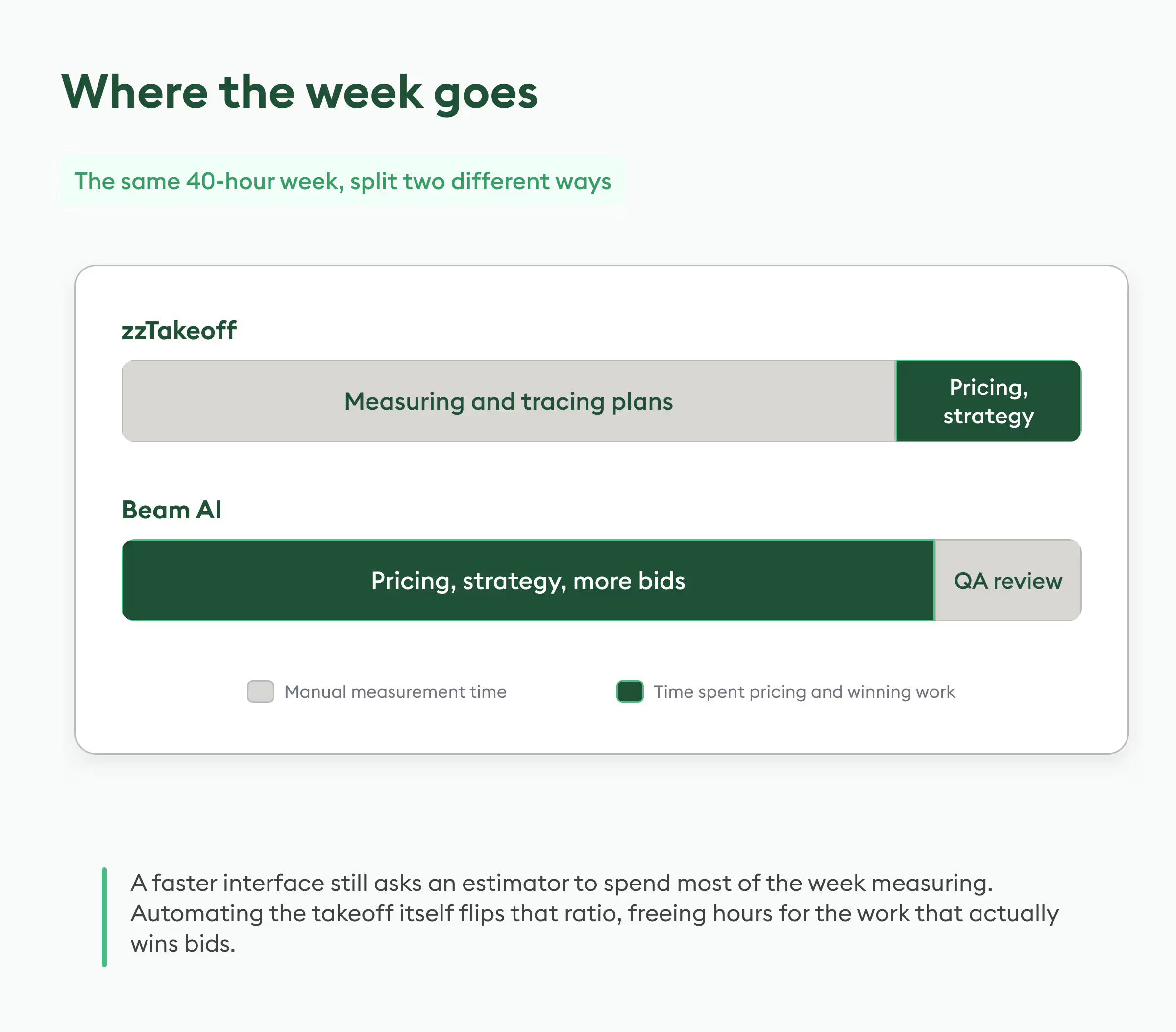
That changes where estimator time gets spent. Instead of devoting the bulk of the schedule to drawing polygons, counting repeated items, or checking every measurement, more of that time can move toward pricing, scope review, procurement decisions, value engineering, risk mitigation, and customer conversations.
The estimator remains responsible for the bid. The repetitive measurement work takes up less of the week.
Revisions Are Compared Automatically
Addenda can be particularly disruptive because the original takeoff may already be complete by the time revised drawings arrive.
With a conventional workflow, someone has to determine which sheets changed, overlay the versions, inspect the differences, and work out how those changes affect quantities.
Beam AI automates the revision comparison and highlights the changes between drawing versions. The estimator can concentrate on the affected scope rather than searching the entire revised set for differences.
On projects with several addenda before bid day, those saved review cycles can become significant.
Bid Management Sits Beside the Takeoff
Takeoff work rarely exists on its own. Estimating teams are also monitoring ITBs, due dates, addenda, RFIs, and other bid activity.
Beam AI includes a Bid Dashboard for this information, keeping it in the same environment as the takeoff.
That is useful for firms currently splitting estimating work between takeoff software, email, spreadsheets, calendars, and another bid-tracking tool. Fewer handoffs also make it easier to see which opportunities need attention as deadlines get closer.
Multi-Trade Coverage From a Single Upload
Beam AI supports 15+ construction trades on the same platform.
A company handling multiple scopes can run several takeoffs without switching between separate takeoff environments for each discipline. Completed quantities can be exported in PDF or Excel for use elsewhere in the estimating process.
Manual takeoff tools are also available for smaller jobs or additional scope that the team wants to handle directly.
More Room During Peak Bid Volume
Peak bidding periods expose the limits of a self-service workflow fairly quickly.
When the same estimators are responsible for every measurement, turnaround time starts to stretch as their schedules fill. A browser can make the work easier, but it cannot create another ten or twenty hours of estimating before Friday.
Beam AI's DFY work runs through its AI processing and internal QA team. That gives contractors another source of takeoff capacity when internal estimators are already occupied.
For firms comparing the two platforms during peak season, the practical question is whether a faster manual process is sufficient or whether the takeoff itself needs to be taken off the estimator's plate.
Where zzTakeoff Fits In-House Takeoff Teams
zzTakeoff follows a self-service takeoff workflow. It gives estimators browser-based tools to make manual measurement faster and easier to organize, while keeping the takeoff itself in the estimator's hands.
Manual Takeoff Stays With the Estimator
Estimators open the plans and measure area, linear, and count quantities themselves. For teams that want direct control over every measurement, this keeps the workflow familiar while moving it into the cloud.
Because the quantities are still traced and counted by the estimator, turnaround time remains tied to project size and estimator availability.
Real-Time Collaboration for Multi-User Teams
zzTakeoff allows multiple users to work on the same live plan set. That can help teams divide larger scopes, review work together, and keep everyone on the current set of drawings without passing files back and forth.
Drawing Setup Is Faster
Auto-scale, page auto-naming, and sheet numbering reduce some of the setup work that comes before measurement. These features can save time on large plan sets, particularly when estimators would otherwise have to organize pages and confirm scales manually.
Assemblies and Formulas Support Repeatable Estimating Logic
Built-in assemblies and formulas let teams apply established estimating logic inside the takeoff workflow. This can be useful for contractors who already have repeatable ways of turning measured quantities into labor, material, or cost calculations.
PlanSwift Imports Can Ease Migration
zzTakeoff can import PlanSwift takeoff items and measurements. Complex formulas and assemblies still need to be rebuilt manually, but the import option can reduce the amount of work involved in moving an existing takeoff library into a browser-based workflow.
Capacity Still Depends on Estimator Hours
These features make manual takeoff more efficient, but they do not remove the measurement step. Every wall, fixture, length, and area still has to be traced, counted, checked, and revised by someone on the estimating team.
That model can work well for firms with enough internal estimating capacity and a preference for hands-on control. When bid volume rises, however, the same estimator hours still set the ceiling on how many takeoffs can be completed at once.
That is the main contrast with Beam AI. zzTakeoff is designed to improve the manual takeoff process, while Beam AI is designed to automate more of the measurement work and, through DFY, add a QA layer before the takeoff returns to the contractor.
Why Contractors Are Moving to Cloud-Based Takeoff Software
Construction technology adoption has grown, although the industry is far from uniform.
A 2025 survey found that 61% of firms were using cloud-based technology for project management. At the same time, one in five construction firms reported using no cloud technology at all.
That spread is worth noting. Some contractors are already connecting multiple parts of preconstruction through cloud tools and automation, while others are still moving away from largely manual or disconnected workflows.
Both Beam AI and zzTakeoff sit on the digital side of that transition, but they automate different amounts of the process. zzTakeoff modernizes the environment in which manual takeoff happens. Beam AI pushes automation further into quantity extraction, estimating, revision review, and bid management.
For more background on takeoff itself, Beam AI has guides explaining what takeoff means in construction and a broader comprehensive guide to takeoff software.
Beam AI as a zzTakeoff Mac Alternative
Mac compatibility is sometimes one of the first things estimators check when comparing takeoff tools, particularly if they are moving away from older desktop software.
In this case, operating system support is unlikely to determine the outcome of the comparison.
zzTakeoff already runs in a browser and supports Mac, PC, and iPad. Someone searching for a zz Takeoff mac alternative or a zz Takeoff alternative for mac purely because of device compatibility may find that zzTakeoff itself already meets the requirement.
Beam AI is also browser-based and works on macOS and Windows without a local installation.
The distinction shows up in the work performed after the plans are opened.
zzTakeoff relies on the estimator and the device as part of the active measurement process. Beam AI handles AI processing and DFY QA in the cloud, while the DIY workflows generate automated takeoffs for supported trades. A mixed-device team can access the results without turning local hardware into the main driver of takeoff speed.
For remote estimating teams, this can make device choice less relevant to the workflow. In other words, teams looking for alternative software to zz Takeoff solely for Mac support may not gain much from switching. The stronger reason to compare the platforms is workflow automation.
Which Teams Benefit Most from Beam AI?
No two estimating departments have the same workload. Some teams price a small group of larger projects. Others receive enough ITBs in a week to keep several estimators occupied at once.
Beam AI is most likely to make a noticeable difference where takeoff capacity has already become a constraint.
High Bid Volume
More incoming bids usually mean more measurement work before they mean more revenue.
If estimators can spend fewer hours tracing plans, the recovered time can go toward scope review, pricing, subcontractor coordination, and additional opportunities. That is the operating logic behind the 3X bidding capacity reported by Beam AI customers.
Multi-Trade Projects
General contractors and multi-trade subcontractors may need quantities across concrete, HVAC, electrical, plumbing, steel, and other scopes on the same project.
Beam AI's 15+ trade coverage allows those takeoffs to stay within one platform. For teams currently juggling separate processes by trade, this can simplify the movement from the uploaded plan set to the completed quantities.
Addenda-Heavy Bid Cycles
The more revisions a bid receives, the more time manual comparison starts to consume.
Automated revision comparison is especially useful on projects where several addenda arrive close to bid day. Estimators can review the changed areas rather than repeatedly overlaying and scanning whole drawing sets.
Teams That Want Bidding and Estimating in One Place
Many firms still track ITBs and bid deadlines outside their takeoff tool.
Beam AI's Bid Dashboard keeps invitations, RFIs, addenda, deadlines, and takeoff activity together. That can reduce the amount of administrative tracking required around the estimate itself.
Growing Estimating Teams
Hiring another estimator is one way to increase capacity, but it is not the only one.
Automating the measurement-heavy portion of quantity takeoff can allow firms to support more active bids before headcount has to increase at the same pace.
Finishes contractor G.W. Thiel encountered that problem before adopting Beam AI.
Its estimators handled takeoffs internally, with a single bid taking between 3 and 5 days depending on size. Addenda pulled estimators back into previously completed work, which made it harder to keep new opportunities moving. At times, the company had to turn down ITBs because the estimating team did not have enough available capacity.
After adopting Beam AI, G.W. Thiel reported:
- 75 to 80% improved turnaround time on takeoffs
- 3X weekly bid volume without expanding headcount
- 30 to 40% higher business growth
Its senior estimator described Beam AI as particularly useful for contractors receiving a large number of ITBs and trying to avoid turning away customers simply because the estimating team does not have time for another bid.
That example gets to the main difference in Beam AI vs zzTakeoff. zzTakeoff can help an estimator complete manual takeoffs more efficiently. Beam AI gives firms a way to move part of that workload outside the estimator's available hours.
Beam AI vs zzTakeoff: Which One Should You Choose?
Both platforms are a significant step beyond legacy desktop takeoff software. Which one fits better depends largely on how much manual involvement the estimating team wants to retain.
zzTakeoff may suit teams that have enough internal estimating capacity and prefer direct control over every measurement.
It is worth considering if the team
- Wants estimators to perform every takeoff internally
- Relies heavily on custom formulas and assemblies inside the takeoff tool
- Needs several users working on the same live drawing set
- Is moving from PlanSwift and is comfortable rebuilding complex formulas and assemblies that do not transfer automatically
- Prefers predictable per-seat pricing
- Is not currently constrained by the number of estimating hours available
Beam AI is more closely aligned with teams trying to reduce the manual workload attached to each bid.
It may be the stronger fit if the company wants the following:
- Takeoffs completed without consuming the same number of internal estimating hours
- AI-based takeoffs through either DFY or DIY
- QA-reviewed DFY takeoffs and estimates
- Automated revision comparison when addenda arrive
- Bid management alongside estimating
- Multi-trade takeoff across 15+ trades
- More bidding capacity without increasing overhead at the same rate
Both products are cloud-based. The larger difference lies in what happens between opening the drawing set and getting quantities ready for pricing.
For some teams, better manual tools are enough. Others have already reached the point where there is too much work for the available estimator hours. That is usually when zz Takeoff alternatives start getting a closer look.
Beam AI vs zzTakeoff: Pricing
The two products also use different pricing structures.
zzTakeoff follows a per-seat monthly subscription model. As more estimators need access, more seats are added. That structure can work well for firms that want to keep takeoff work in-house and prefer costs tied directly to the number of users.
Beam AI prices around annual trade licenses and bid capacity rather than individual seats. The license covers the AI processing and, for DFY, the QA work involved in producing the takeoff.
Beam AI's current pricing includes:
- Standard plan (DFY): $15K to $25K per year, per trade license. The plan includes 99%+ accurate, QA-reviewed takeoffs and estimates delivered within 24 to 72 hours, two plans running in parallel per license, AI-based takeoffs and estimates, in-platform estimates for HVAC and piping, dedicated support, and bid management features.
- Do It Yourself plan: $8K per year, per trade license. This covers instant AI takeoffs for HVAC, plumbing, and steel, along with in-platform estimates, trade-specific review tools, and dedicated support.
- Enterprise plan: Custom pricing for companies needing multi-trade customization, flexible licensing based on team size, or a combination of DFY and DIY workflows.
The annual Beam AI license is tied to bid capacity rather than a fee for each individual takeoff. Teams can therefore run multiple projects within the license capacity without paying separately for every plan set.
zzTakeoff offers a free trial. Beam AI provides a free demo tailored to the contractor's trade and typical bid volume.
For anyone searching specifically for a free alternative to zz Takeoff, neither platform is positioned as an unlimited free-forever product. A useful comparison will depend on more than the sticker price. A contractor running a high volume of work may want to compare software cost against estimator hours, turnaround time, and the number of bids that can realistically be completed each month.
Final Thoughts
Beam AI vs zzTakeoff comes down to how much of the takeoff process a contractor wants the software to handle.
zzTakeoff keeps the estimator at the center of the measurement. The platform gives the estimator better page setup, collaboration, assemblies, formulas, and browser access. For a team that already has the people and time to perform takeoffs internally, that approach can work well.
Beam AI removes more of the measuring from the internal workload. DFY sends the takeoff through AI processing and human QA, while DIY gives supported trades instant AI takeoffs that can be reviewed and exported. Revision comparison and bid tracking extend the workflow beyond quantity measurement as well.
The difference is easiest to feel when the estimating calendar fills up.
With five active bids, several addenda, and another ITB arriving before the end of the day, the limiting factor may no longer be how efficiently someone can draw a line on screen. It may simply be whether anyone has time left to do the takeoff.
Teams exploring a zz Takeoff software alternative can compare the two with their own project mix. zzTakeoff's free trial provides a way to test its manual workflow, while a Beam AI demo can show how the same type of plans move through an automated DFY or DIY process.
Looking at actual turnaround time and internal hours used will usually tell the story more clearly than a feature checklist alone.




.jpg)