





Why Does the Same Steel Package Get Five Different Numbers?
The bid tab is open. Three steel fabricators have priced the exact same package, and the numbers are nowhere close. One comes in comfortably below the others. Another is tens of thousands higher. The drawings are the same. The tonnage is the same. So what happened?
The first instinct is usually to assume somebody missed something. Maybe the low bidder forgot a scope item. Maybe the high bidder padded the labor. Maybe one shop simply has better steel pricing.
Sometimes that is exactly what happened. But often, none of it did.
Steel fabrication is not a commodity where every shop starts with the same cost and simply adds a markup. Each fabricator is pricing the job from the position of their own shop: how full the floor is, what its labor costs are, where it buys steel, how much work the connections require, what tolerances and quality requirements it is willing to carry, and what the quote actually includes.
That is why five competent steel fabricators can look at the same structural steel package and produce five legitimate numbers. The spread is not always a sign that someone got the job wrong. It can be the result of five different ways of costing the same work.
The catch is that most of those assumptions never make it onto the first page of the quote. The buyer sees the final number. The steel fabricator sees everything that went into getting there.
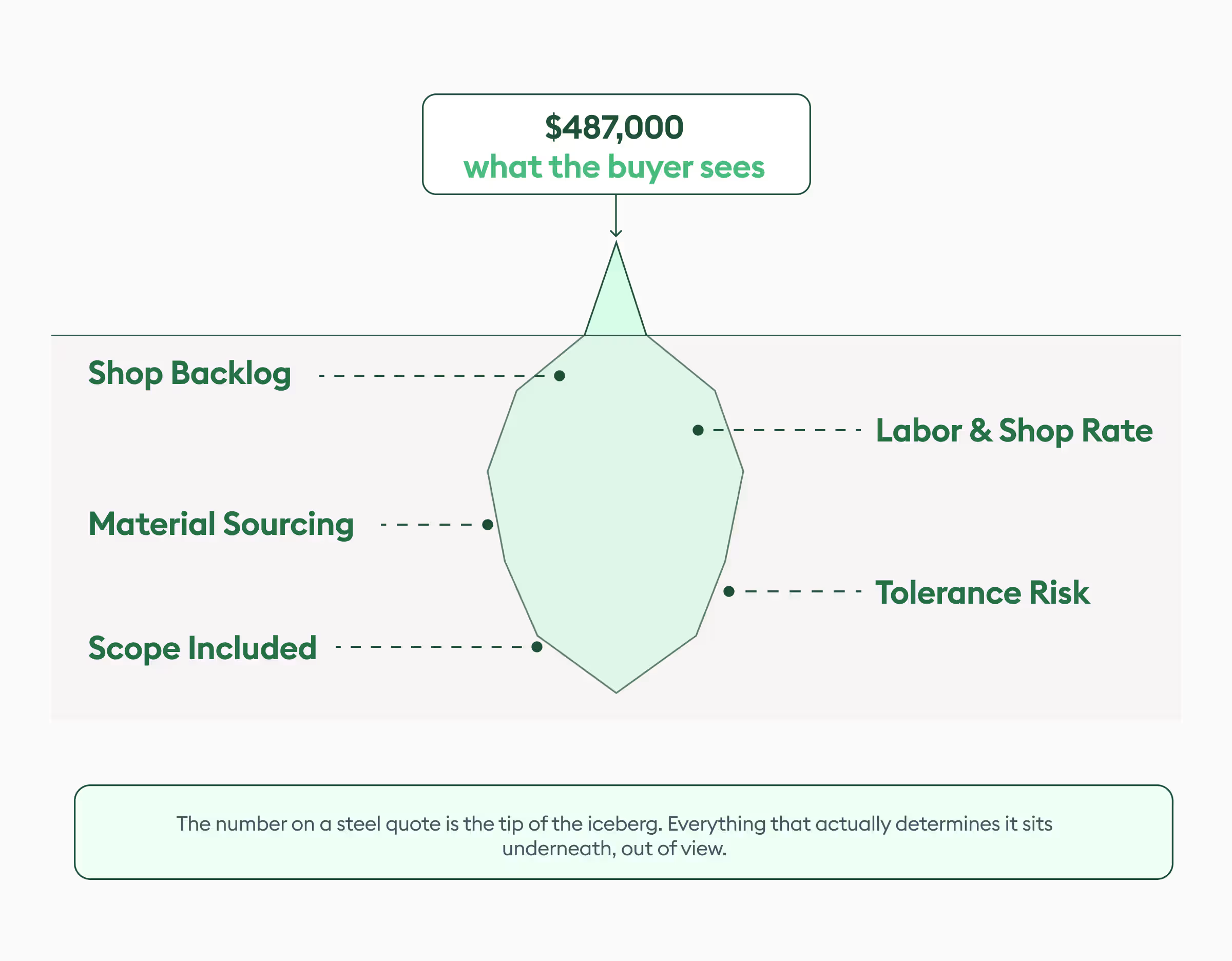
Here are the six variables that can make those numbers move.
Variable 1: Shop Capacity and Backlog
A shop sitting on a full backlog does not need another job, and its quote reflects that. A shop with idle bays and crews standing around does the opposite. Neither number is wrong; both are rational pricing decisions tied to where each shop happens to sit in its schedule the week the quote goes out.
- Full backlog: prices high, either to make the disruption worth it or to get passed over in favor of a shop with open capacity.
- Idle capacity: prices are low, sometimes close to breakeven, purely to keep crews and equipment working.
- Net effect: a meaningful spread is possible from backlog timing alone, with no difference in scope, material, or workmanship between the two shops. This is exactly why the same drawing set can generate wildly different numbers even from equally competent shops.
Variable 2: Labor Rates, Shop Rate, and Overhead
Shop rate is not a single industry number. It gets built from equipment debt, automation level, and the mix of skilled versus general labor on the floor, and it varies meaningfully between structural steel fabrication shops even in the same metro area.
- Automated shops: CNC beam lines and robotic welding cells carry higher equipment overhead but lower labor hours per ton.
- Manual shops: hand-run saws and manually welded connections carry the opposite ratio, having lower equipment overhead but more labor hours per ton.
- Both can turn out to be compliant work. Their shop rate, overhead allocation, and markup on that rate will not match, and that difference flows straight into the bottom-line number on the quote.
Variable 3: Material Sourcing: Mill vs. Service Center
Steel sourcing can move the price quite a bit before even a single connection gets designed. Buying directly from a mill versus buying through a service center changes raw material cost, minimum order quantities, and how fast material shows up on the shop floor.
- Raw material is a large but not dominant share of the number. As per the American Institute of Steel Construction, raw material typically makes up less than one-third of the total framing system cost, with fabrication and erection accounting for the majority of what's left.
- Mill pricing moves month to month. For steel mill products, the U.S. Bureau of Labor Statistics tracks this volatility directly: the index climbed from approximately 301 in October 2025 to close to 325 by February 2026. Such a swing is large enough to shift a quote by a considerable amount, depending on when a shop locked in its material pricing.
- Sourcing relationships matter. A shop with a locked-in service center relationship and a shop buying spot market from a mill can be working off different raw steel numbers entirely before a scrap surcharge on cut waste even enters the estimate.
Variable 4: Connection Design and Complexity
Tonnage looks like the easy part of a steel bid to compare side by side. It is also the part that misleads buyers the most, whether the package is a commercial building frame or industrial steel fabrication for a plant expansion.
- Connections drive cost far more than weight does. An article in AISC's own trade publication, Modern Steel Construction, walks through how two connections might weigh roughly the same and serve the same purpose, but the more complicated one of the two can cost much more. More complex connections take extra time to fit, weld, and inspect, so the labor adds up even when the steel weight barely changes.
- AISC's own cost breakdown backs this up. AISC's published cost guidance puts fabrication and erection, where connection labor lives, at around 70 percent of a steel package's total cost, with material making up less than a third.
- Connection type changes the labor number. A job with mostly standard shear tabs is priced very differently as compared to a job full of moment connections, even if both have the same tonnage. Moment connections simply take more welding, fitting, and inspection labor per piece.
- Bolted vs. welded changes three things at once. Whether a project leans on bolted connections or welded connections changes labor hours, inspection scope, and field erection time together, which is exactly why two shops reading the same connection details can land on very different labor numbers.
Variable 5: Tolerances, AISC Certification, and Quality Risk
Tight tolerances and strict inspection requirements can push prices to increase because they leave less room for error and raise scrap risk. It is not necessarily a shop padding its bid.
- Tighter tolerances mean slower, more careful work. Holding a tolerance tighter than standard shop practice means slower cutting, more fixturing, and more inspection time per piece.
- AISC certification signals a documented process. AISC's own certification program requirements confirm that a fabricator has the personnel, procedures, equipment, and commitment to error prevention rather than error correction, backed by a quality management system covering welding procedures and inspection records.
- Certified shops price the documentation cost in. Certified structural steel fabrication shops, from regional operations up to larger AISC-certified fabricators, generally build that documentation cost into their rate. A quote from a certified shop and a quote from an uncertified one are not pricing the same risk, even on paper-identical drawings.
Variable 6: Coatings, Galvanizing, and Erection Scope
Finishing and erection are two more places where "the same job" quietly stops being the same job.
- Coatings are priced differently shop to shop. Galvanizing versus a shop-applied coating system changes both material cost and lead time. Some shops price galvanizing as a pass-through to a third-party hot-dip shop; while others build a markup into it.
- Erection scope varies just as much. One quote may assume the fabricator's own crew handles erection from start to finish, also including crane time and field welding. Another may hand erection off completely and only quote shop fabrication.
- Both are legitimate, but they are not equal. Comparing them side by side without noticing the split is how a buyer ends up thinking one shop is dramatically cheaper when it has simply left out a phase of work.
Hidden Scope Differences: Shop Drawings, Detailing, and Exclusions
.avif)
The biggest scope gap on most steel quotes is invisible on the summary page. Steel detailing and shop drawings sit inside the fabrication and erection share of cost that, per AISC's own cost guidance referenced above, makes up the majority of a steel package's total price, which is exactly why leaving detailing out of a quote moves the number so much.
- Detailing time is expensive and inconsistent across quotes. Shop drawings and steel detailing are labor-intensive, and not every quote includes the same amount of detailer time.
- One number can include far more than another. A shop's quote may cover full detailing, engineering review, permitting support, and delivery to the site. A cheaper quote from another shop may list those same items as exclusions in a line most buyers skim past.
- Reading for scope, not just total, closes the gap. A structural steel takeoff done consistently across every bid is one of the few ways to catch a missing scope item before it becomes a change order.
The Real Cost Structure of Structural Steel
Source: American Institute of Steel Construction, Construction Costs.
These numbers explain why two steel fabricators can come back with drastically different quotes for the same package, even when their steel costs are pretty close. Since fabrication and erection make up the vast majority of the total, most of the spread between the two shops comes from labor, connection complexity, and scope, not from what either shop paid for steel.
Buyers who fixate on the per-ton headline number tend to miss this, since a lower per-ton price on a connection-heavy job is often a sign that something in the labor or inspection scope got underestimated, not that the shop found a better deal on steel.
How to Compare Steel Fabricator Quotes Apples-to-Apples
- Ask for a complete scope breakdown, not just a total cost. A quote should be able to reflect what's going toward material, labor, coatings, detailing, and erection so it’s clear where the money is actually going.
- Confirm connection type assumptions. Ask whether the quote assumes shear tabs, moment connections, or a mix, since that single variable moves the labor number more than tonnage does.
- Check the material sourcing basis. A quote priced off mill pricing weeks ago and one priced off this week's service center number are not the same starting point, especially with steel mill pricing moving as much as it has over the past several months.
- Ask directly about AISC certification. It is a fair, apples-to-apples way to compare the quality management system behind two numbers, not just the numbers themselves.
- Verify what "complete" means in each quote. Shop drawings, detailing, permitting, coatings, and delivery should each be confirmed as included or excluded, not assumed.
- Standardize the takeoff before you send the RFQ. Whether the RFQ is going to two steel fabricators or ten, ensure all of them receive the same documented tonnage and connection count from structural takeoff software, so the bids are based on the same quantities instead of each shop coming up with its own.
In Closing
A steel quote is really five decisions rolled into one number: how full the shop's schedule is, what its labor and equipment cost per hour, where its steel comes from, how much risk its tolerances carry, and how much of the job actually made it into scope.
None of that is obvious from the final price. That’s why the lowest and highest bids can both make sense and why the one in the middle isn’t necessarily the safest bet. Buyers who understand this stop asking, "Which quote is right?" and start asking, "What did each shop assume?" which is a much more useful question to bring to a bid-leveling meeting.
Picking the steel fabricator with the best story isn't the fix. What helps is standardizing the scope before the quotes come back. Start with a tonnage count and connection schedule pulled from structural takeoff software, instead of having five shops work out their own quantities from the same set of drawings. That way, every bid is based on the same scope, not five slightly different interpretations of it.
Structural estimating software that ties labor hours to actual connection types, rather than a flat per-ton average, gives buyers a way to ask sharper questions when a number comes in high or low.
Beam AI's structural steel takeoff workflow pulls tonnage, connection counts, and misc metals directly from uploaded drawings, so the quantities every shop is bidding against are the same ones the GC is holding.


.jpg)