





Why Accurate Commercial Snow Removal Estimating Matters
Estimation of commercial snow removal contracts is done by measuring the property, choosing the correct pricing model, calculating labour, equipment and de-icing costs and then factoring in the risk of snowfall and profit margins. The best estimates are a blend of detailed site measurements and historical weather data so you can keep your pricing competitive and protect your profitability throughout the winter season.
Winter contracts can be highly profitable but only when they're priced correctly. Meaning, if you bid too low, a heavy snowfall season wipes out your margins. Bid too high, and competitors win the work.
This is why contractors should know exactly how to estimate commercial snow removal contracts, compare pricing models, and build quotes that remain profitable regardless of weather conditions.
What Is Commercial Snow Removal?
Commercial snow removal refers to clearing snow and ice from business properties, including parking lots, office complexes, retail centers, industrial facilities, schools, healthcare campuses and multi-family developments.
Unlike residential work, commercial contracts often include strict service-level agreements (SLAs), response times, liability requirements, and ongoing site maintenance throughout the winter.
Common contract types include:
- Per-push contracts
- Per-event contracts
- Seasonal flat-rate agreements
- Per-inch pricing
- Time-and-materials billing
Each model distributes weather risk differently between the contractor and the customer.
What Pricing Models Are Used for Commercial Snow Removal?
Choosing the right pricing model is one of the biggest estimating decisions you'll make.
Many contractors offer multiple pricing options, allowing property managers to choose based on their budget and risk tolerance for snow removal takeoff services.
How Do You Estimate Commercial Snow Removal Step by Step?

Define the Scope of Work
The first step is to clarify precisely what services the contract covers. An example of commercial snow removal coverage can be parking lots, roadways, loading docks, sidewalks, building access, stairways, fire lanes and accessible walkways.
It will also be necessary to define if snow hauling, snow management, sidewalk salting, de-icing treatments, snow stacking areas, emergency call-outs with guaranteed response times is included in the scope. At the start of the season, if you document the scope clearly, it can help you avoid misunderstandings, unexpected costs and change orders later in the season.
Measure Every Surface
Labor, equipment, and materials are dependent on accurate site measurements which are the basis for any estimate. Determine plowing time, snow blower requirements, salt quantities, crew allocations and equipment routing for the total park area, drive lanes, sidewalks, loading areas, curb lines, and building entrances.
Estimates are quicker and more consistent across properties, as many contractors are now measuring properties from aerial images or digital site drawing plans, rather than visiting each location.
Select the Right Pricing Model
Once you understand the property's requirements, choose the pricing model that best fits the client and the level of weather risk. Consider your region's snowfall patterns, the customer's budgeting preferences, whether you're servicing a single property or multiple sites and how much weather risk you're willing to assume.
Seasonal pricing is often preferred by shopping centers, per-event contracts are common for industrial facilities, per-push pricing works well for office parks and many municipal contracts use tiered per-inch schedules.
Calculate Labour Costs
Labour is usually the largest expense in a commercial snow removal quote. Determine the number of plow operators, sidewalk crews, salt applicator teams, supervisors and emergency personnel needed for each event.
Your estimate should also account for payroll taxes, overtime, workers' compensation, insurance, travel time, mobilisation, and administrative overhead. Since snow removal often happens overnight or during holidays, premium pay rates should also be included in your calculations.
Calculate Equipment Costs
Next, estimate the operating cost of every piece of equipment required to service the property. This may include pickup trucks with plows, skid steers, wheel loaders, tractors, sidewalk machines, snow blowers, spreaders and salt brine systems.
Beyond ownership or lease costs, consider factors like fuel, maintenance, repairs, transportation, insurance and equipment depreciation. During severe winters, maintenance expenses often increase, so it's wise to build a contingency into your estimate.
Estimate Salt and De-Icing Materials
Profitability can be affected greatly by de-icing materials, particularly in winters with multiple freeze-thaw cycles. Determine the amount of rock salt, calcium chloride, magnesium chloride, mixtures of liquid brine and sand to be used for a specific property, pavement and storm severity and the temperatures of the area and the number of service demands.
However, due to seasonal changes in material prices, allowances need to be added to your bid for wastes and potential price increases.
Set Snow Accumulation Triggers
Most commercial contracts specify a minimum snowfall depth before service begins rather than requiring snow removal after every snowfall. Common trigger depths are one, two or three inches, with lower thresholds resulting in more frequent service and higher operating costs.
Clearly define the accumulation trigger, return visits during extended storms, ice-only service calls, refreeze conditions and post-storm cleanup responsibilities to minimise disputes and ensure both parties have clear expectations.
Assemble the Final Quote
Once all costs have been calculated, prepare a detailed proposal that outlines the property measurements, service schedule, accumulation trigger, pricing model, salt pricing, including equipment, response times, insurance coverage, contract duration and any exclusions.
A clear, well-organised quote gives clients confidence in your estimate, reduces pricing questions and establishes expectations before the first snowfall.
How Much Does Commercial Snow Removal Cost?
Actual pricing varies by region, snowfall, property size and service requirements. The following ranges reflect common North American market averages reported by industry sources.
Large industrial campuses or shopping centres often exceed these ranges because of acreage, staffing, and equipment requirements.
How Should You Price for an Unpredictable Winter?
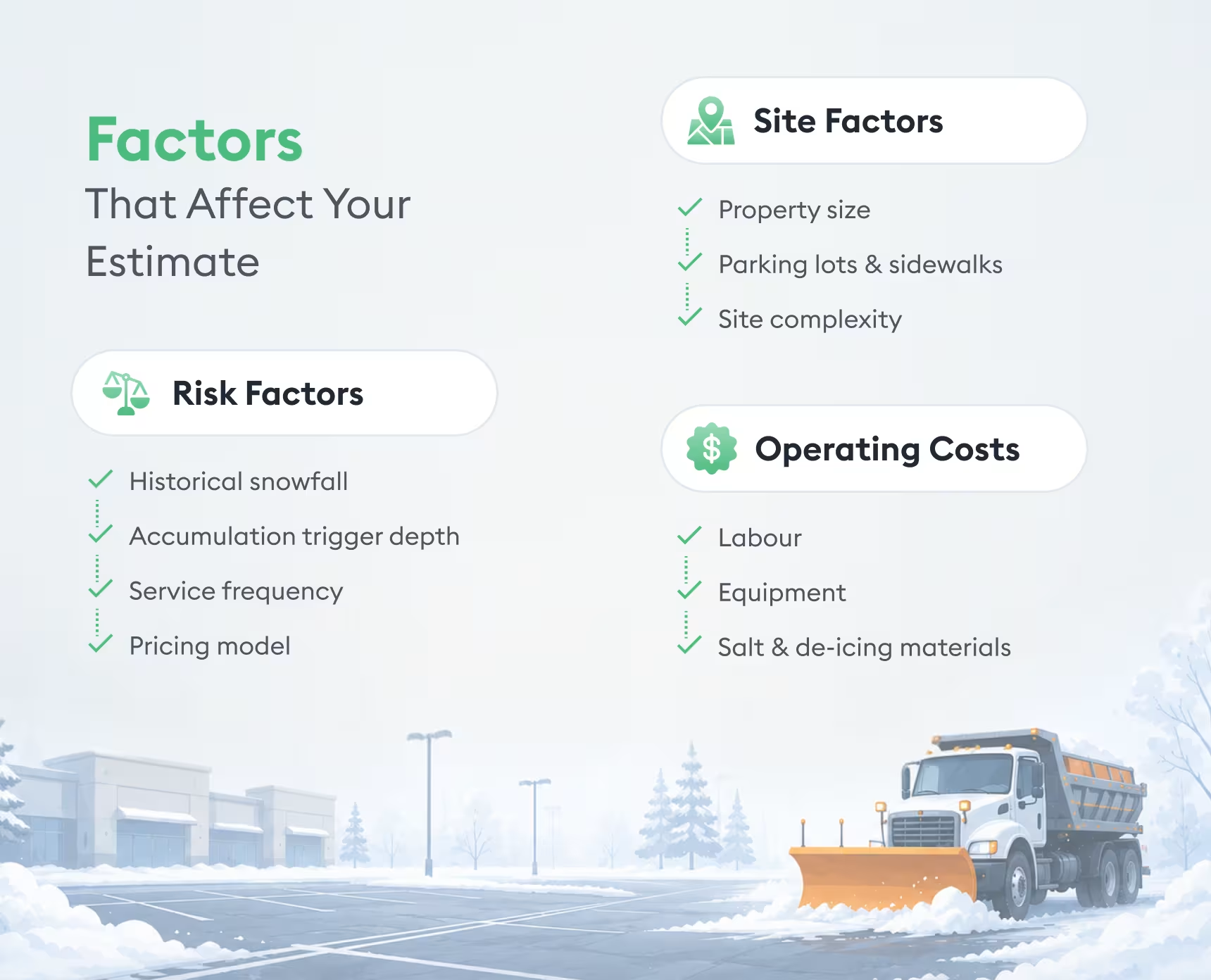
Weather uncertainty makes commercial snow removal takeoff & estimating different from almost any other construction service. A mild winter can generate healthy profit margins, while an unusually snowy season can quickly erode profits on poorly priced contracts.
Choosing the right pricing structure is essential for balancing competitiveness with long-term profitability:
Seasonal Contracts
Seasonal contracts provide predictable cash flow, simplify budgeting for customers and often encourage long-term relationships. However, they also place most of the weather risk on the contractor. If snowfall exceeds historical averages, labour, equipment, and material costs can increase significantly, reducing your margins.
Pre-event Contracts
Per-event contracts, however, limit the contractor’s exposure as revenue is scaled with each snow fall event. This pricing model is more accurate in relation to the work being done, but it makes budgeting less predictable for the customer and can lead to variable monthly revenue depending on weather conditions.
Hybrid Pricing
Many well-established contractors adhere to a hybrid pricing structure, with minimum pricing during certain seasons, and extra charges for overages of work performed, and per event charges for salt application and snow hauling. This strategy helps to even out the weather risk between both parties, and it helps to preserve profit margins. Before pricing any seasonal agreement, review historical snowfall data to ensure your estimate reflects realistic weather patterns.
How Do You Estimate Multiple Commercial Properties Efficiently?
Managing one property is straightforward but estimating twenty properties manually is another challenge entirely.
Consistency becomes essential when bidding:
- Retail chains
- Property management groups
- Municipal portfolios
- School districts
- Healthcare networks
Snow removal takeoff software such as Beam AI allows estimators to calculate areas, routes, sidewalks, and parking lots consistently across every property.
Instead of repeated manual measurements, many contractors now rely on aerial imagery and automated quantity calculations to standardise estimates before preparing proposals.
If you're focused on getting snow bids out early, our guide on quoting snow contracts before the season starts explains how faster pre-season estimating improves bid volume and response times.
Modern Snow removal estimating software also integrates aerial measurements, automated quantity extraction, and digital workflows that reduce repetitive measuring across large property portfolios while improving consistency.




.jpg)


.webp)

