

.jpg)

What Are Bollards?
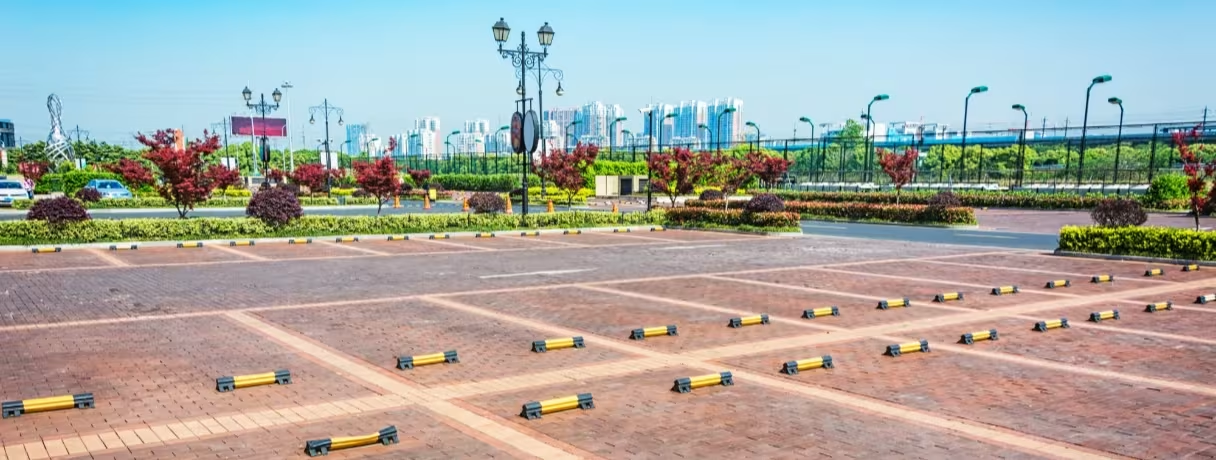
A bollard is a short vertical post installed to control or restrict vehicle movement. Depending on its design, it can also guide pedestrians, protect storefronts and building entrances, define pedestrian zones, or provide low-level lighting.
You’ll find bollards in places ranging from parking lots and sidewalks to airports, commercial buildings, public plazas, loading areas, and high-security facilities.
They can be simple steel posts embedded in concrete or sophisticated retractable systems that move into the ground when vehicles need to pass. Some are primarily decorative, while others are engineered to stop a moving vehicle.
And that distinction matters during estimating. Two items may both be called “bollards” on a plan, but their material, foundation, installation method, and cost can be very different.
CISA’s Vehicle Incident Prevention and Mitigation Security Guide recommends evaluating vehicle barriers based on site-specific risks and identifies permanent bollards as a passive barrier that can help inhibit vehicle intrusion and manage vehicle and pedestrian traffic. Its guidance also notes that crash-rated barriers should be appropriately sized, anchored, and reinforced for their intended application.
Types of Bollards
There are several ways to classify bollards, but the most useful approach for estimating is to look at how they function and how they are installed.
Fixed Bollards
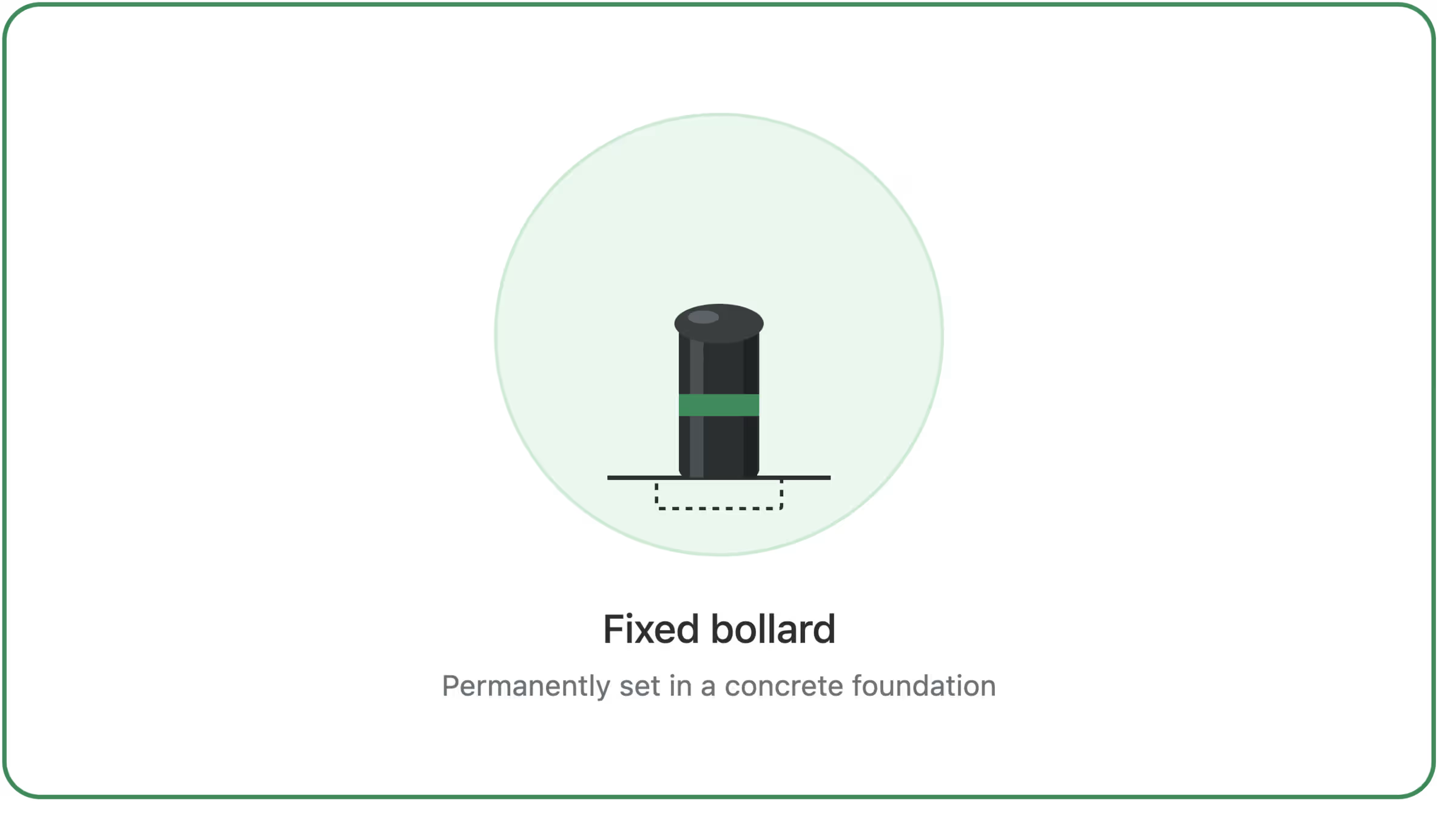
Fixed bollards are permanently installed and remain in place. They are commonly set into concrete foundations or attached to a structural surface using a base plate and anchors.
They are often used around storefronts, building entrances, parking areas, sidewalks, loading zones, and pedestrian spaces where vehicles need to be kept out permanently.
For estimating, fixed bollards usually involve more than counting the posts. The scope may also include excavation, concrete foundations, reinforcing steel, anchor hardware, backfill, surface restoration, and installation labor.
Removable Bollards
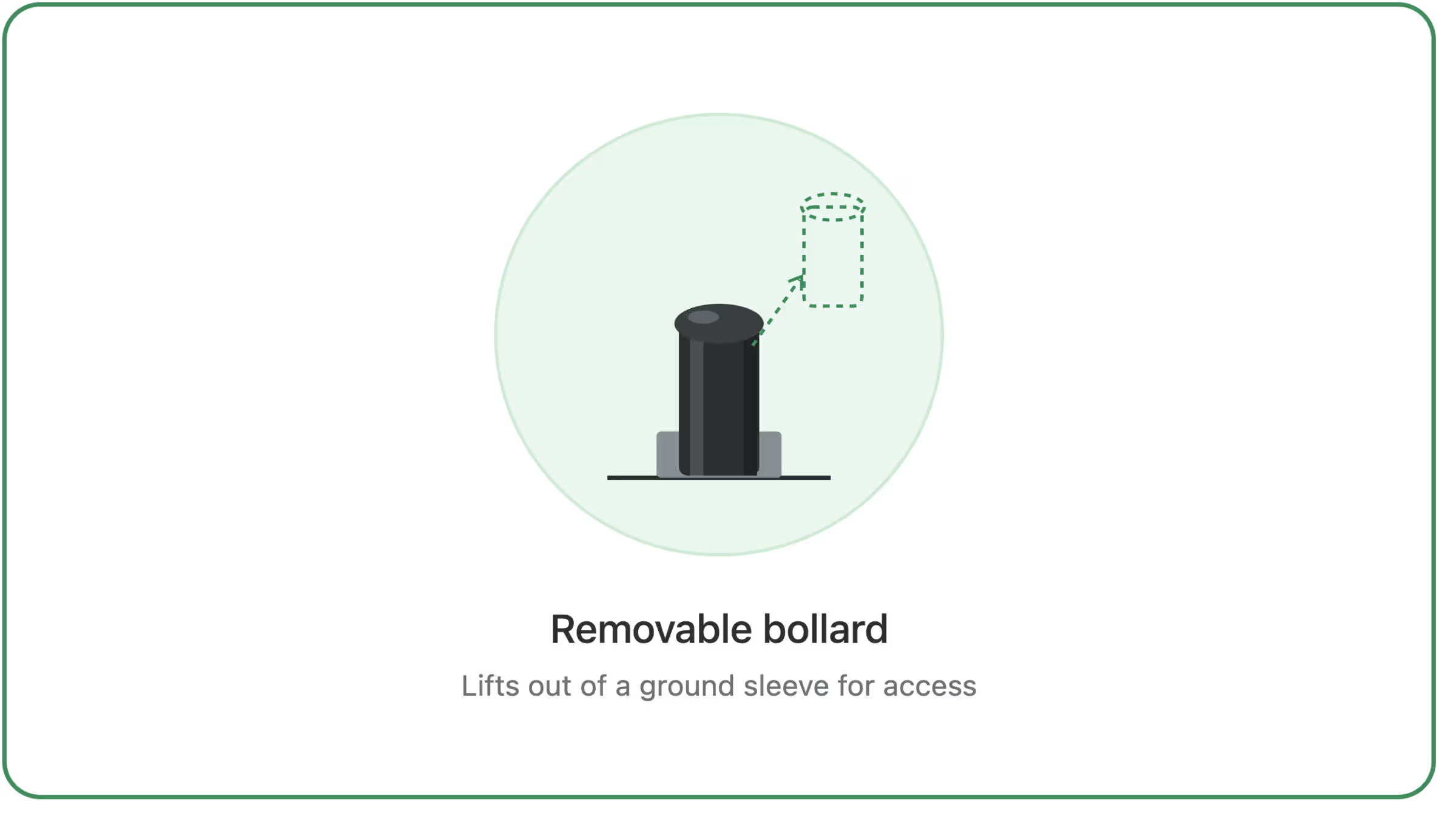
Removable bollards are installed into a ground sleeve or socket, and provide security while allowing authorized vehicles to access an area when required. When access is needed, the post can be unlocked and removed, leaving the opening available for vehicles.
They can work well at storefronts, pedestrian zones, service entrances, event spaces, and other locations where access requirements change throughout the day.
For an estimate, don't forget the sleeves, locking hardware, covers, and any additional foundation or pavement work required.
Retractable Bollards
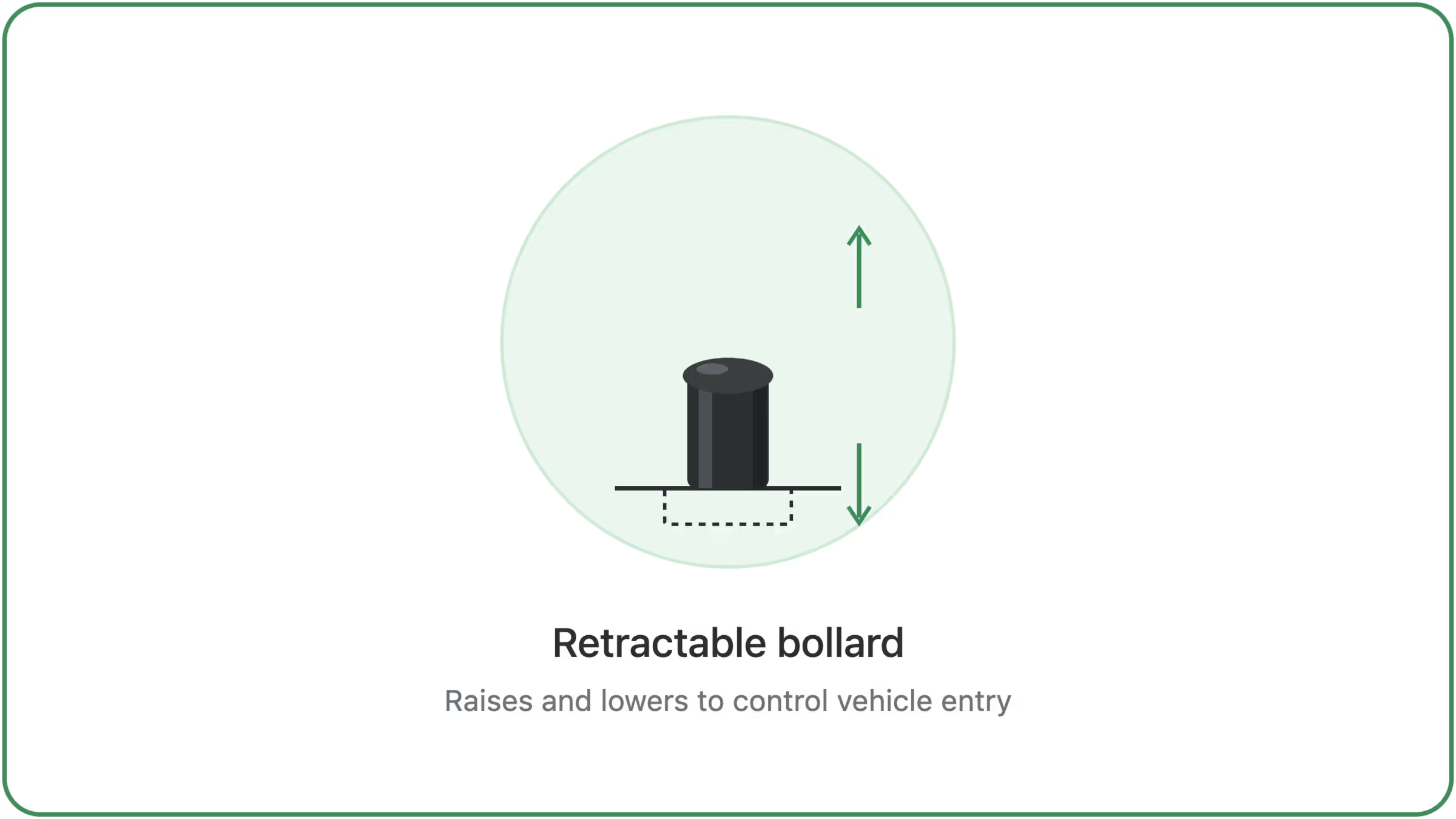
Retractable bollards are designed to move up and down depending on whether vehicle access is permitted, making them useful at controlled entrances. They can be manually operated, but automated versions make use of hydraulic, pneumatic, or electric systems.
Typical applications include:
- Building entrances
- Parking garages
- Government facilities
- Restricted-access roads
- Loading and service areas
- High-security sites
Retractable bollards generally have a more involved installation than fixed bollards. In addition to the bollard and foundation, the estimate may need to account for electrical connections, control systems, drainage, hydraulic equipment, conduits, sensors, and commissioning.
Crash-Rated Bollards
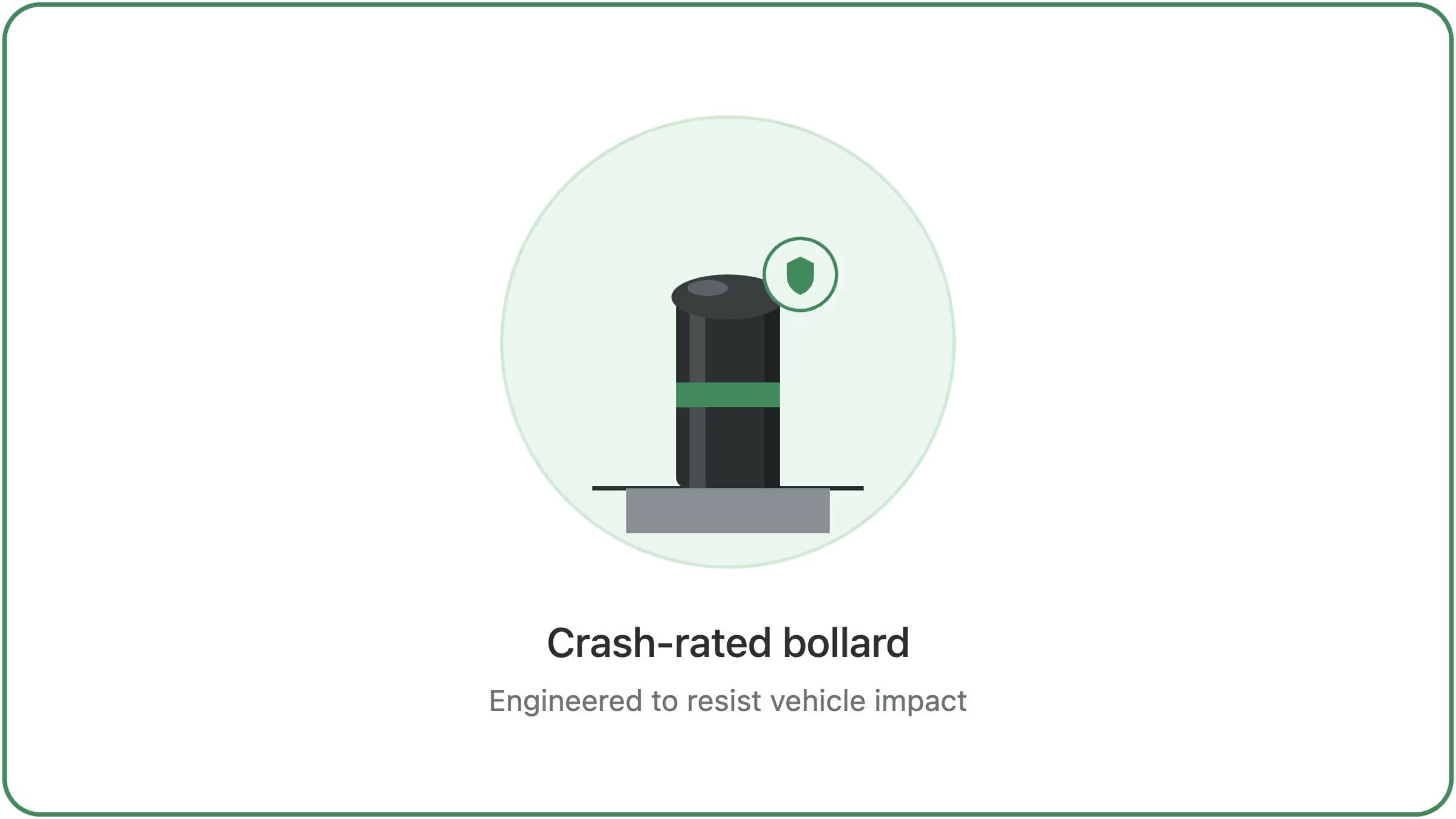
Crash-rated bollards are engineered and tested to resist vehicle impacts under defined conditions.
They're mostly used where the project requires more than basic access control or parking deterrence. Applications can include government facilities, critical infrastructure, public gathering spaces, commercial buildings, and other areas where vehicle impact is a specific concern.
ASTM F2656/F2656M provides a standardized method for crash testing vehicle security barriers and establishing a penetration rating based on a specified impact scenario. And more importantly, ASTM notes that the test rating doesn't automatically mean that the barrier will perform identically under every site condition. Approach routes, terrain, soil conditions, and other factors can affect performance.
That means an estimator shouldn't treat “crash-rated” as a standalone specification. The estimate needs to follow the actual product, test configuration, foundation requirements, and project specification.
Decorative and Architectural Bollards

Not every bollard is installed for security. Architectural bollards can define pedestrian areas, separate vehicles from landscaping, protect building features, or even enhance a site's appearance.
They may be made from steel, stainless steel, aluminum, concrete, cast iron, or other materials. Some are also illuminated and function as both site furnishings and lighting elements.
For these bollards, the estimate may focus more heavily on finish, material, mounting method, lighting components, electrical connections, and site coordination than on vehicle-impact performance.
Where Are Bollards Used?
Bollards show up across many types of construction projects because they solve several different problems.
1. Pedestrian Protection - Bollards can create a physical separation between pedestrians and vehicles. They are commonly installed along sidewalks, storefronts, entrances, plazas, and pedestrian-only areas.
2. Vehicle and Parking Control - Fixed or removable bollards can prevent vehicles from parking in restricted areas, entering pedestrian zones, or getting too close to buildings. They can also be used around loading docks, utility equipment, landscape areas, and other areas vulnerable to accidental vehicle contact.
3. Building and Property Protection - Bollards can provide protection to the vulnerable parts of a building from accidental or unauthorized vehicle contact. Common locations include entrances, garage doors, glass storefronts, corners of buildings, fuel pumps, utility equipment, and service areas.
4. Security and Perimeter Protection - Security bollards can form part of a larger perimeter protection strategy. In higher-security applications, the bollards may be combined with gates, fencing, access-control systems, cameras, and other barriers.
5. Public Spaces and Event Venues - Bollards are also used around stadiums, public plazas, event venues, and busy pedestrian areas. They can help separate vehicle routes from pedestrian spaces while still allowing controlled access when needed.
6. Lighting and Wayfinding - Illuminated bollards can provide low-level lighting along walkways, entrances, parking areas, and landscaped paths. In these applications, they serve both a functional lighting role and a site-design purpose.
7. Industrial and Commercial Sites - Warehouses, manufacturing facilities, distribution centers, and commercial properties may use bollards to protect loading areas, dock doors, machinery, storage areas, and other equipment from vehicle impact.
What are Bollards Usually Made Of?
Material choice affects cost, durability, and appearance, and it's a factor across nearly every bollard type covered above, not just decorative ones.
Steel: The most common material for fixed, removable, and crash-rated bollards. Steel offers strong impact resistance at a relatively moderate cost, which is why it shows up in most security and traffic-control applications. It typically requires a protective coating, such as powder coating or galvanizing, to resist corrosion, especially in exterior or coastal environments.
Stainless steel: Used where appearance and corrosion resistance matter more than minimizing cost, like building entrances, retail storefronts, and public plazas, for example. Stainless steel costs more than standard steel but doesn't need the same ongoing coating maintenance, which can offset some of the difference over the life of the installation.
Aluminum: A lighter material, typically used for decorative or lower-load applications, where impact resistance of vehicles is not a main consideration. Aluminum has good corrosion resistance and is easier to install, but it is normally not specified when crash resistance is required.
Concrete: Common for fixed, non-crash-rated bollards, particularly in parking lots and lower-security applications. Concrete bollards are relatively inexpensive and durable, though they're heavier to install and offer less design flexibility than steel or aluminum.
Cast iron: Can sometimes be used for decorative and historic style bollards where the look is a desired feature of the design. Cast iron is a more brittle material than steel, and is not as widely used in new security installations.
Polyurethane: Normally reserved for flexible or bendable bollards used in areas with low-speed traffic, like parking lots, drive-thru lanes, and bike lanes. Polyurethane bollards can absorb minor impacts and spring back into shape rather than deforming or breaking, which reduces damage and replacement cost in high-contact areas. Additionally, they're an affordable option for marking boundaries and guiding traffic where the main risk is low-speed contact.
Finishes: In addition to the base material, the finish also influences cost and maintenance. Powder coating offers a long-lasting and customizable color finish, and is used on steel and aluminum bollards. Galvanizing provides a good level of corrosion protection and is frequently applied as an undercoat layer under powder coating for exterior finishes. Some bollards also have reflective bands, decorative caps, or lighting embedded in the structure, further increasing the expense and complexity of their installation.
How Much Space Should You Leave Between Bollards?
There isn't one universal bollard spacing requirement. The right spacing depends on what the bollards are supposed to accomplish, who needs to pass through them, the bollards' dimensions, local accessibility requirements, and, when applicable, the manufacturer's tested configuration.
As a general planning range, bollard layouts commonly fall somewhere around 3 to 5 feet apart, but this should not be treated as a universal specification.
For pedestrian routes, the clear opening, not simply the center-to-center distance, is important. A larger bollard diameter reduces the actual space available between two posts.
For crash-rated systems, spacing can be even more specific. The tested array and manufacturer's installation instructions may define the allowable center-to-center spacing. Changing that configuration can affect whether the installed system matches the tested design.
So, when estimating bollard spacing:
1. Check the plan dimensions.
2. Identify the required clear pedestrian path.
3. Check local accessibility requirements.
4. Confirm the required vehicle-exclusion width.
5. Review the manufacturer's installation requirements.
6. For crash-rated products, use the certified configuration rather than a generic spacing rule.
The goal is to avoid 2 recurring problems: leaving enough space for an unwanted vehicle to pass or placing bollards so close together that they interfere with legitimate pedestrian movement.
How to Estimate Bollards
Once the bollard type and layout are understood, the takeoff itself is relatively straightforward. The challenge, then, is capturing the complete scope rather than counting only the posts.
Step 1: Review the Site and Architectural Plans
Start with site plans, architectural drawings, civil drawings, landscape plans, details, and specifications. Look for:
- Bollard locations
- Bollard type and model
- Height and diameter
- Finish
- Spacing
- Mounting method
- Foundation details
- Removable sleeves
- Access-control requirements
- Electrical requirements
- Crash-rating requirements
Don't rely on a single drawing. Bollards may appear on the site plan but have their actual foundation or mounting details shown elsewhere.
Step 2: Count the Bollards
Count the bollards by type rather than treating everything as one item. For example:
If different finishes, diameters, heights, or ratings are specified, break them into separate line items.
Step 3: Measure the Associated Work
The bollard itself is only one part of the takeoff. Depending on the installation, measure or quantify:
- Concrete foundations
- Reinforcing steel
- Excavation
- Backfill
- Anchor bolts
- Base plates
- Ground sleeves
- Drainage
- Electrical conduit
- Wiring
- Control equipment
- Hydraulic components
- Pavement or concrete restoration
For linear work around a perimeter, the overall run can also be measured in linear feet.
Step 4: Apply Unit Costs
Once quantities are established, apply the appropriate unit costs.
A basic estimate can be structured as:
Bollard installation cost = Material + Labor + Equipment + Foundation + Site work + Electrical/Controls + Other indirect costs
Material costs may include the bollard, sleeve, finish, anchors, caps, hardware, and associated components.
Labor depends on the installation method. A simple surface-mounted bollard will typically involve a different installation process than a deep-embedded or automated retractable bollard.
Equipment can include saws, drills, excavation equipment, lifting equipment, compactors, or traffic-control equipment depending on the site.
Step 5: Account for Site Conditions
Site conditions can have a surprisingly large effect on the estimate. For example, installing bollards in new construction with open site access is very different from cutting into an existing concrete sidewalk in a busy commercial area.
Check for:
- Existing concrete or asphalt
- Underground utilities
- Restricted access
- Traffic management
- Demolition
- Excavation limitations
- Difficult soil conditions
- Drainage requirements
- Existing landscaping
- Working-hour restrictions
All of the above factors can affect both labor and equipment costs.
Step 6: Review the Estimate
Finally, compare the takeoff against the drawings and specifications.
Make sure every bollard shown on the plans is accounted for and that the estimate includes the supporting work required to install it.
This is also where revision control matters. If an addendum changes the number, type, spacing, or location of bollards, the takeoff needs to be updated before the bid goes out.
For more on building a reliable estimate after the takeoff, our article on proven strategies to improve cost estimates can prove helpful.
An Example of Estimating a Fixed Bollard Line
Suppose a project shows 20 fixed steel bollards around a storefront. The estimate might include:
- 20 steel bollards
- 20 concrete foundations
- 20 anchor assemblies, if surface-mounted
- Excavation for foundations
- Reinforcing steel where specified
- Concrete
- Backfill
- Installation labor
- Equipment
- Pavement restoration
- Traffic control, if required
The first quantity is simple: 20 EA bollards.
But the complete estimate depends on the installation detail. If each bollard requires an individual concrete footing, the estimator needs to quantify the footing volume and reinforcement rather than applying a bollard-only unit price.
This is why a good bollard takeoff starts with the drawings and details, not a catalog price.
Final Thoughts
At first glance, bollards can seem like an afterthought on a site plan — a handful of small circles scattered around a building. But as this article shows, that impression doesn't hold up once you start estimating them. A fixed decorative bollard, a removable security bollard, and a crash-rated retractable bollard may all look nearly identical on paper, yet each carries a different foundation, installation method, and cost.
Getting the estimate right comes down to the same discipline as any other scope: understand what each bollard is actually doing on the project, confirm how it's installed, verify spacing against pedestrian and vehicle requirements, and price the full assembly — not just the post. Skipping any of these steps is usually where bollard estimates go wrong, whether that means missing a foundation detail buried in a separate drawing or treating a crash-rated product as a generic line item.
Construction takeoff software, especially AI-assisted tools that can read plans, notes, and specifications together, can take over much of the repetitive counting and measuring. But the judgment calls — matching the right product to the site's risk level, catching addenda that change quantities, and pricing site conditions accurately — still rest with the estimator. Used well, automation frees up that time rather than replacing the need for it, so the final bid reflects what's actually required to get the bollards in the ground and working as intended.