



What should determine the best HVAC estimating software
The best HVAC estimating software depends on how you build and price HVAC jobs. Residential service contractors may prioritize mobile estimates, flat-rate pricing and customer proposals, while commercial
Generally, HVAC contractors often need drawing-based takeoffs, equipment schedules, ductwork quantities and detailed material estimates. In 2026, AI is changing how contractors handle takeoffs by automating quantity extraction from plans and reducing the manual work involved in building bids.
Quick Comparison: Best HVAC Estimating Software in 2026
Beam AI: Best for AI-based HVAC Takeoffs & Estimating
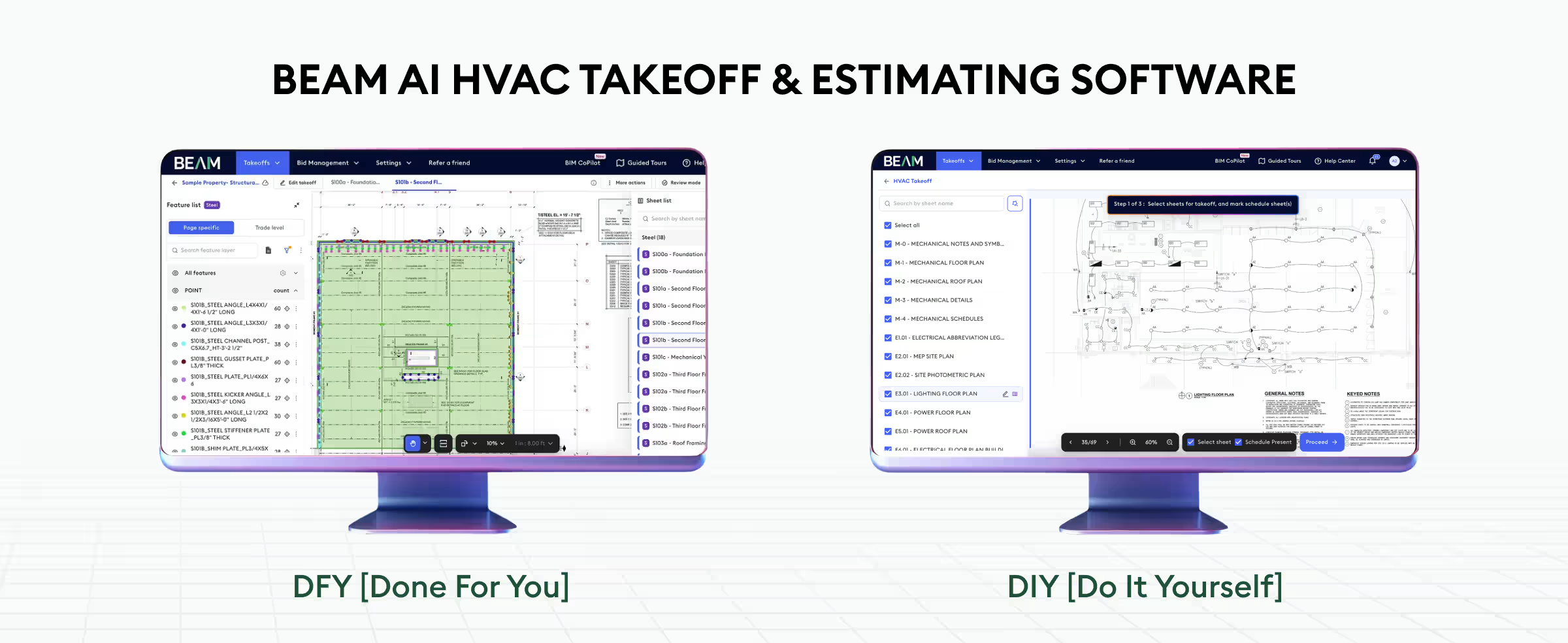
Best for: HVAC and mechanical contractors who estimate from PDF construction drawings and want to automate quantity takeoffs.
Beam AI takes a different approach to HVAC estimating. Instead of focusing primarily on service calls and customer proposals, it uses AI to automate the material takeoff process that happens before an estimate is built.
Upload your HVAC, mechanical, or MEP drawings, and Beam AI can identify and quantify ductwork, equipment, fittings, piping, air terminals, and other components. It can also read specifications and equipment schedules to organize the quantities you need for estimating, so you can review the takeoff and move the results into your existing estimating workflow.
This makes it particularly useful for contractors handling commercial projects where an estimator may spend hours measuring drawings by hand.
The workflow also fits contractors looking for AI construction takeoff software, AI quantity takeoff, or AI blueprint takeoff capabilities. Instead of manually measuring every run and counting every piece of equipment, AI handles the initial quantity extraction.
Additionally, Beam AI supports both fully managed takeoffs for 15+ trades such as plumbing, steel, civil, concrete, earthwork, flooring, roofing, painting, etc., and instant AI takeoffs for select trades, depending on the workflow a contractor needs.
Key features:
- 99%+ accurate, QA-checked HVAC & mechanical outputs in 24-72 hours
- Instant takeoffs for faster budgeting & estimating
- AI extraction of ductwork, equipment, fittings and piping quantities
- PDF drawing and blueprint takeoff
- Quantities organized for estimating workflows
- Support for multiple construction trades
The trade-off: Beam AI is primarily focused on construction takeoffs and estimating rather than replacing a full HVAC field-service management system or estimator. Contractors looking mainly for dispatching, maintenance agreements or residential service CRM features may need another system alongside it.
QuoteIQ: Best for Fast AI-Driven Estimates
Best for: Residential and light-commercial HVAC contractors that need to create estimates quickly from field information.
QuoteIQ has positioned its HVAC software around speed, AI-assisted estimating, customer proposals, and field-service management. Its 2026 HVAC offering includes an AI Estimator that can generate line-item pricing from photos and job descriptions, alongside tools for scheduling, invoicing, pricebooks, and customer management.
For a technician working at a customer's property, this type of workflow can reduce the amount of information that needs to be entered manually before presenting an estimate.
QuoteIQ is also aimed at contractors who want estimating and field-service functions in the same system. Its AI Estimator is particularly relevant to replacement and service work where technicians can provide photos or descriptions of existing equipment and site conditions.
Key features:
- AI-assisted estimates from photos and descriptions
- HVAC pricebook functionality
- Customer proposals
- Scheduling and invoicing
- Field-service management
- Options for presenting different estimates
The trade-off: Its workflow is more focused on service and replacement estimating than detailed commercial plan takeoffs. If your estimating process starts with hundreds of PDF sheets and requires detailed duct, equipment, and piping quantities, an automated takeoff tool such as Beam AI may fit that workflow more closely.
ServiceTitan: Best for Large Residential HVAC Operations
Best for: Established HVAC companies with larger technician teams and extensive residential service operations.
ServiceTitan combines HVAC estimating with a broader field-service management system. Its pricebook tools allow contractors to organize services and equipment, update pricing, and create estimates from standardized items while also supporting multiple proposal options and flat-rate pricing.
For contractors that sell equipment replacements directly to homeowners, standardized pricing can help technicians build estimates without starting from scratch. ServiceTitan also supports Good-Better-Best proposals, allowing contractors to present multiple equipment or service options to customers.
Its estimating functionality sits within a much broader operational system covering dispatch, customer management, invoicing, and other field-service processes.
Key features:
- HVAC pricebook management
- Flat-rate pricing
- Mobile estimates and proposals
- Good-Better-Best proposals
- Customer and service management
- Broader field-service workflows
The trade-off: ServiceTitan offers a broad set of field-service and business management features, which may be more than you need if you're primarily looking for estimating software. It makes more sense for contractors who want estimating to connect with dispatching, customer management, invoicing, and other day-to-day operations.
Housecall Pro: Best for Small and Growing HVAC Teams
Best for: Small HVAC companies that want straightforward estimating, scheduling, invoicing, and customer communication.
Housecall Pro focuses on simplifying the workflow from estimate to completed job. Its HVAC software includes estimates, flat-rate pricing, scheduling, dispatching, customer management, QuickBooks integration and other field-service functions.
Here, contractors can create detailed estimates and send them to customers by email or text for approval. Its flat-rate pricing tools can also factor labor, material, and overhead costs into service pricing.
This makes Housecall Pro useful for smaller HVAC operations where the person preparing an estimate may also handle scheduling, customer communication, and invoicing.
Key features:
- Mobile HVAC estimates
- Flat-rate pricing
- Customer proposals
- Scheduling and dispatching
- Invoicing
- QuickBooks integration
- Customer communication tools
The trade-off: Housecall Pro is better suited to service and replacement workflows than detailed commercial construction takeoffs. Contractors who need automatic takeoff from PDF drawings or AI drawing measurement will likely need dedicated AI-based takeoff & estimating software.
BuildOps: Best for Commercial HVAC Contractors
Best for: Commercial HVAC and mechanical contractors managing complex projects, multiple crews and connected estimating and operations workflows.
BuildOps is designed around commercial contracting rather than primarily residential service. Its HVAC offering connects estimating and quoting with job costing, scheduling, dispatch, invoicing, and other operational functions.
For commercial HVAC contractors, this broader workflow can be useful when estimates need to flow into project execution. BuildOps also highlights tools for tracking job costs and material and labor calculations as part of the estimating process.
Key features:
- Commercial HVAC estimating
- Job costing
- Labor and material calculations
- Proposal creation
- Scheduling and dispatch
- Project and financial workflows
- Integration with accounting systems
The trade-off: BuildOps is designed for broader commercial operations, so contractors looking specifically for construction takeoff automation may want a dedicated AI takeoff solution alongside or instead of a full operational system.
Choosing the Best HVAC Estimating Software
Before choosing a tool, look at where your estimating time actually goes.
If your team spends most of its time measuring HVAC drawings, look for automated takeoff software that can read PDFs, identify HVAC components, and produce organized quantities.
If your technicians create estimates at residential properties, prioritize mobile estimating, flat-rate pricing, customer proposals and pricebook management.
For commercial contractors, consider whether the software supports:
- PDF and blueprint takeoffs
- Ductwork and piping measurements
- Equipment schedules
- Material quantity extraction
- Labor and material pricing
- Job costing
- Proposal generation
- Integration with your existing estimating workflow
This distinction is becoming more important as AI estimating software for contractors moves beyond simple proposal generation. Technologies such as machine learning construction estimating and AI drawing measurement can automate parts of the estimating process that previously required an estimator to manually review and measure drawings.
For example, an AI-based workflow can identify HVAC quantities from construction plans before those quantities are transferred into an estimate that can reduce repetitive measurement work while giving estimators more time to review scope, validate quantities, apply pricing, and finalize the bid.
For an HVAC estimating software comparison, I’d adapt the methodology around estimating accuracy, takeoff capabilities, usability, pricing, and customer feedback:
How We Picked the Top 5
We evaluated HVAC estimating software based on the features and workflows that matter most to contractors when preparing estimates and bids and looked beyond feature lists to consider how each tool supports takeoffs, estimating, project workflows and day-to-day usability.
Our evaluation focused on five criteria:
- Estimating and takeoff capabilities. We looked at how well each software supports HVAC estimating, including quantity takeoffs, plan-based estimating, measurements, material and labor costs, and estimate generation.
- Accuracy and quality control. We considered how each tool handles estimate accuracy, review processes, and quality checks. For AI-based solutions, we also looked at whether outputs can be reviewed and adjusted before they are used for bidding.
- Ease of use. HVAC estimators need to work through drawings and estimates without a steep learning curve. We considered interface usability, workflow simplicity, customization and how easily contractors can get started.
- Pricing and overall value. We compared available pricing information, pricing models, included features, and the level of investment required. When vendors do not publish pricing, we noted that as part of the comparison.
- Customer reviews and support. We reviewed feedback from customers across platforms such as Capterra and Software Advice to understand common user experiences, strengths, limitations and support quality.
Final Thoughts
The best HVAC estimating software depends on whether your business primarily handles construction takeoffs, residential service or commercial HVAC projects.
Beam AI is designed for contractors who want to automate HVAC and mechanical quantity takeoffs from construction drawings. QuoteIQ focuses on fast AI-assisted service estimates while ServiceTitan and Housecall Pro combine estimating with broader residential field-service workflows. Finally, BuildOps is geared toward commercial contractors that need estimating connected to project and operational management.
For HVAC contractors looking to reduce manual drawing measurement, the biggest shift in 2026 is the move toward automated quantity takeoff. Instead of replacing the estimator, AI can handle repetitive measurement and quantity extraction while the estimator remains responsible for reviewing scope, validating results, applying costs and producing the final bid.