



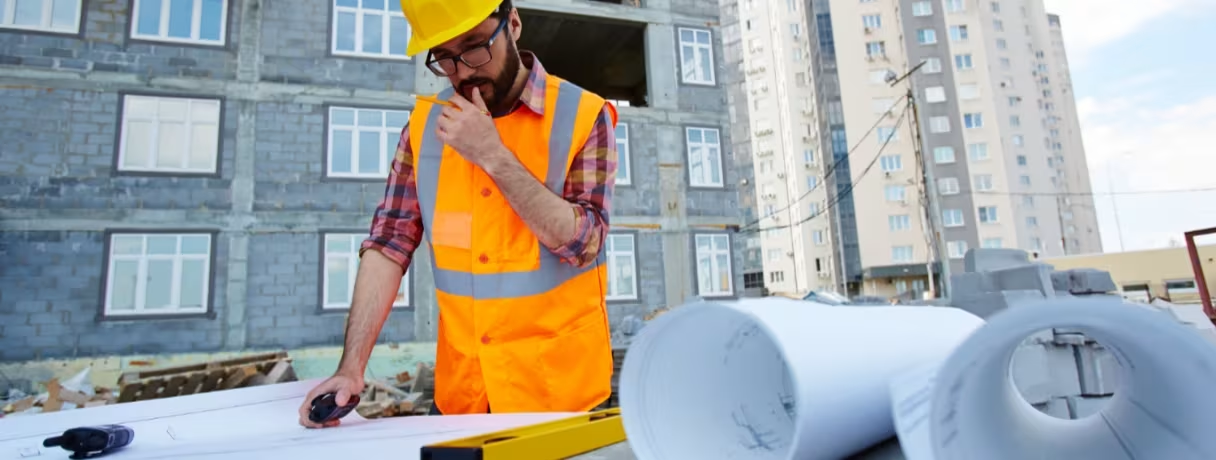
Walk onto a large construction site, and you'll see thousands of dollars' worth of equipment moving around: Excavators, total stations, drones, and even laser levels.
But ask a project manager which tool saves them the most headaches, and they probably won't point to a machine. They'll point to whatever helps them avoid mistakes.
Because on big jobs, mistakes get expensive fast.
A missed utility line can stop work for days. An outdated drawing can send a crew to the wrong area. A quantity error during estimating can suddenly turn into a budget problem.
That's why today's most valuable contractor tools aren't in the field. Some of them are back in the office long before the project starts. Take estimating, for example.
Most contractors have lived through the pain of discovering that a number in the bid didn't match what the job actually required. Nobody forgets that lesson. That's one reason more teams are adopting general contractor estimating software. The goal isn't to replace estimators. It's to catch problems while they're still cheap to fix.
The same shift is happening with takeoffs. Instead of spending days manually measuring drawings, contractors are finding faster ways to obtain accurate quantities and move on to the decisions that actually require experience. Curious about where that trend is headed, this guide on AI takeoff software for contractors is worth a read.
What's interesting is that the "must-have" tools keep changing.
Twenty years ago, a surveyor's scale was non-negotiable. Today, many estimators rarely touch one. Twenty years from now, the tools will look different again.
What won't change is the reason contractors use them in the first place: fewer surprises, fewer mistakes, and a better shot at protecting profit when the job is finally complete.




.jpg)