


.jpg)

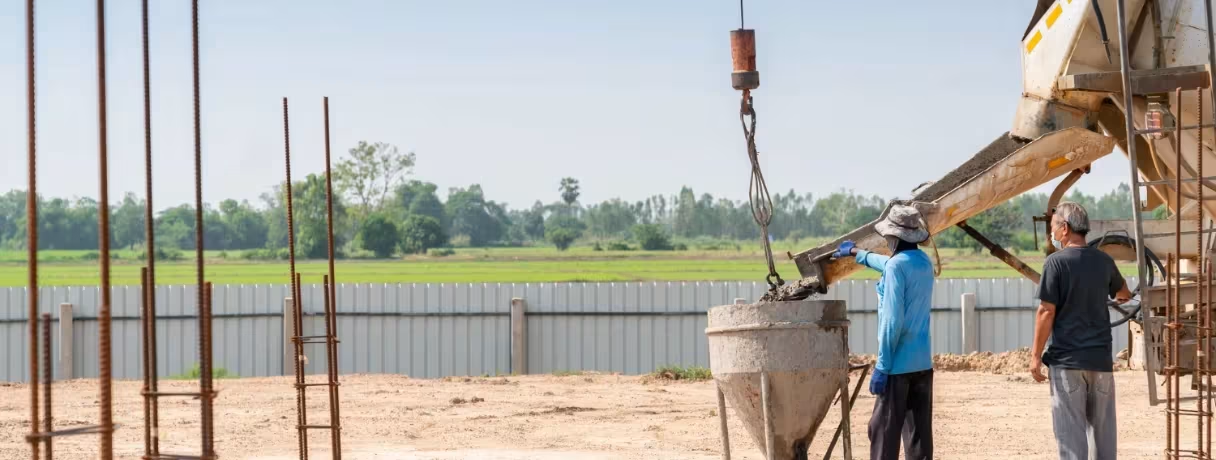
One cubic metre is a significant number when dealing with earthwork. If there’s even a small error in volume calculations, it’ll affect excavation costs, hauling requirements, equipment utilisation, and even project schedules.
Still, many estimators spend hours measuring the grading plans, checking contours, and verifying quantities by hand. And no, the real challenge isn't calculating the earthwork volume manually; it's calculating it quickly and accurately enough to meet today's bid deadlines.
Manual takeoffs have long been the standard for estimating excavation and fill quantities, but they’re also one of the biggest bottlenecks. Each revision means going back to the drawings, checking measurements again, and recalculating volumes. This makes for hours of extra work and also increases the risk of missing changes. When several stakeholders are working under tight submission deadlines, even a minor delay in updating quantities can cause a slowdown in the estimating process.
The complexity of earthwork only adds to the challenge. Estimators have to account for grading plans, cut-and-fill balances, slopes, existing ground conditions, and design revisions, all while making sure the final quantities remain accurate. One factor that quietly shifts that balance is the organic surface layer — here's what topsoil stripping adds to an earthwork estimate, from separate excavation volume to haul-off and imported fill. Doing all this by hand for several project versions takes a lot of time and makes it tough to keep results consistent.
Today, automated takeoff software makes earthwork volume calculations faster and more reliable. You can use it to automate much of the process, like generating accurate cut-and-fill quantities in a matter of hours, with simplified addenda handling, and then creating an estimate based on those outputs within the same platform. What this does is reduce the manual effort while helping teams maintain greater consistency across estimates.
And the best benefit isn't just saving time. Faster earthwork calculations let estimators validate their assumptions, build better client relations, review material balances, and spot potential risks before submitting a bid. So when previously teams used to rush to complete measurements, they can now focus on making better-informed decisions that improve bid quality and profitability. And with the extra time available, they can also pursue additional bid opportunities without compromising accuracy.
Because the goal isn't just to work out the volumes. It's to make earthwork estimating a more quick and repeatable process that helps estimators bid more work, respond to changes quicker, and deliver more competitive bids.




.webp)
