

.png)

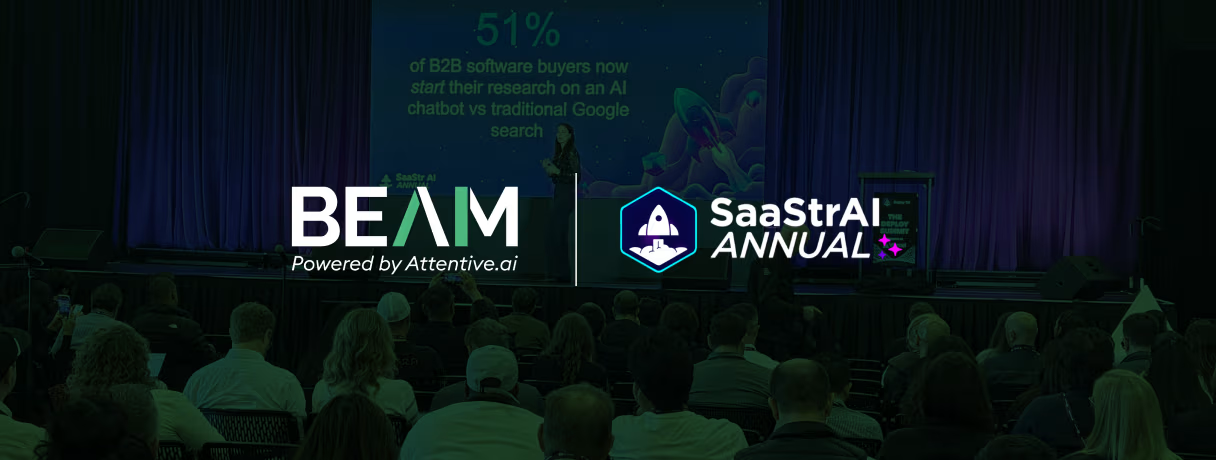
What SaaStr Annual 2026 taught us about building AI that actually works
SaaStr Annual has always been a place where the SaaS world gets very honest about what is working, what is changing, and what teams need to rethink next. This year, the conversation was impossible to miss. AI was everywhere, but not in the shallow “we added AI” way that's easy to tune out.
The more interesting conversations were about operations. How should a company actually run when AI becomes available across every team? What changes in sales, support, RevOps, marketing, customer success, product, and leadership? And how do you ensure AI does not become another disconnected tool within an already crowded SaaS platform stack?
That is where SaaStr Annual 2026 felt different. The event was not just about AI as a product story. It was about AI as a business system.
For Beam AI, that message felt especially relevant. Construction may not look like traditional SaaS on the surface, but preconstruction teams are asking many of the same questions. How do we reduce repetitive work? How do we make teams more productive without adding more headcount? How do we create outcomes customers can actually measure? And how do we use AI in a way that supports real workflows instead of adding more noise?
That is the bigger shift this event captured. AI is moving from the edges of the business into the center of how work gets done.
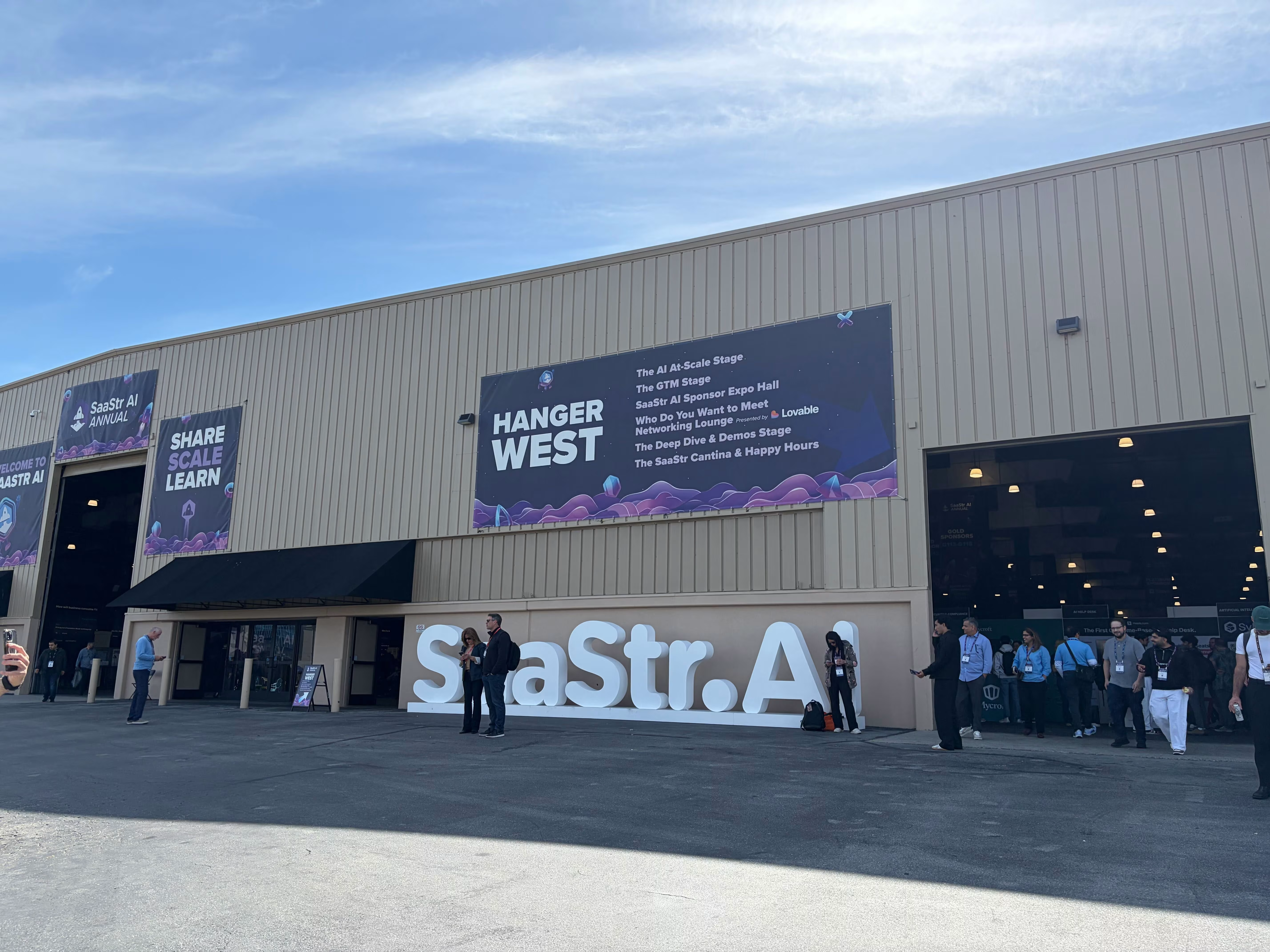
AI has moved from just a product feature to a company operating system
One of the most prominent themes at SaaStr Annual 2026 was that AI is no longer just an add-on, good-to-have, shiny feature on a SaaS platform. The conversation has moved way beyond “Where can we add AI?” to “How can AI make the business more efficient and profitable?”
That may sound like a small shift, but it changes everything.
For years, many companies treated AI like a feature checklist. Add an assistant here. Add a summarizer there. Add a chatbot somewhere else. But at SaaStr Annual, the more mature conversation was around AI as an operating layer across the company. Companies are embedding AI into sales, support, RevOps, marketing, customer success, and internal workflows to improve speed, consistency, and scale.
SaaStr itself deployed 20+ AI agents across revenue and ops workflows, which says a lot about where the market is headed when it comes to AI. It is no longer just something companies talk about in passing or to add shine to product launches. It is becoming part of how teams actually get work done.
This is also where SaaS management becomes more important. When companies add more AI tools, enabled workflows, and agents, they also then require a clearer way to manage the software, basically how it's being used. If that is not managed, then AI can quickly become another layer of tool sprawl.
Key takeaway
Do not limit AI investment to product features. Identify 3–5 internal workflows where AI can reduce manual effort, improve speed, and create measurable operational leverage this year.
The GTM stack is being rebuilt around AI
Another major theme at SaaStr Annual was the intersection of AI and go-to-market execution. This was not just a product conversation. It was a conversation about sales, marketing, RevOps, customer success, and support.
The old GTM stack was built to store information and track all activity. CRMs, for example, store all account data. Support tools store all tickets and relevant information. Marketing has the campaigns and customer success tools store account health. Yes, these systems are extremely useful for tracking, but then they require heavy people support.
The new age GTM stack, on the other hand, now will look very different.
AI is helping teams summarize context, recommend next steps, automate repetitive work, improve follow-ups, qualify accounts, support onboarding, and surface customer insights faster. That means the value of a SaaS platform is no longer just about where data lives. It is about how quickly teams can act on that data.
GTM leaders are not deeply evaluating their processes. Sales is asking where AI can help support prospecting and qualification. RevOps is now analyzing manual workflows that are slowing entire teams down. There are more examples in every part of a SaaS business.
Use cases being built are not based on replacing people. It’s how AI can be used as a leverage for efficiency. This distinction matters.
Key takeaway
Reevaluate your Sales, CS, RevOps, marketing, and support workflows. Start with AI-assisted prospecting, qualification, onboarding, customer engagement, and support, where speed and context can create immediate value.
.avif)
Flashy AI features do nothing if there are no outcomes
One of the clearest messages from SaaStr Annual 2026 was that customers are becoming much sharper about AI. They are not impressed by AI branding alone. They want to know what actually improves.
Is manual work reduced? Is onboarding happening faster? Is it improving individual productivity? Does it directly result in better revenue outcomes? These are some of the questions leaders are asking.
That is the difference between an AI feature and a business outcome.
Many AI-native and incumbent SaaS leaders emphasized that the strongest AI stories are not about the technology itself. They are about measurable value. The companies that stood out were not simply saying, “We use AI.” They were showing what AI helped customers achieve.
This is a valuable reminder for anyone marketing or building a SaaS application today. Customers do not want a vague promise. They want a clear answer to a very practical question: what gets better because of this?
That question should sit at the center of every AI roadmap. Before launching or marketing an AI capability, teams should ask: what KPI improves because of this feature? If the answer is unclear internally, it will probably be unclear to customers too.
For Beam AI, this connects directly to construction estimating. Contractors are not looking for AI because it sounds modern. They are looking for less manual work, faster takeoffs, more bid capacity, better accuracy, and more time for estimators to focus on decisions that actually affect the bid.
That is the outcome that matters.
Key takeaway
Market the business outcome, not just the AI capability. Lead with faster onboarding, reduced manual work, increased productivity, better workflow completion, or revenue impact.
Internal AI adoption needs sharper focus
A lot of companies are experimenting with AI right now. That is expected. But experimentation without focus can quickly become messy.
One of the more practical takeaways from SaaStr Annual was that internal AI adoption needs structure. Teams cannot just tell employees to “use AI more” and expect meaningful transformation. That usually leads to scattered experiments, inconsistent usage, and unclear results.
The better approach is to pick a few workflows where AI can create obvious value.
Where is your team losing the most time? Which processes are repetitive but still important? What work requires a lot of manual coordination? Where are handoffs slowing down execution? Which customer-facing workflows could be improved by increasing speed or providing better context?
These are the places where AI can create real leverage.
This is also where saas management becomes a strategic conversation, not just an IT conversation. As more teams adopt AI tools, companies need visibility into what is being used, how it connects to existing workflows, and whether it is improving the right metrics. Without that clarity, AI adoption can turn into another software management problem.
The companies that make the most progress will not be the ones experimenting everywhere at once. They will be the ones choosing the right workflows, defining the right outcomes, and scaling what actually works.
Key takeaway
Move beyond broad AI experimentation. Pick high-impact workflows, define what success looks like, and measure whether AI is improving the way work gets done.
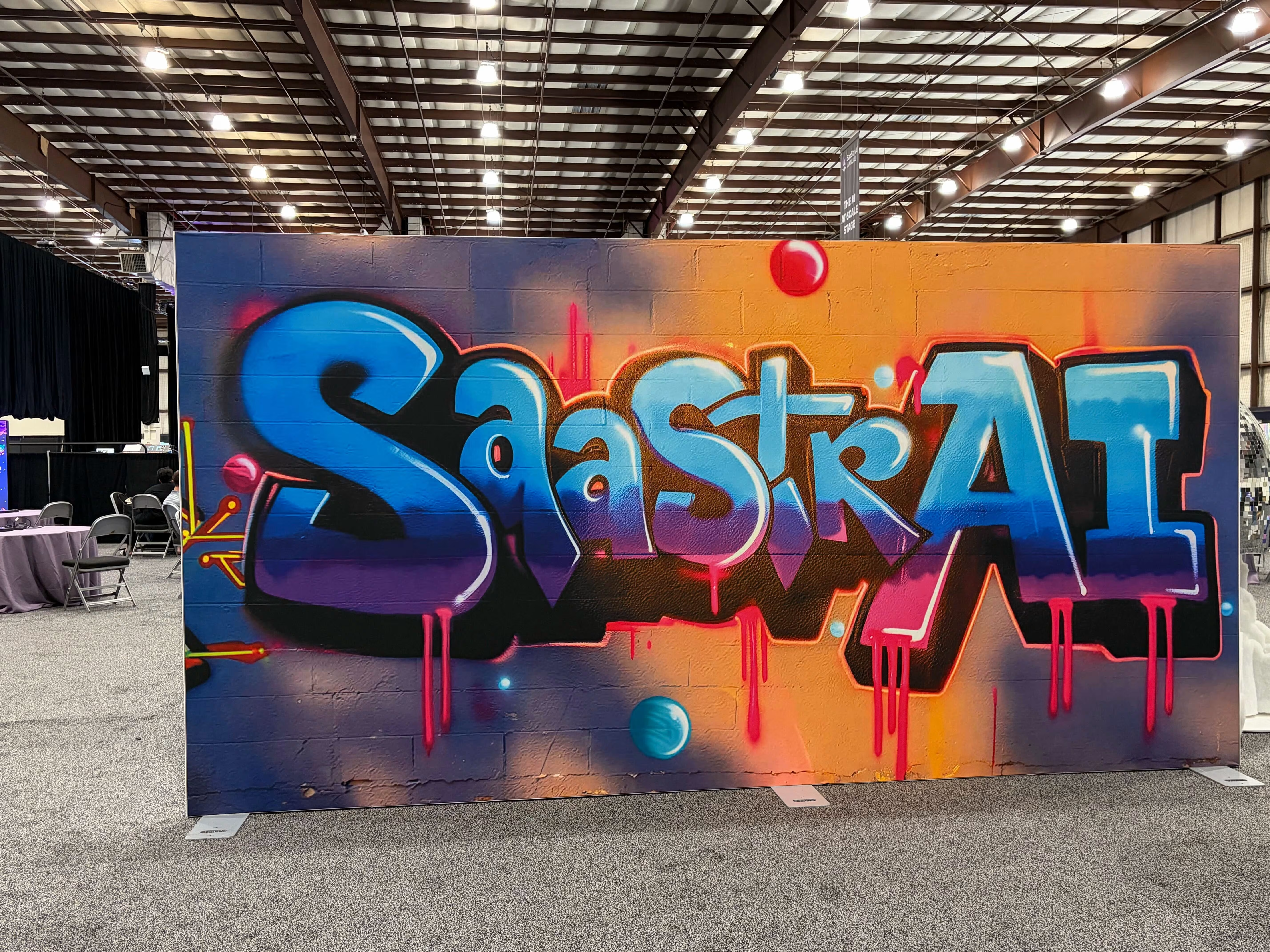
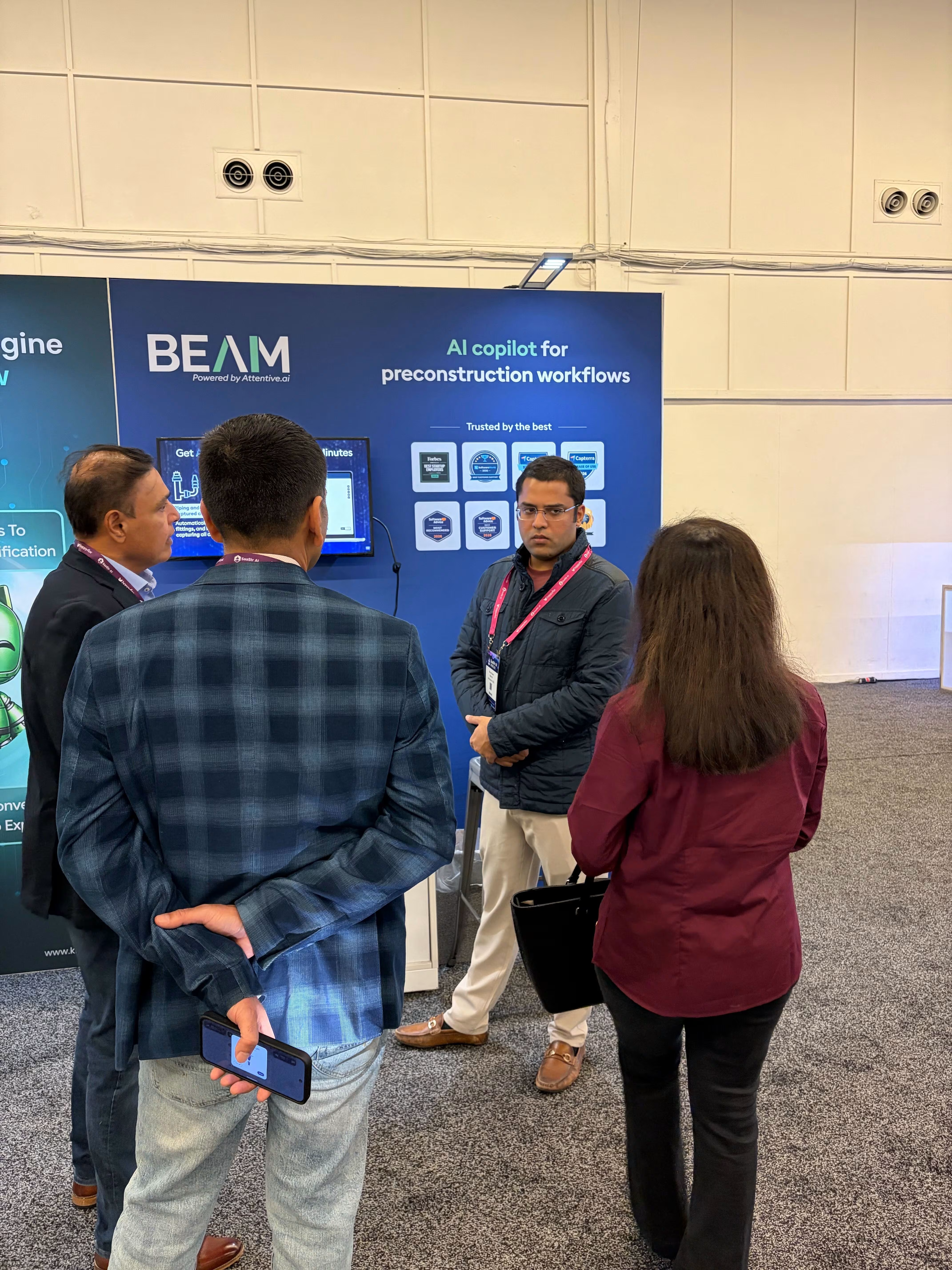
Beam AI team in action!
Beam AI’s team had an incredible time at SaaStr Annual 2026, connecting with founders, operators, GTM leaders, and teams, thinking deeply about how AI is changing the way companies work.
From live demos to booth conversations, the discussions kept returning to a familiar challenge: teams want to move faster, reduce manual effort, and create more capacity without compromising quality. For Beam AI, that conversation is especially important in construction, where estimators are often asked to bid on more projects without getting more time back in their day.
Beam AI showcased AI-powered takeoffs and estimates built to help contractors save up to 90% time on takeoffs, bid 3X more jobs, and move faster without compromising accuracy. The team also highlighted Beam AI’s do-it-yourself platform, which produces HVAC and plumbing takeoffs in under 10 minutes with 90% feature-capture accuracy.
In a SaaS environment where customers are asking for measurable outcomes, Beam AI’s message was clear: AI should not just make software feel smarter. It will improve the actual workflow.
Before you go
SaaStr Annual 2026 made one thing very clear: AI is becoming part of the operating rhythm of modern companies.
The conversation has moved beyond “Should we use AI?” and into “Where should AI sit in the workflow?” That is a much more useful question. It pushes teams to think about adoption, execution, measurement, and business impact.
For SaaS companies, the opportunity is not just to build better products. It is to build better operating models. AI can help teams reduce manual work, improve speed, create more consistent workflows, and make better use of the tools they already have.
But the companies that win will not be the ones with the loudest AI messaging. They will be the ones that connect AI to real problems, real workflows, and real outcomes.
That is true for every SaaS platform trying to stand out. It is true for every SaaS application trying to prove value. It is true for every company that is thinking seriously about SaaS management in an AI-heavy world. And it is especially true for industries like construction, where the best technology is not the one that sounds the most advanced, but the one that gives teams time back and helps them do better work.
Ready to see how Beam AI helps contractors save time on takeoffs and bid more work with confidence? Book a demo with Beam AI.






.jpg)
.webp)

