


.jpg)

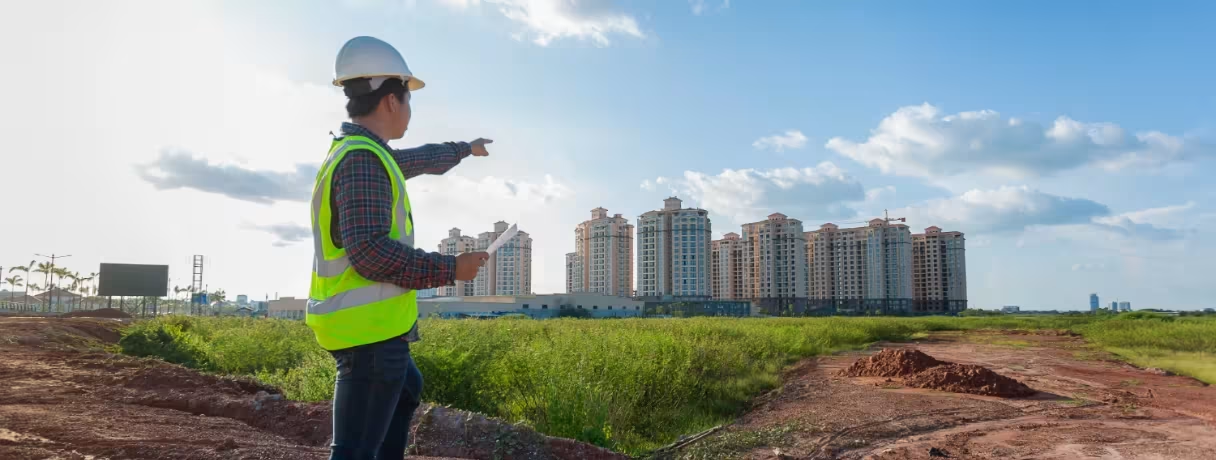
Imagine a construction site that looks fine from a distance. You see that grading’s underway, foundations are taking shape, and materials are moving in and out.
Then it rains.
All at once, loose soil moves across the landscape, sediment collects where it shouldn't, and runoff flows toward streets, drains, or neighboring properties.
That's why erosion control is one of the first things inspectors look for during early residential inspections. It’s not just about keeping a site clean. It is about ensuring the project controls stormwater and prevents sediment from leaving the property.
Why early erosion control matters
Erosion control measures are often installed before substantial construction begins. Silt fences, inlet protection, sediment basins, stabilized construction entrances, and other controls manage runoff while the site is still exposed.
But these measures work only when installed in the right locations and maintained throughout construction.
For inspectors, that makes erosion control an early indicator of whether a project is following its site and stormwater plans.
A missing silt fence might seem like a small issue. But if runoff carries sediment into a public drain, the problem can quickly become much bigger.
Key focus areas for early inspections
Early inspections normally focus on the parts of the site most vulnerable to runoff and sediment movement, including:
- Perimeter controls: Install silt fences and other barriers where they can intercept sediment before it leaves the site.
- Drainage and inlets: Protect storm drains from sediment and construction debris.
- Construction entrances: Stabilized entrances help prevent mud and soil from being tracked onto public roads.
- Exposed soil: Newly graded or disturbed areas need appropriate erosion protection, especially before heavy rain.
- Stockpiles: Protect soil and other loose materials from runoff and wind.
- Overall site condition: Controls need to remain functional as construction progresses, not only pass an initial inspection.
Don't wait until something washes away
The number one mistake is treating erosion control as a one-time checklist item. But why so?
Because a construction site keeps changing. Grading changes, excavation expands, weather can affect the site, and temporary controls can get damaged or displaced. And regular inspections help catch these issues early, before they lead to violations, extra cleanup, or project delays.
For residential inspections, the goal is simple: identify vulnerable areas early, verify that the right controls are in place, and make sure they continue doing their job.
So here’s a mantra for you to use: Inspect it early. Control it early. Keep the site moving.
Because with erosion control, the cheapest problem to fix is the one you spot before the rain does.



.webp)
