


What Is Spray Foam Insulation?
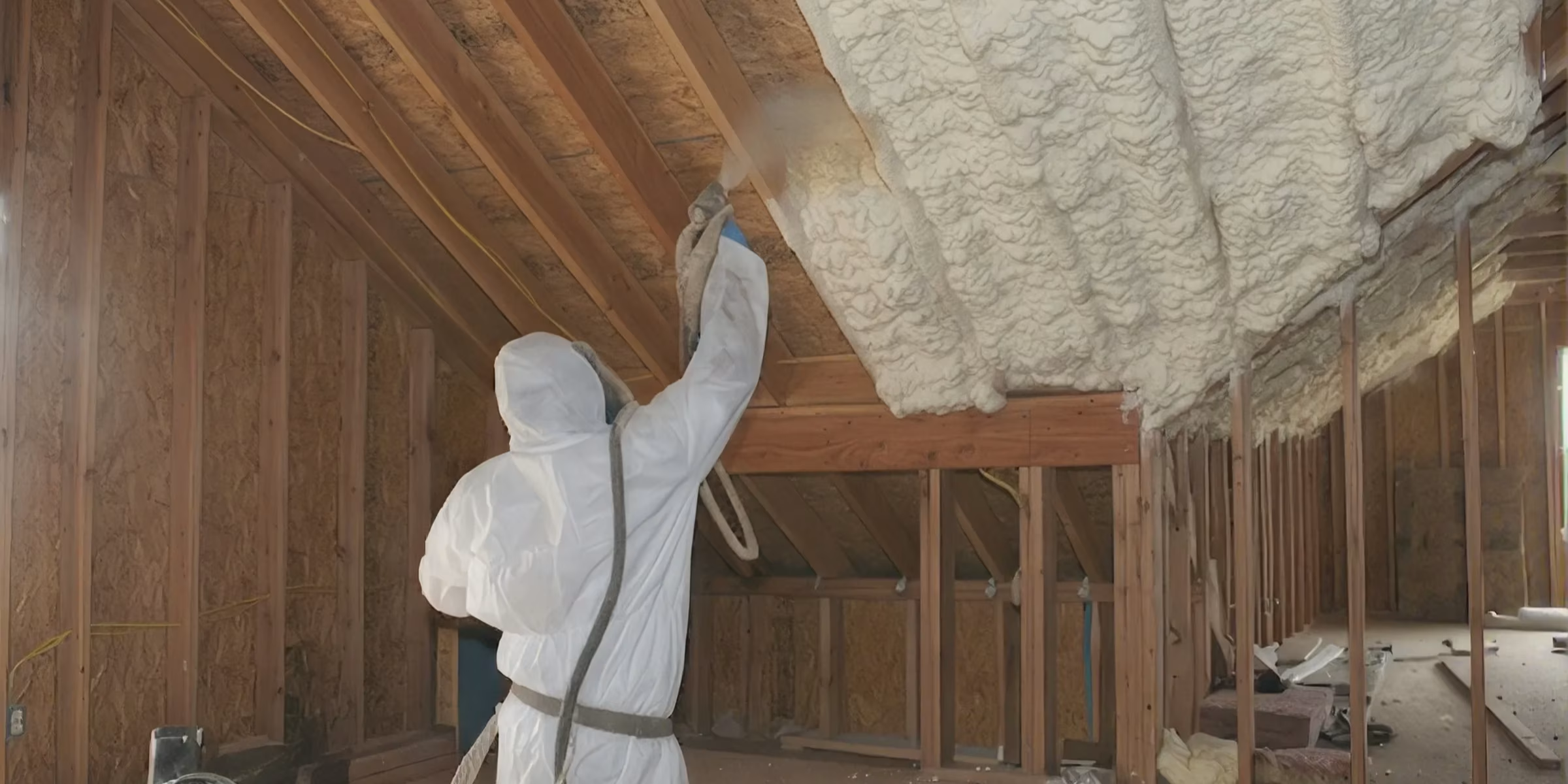
Spray foam insulation is a liquid that’s sprayed into place, then expands and hardens after application. As it grows, it fills cavities, seals gaps, and reduces heat transfer through walls, roofs, and other parts of a building.
Available in open-cell and closed-cell formulations, it can also function as an air barrier. Closed-cell foam generally provides greater thermal resistance per inch and better resistance to moisture vapor.
What Is Fiberglass Insulation?
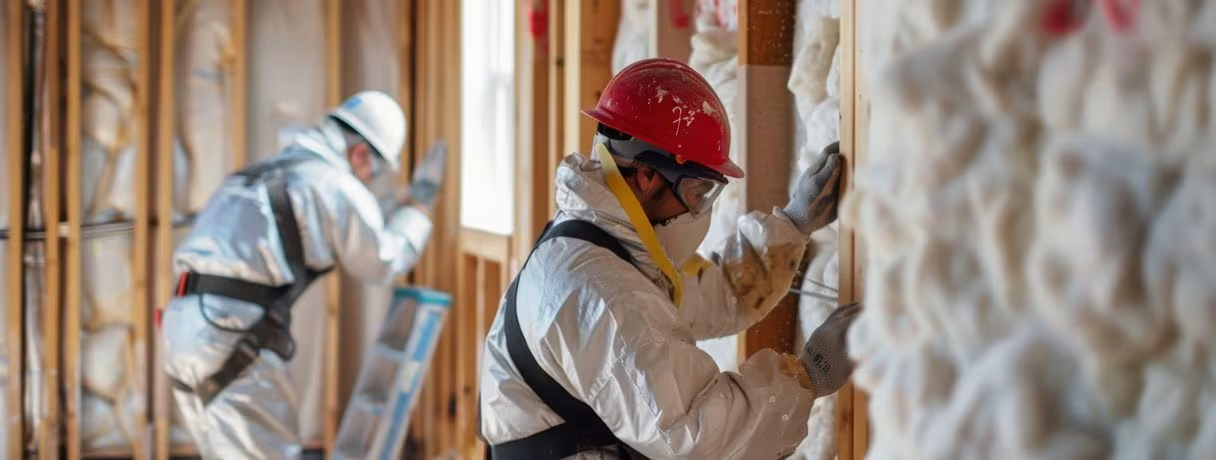
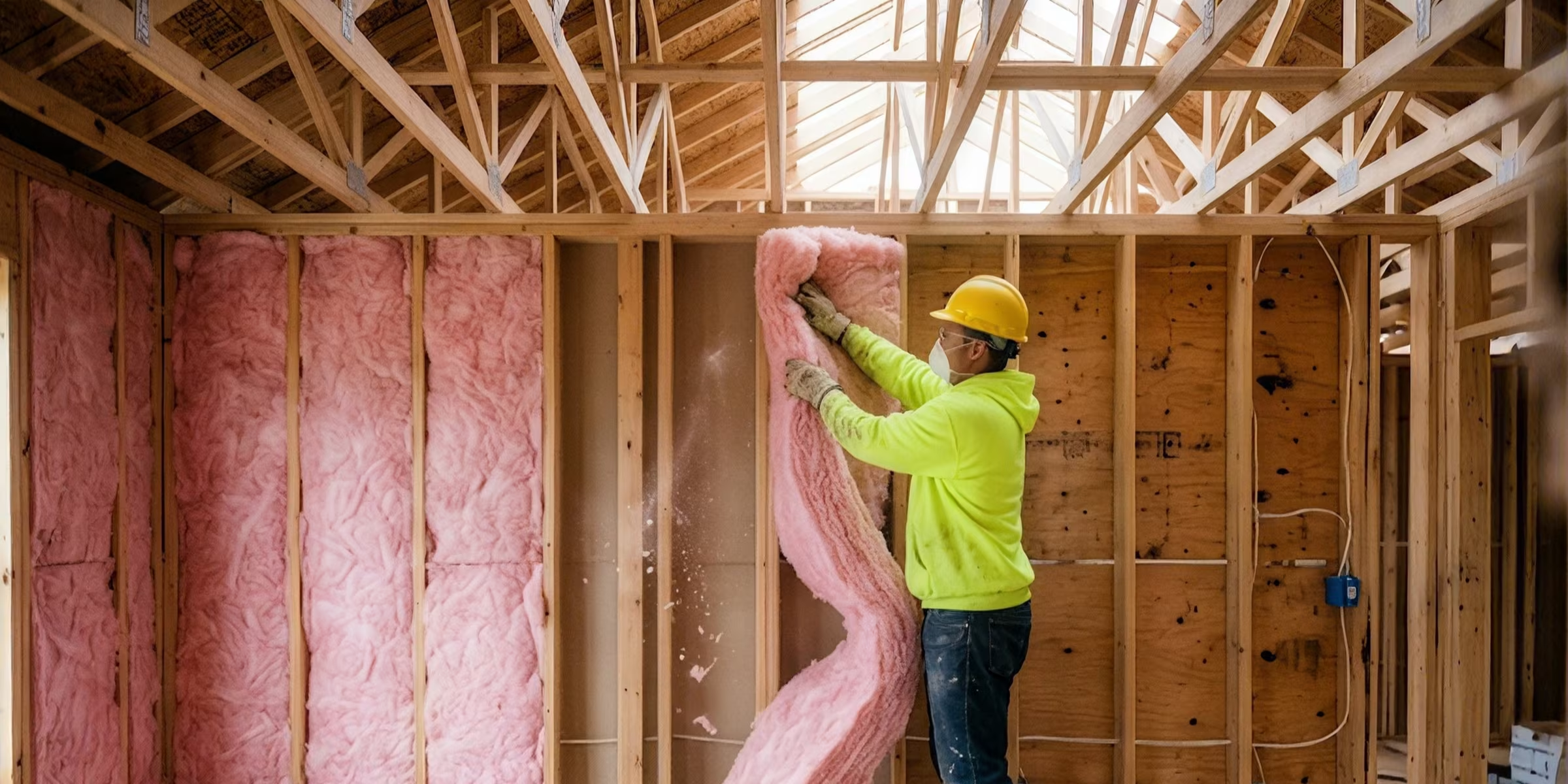
Fiberglass insulation is made of fine glass fibers that trap air and slow heat transfer. It is available as batts and rolls, or as loose-fill material that’s blown in with equipment, and uses include walls, attic, floors, and HVAC systems.
It is relatively affordable, widely available, and effective when installed at the correct thickness without gaps or compression. It works best when it's cut to fit, installed at the right thickness, and not squashed or left with gaps.
Open-Cell vs. Closed-Cell Spray Foam
Spray foam comes in two types, and they behave quite differently. Both insulate and reduce air leakage, but they differ in density, R-value, and how they handle moisture.
Open-cell foam works well when you have plenty of depth to fill. Closed-cell foam makes more sense when space is tight or you need higher R-value and better vapor resistance.
One caution: neither type should be treated as a waterproofing product. Roof leaks, poor drainage, and other moisture sources still need to be fixed separately.
Spray Foam vs. Fiberglass: What Are the Key Differences?
Both materials reduce heat transfer, but their performance depends on installation quality and the building assembly. So, the big difference comes down to one thing: that spray foam can provide insulation and air sealing in one application.
Sources: U.S. Department of Energy insulation guide and insulation types. Actual performance may vary by product and assembly.
How Does the Spray Foam vs. Fiberglass R-Value Comparison Work?
R-value is a measure of how well a material resists heat flow. The higher the value, the better it insulates, as long as it's installed properly.
R-value per inch by insulation type
Sources: DOE Building America insulation guide and DOE Building America simulation protocols. Please refer to the product's rated R-value for final specifications.
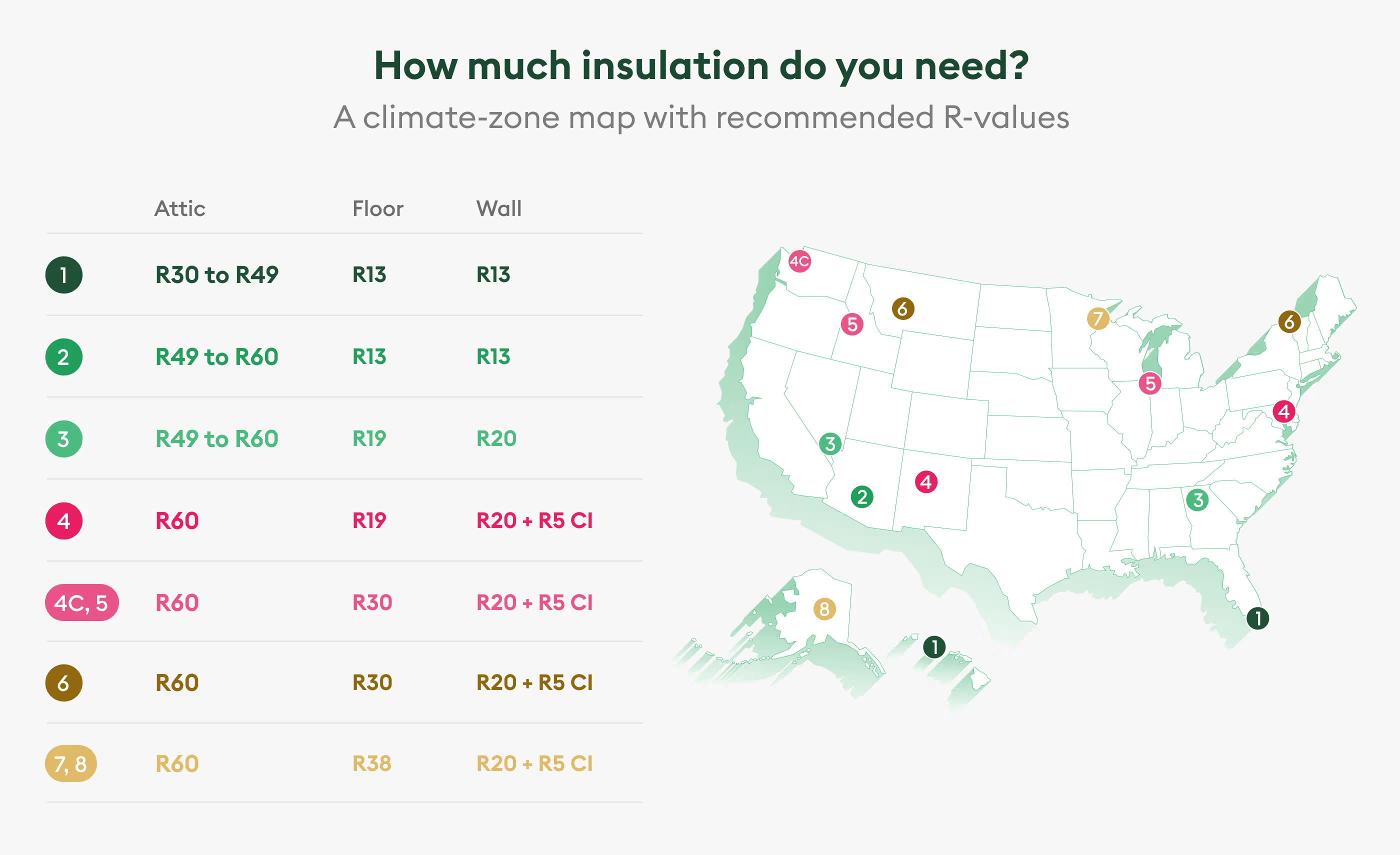
Closed-cell spray foam provides higher R-value in a thinner layer, which helps when wall depth or roof shape limits how much insulation you can fit. Fiberglass can be used to achieve high total R-values. You just need more thickness to get there.
But R-value isn't the whole story; there’s more to building performance. Air leakage, thermal bridging (heat traveling through studs and framing), moisture, and installation quality all affect how well an insulation system works.
This is an important consideration for fiberglass. Its rated R-value only holds up under ideal installation. A batt that is jammed into a shallower area, cut poorly around the wiring, or has gaps along the sides will not function as it is supposed to. And because fiberglass slows heat but doesn't stop airflow, air moving around or through it cuts its effectiveness further. That's why fiberglass projects require proper installation and air sealing.
How Much Does Each One Cost?
Spray foam insulation costs more upfront because of its material requirements, specialized equipment, and the skilled labor involved. Fiberglass is usually the cheaper option when cavities are accessible and evenly spaced.
The figures below are indicative installed costs in U.S. dollars, not contractor quotes.
Cost references: Angi's 2026 spray foam cost guide and insulation installation cost guide. Fiberglass ranges are budgeting estimates; so confirm current local pricing.
Comparing them side by side
It is difficult to compare fiberglass and spray foam prices since the costs are based on square foot for fiberglass and board foot for spray foam. One board foot equals one square foot of insulation installed 1" deep. So 1,000 square feet covered with 2 inches of foam is about 2,000 board feet.
Here’s a worked example for 1,000 sq. ft. of wall insulated to roughly R-13, using the ranges above:
For the same R-value, spray foam costs several times more than fiberglass here (about 4 times at the high ends of the ranges and 7 to 9 times at the low ends). What you're paying for is air sealing and, with closed-cell foam, a thinner layer and better moisture resistance.
However, don't set a budget without obtaining local quotes.
What affects the final insulation cost?
There are a number of factors that can affect the final cost:
- Material type: Closed-cell foam generally costs more than open-cell foam.
- Thickness: Higher target R-values require more material.
- Project accessibility: Tight crawl spaces and difficult rooflines can increase labor.
- Existing conditions: Removing old insulation, repairing moisture damage, and preparing surfaces add costs.
- Air sealing and finishing: Additional sealing, ventilation changes, and required protective coverings can affect the budget.
- Project size: Larger projects may benefit from different unit pricing.
Is spray foam worth the extra cost over fiberglass?
It can be, especially when air leakage is a big problem or space is limited. However, this does not necessarily make it the economical option.
ENERGY STAR estimates that air sealing and insulating in the right locations can result in an average savings of 15% in heating and cooling costs, or 11% in total energy costs. These figures apply to a package of improvements, not spray foam alone.
If you want to know whether spray foam is worth the money, see how much you would save annually versus the extra cost of installing spray foam. Consider maintenance, moisture issues, and how long the insulation should last.
Which Insulation Works Better Across Different Locations?
The selection of the appropriate material depends on what you're insulating, its operating conditions, and how moisture is handled in that part of the building.
Which insulation is better for walls?
Fiberglass wall insulation is a sensible option for standard wall cavities. It fits conventional framing and keeps material costs down.
Spray foam can be helpful around irregular framing or if there’s a significant air leakage problem, and closed-cell foam can help you reach a target R-value in a shallow wall.
With either material, follow the requirements for air sealing, vapor control, and fire protection in your wall assembly. Water management matters here too, so see how a weather resistant barrier works behind the cladding and why walls need one.
Can you use fiberglass for pipe insulation?
Yes. For hot-water, steam, or other appropriate pipe systems, fiberglass pipe insulation is commonly used. Sections of preformed fiberglass can be installed around pipes, and can be supplied with protective facings or vapor-retarder jackets.
Select the product according to pipe temperature, diameter, operating conditions, and condensation risk. Cold piping may need a properly sealed vapor-retarder system to prevent condensation.
"Foam pipe insulation" is not the same product as spray foam. It usually means pre-formed tubes of flexible polyethylene or elastomeric foam that slip over the pipe. Spray foam isn't a typical way to insulate individual pipes. These flexible foam tubes are common on smaller-diameter domestic water lines because they're easy to cut and fit and resist condensation well.
Can you use fiberglass for duct insulation?
Yes, fiberglass duct insulation can be used as external wraps and internal duct liners. It can minimize heat transfer and, in suitable systems, condensation and noise.
External insulation should be installed with appropriate facing and sealed joints. The internal duct liner must provide the following necessary features, including airflow, durability, hygiene, and fire performance.
Spray foam, however, isn’t a typical method of duct insulation. Usually, ducts are insulated or fitted with duct liner, allowing them to be inspected and repaired. Spray foam does appear in duct-related work in one common way: when a roof deck is insulated with foam, the attic becomes part of the conditioned space, so ducts in that attic are no longer exposed to extreme temperatures. In that case, the foam insulates the space, not the duct itself.
Whatever the method, seal duct leaks first and follow the HVAC design, product approvals, and local mechanical codes.
What works best for attics and crawl spaces?
Attics are often the best place to start improving energy performance. ENERGY STAR recommends sealing air leaks before adding attic insulation.
Fiberglass batts or blown-in fiberglass can be used for an accessible attic floor. On the other hand, spray foam is ideal for roof decks or hard-to-seal attics, provided proper ventilation and moisture management are followed.
If you spray foam the underside of the roof deck, the attic becomes an unvented, conditioned space. That comes with a few requirements:
- Building codes generally call for a fire-protective covering, such as an ignition or thermal barrier, over exposed foam.
- Some shingle manufacturers have specific requirements for roofs over unvented assemblies, so check your shingle warranty before choosing this approach.
- Roof leaks and condensation still need to be managed.
While for crawl space applications, closed-cell spray foam can be used in some foundation or rim-joist assemblies. Fiberglass can be used in appropriate floor cavities, but its performance may be ruined if exposed to moisture.
The right approach depends on whether the assembly should be vented, the location of the air barrier, and methods of managing moisture.
Should You Hire Contractors or Install It Yourself?
Fiberglass is DIY-friendly. Typically, spray foam isn't.
An experienced DIYer with protective gear and proper fitting care can handle fiberglass batts. Blown-in fiberglass requires a blower, plus attention to the installed depth the product calls for. Fiberglass fibers can irritate your skin, eyes, and airways though, so make sure to wear long sleeves, gloves, safety goggles, and a properly rated respirator or dust mask, particularly in attics and confined areas.
Spray foam is a larger task, since it is applied as a two-part chemical mixture that needs to be combined at the right ratio and temperature. The chemicals can be hazardous during application and curing, which is why installers always wear respirators and protective equipment, and occupants should remain out of the area during application and for the re-entry period specified by the manufacturer. Poorly mixed or off-ratio foam can leave lingering odors and curing problems, which is a strong reason to choose an experienced, certified installer.
This is also why the Department of Energy's home insulation guide recommends appropriate protective measures and advises considering professional installation.
Hire qualified spray foam insulation contractors for large areas, enclosed cavities, roof assemblies, or spaces that have tricky moisture conditions. And before signing, inquire about:
- Product specifications
- Ventilation
- Re-entry timing
- Fire protection
- How they check installation quality
Regardless of which route you choose, it’s important not to let DIY convenience override the product instructions or your local building codes.
So, Which Should You Choose: Spray Foam or Fiberglass Insulation?
Neither material wins every time. The winning combination, rather, is one that balances thermal performance, air leakage, moisture control, installation conditions, and budget.
Start with the Simple Rules of Thumb
- Choose spray foam when air sealing is important, the available cavity is shallow, or the assembly benefits from closed-cell foam's higher R-value.
- Choose fiberglass when budget is the most important, cavities are easy to reach, and you can handle gaps and penetrations with separate air sealing.
- Consider a hybrid if you want some of each. More on that below.
The In-Between Option: Flash and Batt
A "flash and batt" hybrid involves attaching a thin layer of closed-cell spray foam, normally about 1 to 2 inches, to the sheathing in order to seal air leaks and add vapor resistance. The rest of the cavity is then filled with fiberglass batts.
You get much of spray foam's air-sealing benefit at a lower cost than filling the whole cavity with foam. In colder regions, the thickness of the foam layer must be sufficient enough relative to the total insulation to keep the surface where moisture could condense warm. Building codes set minimum ratios, so confirm them with your installer.
Does Climate Affect the Choice?
Yes, primarily through moisture interactions.
- Cold climates: Air sealing and vapor control are most important. Warm indoor air that leaks into a cold wall or roof cavity can condense and lead to moisture problems. Either spray foam, or fiberglass paired with careful air sealing, can work, but the air sealing needs to be continuous.
- Hot-humid climates: Here, moisture management is a key priority. Humid outdoor air that enters a building can condense on cool interior surfaces, and an interior vapor barrier in the wrong place can trap moisture inside the wall. Tight air sealing still helps, but the assembly needs to be able to dry.
- Mixed and hot-dry climates: Follow local code and the recommended R-values for your climate zone, and prioritize air sealing in both cases.
Because the right vapor-control approach varies by region, check your local building code or ask a qualified insulation professional before you decide.
Quick Recommendations
- For higher R-value per inch: Closed-cell spray foam.
- For lower upfront cost: Fiberglass batts or blown-in fiberglass.
- For air sealing: Properly installed spray foam, or fiberglass paired with separate air sealing.
- For standard wall cavities and accessible attics: Fiberglass is often a practical choice.
- For pipes and ducts: Select a product specifically rated for the system's operating conditions.
- For long-term savings: Evaluate the whole building assembly, installation quality, and expected energy use rather than insulation material alone.
- For a balance of air sealing and cost: A flash-and-batt hybrid.
The best insulation system is one that achieves the thermal performance that you need while managing air leakage and moisture appropriately. Compare the full installed costs and specifications before you make the final call.