

.jpg)

Same Walls, Different Numbers
Two contractors bid the same warehouse repaint job. They walked the same, and measured the same walls. Yet, their totals land tens of thousands of dollars apart.
It's not a difference in the paint. It’s everything each estimator chose to see, or not see, when they wrote the number down.
A commercial painting estimate is a collection of decisions: which surface areas have been counted separately, what coating system was specified, how much preparationpreperation has been priced in, and the access to the job. If those decisions are evident, the bid holds up. But if they're all lumped together in one package, there are issues that crop up in mid-project, typically at the contractor's expense.
And understanding how these pieces fit together is what separates a bid that wins and delivers from one that wins and bleeds. So here’s what goes into a reliable estimate.
Measure paintable area by surface
Every estimate starts with the paint takeoff square footage. Estimators measure walls and ceilings, account for doors, frames, trim, exposed structural elements, and other surfaces included in the scope, and separate them by material and finish.
But why is the above important? This is because a porous concrete block wall and a smooth drywall wall may be the same surface area, but require different preparation, primers, and paint amounts. Hence, measuring each surface separately makes the material and labor calculations more reliable.
Match coverage to the coating spec
After the quantities are determined, the estimator will calculate the amount of primer and finish paint that the project will need. The paint coverage spread rate per gallon tells you how much area a gallon can cover; however, this will depend on the product, porosity of the surface, application method, and expected material loss.
The coating specifications also play a role, wherein if the specification requires a particular DFT, the estimator must account for the product's coverage characteristics and the number of coats needed to achieve it. Dry film thickness (DFT) is the thickness of a coating after it has dried.
For instance, spraying an exposed ceiling can involve more overspray and material loss than rolling a smooth wall. Taking one coverage assumption for both may result in underestimation of materials.
Price prep and labor separately
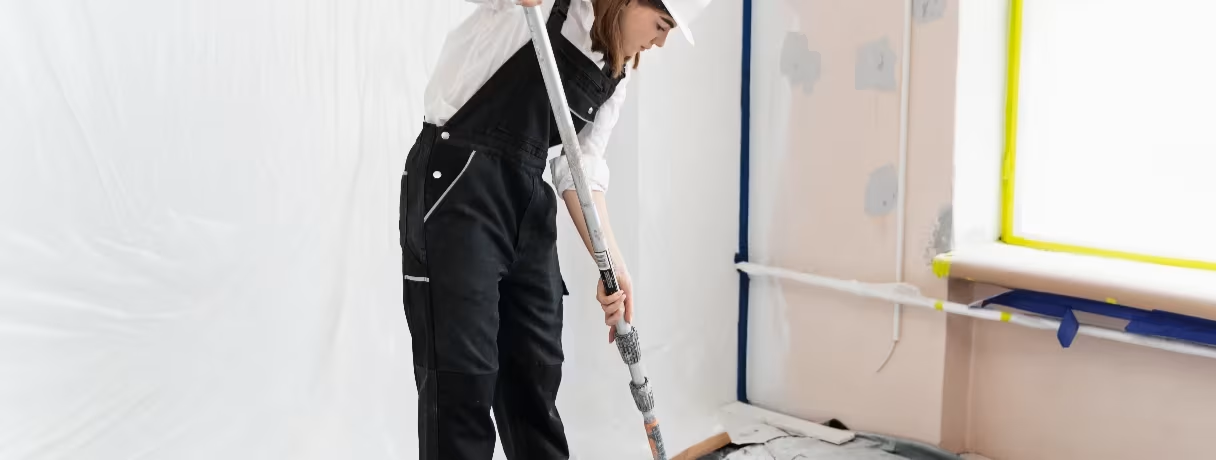
Paint does not go straight onto every surface. Prep work like scraping, sanding, patching, caulking, cleaning, priming and masking may be required before the application is started.
This is where substrate prep time becomes important. A surface in good condition may need minimal preparation, while peeling paint, cracks, corrosion, or porous masonry can add substantial work. Estimators should identify these requirements instead of burying them in a general labor allowance.
Architectural coating labor units then convert the measured quantities into estimated work hours. These rates depend upon surface type, coating system, application process, access, and crew productivity. Detailed trim, high ceilings, multiple colors, and occupied areas can all adversely affect production.
Add equipment, overhead, and profit
The estimate should also include lifts and scaffolding, surface protection, consumables, project specific access or scheduling needs, mobilization, and cleanup. After direct costs are calculated, overhead and profit must be included to arrive at a sustainable bid price.
What makes a paint estimate reliable?
The idea is to not only determine the amount of paint required for a job, but to grasp the full scope of what's involved in the number.
Clearly separating quantities, coating specifications, preparation, and labor helps estimators identify missing costs, explain their assumptions, and submit bids with fewer surprises.