


.png)


Have you ever missed an electrical component while taking off plans? Most likely, the answer is yes. You pore over the plans, for hours to take off lighting fixtures, conduits, and other quantities, and then…… there it is. That nagging worry: Are my branches adequate? Did I take off all the fixtures and receptacles?
Electrical takeoffs shouldn't be a guessing game. And most definitely, they should not be a source of anxiety. Takeoffs are the foundation for a smooth, efficient installation. This blog post explores efficient methods for doing electrical takeoffs accurately. It aims to provide valuable information to electrical contractors seeking to optimize their approach to electrical takeoffs.
What is an Electrical Takeoff?
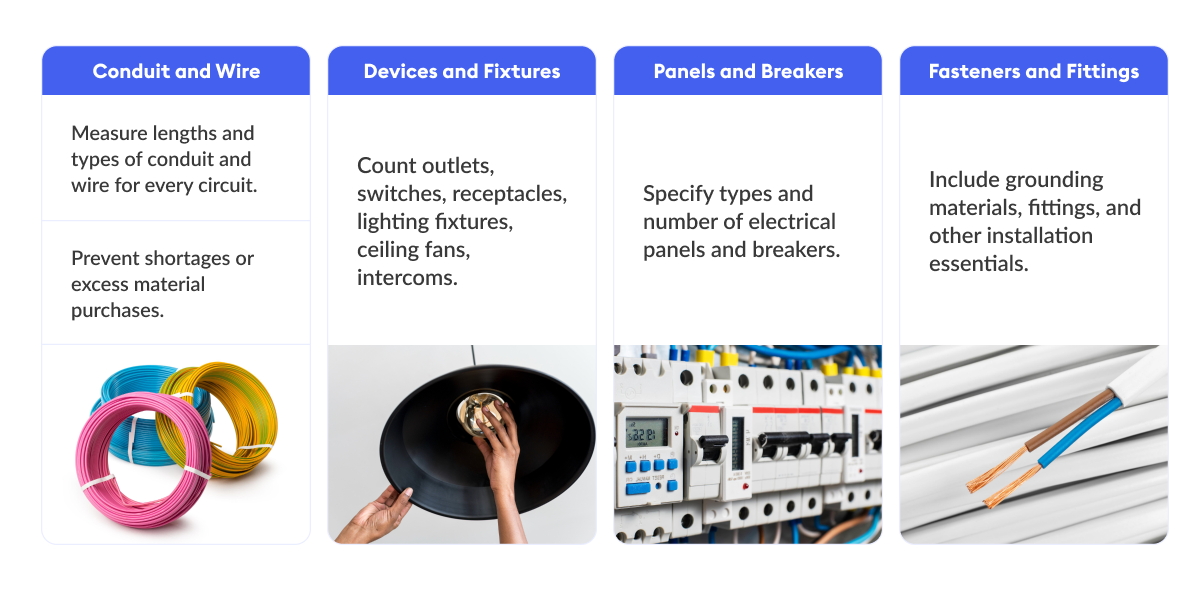
An electrical takeoff is the process of carefully reviewing a project’s blueprints and specifications to figure out exactly what materials and components are needed-like conduits, wiring, fixtures, panels, and more. In simple terms, it’s how estimators translate drawings into real numbers. By counting and quantifying every electrical item, they can build an accurate cost estimate and ensure nothing is missed when it’s time to order materials or start installation.

Why Accurate Electrical Takeoffs Matter
Accurate electrical takeoffs are essential for keeping projects on track and profitable. They ensure materials and labor are priced correctly, helping contractors avoid overspending or underbidding. With a detailed and precise quantity list in hand, teams can plan resources efficiently, prevent project delays, and boost overall productivity. Most importantly, accurate takeoffs reduce the risk of costly errors and last-minute change orders-keeping both budgets and timelines under control.
- It prevents cost overruns by calculating precise quantities of outlets, conduits, and other components.
- It helps to ensure timely material deliveries and avoids costly delays.
- It provides reliable, detailed estimates to improve bid success and reputation.
Key Components of Electrical Takeoffs
Key Reasons Why Accurate Electrical Takeoffs Matter
Accurate electrical takeoffs are more than just numbers-they’re the foundation for a smooth, profitable project. Here’s why they’re so important:
- Cost Control and Budget Adherence: Precise takeoffs give you exact estimates for materials and labor, helping prevent budget overruns while keeping bids competitive and profitable.
- Preventing Delays and Ensuring Efficiency: Knowing exactly what’s needed allows for better resource planning, reducing project delays and keeping workflows efficient.
- Comprehensive Resource Planning: Detailed takeoffs ensure all materials-wires, conduits, fixtures, and labor-are accounted for, so everything is available when needed.
- Minimizing Errors and Change Orders: By identifying every component upfront, takeoffs reduce the risk of missing items, costly mistakes, and subsequent rework or change orders.
- Improved Bid Accuracy: Accurate estimates demonstrate a clear understanding of project scope, giving contractors an edge when submitting competitive bids.
- Facilitating Collaboration: Cloud-based takeoff tools let teams work together in real time, keeping everyone aligned, maintaining version control, and minimizing miscommunication.
- Enhanced Project Execution: Detailed takeoffs act as a roadmap for procurement and installation, helping teams manage complex electrical systems seamlessly.
- Better Risk Management: With clear, accurate data, potential plan ambiguities or conflicts can be identified early, allowing RFIs to be issued and resolved before they become costly issues.
In short, precise electrical takeoffs keep projects on budget, on time, and running smoothly from planning to execution.
Key Considerations in Electrical Quantity Estimating
- Different Types of Ductwork and Wiring Materials:
- Accurately measure rectangular, round, spiral, and flexible ducts and wiring types.
- Fittings and Accessories:
- Include elbows, tees, reducers, dampers, diffusers, and grilles.
- Estimating Dampers and Controls:
- Account for volume, fire, and smoke dampers based on system design.
- Insulation Needs:
- Measure insulation type, thickness, and coverage per code requirements.
How to do Electrical Takeoffs?
Common Challenges in Electrical Takeoffs
Electrical takeoffs are essential, but they come with their own set of challenges. Here’s what contractors and estimators often face-and how to navigate them:
- Complexity and Scope Management:
- Intricate Systems: Projects with complex electrical layouts can make identifying and measuring every component tricky, increasing the risk of errors.
- Varying Scope: Accurately capturing all aspects of the electrical work-including temporary power setups, low-voltage systems, and testing-can be challenging, leading to missed items and inaccurate bids.
- Intricate Systems: Projects with complex electrical layouts can make identifying and measuring every component tricky, increasing the risk of errors.
- Project Changes and Data Accuracy:
- Updates and Revisions: Frequent changes to plans or specifications require constant updates to takeoffs. Doing this manually is time-consuming and prone to mistakes.
- Managing these late drawing revisions is often where traditional methods fail. If you're evaluating AI tools to solve this bottleneck, see our detailed guide and revision tracking.
- Data Accuracy: Relying on outdated drawings or incomplete fixture schedules can result in significant errors in material quantities and cost estimates.
- Cost and Material Fluctuations:
- Material Price Changes: Volatile markets for materials like copper, wiring, or circuit breakers make it hard to maintain precise estimates, requiring careful monitoring.
- Labor Shortages: Limited availability of skilled electricians can increase labor costs and affect timelines, making labor estimation more challenging.
- Material Price Changes: Volatile markets for materials like copper, wiring, or circuit breakers make it hard to maintain precise estimates, requiring careful monitoring.
- Collaboration Challenges: Coordinating across distributed teams can lead to miscommunication or version-control issues, which can impact accuracy and project efficiency.
- Mitigation Strategies: Using reliable electrical takeoff software, staying updated with project revisions, double-checking measurements, and incorporating material waste allowances can help overcome these challenges, streamline workflows, and improve estimate reliability. A well-structured electrical takeoff sheet serves as the central document for tracking these details across revisions. To learn how different cloud-based tools compare across low-voltage detection, multi-trade support, and QA reviews, check out our Beam AI vs Drawer AI feature-by-feature comparison.
See how one electrical estimating firm saved 10 hours per project by automating its symbol counting and spec checks. Tired of double-checking for missed components? See how AI auto-detects every circuit and fixture from the plans.

How to Select the Right Electrical Takeoff Software
Define Your Requirements
- Business Size & Project Complexity: Are you handling large, complex commercial projects or smaller residential jobs? The size and complexity will guide whether you need a comprehensive, feature-rich solution or a simpler tool.
- Budget: Set a realistic budget, keeping in mind both upfront costs and ongoing subscription or maintenance fees.
- Integration Needs: Check if the software works seamlessly with your accounting, project management, and other existing systems to keep workflows smooth.
- Team Workflow: Consider who will use the software and how easily they can adapt to a new system-ease of adoption is key for fast implementation.
Assess Features & Functionality
- Takeoff & Estimating Tools: Look for fast, accurate quantity takeoffs from blueprints, with features like auto-counting, customizable assemblies, and the flexibility to adjust for changes.
- Databases: Ensure the software provides comprehensive and up-to-date material and labor databases, and allows you to easily add or update information.
- Reporting & Documentation: The ability to generate professional, customizable reports and proposals is crucial for presenting accurate bids. Look for platforms that either integrate smoothly with or operate as complete electrical contractor bid software, allowing your estimators to apply labor rates, burden, and profit margins directly to takeoff counts without messy double-entry.
- Collaboration: Multiple team members should be able to work on the same project or bid efficiently, ideally in real-time if the software is cloud-based.
Research & Test Software
- Ease of Use & Training: Choose software with an intuitive interface and strong training resources, like tutorials, webinars, and customer support.
- Trial & Comparison: Whenever possible, request free trials or demos to see how well the software fits your team’s workflow and requirements.
By carefully evaluating your needs, features, and vendor support, you can select electrical takeoff software that saves time, improves accuracy, and helps your team submit more competitive and profitable bids.
The Final Word
Electrical takeoffs are critical for efficient project execution and with AI-based Electrical Takeoff software such as Beam AI- that automates end-to-end material takeoff, estimators can save time to focus on winning more bids and delivering projects confidently.
Leveraging Beam AI saves time, minimizes errors, and streamlines HVAC quantity takeoffs, estimators can unlock the free Beam AI experience here.



.jpg)